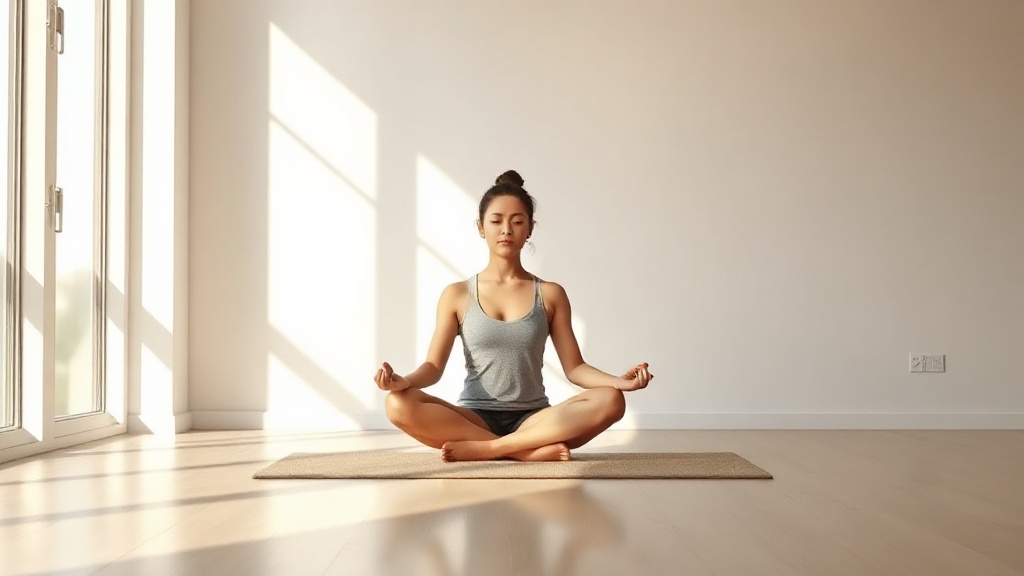
Mindfulness meditation means paying attention, on purpose and without judgment, to the present moment. Long seen as a spiritual practice, it is now backed by hundreds of studies as a concrete tool for mental well-being.
In brief – Mindfulness meditation is the practice of training attention to stay anchored in the present moment: body sensations, breathing, sounds and passing thoughts. It does not mean emptying the mind, but observing what arises without clinging to it. Popularized in medicine through Jon Kabat-Zinn’s MBSR program, it is one of the most studied mind-body approaches, with proven effects on stress, anxiety, sleep, blood pressure and chronic pain. Ten minutes a day, practiced regularly, is enough to notice benefits, and the habit can be built through a simple breath-focused routine, without any equipment.
What is mindfulness meditation?
Mindfulness meditation is the training of attention to stay anchored in the present moment: body sensations, breathing, sounds, and passing thoughts. It is not about “emptying the mind”, but about observing what arises without holding on to it. Popularized in medicine through Jon Kabat-Zinn’s MBSR program, this practice can be measured and learned.

The proven benefits
The effects of this practice on mental and physical health are among the best studied of all mind-body approaches:
- Reduced stress and lower cortisol levels;
- Less anxiety and fewer mild to moderate depressive symptoms;
- Better focus and working memory;
- Improved sleep and emotional regulation;
- Lower blood pressure and a better response to chronic pain.
What the science actually says
Major health institutions now recognize the value of this practice: the National Center for Complementary and Integrative Health (NCCIH) states that meditation can reduce stress, anxiety and blood pressure.
Meta-analyses are encouraging: see the research on mindfulness meditation and stress and on mindfulness-based stress reduction. The effects, modest but real, grow stronger with regular practice.
In practice: how to get started
No equipment or particular belief is needed. This practice works best alongside healthy daily habits: check out our 7 mental well-being strategies and our keys to better sleep. Find more resources in the Mental Well-Being pillar.
Protocol: 10 minutes a day
- Pick a fixed time (on waking or before bed) and a quiet place.
- Sit comfortably, back straight, eyes closed or gaze resting on the floor.
- Bring attention to the breath, without trying to change it.
- When the mind wanders, gently bring it back, without judging yourself: that is the exercise.
- Start with 5 to 10 minutes, then increase gradually.
| Stage | Suggested length | Frequency |
|---|---|---|
| Getting started | 5 minutes | Daily |
| Building the habit | 10 minutes | Daily |
| Established practice | 15 to 20 minutes | Daily |
To be guided week after week, subscribe to the Health Letter.
Common misconceptions
The first misconception is thinking the mind must go blank. In reality, the practice does not eliminate thoughts: it teaches you to observe them without being swept away. A wandering mind is normal, and bringing it back, again and again, is the practice. There is no need to get discouraged after a few restless minutes.
The second misconception is that it takes hours. Regularity matters more than duration. Ten minutes a day brings more benefit than two hours once a month. Finally, mindfulness is not reserved for the initiated: it fits into ordinary actions, such as eating, walking or washing dishes with full presence.
Meditation and the brain: what happens?
Brain imaging shows that regular meditation practice changes certain brain regions: it strengthens areas linked to attention and emotional regulation, and calms the amygdala, the brain’s alarm and fear center. This phenomenon, called neuroplasticity, shows the brain’s capacity to reshape itself through training.
These changes translate into lower stress reactivity and a better ability to step back from a situation. Like a muscle, attention develops with exercise, which is what makes meditation a real form of mental training, accessible at any age.
The main families of meditation
Mindfulness meditation is just one approach among others, even if it is the most studied. Broadly, three types stand out: focused attention meditation (fixing attention on an object, the breath, a word), mindfulness practice proper (open awareness of whatever arises), and loving-kindness meditation, which actively cultivates positive feelings toward oneself and others. Each trains the mind differently.
| Type | What it trains | Best for |
|---|---|---|
| Focused attention | Sustained concentration on one point (breath, object, word) | Beginners who need structure |
| Mindfulness (open awareness) | Non-judgmental observation of thoughts, sensations and sounds | Stress and anxiety management |
| Loving-kindness | Active cultivation of goodwill toward self and others | Self-criticism and difficult relationships |
For a beginner, this breath-focused practice remains the ideal entry point: simple, requiring no equipment, and easy to fit into daily life. Other forms can be explored later, depending on personal preferences and goals.
Getting started: overcoming common obstacles
The first sessions are often confusing. “I can’t stop thinking” is the most common complaint, yet that is not the goal: the mind thinks, that is its nature, and gently bringing it back is the exercise itself. “I don’t have time” is solved by starting with just three to five minutes. “I fall asleep” calls for meditating seated rather than lying down, and at a different time of day. Restlessness, boredom or impatience are part of the process and ease with practice.
The key is self-compassion: there is no such thing as a “failed” meditation. Every time you notice the mind has wandered and bring it back, you strengthen your attention. That, precisely, is progress.
Bringing mindfulness into daily life
The practice is not limited to a meditation cushion. Mindfulness can infuse the most ordinary actions:
- Mindful eating: savoring, chewing slowly, without screens;
- Mindful walking: feeling the contact of the feet, the breath, the surroundings;
- A breathing pause before a stressful task;
- Truly listening to the other person, without preparing a reply;
- Turning waiting time (a line, a commute) into micro-moments of presence.
These informal practices extend the benefits of formal sessions and pair well with heart rate coherence, another breath-based tool for regulating stress.
Targeted applications: stress, sleep, pain
This approach has given rise to structured programs such as MBSR (mindfulness-based stress reduction) and MBCT (mindfulness-based cognitive therapy), now used in hospital settings. These protocols have shown value in managing chronic stress, preventing depressive relapse, and easing anxiety, as well as chronic pain and poor sleep. In the case of sleep, an evening practice helps release tension and calm the mind before bed. Meditation does not replace treatment, but it is a valuable complement, backed by a growing body of research.
Guided or silent meditation: where to start
For a beginner, guided meditation is often the gentlest way in: a voice accompanies the session, prompts a return to the breath and structures the time. Apps, podcasts and videos offer a wide range of options. Silent meditation, more demanding, is usually discovered later, once a person feels comfortable holding attention alone. Neither is superior to the other: what matters is practicing. Many people alternate between the two depending on the day and mood, since the practice lends itself equally well to a guided format or a personal period of silence.
Building a routine that lasts
The main challenge is not meditating once, but sticking with it. A few principles help anchor the habit: choosing a fixed time and linking it to an existing daily action (after waking, before lunch), starting small to avoid discouragement, and aiming for regularity rather than length. Five minutes every day beats one hour once a week. Keeping simple track of sessions, and being kind to yourself on the days that do not happen, both reinforce the practice. Over time, the practice stops being an obligation and becomes a welcome moment, a pocket of calm in the day.
Frequently asked questions
How long should I meditate each day?
Ten minutes a day is enough to feel benefits, provided the practice is regular. Consistency matters more than the length of each session.
Is mindfulness meditation religious?
No. Although inspired by contemplative traditions, mindfulness as used in health care is secular and based on scientifically validated protocols, with no imposed spiritual dimension.
Do I need to empty my mind?
No, that is a misconception. The goal is not to eliminate thoughts but to observe them without clinging to them, then bring attention back to the present. A wandering mind is part of the exercise.
Can meditation replace treatment?
No. It is a useful complement, not a substitute for medical or psychological care. For a diagnosed condition, it should be used alongside professional guidance.
Medical disclaimer. The information provided here is for informational purposes only and does not constitute medical advice. It does not replace a consultation. Ask a healthcare professional before changing your diet, taking dietary supplements or starting a new practice, especially if you have a medical condition, are pregnant or are under treatment. Dietary supplements do not replace a balanced diet or medical follow-up.