Heart rate coherence is a guided breathing technique that synchronizes the rhythm of the heart with breathing to calm the nervous system. Simple, free and backed by science, it has become a leading tool for managing everyday stress.
In brief – Heart rate coherence is a guided breathing technique, practiced at about six breaths per minute, that synchronizes heart rhythm and breathing to calm the nervous system within minutes. The best-known protocol, the 365 method, means three sessions a day, six breaths a minute, for five minutes each. Regular practice is linked to lower cortisol, reduced anxiety, better sleep, sharper focus and a modest drop in blood pressure in people with hypertension. The mechanism runs through heart rate variability, a marker of the nervous system’s ability to adapt to stress, which rises temporarily during each session and improves over weeks of daily practice. No equipment is required, though a breathing app or a heart rate variability sensor can help beginners find the rhythm. Athletes also use it to speed recovery after exercise and to manage pre-competition nerves.
What Is Heart Rate Coherence?
It means breathing slowly and regularly, at a pace of about six breaths per minute. At this rate, the heart and breathing enter into resonance: heart rate variability improves and the autonomic nervous system regains its balance. In practice, the body shifts from “stress” mode to “recovery” mode within a few minutes.

The Proven Benefits
Practiced regularly, it brings measurable benefits:
- Reduced stress and lower cortisol;
- Less anxiety and better emotional regulation;
- Lower blood pressure in people with hypertension;
- Better sleep and recovery;
- Sharper focus and mental clarity.
What the Science Really Says
Slow-breathing techniques are drawing growing scientific interest: the National Center for Complementary and Integrative Health (NCCIH) recognizes that relaxation and breathing techniques can reduce stress and anxiety.
Research is closely examining the underlying mechanism: see the work on heart rate variability and biofeedback and on slow breathing and stress. The effects are modest but real, especially with regular practice.
In Practice: The 365 Method
The best-known rule is the “365” method: 3 times a day, 6 breaths per minute, for 5 minutes. This breathing practice pairs well with other mind-body approaches: check out our 7 strategies for mental wellbeing and our mindfulness meditation guide. More resources are available in our Mental Wellbeing pillar.
Protocol: The Exercise Step by Step
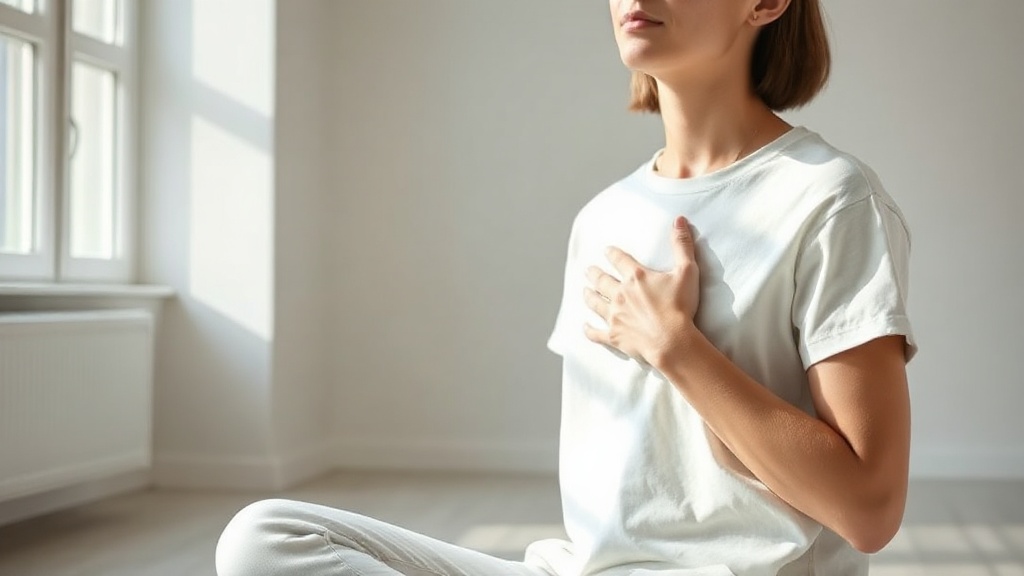
- Get settled sitting upright, in a quiet place.
- Inhale for 5 seconds through the nose, letting the belly expand.
- Exhale for 5 seconds, slowly, through the mouth or nose.
- Repeat this cycle for 5 minutes, roughly 30 breaths.
- Practice 3 times a day, ideally morning, midday and late afternoon.
| Element | Detail |
|---|---|
| Frequency | 3 sessions a day |
| Breathing rate | 6 breaths a minute (5 seconds in, 5 seconds out) |
| Session length | 5 minutes, about 30 breaths |
For guided practice week after week, subscribe to our health newsletter.
Heart Rate Variability Explained
Contrary to popular belief, a healthy heart does not beat like a metronome: the interval between two beats varies constantly. This heart rate variability (HRV) reflects the nervous system’s capacity to adapt. A high HRV is a marker of good health and resilience to stress. By slowing the breath, this practice temporarily raises this variability and, over time, strengthens the body’s capacity to adapt.
This mechanism explains why a gesture as simple as breathing slowly can have such clear effects on stress, mood and even blood pressure.
When and How Long to Practice
Consistency matters more than duration. Ideally, the exercise is practiced in the morning on waking to start the day well, at midday to release accumulated tension, and in the late afternoon to support calmer sleep. During a sudden stress spike, a few minutes are enough to regain composure. The first effects are felt from the very first session, but it is daily practice over several weeks that builds lasting benefits.
The Three Daily Breathing Appointments
The strength of the 365 method lies in anchoring it to three strategic moments. In the morning on waking, it prepares the body for the day ahead by limiting the cortisol spike. At midday, ideally before lunch, it releases accumulated tension and refocuses attention. In the late afternoon or early evening, it helps unwind and sets up better-quality sleep. Three five-minute sessions, about fifteen minutes a day, are enough to build the benefits.
The trick to sticking with it is to pair each session with an existing routine, morning coffee, the lunch break, coming home from work, so it becomes an automatic habit rather than one more obligation.
Athletic Recovery Benefits
Athletes pay close attention to this practice because it acts on the autonomic nervous system, a key driver of recovery. Practiced after exercise, slow breathing speeds the return to a resting state, supports the shift into “recovery” mode and improves sleep quality, a determining factor for progress. Some athletes also use it before competition to manage stress and focus. It is a useful complement to physical training, in line with our guide on VO2 max and recovery.
How It Differs from Meditation and Yoga
This technique is sometimes confused with meditation, but the two work differently. Meditation trains attention and one’s relationship to thoughts; this method acts mainly on physiology, imposing a precise breathing rhythm to synchronize heart and breath. Yoga, for its part, combines postures, breathing and attention. These approaches complement rather than compete with one another: it is entirely possible to practice it for its fast, measurable effect on stress, and mindfulness meditation for its deeper work on attention and emotions.
Tools and Apps to Guide You
Holding a rhythm of six breaths per minute without support is not easy at first. Several aids can help:
- Free guided-breathing apps, with an animated visual guide;
- “Breathing pacer” videos where a bubble rises and falls;
- A simple timer: inhale for 5 seconds, exhale for 5 seconds;
- Connected devices that measure heart rate variability in real time.
These tools are useful for getting started, but quickly become unnecessary: with a little practice, the rhythm sets in naturally and the exercise can be done anywhere, without any device.
Heart Rate Coherence and Blood Pressure
One of the best-documented effects is on blood pressure. By stimulating the parasympathetic nervous system, heart rate coherence supports a slight drop in blood pressure, particularly in people who are hypertensive or under stress, a mechanism also described by the NHS in its guidance on lowering blood pressure. Each session’s effect is transient, but regular practice over several weeks can support better blood pressure control, alongside, not instead of, lifestyle measures and any prescribed treatment. It is an appealing drug-free tool to fold into an overall plan agreed with a doctor.
Managing an Anxiety Spike in Minutes
Beyond scheduled sessions, this technique works as a genuine anti-stress first-aid kit. Facing a wave of anxiety, stage fright before speaking, or a frustration, a few minutes of slow breathing are often enough to regain control: heart rate settles, thinking clears, the emotional reaction fades. The NHS notes that this kind of breathing and relaxation technique can help manage everyday anxiety. Its discretion is a real advantage: it can be practiced anywhere, without anyone noticing. Regular training makes the tool even more effective in these critical moments, because the body has learned to shift quickly into a calmer state.
Frequently Asked Questions
How long before you feel the effects?
An immediate sense of calm is often felt from the very first session. Lasting benefits for stress and sleep tend to build after two to three weeks of regular practice.
Is heart rate coherence suitable for everyone?
Yes, it is a gentle practice that is generally well tolerated by most people. Anyone with a heart or respiratory condition should get medical advice before starting.
Do you need an app to practice?
No, but a visual or audio guide helps a lot with holding the rhythm of six breaths per minute. Many free apps exist to support the practice.
Can you practice it at work?
Absolutely. It is discreet and can be done sitting at a desk, eyes open or closed. It is even an excellent way to manage stress in the middle of the day.
Medical disclaimer. The information provided here is for informational purposes only and does not constitute medical advice. It does not replace a consultation. Ask a healthcare professional before changing your diet, taking dietary supplements or starting a new practice, especially if you have a medical condition, are pregnant or are under treatment. Dietary supplements do not replace a balanced diet or medical follow-up.