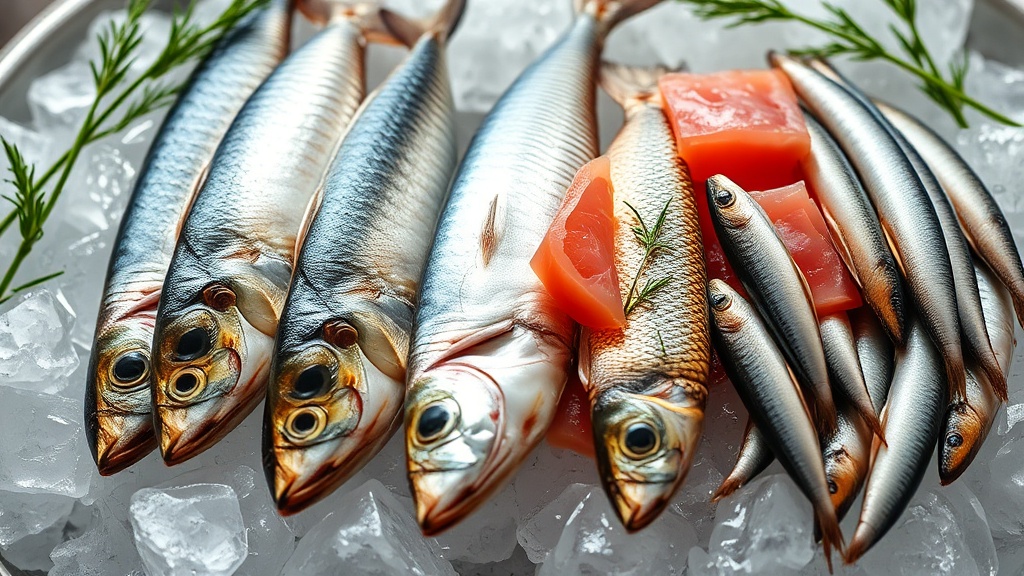
Few nutrients gather as much evidence for a longer, healthier life as omega-3 fish sources. These fatty acids, which the body cannot make on its own, are linked to a stronger heart, a protected brain and a longer life expectancy. Everything depends on the source, though: wild, small oily fish such as sardines, mackerel and anchovies are the best choices, while tuna and farmed salmon deserve more caution. Here is what the science shows.
In brief – Omega-3 fish are the small, oily fish, such as sardines, mackerel, anchovies and herring, that supply the EPA and DHA fatty acids linked to a longer, healthier life. Regularly eating them lowers triglycerides, reduces inflammation and supports brain and heart health, while limiting mercury exposure because these species sit low on the food chain. Tuna and farmed salmon are riskier choices: tuna concentrates mercury, and farmed salmon raises questions about parasite treatments, added dyes and a less favorable fat profile. Wild Alaskan salmon, especially sockeye, is a good alternative. Two to three weekly servings of small oily fish, fresh or canned, are usually enough to reach a protective omega-3 index around 8%.
Omega-3 Fish and Longevity: What the Science Shows
The omega-3s that matter most are EPA and DHA, found mainly in oily fish. They reduce inflammation, lower triglycerides and support the membranes of our cells, including those in the brain.
A blood marker called the omega-3 index measures their presence in red blood cells. Popularized notably by American researcher Dr. Rhonda Patrick, it has become a longevity benchmark: people with a high index show a lower mortality risk, with an estimated difference in life expectancy of several years (PubMed data). A level of roughly 8% is often cited as a protective target. Beyond the heart, these fatty acids feed the brain, where DHA is a major component of neurons, and may help slow cognitive decline with age.
The Best Omega-3 Fish: Small and Oily Wins
The golden rule is simple: favor small, wild, oily fish first. Rich in EPA and DHA, they combine several advantages:
- Sardines: the omega-3 champion, cheap and sustainable.
- Mackerel: very high in DHA, excellent grilled or filleted.
- Anchovies: a concentrated source of omega-3, great for seasoning a dish.
- Herring: another excellent small oily fish, often overlooked.
Their main advantage: being small and low on the food chain, they build up very little heavy metal. Gram for gram, a single tin of sardines already largely covers a week’s needs. They are also more sustainable than large fish, a virtuous circle for health and for the planet alike (PubMed data).
| Fish | Recommended | Why |
|---|---|---|
| Sardines | Yes | Rich in EPA and DHA, low in heavy metals, affordable |
| Mackerel | Yes | Very high in DHA |
| Anchovies | Yes | Concentrated source of omega-3 |
| Herring | Yes | Excellent oily fish, often overlooked |
| Wild Alaskan salmon (sockeye) | Yes | Well-managed wild fishery, few contaminants |
| Tuna | Limit | Top predator, concentrates mercury |
| Farmed salmon | Limit | Parasite treatments, added dyes, less favorable fat profile |
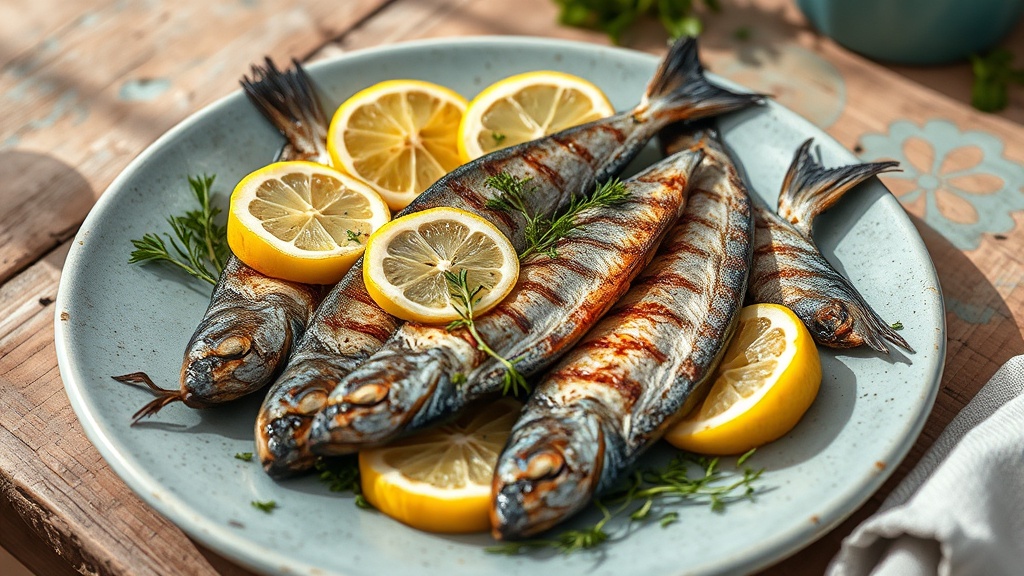
Tuna and Farmed Salmon: Two Omega-3 Fish to Limit
Not all fish are equal. Two deserve real caution:
- Tuna: a large predator at the top of the food chain, it concentrates mercury. Bluefin tuna and albacore carry the highest loads; it is best to limit consumption, especially for pregnant women and children.
- Farmed salmon: it raises genuine questions, between parasite treatments, added dyes and a fat profile that is less favorable than wild salmon. It is not dangerous with every bite, but it is not the best choice either.
If you enjoy salmon, choose wild Alaskan salmon instead, particularly sockeye (red salmon): wild-caught, from a well-managed fishery, it delivers excellent omega-3s and very few contaminants. Sockeye actually gets its color from a natural diet rich in astaxanthin, a powerful antioxidant, not from an added dye. This guidance echoes the official recommendations of the Harvard T.H. Chan School of Public Health’s Nutrition Source on fish consumption.
How to Get More Omega-3s Into Your Week
A few simple habits are enough to make the most of it, keeping in mind that consistency week after week matters more than a one-off serving:
- Two to three servings a week of small, wild oily fish, varying the species.
- Think canned: tinned sardines and mackerel are convenient, affordable and just as rich in omega-3 (PubMed data).
- Supplement if needed: if fish intake is low, a quality fish oil or algae oil (a plant-based source of EPA and DHA) can help.
- Do not rely only on plant sources: flaxseed and chia seeds provide ALA, which the body converts poorly into EPA and DHA.
Omega-3s fit naturally into a balanced diet, alongside quality protein, and rank among the major pillars of longevity. Their role in brain health also makes them an ally of mental well-being. To track your progress, estimate your biological age.
Frequently Asked Questions
Which fish are richest in omega-3?
Small oily fish: sardines, mackerel, anchovies and herring. They offer an excellent supply of EPA and DHA while staying low in heavy metals, since they sit low on the food chain. These are the best everyday omega-3 fish choices.
Why avoid tuna and farmed salmon?
Tuna, a large predator, concentrates mercury, especially bluefin tuna and albacore. Farmed salmon raises questions related to treatments, dyes and its fat profile. Choose small oily fish instead, and for salmon, go wild Alaskan.
What is the omega-3 index?
It is a blood marker that measures the share of EPA and DHA in red blood cells. A high index, around 8%, is associated with a lower mortality risk. It reflects how consistently you eat these fish over the long term.
Are omega-3 supplements useful?
If you eat little fish, a quality fish oil or algae oil can be useful. Plant sources like flaxseed provide ALA, which converts poorly. If you are on medication, ask a healthcare professional for advice.
Medical disclaimer. The information provided here is for informational purposes only and does not constitute medical advice. It does not replace a consultation. Ask a healthcare professional before changing your diet, taking dietary supplements or starting a new practice, especially if you have a medical condition, are pregnant or are under treatment. Dietary supplements do not replace a balanced diet or medical follow-up.