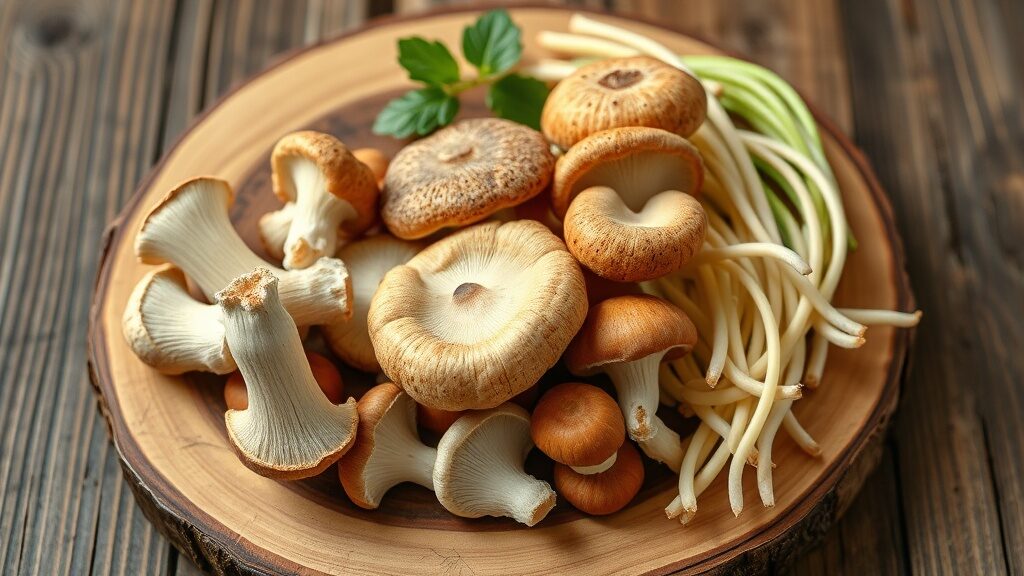
Japanese mushrooms, shiitake, maitake and enoki, hold a central place in Japan’s traditional cuisine, one of the countries with the highest healthy life expectancy in the world. Beyond their umami flavor, these mushrooms interest researchers for their polyamine content, molecules linked to a key cellular mechanism of longevity: autophagy. Here is what the science actually shows, without overstating the case.
In brief – Japanese mushrooms are edible fungi, including shiitake, maitake and enoki, traditionally used in Japan’s cuisine and rich in polyamines such as spermidine, compounds studied for their role in autophagy, the cell’s clearance process linked to healthy aging. In mice, oral spermidine intake extends lifespan and protects heart function. In humans, the Italian Bruneck cohort (829 participants) linked higher dietary spermidine to lower all cause mortality, comparable to about 5.7 fewer years of risk, and a Japanese cohort found a similar association with polyamine intake. Effects on cancer cells remain mostly preclinical. They are best viewed as one part of Japan’s broader traditional diet rather than a stand alone solution.
Japanese mushrooms: shiitake, maitake and enoki
Shiitake (Lentinula edodes), maitake (Grifola frondosa) and enoki (Flammulina velutipes) are three mushroom species traditionally used in East Asian cooking and folk medicine. They are rich in beta glucans, polysaccharides studied for their effects on the immune system, and in polyamines, notably spermidine, compounds naturally present in our cells and in many foods.
Polyamines and autophagy: the mechanism under study
Polyamines are a family of molecules that includes spermidine, putrescine and spermine. They play a role in:
- Autophagy: the cellular “cleanup” process that removes damaged components, considered one of the pillars of healthy aging.
- Regulation of cell growth: polyamines are involved in cell division and repair.
- Modulation of inflammation: some research suggests an effect on age related inflammatory markers.
This cellular cleanup is closely tied to the loss of proteostasis pillar of aging, the gradual decline in cells’ ability to fold, repair and recycle proteins. Mushrooms are among the best dietary sources of spermidine, alongside wheat germ, legumes and certain aged cheeses (Kalac and Krausova, Food Chemistry, 1997).
What the science says about polyamines and longevity
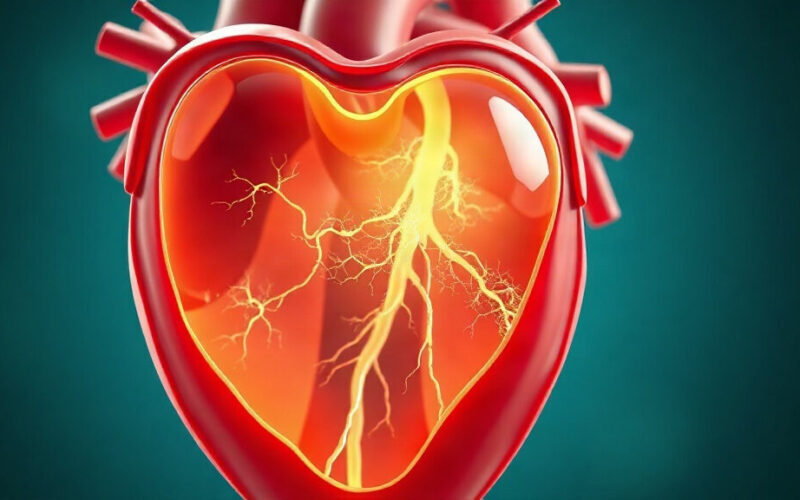
In mice, oral spermidine intake extends lifespan and protects heart function by stimulating autophagy in heart muscle (Eisenberg et al., Nature Medicine, 2016).
In humans, the Italian Bruneck cohort study (829 participants) found that higher dietary spermidine intake was associated with lower all cause mortality, with a difference comparable to about 5.7 fewer years of risk (Kiechl et al., American Journal of Clinical Nutrition, 2018). A Japanese cohort, the Takayama study, also reported that higher dietary polyamine intake was associated with lower all cause and cardiovascular disease mortality among Japanese adults (Takayama study, British Journal of Nutrition, 2023).
As for the effects on cancer cells sometimes attributed to Japanese mushrooms, caution is warranted: the effects of beta glucans have mostly been observed in the lab or in animals, not in solid human clinical trials. As the National Cancer Institute notes, no single food prevents or treats cancer on its own. It is the overall pattern of a varied, balanced diet that matters.
| Study or source | Population | Main finding |
|---|---|---|
| Eisenberg et al., 2016 | Mouse model | Oral spermidine extended lifespan and protected heart function |
| Bruneck cohort (Kiechl et al., 2018) | 829 adults, Italy | Higher dietary spermidine linked to lower all cause mortality |
| Takayama study, 2023 | Japanese adults | Higher polyamine intake linked to lower all cause and cardiovascular mortality |
| Beta glucans and cancer cells | Lab and animal models | Preliminary effects, not confirmed in human clinical trials |
One ingredient among many in Japan’s traditional diet
Shiitake, maitake and enoki are just one piece of the puzzle of washoku, Japan’s traditional diet recognized by UNESCO: plenty of vegetables, fish, fermented soy (miso, natto), moderate portions and few ultra processed foods. It is this overall pattern, not a single isolated food, that is associated with the longevity indicators observed in some regions of Japan, such as Okinawa.
Isolating one ingredient from this broader context can be misleading: eating shiitake while otherwise keeping an unbalanced diet will likely have only a marginal effect. It is the overall consistency of the diet, combined with daily physical activity and social ties, that appears to matter most in studies of longevity regions.
In practice: cooking them day to day
No supplements are needed: these mushrooms are easy to cook, pan fried, in miso broth or as a side to brown rice. This approach fits within a broader anti aging diet, and the autophagy they support is the same mechanism activated by intermittent fasting; the two approaches are complementary rather than exclusive. Fresh, they keep for a few days in the refrigerator. Dried, they rehydrate in about ten minutes in warm water and concentrate their umami aroma even further.
3 tips for eating them well
- Favor short cooking times: beta glucans and polyamines hold up well to heat, but overcooking alters the texture and some of the aromas.
- Vary the species: shiitake, maitake and enoki do not have exactly the same nutritional profile, alternating between them diversifies intake.
- Pair them with other spermidine sources: legumes, wheat germ, broccoli, for a cumulative effect on daily intake.
Frequently asked questions about Japanese mushrooms
Are Japanese mushrooms better than European mushrooms for longevity?
Not necessarily “better”: they are mainly the species most studied for their polyamine and beta glucan content. White button mushrooms, oyster mushrooms and porcini also contain them, in varying amounts.
Should you take spermidine supplements instead of eating mushrooms?
Nothing indicates that a supplement is more effective than a varied diet rich in natural spermidine sources. If in doubt, medical advice is recommended before any supplementation.
Do Japanese mushrooms really prevent cancer?
No, not on their own. The available data are mostly preclinical (lab, animal). No food replaces medical follow up or validated prevention guidelines.
What is a good serving size for Japanese mushrooms?
There is no officially established dose. A portion of 100 to 150 g (about 3.5 to 5.3 oz), a few times a week, as part of a varied diet, is a reasonable approach.
Medical disclaimer. This article is provided for informational purposes only and does not replace a medical consultation. It is not intended to diagnose, treat or prevent any disease. If in doubt, especially in the presence of cancer or ongoing treatment, ask a healthcare professional for advice.