
Memory loss after 60 rarely has a single cause. Normal brain aging, too little sleep, declining hearing, certain medications, a vitamin B12 deficiency or depression all contribute, often together. The Whitehall II cohort (7,959 adults followed for 25 years) and the two Lancet Commission reports on dementia (2020 and 2024) have measured the weight of each of these factors. Here is what separates an ordinary lapse from a warning sign, the eight causes documented by research, and the moment when a memory assessment becomes necessary.
In brief – Memory loss after 60 is a common symptom that, in most cases, reflects normal cognitive aging or a reversible cause, not dementia. Forgetting a name and recalling it later, hunting for your keys or needing more time to learn something new matches the slowdown described by Salthouse (2009). Repeating the same questions, getting lost in a familiar place or no longer managing your paperwork are warning signs. Modifiable causes carry real weight. Sleeping 6 hours or less at age 50 or 60 raises the risk of dementia by 22 to 37% (Sabia et al., 2021, n=7,959). Moderate hearing loss triples it (Lin et al., 2011). More than 180 doses of benzodiazepines are associated with an 84% higher risk of Alzheimer’s disease (Billioti de Gage et al., 2014). The 2024 Lancet Commission attributes 45% of dementia cases to 14 modifiable factors. See a doctor as soon as a relative is worried, as soon as the lapses interfere with daily life, or as soon as they progress over a few months.
Definition: normal memory loss, mild cognitive impairment or dementia
Three situations hide behind the same memory complaint, and only the second and third call for medical follow-up. Normal cognitive aging slows processing speed and word retrieval from our thirties onward. The phenomenon becomes more visible after 60, without preventing everyday life (Salthouse, 2009, PubMed). Mild cognitive impairment, defined by Petersen in 2004, combines a memory complaint felt by the person, confirmed by a relative, with a deficit that shows up on tests, while independence is preserved (Petersen, 2004, PubMed). Dementia begins when the lapses affect daily tasks: managing a budget, taking medications, finding your way around.
Moving from one stage to the next is far from automatic. A meta-analysis of 41 cohorts calculated that mild cognitive impairment progresses to dementia in 5 to 10% of cases per year. Most of the people concerned still do not have dementia after 10 years of follow-up (Mitchell and Shiri-Feshki, 2009, PubMed). Worldwide, the WHO counted 57 million people living with dementia in 2021, with nearly 10 million new cases each year. In France, national public health data show that Alzheimer’s disease and related dementias mainly affect people over 75, which makes a memory complaint at 60 all the more likely to be benign. The National Institute on Aging makes the same point: most age-related forgetfulness is not dementia.
| Situation | Normal aging | Warning sign |
|---|---|---|
| Names and words | The word comes back later, and so does the name | The word never comes back, vocabulary shrinks |
| Objects | Looking for your keys, then finding them | Putting the keys in the refrigerator with no memory of it |
| Conversations | Forgetting one detail of a discussion | Repeating the same question several times in an hour |
| Orientation | Hesitating on a new route | Getting lost in your own neighborhood |
| Daily tasks | Needing a shopping list | No longer able to handle bills or medications |
| Awareness of the problem | The person complains about it themselves | Relatives worry, the person plays it down |
Mechanism: what changes in the brain after 60
The hippocampus, the key structure for remembering recent events, loses about 1 to 2% of its volume per year in older adults without dementia (Erickson et al., 2011, PubMed). This slow atrophy explains the loss of so-called episodic memory: what was said at an appointment, where the car is parked. Semantic memory (knowledge) and procedural memory (learned movements) hold up far better, which explains why a retiree can forget a first name yet play the piano without difficulty.
Lars Nyberg and his team showed in 2012 that the older adults whose memory stays stable are those whose brain preserves its structure and activity. This phenomenon, called “brain maintenance,” matters more than compensation by other regions (Nyberg et al., 2012, PubMed). Preserving the conditions for this maintenance relies on four circuits that the causes described below disrupt:
- Overnight cleaning: during deep sleep, the glymphatic system clears misfolded proteins, including beta-amyloid. Short or fragmented sleep reduces this drainage.
- Blood flow: high blood pressure, diabetes and high LDL damage the small cerebral vessels and cause micro-lesions in the white matter.
- Transmission between neurons: anticholinergic drugs block acetylcholine, the neurotransmitter of learning; B12 deficiency disrupts the myelin sheath that insulates nerve fibers.
- Sensory and social stimulation: declining hearing or prolonged isolation reduce the input the brain has to process, and speed up its disengagement.
Forgetting therefore depends as much on communication between cells as on the neurons themselves. This mechanism connects to the longevity pillar “altered intercellular communication”.
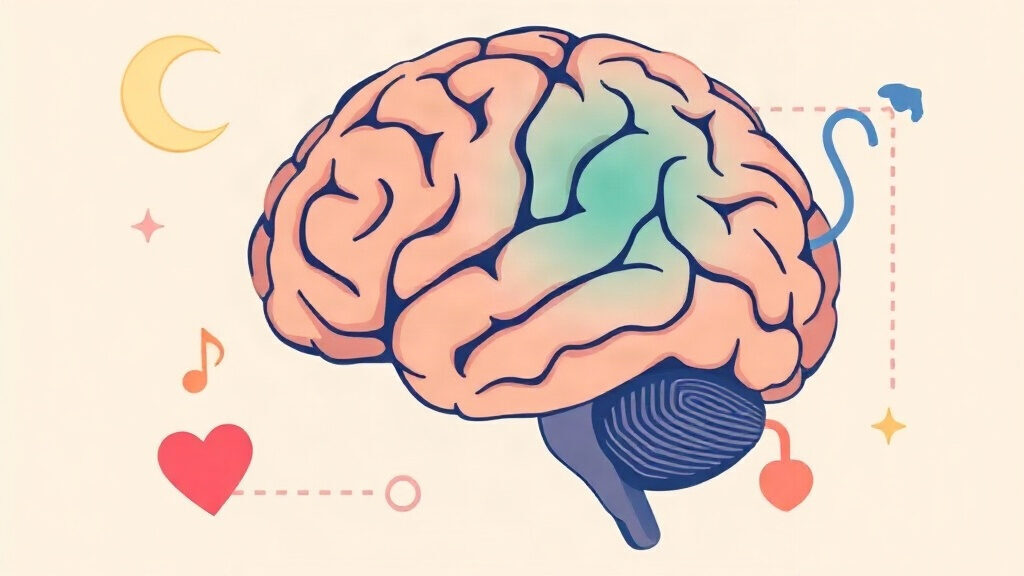
What the science says: 8 proven causes of memory loss
The Lancet Commission on dementia lists 14 modifiable risk factors that, together, would explain 45% of dementia cases worldwide (Livingston et al., 2024, PubMed). The 2020 report counted 12 factors for 40%; the two additions in 2024 are high LDL cholesterol and uncorrected vision loss (Livingston et al., 2020, PubMed). Eight of these causes directly concern memory after 60 and come with measured figures.
1. Sleeping 6 hours or less
In the Whitehall II cohort, sleeping 6 hours or less at age 50 raises the risk of dementia by 22% compared with 7 hours of sleep. At 60, the increase reaches 37% (Sabia et al., 2021, PubMed). Persistently short sleep at 50, 60 and 70 is associated with a 30% higher risk, independently of depression and cardiometabolic disease. Long before any dementia, sleep-related forgetfulness shows up as faulty overnight consolidation of the day’s memories.
2. Uncorrected hearing loss
Among 639 adults followed for 11.9 years in Baltimore, mild hearing loss multiplied the risk of dementia by 1.9, moderate loss by 3 and severe loss by 4.9. These figures are adjusted for age, diabetes and high blood pressure (Lin et al., 2011, PubMed). Every 10 decibels lost adds 27% to the risk. The brain devotes more resources to decoding speech, at the expense of memorizing, hence apparent forgetfulness before any neuronal deficit. Our feature on hearing and the brain details this link and the value of early hearing aids.
3. Benzodiazepines and related sleeping pills
A Quebec case-control study run with the French research institute Inserm compared 1,796 people with Alzheimer’s disease to 7,184 controls. Benzodiazepine use started at least 5 years before diagnosis was associated with a 51% higher risk. The risk climbs to 84% beyond 180 cumulative daily doses, and to 70% for long half-life molecules (Billioti de Gage et al., 2014, PubMed). An association is not proof of causation, but these drugs impair memory from the very first dose, and stopping them must be done with the doctor, never alone.
4. Anticholinergic medications
Some antidepressants, bladder antispasmodics, antihistamines and antipsychotics block acetylcholine. The study covered 58,769 British patients with dementia and 225,574 controls. In this population, heavy exposure (more than 1,095 daily doses over 10 years) was associated with a 49% higher risk. The authors attribute 10.3% of dementia cases to these treatments (Coupland et al., 2019, PubMed). Memory impairment under anticholinergics is often reversible once they are stopped, which makes them the first cause to check on a prescription list.
5. Vitamin B12 deficiency and high homocysteine
B12 deficiency primarily affects people over 60, because of reduced gastric absorption, acid-suppressing treatments and metformin. In the VITACOG trial, 168 people over 70 with mild cognitive impairment received folic acid, B12 and B6, or a placebo, for 2 years. The rate of brain atrophy slowed by 30% (0.76% versus 1.08% per year). The slowdown reached 53% in those whose homocysteine exceeded 13 µmol/L (Smith et al., 2010, PubMed). A B12 blood test is part of the standard work-up for any memory complaint; see our guide to vitamin B12 deficiency.
6. Alcohol beyond the guidelines
Among 31.6 million adults hospitalized in France between 2008 and 2013, alcohol use disorders were the strongest modifiable risk factor for dementia. The risk was multiplied by 3.3 in women and men alike (Schwarzinger et al., 2018, PubMed). Of the 57,353 cases of dementia that occurred before age 65, 57% were alcohol-related. Alcohol-related memory damage is partly reversible after withdrawal, especially when it comes with a vitamin B1 deficiency.
7. High blood pressure, diabetes and high LDL
The 2024 Lancet Commission retains high blood pressure, diabetes, obesity and, since 2024, high midlife LDL cholesterol as dementia risk factors. These diseases damage the brain’s arterioles and produce white matter lesions visible on MRI, which slow processing speed before memory declines. The NHS notes that vascular damage often coexists with the lesions of Alzheimer’s disease in older patients.
8. Depression and social isolation
Depression after 60 often presents as memory loss, slowness and trouble concentrating, with no expressed sadness. Tests then show an attention deficit rather than true forgetting, and treating the depression improves the scores. The Lancet Commission ranks depression and social isolation among the 14 modifiable factors, with a weight comparable to that of physical inactivity. Memory problems linked to depression are among the most reversible.
| Cause | Study | Measured effect | Reversible? |
|---|---|---|---|
| Sleep of 6 hours or less | Sabia 2021, n=7,959 | Dementia risk +22 to 37% | Yes, if sleep gets longer |
| Hearing loss | Lin 2011, n=639 | Risk x1.9 to x4.9 depending on severity | Partially, with hearing aids |
| Benzodiazepines | Billioti de Gage 2014, n=8,980 | Alzheimer’s risk +51 to +84% | Yes, with gradual withdrawal |
| Anticholinergics | Coupland 2019, n=284,343 | Risk +49%, 10.3% of cases attributable | Yes, once stopped |
| B12 deficiency / homocysteine | Smith 2010, n=168 | Brain atrophy slowed by 30% with B vitamins | Yes, if corrected early |
| Alcohol | Schwarzinger 2018, n=31.6 million | Dementia risk x3.3 | Partially, after withdrawal |
| High blood pressure, diabetes, LDL | Livingston 2024 | Among the 14 factors explaining 45% of dementia cases | Slowing, no going back |
| Depression, isolation | Livingston 2024 | Recognized modifiable factors | Yes, with treatment and social ties |
In practice: when to see a doctor for memory loss
See a doctor for memory loss as soon as the lapses interfere with daily life, as soon as they get worse over a few months, or as soon as a relative is worried. These three criteria matter more than age. The primary care doctor is the first step. They first look for reversible causes: medications, B12, thyroid, depression, hearing, sleep. They then run a quick screening test such as the MMSE or the MoCA. A low score, or a complaint that persists despite a normal work-up, justifies a referral to a hospital memory clinic, which has full neuropsychological testing and brain imaging.
A delay of a few weeks does not change the prognosis of a neurodegenerative disease, but every month spent on an unsuitable medication or with an uncorrected deficiency sustains avoidable forgetfulness. The validated prevention strategies, from blood pressure control to physical activity, are detailed in our article on preventing Alzheimer’s disease.
| Sign observed | Recommended timeframe | Whom to see |
|---|---|---|
| Occasional lapses, word on the tip of the tongue, no impact | No dedicated appointment, mention it at the annual check-up | Primary care doctor |
| Lapses that worry the person, for less than 6 months | Within the month | Primary care doctor, blood tests and prescription review |
| Repeated questions, objects put in the wrong place, worried relative | Within 2 weeks | Primary care doctor, then memory clinic |
| Disorientation in a familiar place, trouble with paperwork or medications | Without delay | Memory clinic (neurologist or geriatrician) |
| Sudden onset over a few hours, confusion, speech difficulty | Immediate emergency (call 911 in the US, 999 in the UK, 112 in Europe) | Emergency department: suspected stroke |
Protocol: 7 validated steps to slow memory loss
The Finnish FINGER trial demonstrated that a combined intervention over 2 years improves overall cognition in 1,260 at-risk people aged 60 to 77. The difference compared with standard health advice was significant (Ngandu et al., 2015, PubMed). The following steps take up its four components, supplemented by the data on sleep, hearing and medications.
- Have your prescriptions reviewed: ask the doctor or pharmacist to identify benzodiazepines, sleeping pills and anticholinergics, then to organize a gradual withdrawal when possible.
- Test B12, folate, TSH and blood sugar once a year after 60, and correct any deficiency before attributing forgetfulness to a neurological disease.
- Walk briskly for 40 minutes, 3 times a week: in 120 older adults, one year of aerobic walking increased hippocampal volume by 2%, whereas it shrank in the control group (Erickson et al., 2011).
- Sleep 7 hours and treat sleep apnea: the dementia risk linked to short sleep is set as early as age 50 (Sabia et al., 2021).
- Have your hearing tested every 2 years and get hearing aids from moderate loss onward, since the risk rises by 27% for every 10 decibels (Lin et al., 2011).
- Train reasoning and speed: in the ACTIVE trial (2,832 participants, average age 73.6), 10 training sessions kept their effects on reasoning and processing speed 10 years later. The effect on memory itself did not persist (Rebok et al., 2014, PubMed). Learning a language, an instrument or a strategy game beats repeating lists.
- Keep blood pressure under 140/90 mmHg and alcohol under 10 drinks a week, the two benchmarks used by the Lancet Commission and by France’s public health agency.
No dietary supplement has shown an effect on memory in a person without a deficiency: the B vitamins in the VITACOG trial only slowed atrophy in participants whose homocysteine was high. The most cost-effective lever remains the combination of steps, not an isolated product.
Frequently asked questions about memory loss after 60
What is the difference between normal memory loss and early Alzheimer’s?
Normal memory loss affects retrieval: the name or the word comes back later, and the person stays aware of their lapses. In early Alzheimer’s disease, recent information is not recorded: the question is asked again, yesterday’s event has vanished, and it is the relatives who raise the alarm. Mild cognitive impairment progresses to dementia in only 5 to 10% of cases per year (Mitchell and Shiri-Feshki, 2009).
Which medications can cause memory loss in older adults?
Benzodiazepines and related sleeping pills, anticholinergic drugs (some antidepressants, bladder antispasmodics, antihistamines, antipsychotics) and, at high doses, some antiepileptics. Beyond 1,095 daily doses of anticholinergics over 10 years, the risk of dementia rises by 49% (Coupland et al., 2019). This memory loss often recedes after a gradual withdrawal supervised by the doctor.
Why does memory loss so often come with hearing loss?
The brain mobilizes its resources to decode poorly heard speech, at the expense of encoding memories, and the social isolation that follows reduces cognitive stimulation. Among 639 adults followed for 11.9 years, moderate hearing loss triples the risk of dementia (Lin et al., 2011). The 2024 Lancet Commission ranks uncorrected hearing loss among the most important risk factors.
What does a memory loss assessment involve?
The primary care doctor starts with an interview with the person and a relative, a prescription review, blood tests (B12, folate, TSH, blood sugar) and a 10 to 15 minute screening test such as the MoCA. If in doubt, the memory clinic offers 2 to 3 hours of neuropsychological testing, a brain MRI and sometimes a lumbar puncture or a PET scan to refine the diagnosis.
Can exercise slow memory loss after 60?
Yes, for regular aerobic activity. In a randomized trial of 120 older adults, one year of brisk walking 3 times a week increased hippocampal volume by 2%, the equivalent of one to two years of aging regained, with improved spatial memory (Erickson et al., 2011). The effect depends on consistency and adds to the other steps, including sleep and blood pressure control.
Medical disclaimer. The information on this page is provided for informational purposes only and does not constitute medical advice. It does not replace a consultation. Never change or stop a treatment (sleeping pill, anxiolytic, antidepressant or other) without the advice of the doctor who prescribed it: abrupt withdrawal can be dangerous. Any memory loss that interferes with daily life, gets worse or worries those around you warrants a medical consultation. Dietary supplements do not replace a balanced diet or medical follow-up.