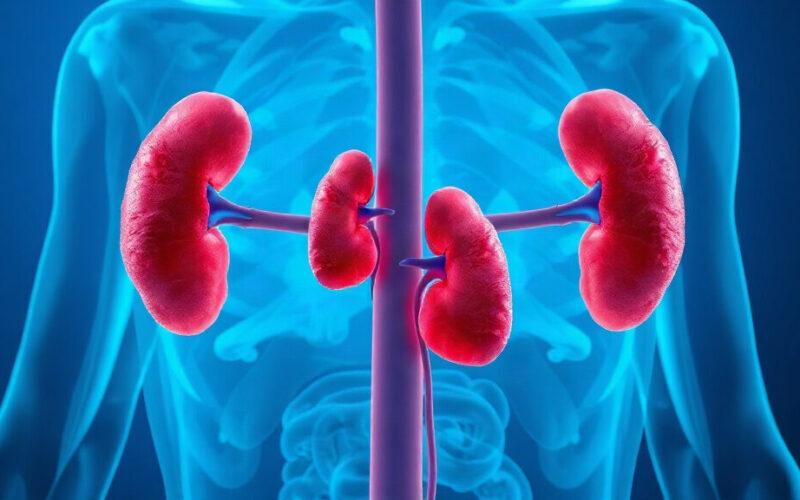
Chronic inflammation, or inflammaging, is now considered one of the most universal drivers of aging. Unlike acute inflammation, the kind that reddens a wound and fades within days, this is a low grade fire that smolders silently, year after year, without obvious symptoms, slowly wearing down every tissue in the body.
The name comes from blending inflammation and aging: inflammaging. Over the past twenty years, research has elevated it to a major risk factor for mortality and for most age related diseases. The good news is that this inflammaging is largely modifiable through lifestyle.
In brief – Chronic inflammation, or inflammaging, is a low grade, systemic, persistent inflammatory state that builds up gradually with age and is measured through blood markers such as hs-CRP, IL-6 and TNF-alpha. It is not a disease itself but a shared soil for cardiovascular disease, type 2 diabetes, cancer, neurodegenerative disease, osteoporosis and sarcopenia. It stems from cellular senescence, chronically active NF-kB and NLRP3 pathways, visceral fat, gut permeability and oxidative stress. Healthy centenarians consistently show markedly lower inflammaging than the general population their age, and diet, exercise, sleep, stress management, gut health and intermittent fasting are the seven levers with the strongest evidence for lowering it.
What is chronic inflammation (inflammaging)?
Chronic inflammation refers to a low intensity, systemic and persistent inflammatory state that develops gradually with age. Where acute inflammation is a targeted, short lived response to an injury, inflammaging is diffuse, silent and constant. It is tracked through a modest but sustained rise in blood markers such as high sensitivity C-reactive protein (hs-CRP), interleukin-6 (IL-6) and TNF-alpha.
It is not a disease on its own but a shared soil. Inflammaging precedes and fuels most chronic conditions: cardiovascular disease, type 2 diabetes, cancer, neurodegenerative disease, osteoporosis and sarcopenia all share a common inflammatory component. Two people of the same chronological age can show very different levels of inflammaging, and it is this level, more than the number on a birth certificate, that predicts their health trajectory.
The mechanisms behind inflammaging
Several sources converge to sustain this low grade inflammation. Understanding these mechanisms points directly to the levers for acting on them.
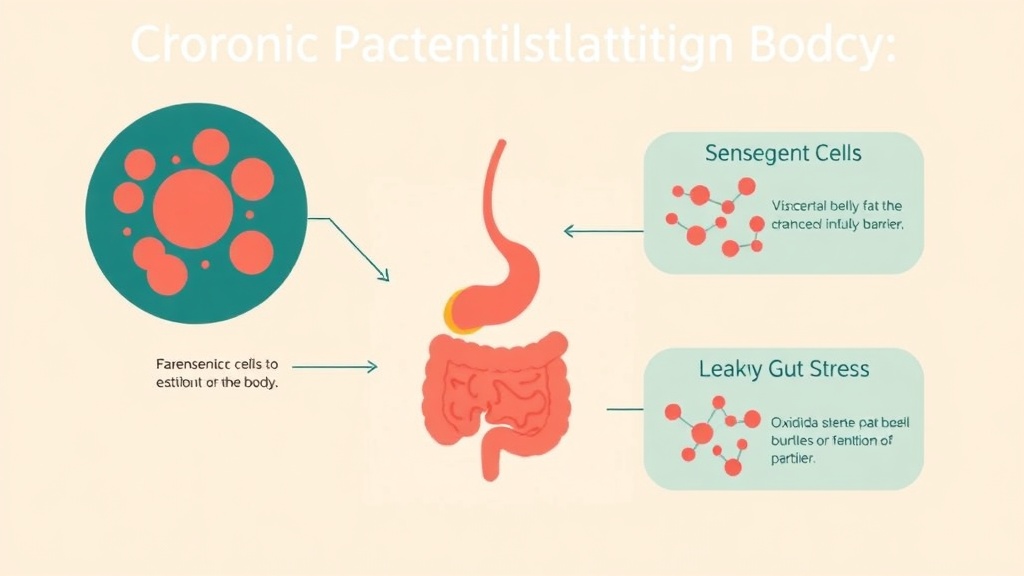
- Cellular senescence. With age, some cells stop dividing without dying off: these are senescent cells. They secrete a cocktail of pro-inflammatory molecules called the SASP (senescence associated secretory phenotype), a genuine inflammation pump.
- Activation of NF-kB and the NLRP3 inflammasome. These molecular switches of innate immunity stay chronically turned on with age, continuously producing inflammatory cytokines.
- Visceral fat. Abdominal fat tissue is not inert: it actively manufactures inflammatory molecules. The larger the waistline, the more inflammaging is sustained.
- Gut permeability. A weakened intestinal barrier lets bacterial fragments (LPS) leak into the bloodstream, triggering low grade systemic inflammation.
- Oxidative stress and cellular debris. The buildup of damaged molecules keeps activating immune sensors, which treat them as threats.
What the science says
The concept of inflammaging was formalized by Italian gerontologist Claudio Franceschi in the early 2000s, then reinforced by thousands of publications since. The founding reference, Franceschi and Campisi, Journal of Gerontology 2014, establishes chronic low grade inflammation as a major risk factor for morbidity and mortality in older adults.
A landmark review, Furman et al., Nature Medicine 2019, goes further: it shows that chronic systemic inflammation, sustained by social, environmental and behavioral factors, is implicated in the leading causes of disability and death worldwide, from cardiovascular disease to neurodegenerative disorders.
Dr. Belghiti’s insight, What makes inflammaging clinically decisive is that it is measurable and actionable. An hs-CRP persistently above 3 mg/L, with no infection present, is a warning sign. In practice, I treat inflammaging as the common denominator of frailty: lowering it acts on the heart, the brain and the muscles at once. The lever is never a single drug, but the accumulation of daily micro-decisions.
The World Health Organization notes that this kind of low grade inflammation, sustained over years, damages stem cells and speeds up the aging process across organ systems.
Chronic inflammation and longevity
Inflammaging sits at the center of the mechanisms of biological aging. It is not an isolated phenomenon: it intertwines with the major pathways of longevity. The senescent cells that fuel this inflammation disturb the balance between mTOR (growth) and AMPK (repair), two key metabolic regulators. At the same time, inflammation erodes telomeres and places continuous demand on the immune system, a process called immunosenescence.
This is why healthy centenarians share a notable trait: a level of chronic inflammation clearly lower than the general population their age. In them, inflammation stays better contained, suggesting that controlling inflammaging does not just add years to life but adds life to years, more healthspan, the stretch of life lived in good health.
| Marker | What it reflects | Threshold to watch |
|---|---|---|
| hs-CRP (high sensitivity C-reactive protein) | General, liver produced inflammatory signal | Persistently above 3 mg/L, with no infection |
| IL-6 (interleukin-6) | Cytokine driving the SASP and the acute phase response | No universal cutoff; trend over time matters most |
| TNF-alpha | Cytokine linked to insulin resistance and vascular damage | No universal cutoff; interpreted alongside hs-CRP and IL-6 |
| Fibrinogen | Clotting factor that rises with sustained inflammation | Used as a secondary marker, not a stand alone test |
These markers should always be read with a doctor, since infections, injuries and some medications can temporarily raise them without reflecting true inflammaging.
Inflammaging: what it changes in practice
Lowering this inflammation is not a feat: most of the levers are accessible day to day and reinforce one another. Diet is the cornerstone. Omega-3s from oily fish are among the best documented anti-inflammatory molecules, rebalancing the ratio between pro- and anti-inflammatory fatty acids.
The gut microbiome also plays a leading role: a diverse gut flora strengthens the intestinal barrier and limits the passage of inflammatory molecules into the bloodstream. Finally, psychological stress is a direct fuel for inflammaging, which is why practices such as heart coherence breathing help lower cortisol and, with it, inflammaging.
7 proven levers to switch off inflammaging
Here are the strategies with the best documented anti-inflammatory effect. None works alone; it is their combination that shifts the underlying terrain.
- Build an anti-inflammatory plate. Prioritize colorful vegetables, oily fish, olive oil, legumes and spices such as turmeric. Cut back on fast sugars and ultra-processed foods, which sustain inflammaging.
- Move regularly. Moderate exercise triggers a lasting anti-inflammatory response through myokines secreted by muscle. Sitting too much, by contrast, worsens inflammaging.
- Get enough sleep. A single shortened night already raises inflammatory markers. Deep sleep is an essential window for immune repair.
- Reduce visceral fat. Losing waist circumference directly lowers the output of inflammatory molecules from abdominal fat tissue.
- Manage stress actively. Heart coherence breathing, meditation, walking in nature: these practices lower cortisol, an amplifier of inflammaging.
- Take care of the gut microbiome. Fiber, fermented foods and plant diversity strengthen the intestinal barrier and limit systemic inflammation.
- Explore intermittent fasting. By stimulating autophagy, fasting and the fasting mimicking diet help clear pro-inflammatory cells and debris.
Key takeaway, Chronic inflammation is not an inevitable part of aging but a modifiable terrain. An anti-inflammatory plate, regular physical activity, restorative sleep and good stress management are, combined, enough to lower inflammaging and protect your longevity.
Frequently asked questions
How can you measure your level of chronic inflammation?
The most accessible marker is high sensitivity C-reactive protein (hs-CRP), measured with a simple blood test. A level persistently above 3 mg/L, with no infection present, points to low grade inflammation. Interleukin-6 (IL-6) and fibrinogen sometimes round out the picture. Always interpret these values with your doctor.
Is inflammaging reversible?
Largely, yes. Unlike chronological age, chronic inflammation responds to lifestyle. Dietary changes, physical activity and better sleep lower inflammatory markers within a few weeks. Aging itself is not undone, but its pace can slow significantly.
Which foods make chronic inflammation worse?
Fast sugars, sugary drinks, processed meats, fried foods and above all ultra-processed foods rich in additives sustain inflammaging. A Mediterranean style diet, rich in plants and omega-3s, has a proven anti-inflammatory effect in contrast.
Does stress really cause inflammation?
Yes. Chronic stress raises cortisol and activates the body’s inflammatory pathways. This psychologically driven inflammation is just as real as the kind linked to diet or a sedentary lifestyle, and it eases with techniques that regulate the nervous system.
At what age should you start worrying about inflammaging?
As early as possible. Chronic inflammation sets in quietly from the forties onward, sometimes earlier with abdominal weight gain or an unfavorable lifestyle. Acting as prevention is far more effective than trying to correct an inflammatory terrain that is already established.
Medical disclaimer. The information provided here is for informational purposes only and does not constitute medical advice. It does not replace a consultation. Ask a healthcare professional before changing your diet, taking dietary supplements or starting a new practice, especially if you have a medical condition, are pregnant or are under treatment. Dietary supplements do not replace a balanced diet or medical follow-up.