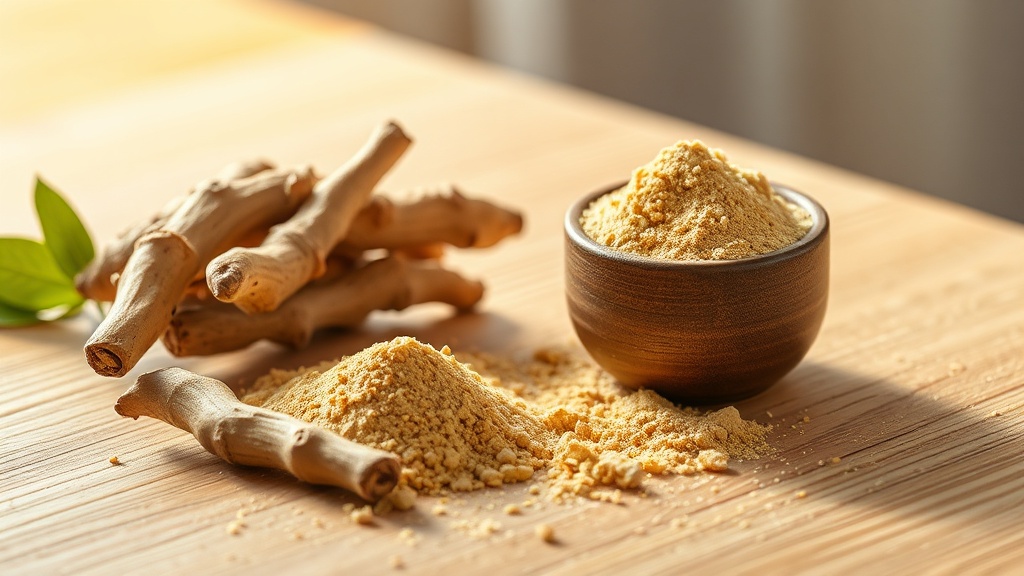
Ashwagandha (Withania somnifera) is an adaptogenic plant used for centuries in Ayurvedic medicine, now studied for its effects on stress, sleep and muscle recovery. Sold as powder, capsules or standardized extracts, it is among the most searched dietary supplements in France in 2026, prompting the French food safety agency Anses to issue an official opinion on its precautions for use. What do clinical trials actually show about ashwagandha, at what dose, and who should avoid it?
In brief – Ashwagandha is an adaptogenic plant from Ayurvedic medicine whose root extract has shown, in several randomized trials, a reduction in salivary cortisol and perceived stress scores. Available studies mostly involve standardized extracts (KSM-66, Sensoril) at doses of 300 to 600 mg per day, over 8 to 12 weeks. The best-documented benefits concern stress, mild to moderate anxiety, sleep quality and, in athletes, muscle strength. Data on testosterone and male fertility remain preliminary. Anses advises against ashwagandha for pregnant or breastfeeding women, minors, and people with thyroid, liver or heart conditions.
What Is Ashwagandha?
Ashwagandha is a shrub of the Solanaceae family, native to India, North Africa and the Middle East, whose botanical name is Withania somnifera. Its dried root forms the base of most dietary supplements sold in pharmacies and online. In Sanskrit, the word literally means “smell of horse,” a nod both to its characteristic odor and to the vigor it is said to confer.
Classified among the adaptogenic plants, it is traditionally used in Ayurveda as a “rasayana,” a general tonic meant to support the body’s resistance to physical and psychological stress. This traditional reputation has, since the early 2010s, driven a series of randomized clinical trials aiming to objectively assess its real effects in humans.
Composition and Mechanism of Action
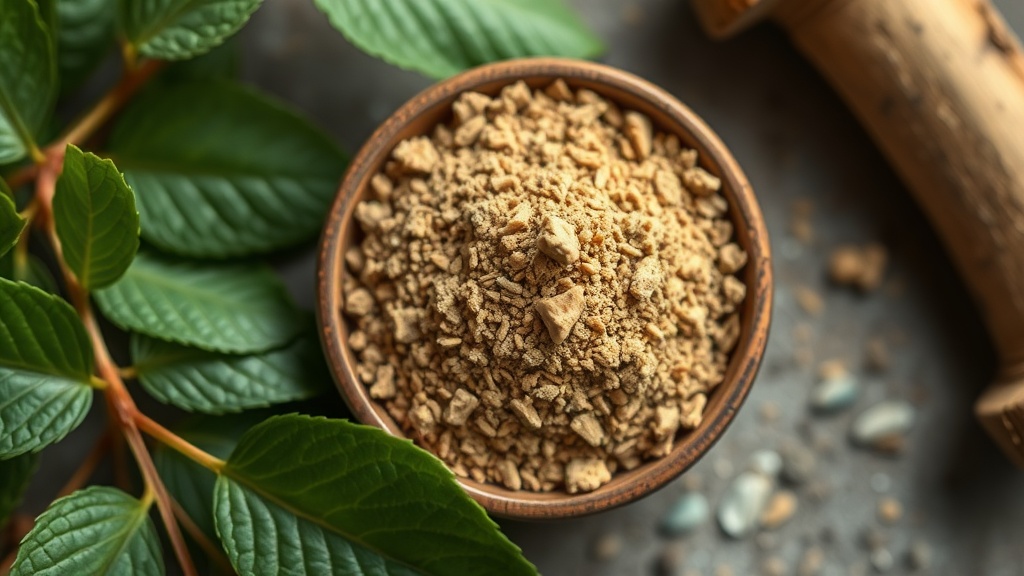
The root of this plant contains a family of molecules called withanolides, steroidal lactones considered its main active compounds. Their concentration varies widely depending on extraction, which is why clinical trials almost always use extracts standardized to a precise percentage of withanolides rather than raw powder.
- Withanolides: the main compounds, whose content is correlated with the activity measured in clinical trials.
- Sitoindosides: glycosides associated with anti-inflammatory properties observed in the laboratory.
- Alkaloids (withanine, somniferine): present in smaller amounts, still poorly studied in humans.
The best-documented mechanism involves the hypothalamic-pituitary-adrenal axis: ashwagandha appears to modulate cortisol release in response to stress, reflected in the drops in salivary and blood cortisol measured in several controlled trials. Preclinical data also suggest an action on GABA receptors, which could explain the observed effect on sleep and anxiety, although this mechanism is not yet fully understood in humans.
What the Science Says About Ashwagandha
The best-replicated effect of ashwagandha concerns stress. In a randomized double-blind trial of 64 chronically stressed adults, 300 mg of extract taken twice daily for 60 days significantly reduced serum cortisol compared with placebo (Chandrasekhar et al., 2012).
For sleep, a controlled trial in 60 participants found improved sleep onset latency and sleep efficiency after 10 weeks at 300 mg twice daily, with a parallel effect on anxiety (Langade et al., 2019). A meta-analysis of 12 randomized trials and more than a thousand participants confirmed a reduction in stress and anxiety compared with placebo, while noting that the overall quality of evidence was low to moderate (Akhgarjand et al., 2022).
In athletes, an 8 week controlled trial in 57 men doing resistance training measured a bench press strength gain of 46 kg (about 101 lb) in the ashwagandha group versus 26.4 kg (about 58 lb) under placebo, along with a larger increase in muscle mass (Wankhede et al., 2015). For male fertility, a small pilot study in 46 men with low sperm counts reported a 167% increase in sperm count after 90 days at 675 mg per day (Ambiye et al., 2013). This result is promising, but it comes from a small pilot study that still needs confirmation before it can be generalized.
These trials share common limitations: sample sizes usually under 100 participants, durations rarely exceeding three months, and wide variation in the extracts tested. A statistical association repeated across several independent trials remains an association, not proof of a universal mechanism valid for every formulation sold commercially.
In Practice: Who Should Consider Ashwagandha?
This adaptogenic plant is primarily suited to healthy adults looking to better manage moderate chronic stress, as a complement (never a replacement) to good sleep hygiene and regular physical activity. Our Mental Wellbeing pillar covers other non-drug approaches to everyday stress management.
For recovery and sleep, it can complement approaches already covered on UltraSante, such as cardiac coherence breathing or a magnesium supplement suited to sleep. Unlike melatonin, which acts directly on the circadian clock, ashwagandha targets the stress response further upstream of falling asleep: the two mechanisms are not interchangeable.
| Form | Withanolide content | Typical trial dose | Best-documented effect |
|---|---|---|---|
| KSM-66 extract | ~5% | 300 mg x2/day | Stress, cortisol, sleep |
| Sensoril extract | ~10% | 125-250 mg/day | Anxiety, relaxation |
| Raw root powder | 1.5-3% (variable) | 3-6 g/day (traditional use) | Less standardized, less predictable effect |
Ashwagandha Dosage and Usage Tips
Positive clinical trials almost all use a standardized extract, taken for at least 8 to 12 weeks before assessing its effect: ashwagandha is not a fast-acting anxiolytic. A few practical points emerge from the available literature:
- Choose a withanolide-standardized extract (KSM-66 or Sensoril) rather than raw powder, whose actual dosage is less certain.
- Stick to the doses tested in clinical trials, between 300 mg twice daily and 600 mg per day, without exceeding the manufacturer’s guidance.
- Reassess whether to continue after 8 to 12 weeks: no solid data support continuous use beyond three months.
- Avoid combining it with sedatives, hypnotics or thyroid medication without prior medical advice.
In France, the food safety agency Anses issued a formal opinion in April 2024, based on reports of several adverse events, advising against ashwagandha for pregnant or breastfeeding women, minors, and people with thyroid, liver or heart conditions, or those on sedative treatment. The US National Center for Complementary and Integrative Health lists similar precautions for these groups. A case of acute liver injury after two weeks of use has also been documented in the medical literature, with full recovery after stopping supplementation (Toth et al., 2023).
Frequently Asked Questions About Ashwagandha
How long does it take to feel the effects of ashwagandha?
Clinical trials generally measure an effect on stress and sleep after 4 to 8 weeks of daily use, with a clearer benefit at 8 to 12 weeks. Ashwagandha does not act like an as-needed anxiolytic: the studies tested regular, standardized dosing, not occasional use during acute stress.
What is the difference between ashwagandha and melatonin?
Melatonin is a hormone that synchronizes the circadian clock and helps with falling asleep in the short term. Ashwagandha is an adaptogenic plant that mainly acts on the stress response and cortisol, with an indirect effect on sleep. The two do not target the same mechanism and, depending on the case, can be used at different times of day.
Is ashwagandha well tolerated by the thyroid?
Not always. Anses has flagged thyroid-related adverse effects reported by some users, particularly in people with an existing thyroid condition. Anyone being treated for a thyroid, liver or heart condition should seek medical advice before taking it, and avoid self-medicating with this plant.
Can ashwagandha be taken during pregnancy?
No. Anses explicitly advises against ashwagandha for pregnant and breastfeeding women, due to its traditional use as an abortifacient and a lack of safety data for this period. This precaution also applies to children and teenagers under 18.
What dose of ashwagandha should you choose?
Positive clinical trials most often use between 300 mg twice daily and 600 mg per day of a withanolide-standardized extract, such as KSM-66 or Sensoril. Exceeding these doses has not shown any additional proven benefit and increases the risk of digestive side effects.
Medical disclaimer. The information provided here is for informational purposes only and does not constitute medical advice. It does not replace a consultation. Ask a healthcare professional before changing your diet, taking dietary supplements or starting a new practice, especially if you have a medical condition, are pregnant or are under treatment. Dietary supplements do not replace a balanced diet or medical follow-up.