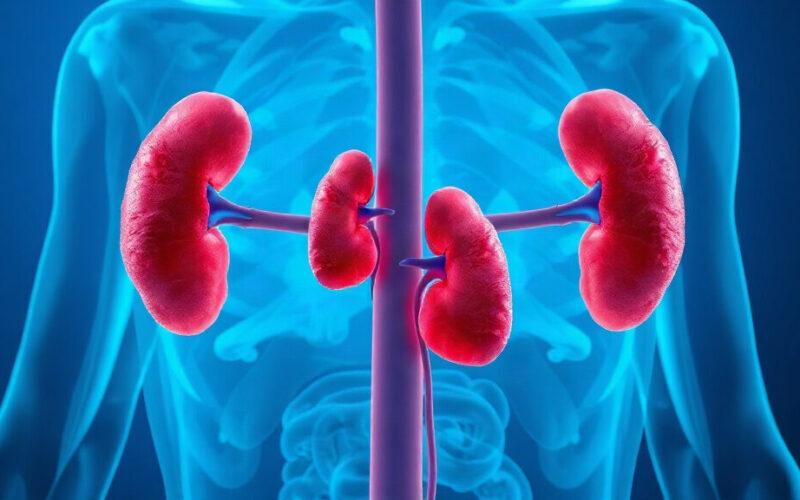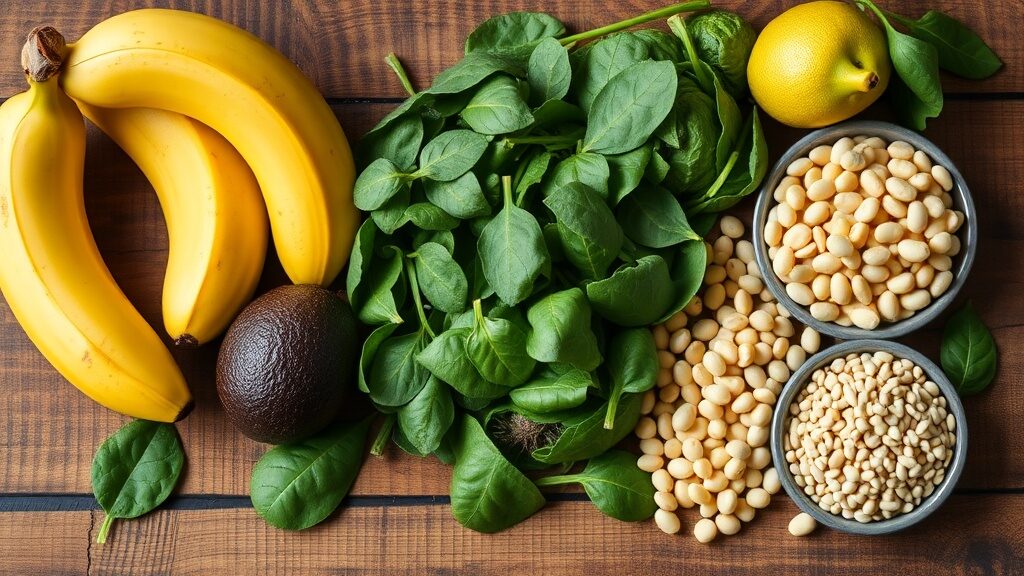
Potassium is an essential mineral for muscle contraction, fluid balance and blood pressure regulation, found in fruits, vegetables and legumes. Here is a review of its science-backed benefits, the daily intake recommended by the World Health Organization, and the precautions to know, particularly for people with kidney disease or on blood-pressure medication.
In brief – Potassium is an electrolyte mineral that regulates blood pressure, acid-base balance and muscle and heart contraction. A meta-analysis of more than 128,000 participants links higher intake to a 24% lower stroke risk (Aburto et al. 2013, BMJ). The World Health Organization recommends at least 3,510 mg a day for adults, a threshold that Western diets rarely reach: legumes, leafy greens, avocado and banana are good sources. In people with healthy kidneys, dietary intake carries no documented overdose risk. Supplements or salt substitutes based on potassium chloride, however, expose people with kidney disease, diabetes, or those taking ACE inhibitors, ARBs or potassium-sparing diuretics to a risk of hyperkalemia, which is why medical advice is needed before any supplementation.
Definition: what is potassium?
This mineral (K+) is the third most abundant in the human body after calcium and phosphorus, and the main cation found inside cells. About 98% of it sits inside cells, while sodium dominates outside them; this electrochemical gradient, maintained by the Na+/K+-ATPase pump, governs nerve signal transmission and muscle contraction, including in the heart.
A 70 kg (154 lb) adult stores roughly 140 grams (about 5 ounces) of this electrolyte, mostly in skeletal muscle. Unlike sodium, which is abundant to excess in processed Western diets, intake of this mineral often falls short: its best sources, fruits, vegetables and legumes, are underrepresented in diets heavy in ultra-processed foods.
Mechanism: what does this mineral do in the body?
Potassium acts at several physiological levels, all tied to its ability to cross cell membranes through dedicated ion channels.
- Muscle and heart contraction: it repolarizes the membrane of muscle cells after each contraction; an imbalance disrupts heart rhythm and can trigger arrhythmias.
- Blood pressure regulation: it promotes renal excretion of sodium and relaxes blood vessel walls.
- Acid-base balance: it helps buffer blood pH alongside bicarbonates.
- Nerve transmission: it maintains the resting potential of neurons, essential for nerve signal propagation.
- Glucose metabolism: it plays a role in insulin secretion and glycogen storage in muscle and liver.
What the science says about potassium
A meta-analysis of 22 randomized trials and 11 cohort studies, totaling more than 128,000 participants, links higher intake to a 3.49 mmHg drop in systolic blood pressure among people with hypertension and a 24% lower stroke risk, with no demonstrated adverse effect on kidney function in healthy subjects (Aburto et al. 2013).
A second meta-analysis of 247,510 participants followed for 5 to 19 years confirms this association: each 1.64 g increase in daily intake is accompanied by a 21% lower stroke risk (D’Elia et al. 2011).
The sodium-to-potassium ratio matters more than either mineral alone: among 12,267 US adults followed for fifteen years, a high ratio raised all-cause mortality risk 1.46-fold compared with the lowest quartile (Yang et al. 2011). These associations do not prove strict causation for any given individual, but they align with the known physiological mechanisms of blood pressure regulation.
In practice: recommended intake and food sources
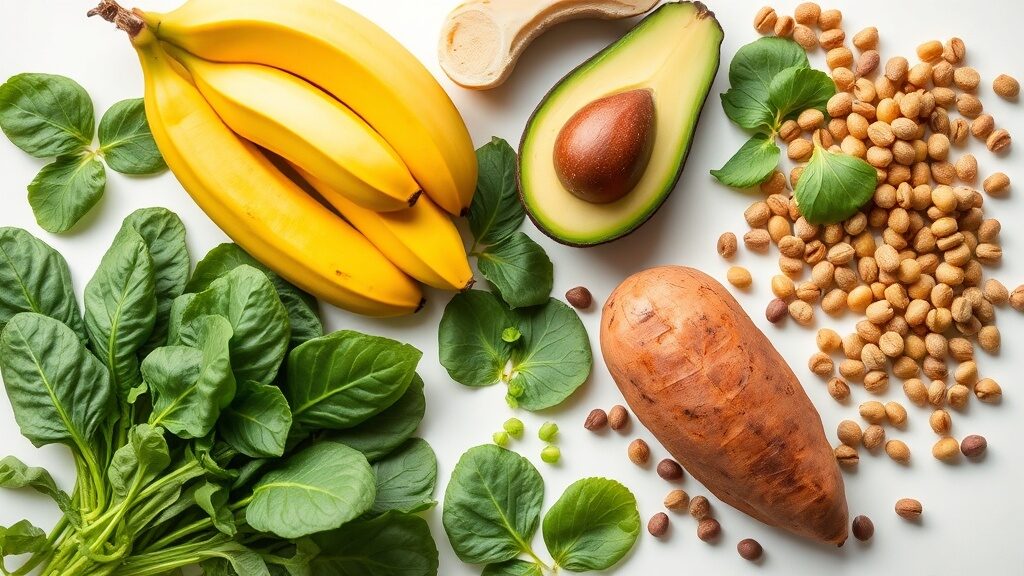
The World Health Organization sets the target at least 3,510 mg of potassium a day for adults, a benchmark detailed in its 2013 guidance. In France, the food safety agency Anses sets a slightly lower adequate intake, generally between 2,500 and 3,500 mg depending on age and sex. Most adults fall short of these targets, mainly for lack of enough fruits, vegetables and legumes in their daily diet.
These benchmarks fit within UltraSante’s Nutrition pillar. They build on what we have already covered about magnesium and its role in sleep, two minerals whose intake overlaps heavily with a longevity-friendly diet.
| Food | Content per 100 g | Note |
|---|---|---|
| Cooked white beans | about 560 mg | Legume, also high in fiber |
| Avocado | about 485 mg | Also rich in unsaturated fats |
| Cooked spinach | about 465 mg | Steaming is preferable to boiling |
| Baked potato with skin | about 380 mg | The skin concentrates part of it |
| Cooked salmon | about 380 mg | Also a source of omega-3s |
| Cooked lentils | about 370 mg | An inexpensive, minimally processed legume |
| Banana | about 360 mg | The fruit most often cited as an example, though not the richest one |
Protocol: how to increase intake safely
Raising potassium intake starts with food, not supplements, unless a doctor advises otherwise.
- Favor legumes and leafy greens: lentils, white beans, spinach and chard are among the most nutrient-dense sources.
- Vary your fruit: banana, dried apricot, kiwi and orange contribute to daily intake without excess calories.
- Limit ultra-processed foods: they mechanically crowd out potassium-rich foods while raising sodium intake, which worsens this balance.
- Favor steaming: this water-soluble mineral partly dissolves into boiling cooking water.
- Ask a doctor before supplementing: especially with kidney disease, diabetes, heart failure, or long-term treatment with ACE inhibitors, ARBs, potassium-sparing diuretics or NSAIDs.
Potassium chloride-based salt substitutes, used in place of table salt, expose people with kidney disease to a risk of hyperkalemia that can cause serious heart rhythm disturbances. The NIH Office of Dietary Supplements recommends medical advice before their use in people treated for high blood pressure, diabetes, heart failure or reduced kidney function.
Frequently asked questions about potassium
How much potassium should you consume per day?
The World Health Organization recommends at least 3,510 mg a day for a healthy adult, a threshold linked to lower cardiovascular risk. In France, Anses sets a slightly lower adequate intake, between 2,500 and 3,500 mg depending on age and sex. Most adults fall short of these targets, for lack of enough fruits, vegetables and legumes.
Which foods are richest in potassium?
Legumes (white beans, lentils), leafy greens (spinach, chard), avocado, banana and baked potato with the skin on are among the best sources. Fish, salmon in particular, also provides notable amounts. These foods can cover recommended intake as part of a varied diet, without resorting to supplements.
Does potassium lower blood pressure?
Yes, in people with hypertension: a meta-analysis of more than 128,000 participants links higher intake to a 3.49 mmHg drop in systolic blood pressure (Aburto et al. 2013). The effect is absent in people whose blood pressure is already normal, which limits its role in strict primary prevention.
Who should be cautious with potassium supplements?
People with kidney disease, diabetes or heart failure, as well as those treated with ACE inhibitors, ARBs, potassium-sparing diuretics or long-term NSAIDs, risk hyperkalemia, which can trigger serious heart rhythm disturbances. Anses recommends medical advice before any supplementation or use of salt substitutes in these groups.
What are the signs of low potassium (hypokalemia)?
Mild hypokalemia shows up as fatigue, muscle cramps and constipation. A more marked deficiency can cause significant muscle weakness, palpitations or heart rhythm disturbances. It mostly occurs with vomiting, prolonged diarrhea or certain diuretics, and rarely from diet alone in an otherwise healthy person.
Medical disclaimer. The information provided here is for informational purposes only and does not constitute medical advice. It does not replace a consultation. Ask a healthcare professional before changing your diet, taking dietary supplements or starting a new practice, especially if you have a medical condition, are pregnant or are under treatment. Dietary supplements do not replace a balanced diet or medical follow-up.