Ginkgo biloba is one of the best-selling plants in the world for supporting memory, but the large randomized clinical trials conducted since 2008 paint a more nuanced picture than its commercial reputation suggests. Native to China, this ancient tree yields a standardized extract (EGb 761) tested in more than 5,900 people across two landmark trials, GEM and GuidAge, designed to evaluate its ability to delay cognitive decline and dementia. What remains of these promises once the data are examined?
In brief – Ginkgo biloba is a leaf extract from a tree native to China, rich in flavonoids and ginkgolides, sold as a supplement to support memory and cerebral blood flow. The two largest randomized trials ever conducted on the topic, the GEM study (DeKosky et al., 2008, n = 3,069) and the GuidAge study (Vellas et al., 2012, n = 2,854), found no significant reduction in the incidence of dementia or Alzheimer’s disease among older adults followed for 5 to 6 years. The best supported evidence instead concerns mild to moderate anxiety and a slight increase in cerebral blood flow, measured on imaging. A 2022 Cochrane review also found no evidence of benefit against tinnitus. It remains inadvisable for people taking anticoagulants, because of a documented bleeding risk.
What is ginkgo biloba?
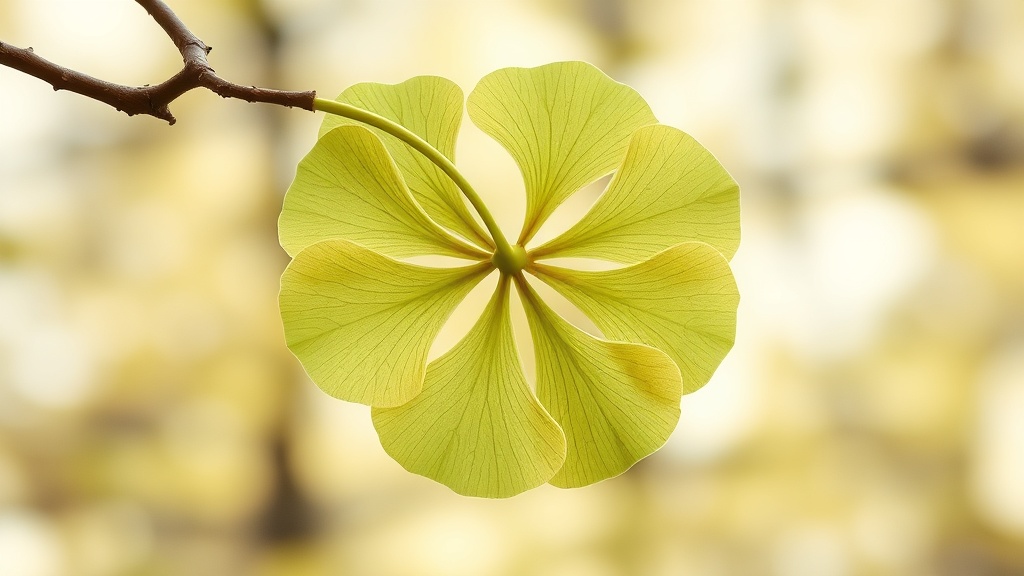
Ginkgo (Ginkgo biloba L.) is the only surviving species of a family of trees that appeared more than 200 million years ago, and botanists consider it a living fossil. Its fan-shaped leaves, harvested and then dried, are used to produce the standardized EGb 761 extract, used in nearly all clinical trials published since the 1990s.
This extract is standardized to two families of active molecules: about 24% flavonoids and 6% terpenoids (ginkgolides and bilobalide). This standardization matters, because non-standardized supplements sold without concentration controls have not been tested under the same conditions, and their effect cannot be inferred from the clinical trials conducted on EGb 761.
Mechanism of action and composition
The flavonoids in this plant act as antioxidants, neutralizing some of the free radicals involved in cellular aging. Ginkgolides inhibit platelet-activating factor, which explains both the vasodilatory effect sought after and the bleeding risk associated with the plant.
- Flavonoids (quercetin, kaempferol, isorhamnetin): antioxidant and anti-inflammatory action.
- Ginkgolides A, B, C: inhibition of platelet-activating factor, a blood-thinning effect.
- Bilobalide: protection of neuronal membranes against oxidative stress, described in vitro.
- Peripheral and cerebral vasodilatory effect, measured by perfusion imaging.
This mechanism supports the hypothesis of an effect on cerebral oxygenation, but a plausible laboratory mechanism does not guarantee a measurable clinical benefit. That is exactly what the trials cited below set out to settle.
What the science says about ginkgo biloba and memory
Two large randomized trials tested the extract against placebo for dementia prevention, with a negative result in both cases. The GEM study (DeKosky et al., 2008) followed 3,069 people aged over 75 for 6.1 years on 240 mg of EGb 761 per day: no significant reduction in the incidence of dementia, from any cause, was observed. The GuidAge study (Vellas et al., 2012), conducted in 2,854 people over 70 who reported memory complaints, recorded 61 cases of Alzheimer’s disease under ginkgo versus 73 under placebo after 5 years, a difference that was not significant.
A systematic review (Weinmann et al., 2010) of trials conducted in people already diagnosed with dementia reports mixed results depending on the extract tested and the follow-up duration, with no clear conclusion in favor of a generalized cognitive benefit. In healthy adults, the extract showed a slight increase in parieto-occipital cerebral blood flow (Mashayekh et al., 2011, n = 9, p ≤ 0.001), a physiological signal that did not translate into a demonstrated cognitive effect at scale. For anxiety, a controlled trial (Woelk et al., 2007, n = 107) measured a significant reduction in anxiety scores after 4 weeks at 480 mg per day. A 2022 Cochrane review (Sereda et al., 1,915 participants), by contrast, found no evidence of efficacy for it when tinnitus was the primary complaint.
According to Dr. Belghiti, “the contrast between the plant’s reputation and the strength of the dementia trials illustrates a common problem in herbal medicine: a plausible biological mechanism never suffices to predict a clinical effect, only randomized trials lasting several years can confirm or refute it.”
In practice: who is it for, and for what?
The table below summarizes this plant’s benefit-to-evidence balance by indication, based on the studies presented above.
| Study | Population | Duration | Main result |
|---|---|---|---|
| GEM (DeKosky 2008) | 3,069 people aged 75 and older | 6.1 years | No reduction in dementia incidence |
| GuidAge (Vellas 2012) | 2,854 people aged 70 and older | 5 years | No significant difference for Alzheimer’s disease |
| Weinmann 2010 (meta-analysis) | Trials in patients with dementia | Variable across trials | Mixed results, no clear conclusion |
| Mashayekh 2011 | 9 healthy men, average age 61 | 4 weeks | Slight increase in cerebral blood flow |
| Woelk 2007 | 107 patients with anxiety | 4 weeks | Significant reduction in anxiety scores |
| Sereda 2022 (Cochrane) | 1,915 participants with tinnitus | Variable across trials | No evidence of efficacy for isolated tinnitus |
It does not replace the levers with the best-established effect on cognition: adequate sleep, regular physical activity and chronic stress management. To explore these further, see UltraSanté’s Mental well-being pillar, our article on creatine and the brain, or our feature on heart coherence against stress. Readers considering an adaptogenic herb rather than a vasoactive extract may also want to read our article on ashwagandha.
- Mild to moderate anxiety: an effect measured after 4 weeks in a controlled trial, at a standardized dose.
- Dementia or Alzheimer’s prevention in a healthy older adult: not supported by the two largest trials available.
- Isolated tinnitus: no evidence of efficacy according to the 2022 Cochrane review.
Dosage protocol and precautions
The positive clinical trials on anxiety and cerebral microcirculation use a standardized EGb 761 extract, dosed at 120-240 mg per day, split into one or two doses, over 4 to 24 weeks depending on the protocol. A non-standardized extract, whose flavonoid and ginkgolide content is not guaranteed, cannot be assumed to reproduce these results.
- Avoid combining with anticoagulants or antiplatelet drugs (aspirin, warfarin, direct oral anticoagulants) because of a documented bleeding risk.
- Stop use several days before a scheduled surgical procedure, on medical advice.
- Avoid during pregnancy, breastfeeding or with a seizure disorder, due to insufficient safety data.
- Choose a standardized EGb 761 extract rather than an untitrated leaf powder.
The European Union also caps the maximum ginkgolic acid content allowed in extracts, a potentially allergenic molecule naturally present in the leaf. According to the NIH Office of Dietary Supplements, its antiplatelet properties warrant particular caution in patients at risk of bleeding or taking anticoagulant medication.
Frequently asked questions
Can ginkgo biloba prevent Alzheimer’s disease?
The two largest randomized trials available, GEM (3,069 participants, 6.1 years) and GuidAge (2,854 participants, 5 years), found no significant reduction in the incidence of dementia or Alzheimer’s disease with ginkgo biloba compared with placebo. Current data therefore do not support recommending it as a way to prevent Alzheimer’s disease.
Does ginkgo biloba improve memory in a healthy person?
Trials in healthy adults mostly show a modest physiological effect, such as a slight increase in cerebral blood flow measured on imaging. No large-scale trial has demonstrated a clinically significant memory improvement in cognitively healthy people without a preexisting memory complaint.
Is ginkgo biloba effective against tinnitus?
No, based on current data. A 2022 Cochrane review of 12 studies and 1,915 participants concludes there is no evidence that it is effective when tinnitus is the main complaint, regardless of the dose or treatment duration tested in these trials.
What precautions should be taken before taking ginkgo biloba?
Ginkgo biloba has antiplatelet properties that increase the risk of bleeding, particularly when combined with anticoagulants or before surgery. Health authorities advise against its use in pregnant or breastfeeding women and recommend medical advice beforehand for anyone on anticoagulant treatment.
What dose of ginkgo biloba is used in clinical trials?
Most positive trials, particularly those on anxiety and cerebral microcirculation, use a standardized EGb 761 extract dosed between 120 and 240 mg per day, split into one or two doses. Non-standardized supplements, whose active ingredient content is not guaranteed, have not been tested under these conditions.
Medical disclaimer. The information provided here is for informational purposes only and does not constitute medical advice. It does not replace a consultation. Ask a healthcare professional before changing your diet, taking dietary supplements or starting a new practice, especially if you have a medical condition, are pregnant or are under treatment. Dietary supplements do not replace a balanced diet or medical follow-up.