Vitamin B1, also called thiamine, lets every cell turn carbohydrates into energy, particularly in the brain, the heart and the nerves. The body stores very little of it, so it depends on a daily supply from food. For a healthy adult, a varied diet is enough. Deficiencies cluster in specific profiles, from heavy drinking to heart failure treated with a diuretic, by way of very old age in hospital. For these people, keeping an eye on thiamine status has proven value.
In brief – Vitamin B1 (thiamine) is a water-soluble vitamin that acts as a cofactor for the enzymes producing energy from carbohydrates, mainly in the mitochondria. France’s food safety agency (Anses) sets the adult nutritional reference at 0.1 mg per megajoule consumed, or about 0.84 mg per day for 2000 kcal. Pork, seeds, nuts, whole grains and legumes are the best sources. A deficiency often goes unnoticed: of 131 cases of Wernicke-Korsakoff syndrome confirmed at autopsy, 80% had not been diagnosed during the patients’ lifetime. Six profiles are mainly affected: heavy drinking, obesity surgery, heart failure treated with furosemide, diabetes, very old age in hospital and undernutrition. In these groups, 200 to 300 mg per day improved heart or kidney function in small trials. Without a risk factor, no trial has shown any benefit from taking supplements.
Vitamin B1: definition and daily needs
Vitamin B1 is the first of the B vitamins, soluble in water and sensitive to heat. Its chemical name, thiamine, comes from the sulfur atom it contains. Once absorbed, it is converted into thiamine diphosphate, the active form that works alongside enzymes. Its historical deficiency disease is beriberi, which damages the nerves and the heart, as the NIH Office of Dietary Supplements points out.
Thiamine requirements depend on the amount of energy you consume, because the vitamin is used first and foremost to burn carbohydrates. Anses, the French food safety agency, therefore expresses its reference values in milligrams per megajoule (mg/MJ). It sets an average requirement of 0.072 mg/MJ and a nutritional reference of 0.1 mg/MJ for all adults, pregnant women included. The table below converts these values into milligrams per day according to calorie intake.
| Daily energy intake | Equivalent in megajoules | Average requirement (0.072 mg/MJ) | Nutritional reference (0.1 mg/MJ) |
|---|---|---|---|
| 1600 kcal | 6.7 MJ | 0.48 mg | 0.67 mg |
| 1800 kcal | 7.5 MJ | 0.54 mg | 0.75 mg |
| 2000 kcal | 8.4 MJ | 0.60 mg | 0.84 mg |
| 2400 kcal | 10.0 MJ | 0.72 mg | 1.00 mg |
| 2800 kcal | 11.7 MJ | 0.84 mg | 1.17 mg |
The practical consequence is simple: an older person who eats little has a lower absolute requirement, but also fewer opportunities to meet it. Refining grains strips away a large share of their thiamine, and so does rinsing white rice (Whitfield et al., 2018). The World Health Organization even devotes an entire guide to preventing this deficiency during food crises.
Mechanism: how vitamin B1 fuels the mitochondria
Thiamine activates the enzymes that feed glucose into the energy production chain of the mitochondria. Absorbed in the small intestine, it relies on active transport at low doses and on passive diffusion at high doses (Smithline et al., 2012). The liver and the cells then convert it into thiamine diphosphate, a step that requires magnesium.
This active form serves as a cofactor for four major enzymes:
- Pyruvate dehydrogenase, which converts the pyruvate derived from glucose into acetyl-CoA, the gateway to the Krebs cycle.
- Alpha-ketoglutarate dehydrogenase, a central step of that same cycle inside the mitochondria.
- Transketolase, which supplies ribose for nucleic acids and antioxidant NADPH in the cytoplasm.
- Branched-chain amino acid dehydrogenase, needed to break down leucine, valine and isoleucine.
Without thiamine, pyruvate can no longer enter the mitochondria and is turned into lactate instead. The tissues that burn the most glucose suffer first: neurons, heart muscle and peripheral nerves. This energy bottleneck links thiamine to mitochondrial dysfunction, one of the biological hallmarks of aging. In the brains of people with Alzheimer’s disease, the activity of thiamine-dependent enzymes is reduced (Gibson et al., 2016).
What the science says about vitamin B1
Trials show a clear benefit of thiamine when a deficiency exists, and little or no effect beyond that. Most studies remain small, with a few dozen participants. The strongest data concern the brain, the heart of patients on diuretics and the kidneys of people with diabetes.
Brain: a deficiency that is often missed
Severe thiamine deficiency causes Wernicke encephalopathy, then Korsakoff syndrome and its memory problems. Of 131 autopsy-confirmed cases in Australia, 80% had not been recognized during the patients’ lifetime. Only 16% showed the classic triad (confusion, balance problems, eye abnormalities), and 19% had no sign recorded in their medical file (Harper et al., 1986).
European neurology guidelines accept the diagnosis when a person who drinks shows two of four signs: poor dietary intake, eye signs, cerebellar problems, and confusion or memory impairment. They recommend 200 mg of thiamine three times a day, preferably intravenously and before any glucose is given (Galvin et al., 2010). Yet the Cochrane review found only two randomized trials, too few to set the ideal dose (Day et al., 2013).
Heart: the diuretic connection
Furosemide, a diuretic widely prescribed for heart failure, increases the loss of thiamine in urine. A pilot study found a deficit in 21 of 23 patients on long-term treatment, compared with 2 of 16 controls (Seligmann et al., 1991). In Toronto, 33% of 100 hospitalized heart failure patients were deficient, compared with 12% of controls (Hanninen et al., 2006). A meta-analysis of 9 studies puts this risk at 2.53 times that of controls (Jain et al., 2015).
Correcting this deficit modestly improves the heart’s pumping strength. In 27 patients on furosemide, seven weeks at 200 mg per day raised the ejection fraction from 27% to 33% (Shimon et al., 1995). A meta-analysis of the two placebo-controlled trials, 38 patients in total, found a gain of 3.28 points (DiNicolantonio et al., 2013). In 24 patients with an average age of 73, 500 mg per day produced only non-significant improvements (Wong et al., 2022).
Diabetes: thiamine flushed out too fast
Diabetes drains thiamine stores through the kidneys. In 74 people with diabetes, plasma thiamine was about 75% lower than in controls. Their renal clearance was 24 times higher in type 1 and 16 times higher in type 2 (Thornalley et al., 2007). In 40 type 2 patients with microalbuminuria, 300 mg per day for three months reduced albumin leakage by a median of 17.7 mg per 24 hours. Blood sugar and blood pressure did not change (Rabbani et al., 2009).
Benfotiamine, a better-absorbed derivative, has been disappointing for nerve health. Over 6 weeks, the BENDIP trial reached statistical significance only in the per-protocol analysis, not in the intention-to-treat analysis (Stracke et al., 2008). Over 24 months, 300 mg per day changed neither nerve function nor inflammation in 67 people with type 1 diabetes (Fraser et al., 2012).
Fatigue and memory: mixed results
High doses of thiamine for fatigue give conflicting results depending on the disease. In 40 patients with inflammatory bowel disease in remission, 600 to 1800 mg per day reduced fatigue by 4.5 points. On placebo, fatigue rose by 0.75 points (Bager et al., 2021). The same team found no benefit in 36 patients with primary biliary cholangitis (Bager et al., 2024).
On the memory front, a 12-month pilot trial in 70 people with mild cognitive impairment or early Alzheimer’s disease tested benfotiamine. The primary endpoint did not reach statistical significance, although the worsening of the CDR score was 77% smaller (Gibson et al., 2020). These figures justify a larger trial, not preventive use.
| Situation | Trial | Dose and duration | Main result |
|---|---|---|---|
| Heart failure on furosemide | Shimon, 1995, 30 patients | 200 mg/day, 7 weeks | Ejection fraction from 27% to 33% |
| Heart failure on diuretics | Schoenenberger, 2012, 9 patients | 300 mg/day, 28 days | +3.9 points of ejection fraction versus placebo |
| Type 2 diabetes with microalbuminuria | Rabbani, 2009, 40 patients | 300 mg/day, 3 months | Urinary albumin reduced, blood sugar unchanged |
| Type 1 diabetic neuropathy | Fraser, 2012, 67 patients | Benfotiamine 300 mg/day, 24 months | No effect on the nerves |
| Fatigue in inflammatory bowel disease | Bager, 2021, 40 patients | 600 to 1800 mg/day, 4 weeks | Fatigue reduced by 4.5 points |
| Fatigue in primary biliary cholangitis | Bager, 2024, 36 patients | 600 to 1800 mg/day, 4 weeks | No better than placebo |
| Septic shock | Donnino, 2016, 88 patients | 200 mg twice a day by infusion | Lactate unchanged, except in the 35% of patients who were deficient |
In practice: who actually benefits from vitamin B1?
Supplemental thiamine is useful for people whose intake drops, whose absorption declines or whose losses increase. Six profiles stand out from the studies. For them, a thiamine blood test or supplementation is worth discussing with their regular doctor.
| Profile | Why the risk rises | Key figure | Recommended approach |
|---|---|---|---|
| Excessive alcohol use | Reduced absorption, unbalanced meals | 80% of Wernicke-Korsakoff cases undiagnosed during life | Talk to your doctor, especially before alcohol withdrawal |
| Obesity surgery | Vomiting, small portions | 94% of encephalopathy cases within 6 months of the operation | Thiamine monitoring for at least 6 months |
| Heart failure on furosemide | Increased urinary losses | 33% of hospitalized patients deficient, compared with 12% | Ask your cardiologist for a blood test |
| Type 1 or type 2 diabetes | Renal elimination 16 to 24 times faster | Plasma thiamine 75% lower | Check-up in case of neuropathy or unexplained fatigue |
| Very old age in hospital or a care home | Poor appetite, diuretics, coexisting illnesses | 39% with a moderate deficit in acute geriatric care | Whole-blood test during a hospital stay |
| Undernutrition, prolonged vomiting | Low stores, quickly depleted | Glucose infusion without thiamine implicated in 18% of surgical cases | Thiamine before any refeeding |
After obesity surgery, a review of 84 cases of Wernicke encephalopathy found frequent vomiting in 90% of cases, and incomplete recovery in 49% of patients (Aasheim, 2008). The risk sometimes starts before the operation: 15.5% to 29% of surgical candidates are already deficient (Kerns et al., 2015). For alcohol, MedlinePlus, from the US National Library of Medicine, notes that Wernicke-Korsakoff syndrome is caused by a severe lack of thiamine.
In older adults, how often thiamine deficiency turns up depends on the measurement method. With the older enzyme test, 39% of 118 patients on a Belgian geriatric ward had a moderate deficit, especially those living in care homes (Pepersack et al., 1999). In Dublin, confusion affected 76% of deficient older patients, compared with 32% of the others (O’Keeffe et al., 1994). Measured by chromatography in whole blood in 238 patients with an average age of 82, deficiency was absent (Pourhassan et al., 2018).
Persistent fatigue has other causes that are far more common than a lack of thiamine. Our article on the proven causes of chronic fatigue helps you sort through them with your doctor. After 60, cobalamin is the other B vitamin whose deficiency is common and underestimated, as explained in our guide to vitamin B12.
Vitamin B1 dose and everyday tips
For most adults, the right dose of vitamin B1 is the one on their plate: 0.84 mg per day for 2000 kcal. The European nutrient reference value, used to calculate the percentages on food labels, is 1.1 mg. The 200 to 300 mg doses used in the heart and kidney trials correspond to deficiency or increased losses. They should be decided with a doctor, ideally after a blood test.
Thiamine comes in three forms at the pharmacy. Thiamine hydrochloride and thiamine mononitrate dissolve in water. Benfotiamine, which is fat-soluble, reaches blood peaks about five times higher and a bioavailability up to 3.6 times greater (Loew, 1996). As for tolerance, European guidelines rate the safety of thiamine as very good, and Anses sets no tolerable upper intake level for this vitamin.
| Food | Serving | Thiamine provided | Share of needs at 2000 kcal |
|---|---|---|---|
| Roasted lean pork tenderloin | 120 g (4.2 oz) | 1.22 mg | 146% |
| Sunflower seeds | 30 g (1.1 oz) | 0.44 mg | 53% |
| Cooked green peas | 150 g (5.3 oz) | 0.42 mg | 51% |
| Macadamia nuts | 30 g (1.1 oz) | 0.36 mg | 43% |
| Cooked brown rice | 150 g (5.3 oz) | 0.27 mg | 32% |
| Pistachios | 30 g (1.1 oz) | 0.26 mg | 31% |
| Cooked lentils | 150 g (5.3 oz) | 0.25 mg | 30% |
| Whole-grain bread | 60 g (2.1 oz) | 0.24 mg | 28% |
| Rolled oats | 40 g (1.4 oz) | 0.18 mg | 22% |
| Cooked white rice, unenriched | 150 g (5.3 oz) | 0.03 mg | 4% |
The habits that matter for maintaining good thiamine status:
- Put a source of thiamine on the menu every day: lean pork, legumes, seeds or whole grains.
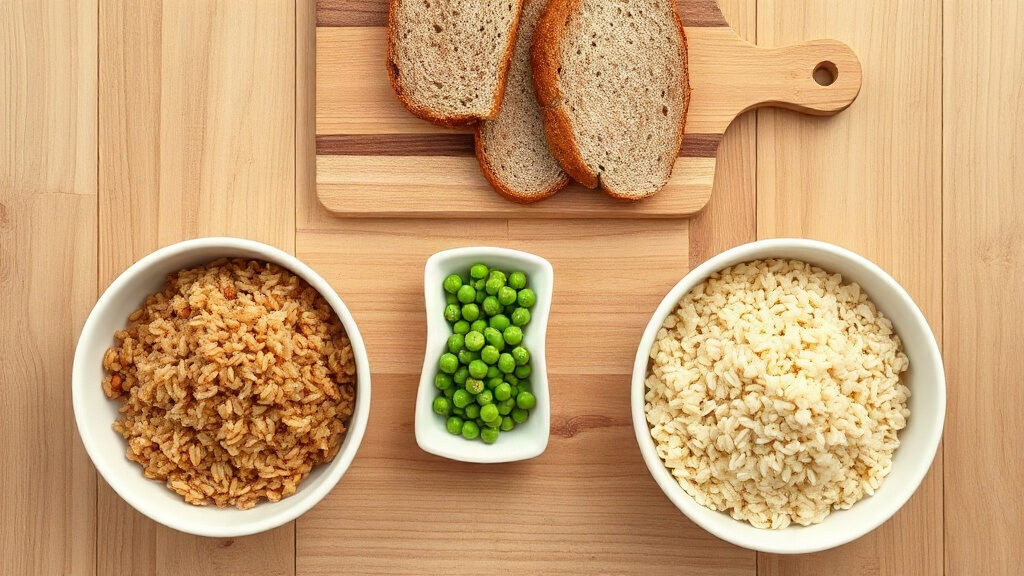
- Choose brown rice over white rice, which contains almost nine times less of it for the same serving.
- Cook vegetables and legumes in little water, because thiamine is water-soluble and sensitive to heat.
- Cut down on alcohol, which hinders the intestinal absorption of thiamine.
- If you take furosemide long term, or after obesity surgery, ask your doctor for a thiamine test.
- Before a high-dose course for fatigue, have your thiamine measured in whole blood by chromatography, the current reference method.
- Also keep an eye on your magnesium intake, which is needed to activate thiamine. Our article on which form of magnesium to choose details the options.
To receive the studies that matter on nutrition and healthy aging every month, subscribe to our health newsletter.
Frequently asked questions about vitamin B1
What are the signs of vitamin B1 deficiency?
The first signs of thiamine deficiency are nonspecific: fatigue, loss of appetite, irritability, tingling or weakness in the legs. A more marked deficiency affects the nerves, the heart (breathlessness, edema) and the brain. Wernicke encephalopathy combines confusion, balance problems and abnormal eye movements. It requires emergency treatment, because the memory damage can become permanent.
How much vitamin B1 does an adult need per day?
France’s food safety agency (Anses) sets the adult nutritional reference for thiamine at 0.1 mg per megajoule of energy consumed. That works out to about 0.84 mg per day for 2000 kcal and 1 mg for 2400 kcal. A varied diet covers this requirement. The 200 to 300 mg doses used in trials are for proven deficiency or at-risk situations, to be discussed with a doctor.
Which foods are richest in vitamin B1?
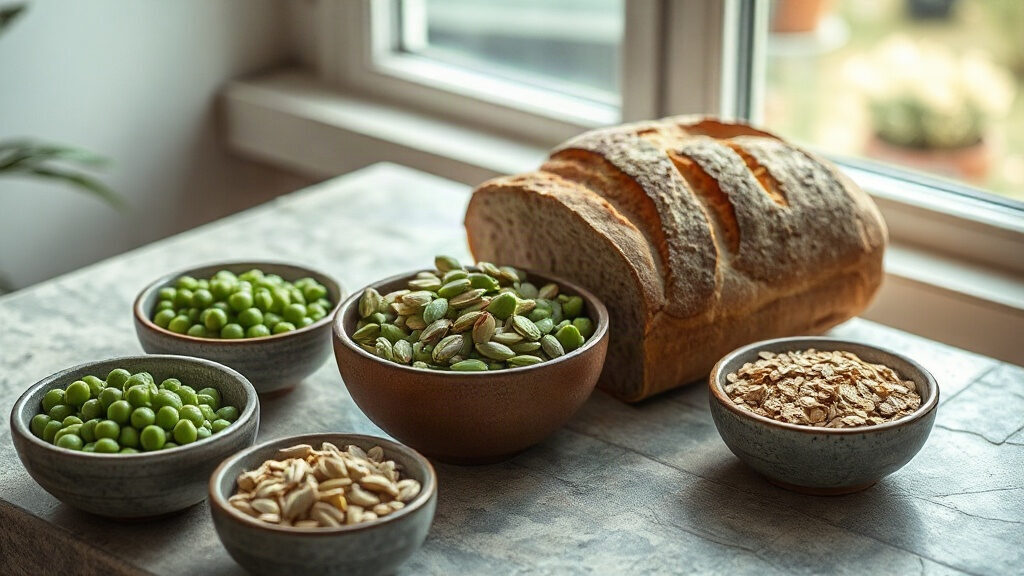
Lean pork comes out on top: a 120 g (4.2 oz) serving of roasted tenderloin provides about 1.2 mg of thiamine, more than the daily requirement. Next come sunflower seeds, macadamia nuts, pistachios, green peas, rolled oats, whole-grain bread and lentils. White rice contains almost nine times less than brown rice, because refining removes the outer layer of the grain.
Can you take too much vitamin B1?
Taken by mouth, an excess of thiamine is very rare: the vitamin is water-soluble and the surplus is excreted in urine. Anses sets no tolerable upper intake level for this vitamin. In trials using 600 to 1800 mg per day for four weeks, only mild side effects were reported. Injections, on the other hand, are given under medical supervision.
What is the difference between thiamine and benfotiamine?
The thiamine in supplements usually comes as hydrochloride or mononitrate, both water-soluble. Benfotiamine is a better-absorbed, fat-soluble derivative: its bioavailability reaches up to 3.6 times that of the hydrochloride. This better absorption does not guarantee a better clinical effect: a 24-month trial in 67 people with diabetes showed no benefit for the nerves.
Why does alcohol cause vitamin B1 deficiency?
Alcohol reduces the intestinal absorption of thiamine, and heavy drinkers often eat less, and less varied, food. The brain, a major consumer of glucose, is the first organ affected. MedlinePlus, from the US National Library of Medicine, notes that Wernicke-Korsakoff syndrome is caused by a severe lack of thiamine. It is the best-known alcohol-related dementia and should not be confused with Alzheimer’s disease.
Medical disclaimer. The information on this page is provided for informational purposes only and does not constitute medical advice. It does not replace a consultation. Sudden confusion, balance problems or vision problems in someone who drinks, who has been vomiting for several days or who has had obesity surgery require an immediate call to emergency services (911 in the US, 999 in the UK, 112 in Europe). Never stop or change a diuretic or any prescribed treatment without medical advice. Ask a healthcare professional before changing your diet, taking dietary supplements or starting a new practice, especially if you have a medical condition, are pregnant or are under treatment. Dietary supplements do not replace a balanced diet or medical follow-up.