Varicose veins and heavy legs affect a large share of the adult population, with a clear predominance in women. These dilated, twisted veins appear most often on the legs, when venous valves no longer close properly to stop blood from flowing backward. Age, heredity and prolonged standing are among the best-documented triggers. This article details the mechanism and the prevention measures backed by verifiable evidence.
In brief – Varicose veins are permanently dilated superficial veins, most often found in the legs. They appear when venous valves stop preventing blood from flowing backward under gravity. This failure causes chronic venous hypertension and a progressive remodeling of the vein wall, which loses its elasticity. In France, chronic venous insufficiency affects roughly 18 million people, the large majority of them women (Inserm). The main contributing factors are heredity, age, pregnancy, prolonged standing and a sedentary lifestyle. No treatment makes the condition disappear permanently without medical intervention. Regular physical activity, weight control and elastic compression stockings, however, limit worsening and ease day-to-day symptoms.
Definition: what varicose veins actually are
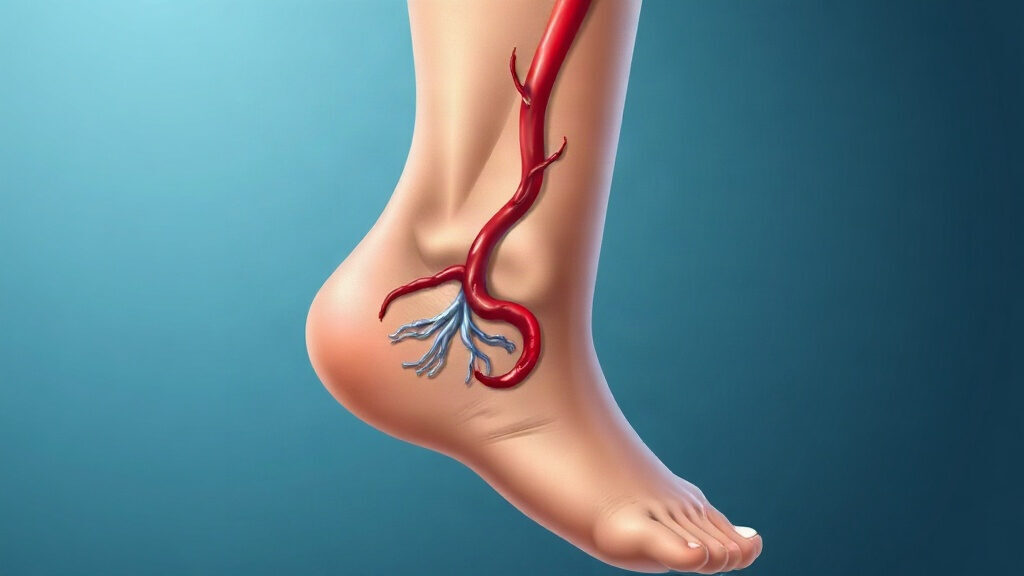
A varicose vein is a dilated, elongated and twisted superficial vein, visible under the skin, most often on the legs and thighs. It results from an inability of venous valves to stop blood from flowing backward under the pull of gravity. Blood pools, pressure rises locally, and the vein wall stretches out over time.
The condition is part of a broader disorder called chronic venous insufficiency, which covers every impairment linked to poor venous return toward the heart. According to an epidemiological review published in Annals of Epidemiology, varicose vein prevalence varies widely across studied populations: from under 1% to 73% in women, and from 2% to 56% in men (Beebe-Dimmer et al., 2005). This gap mostly reflects differing screening methods and diagnostic criteria from one study to another.
Mechanism: how varicose veins form
Their formation follows a chain of events fairly well characterized by vascular research:
- Valve failure: the one-way valves lining the vein no longer close off backward blood flow.
- Venous hypertension: pooling blood raises pressure inside the vein, especially during prolonged standing.
- Enzymatic imbalance in the wall: the balance between matrix metalloproteinases (MMPs) and their inhibitors (TIMPs) breaks down, altering the collagen and elastin structure of the vein wall.
- Local inflammation: white blood cells stick to the wall, and tissue hypoxia keeps the low-grade inflammatory process going.
Two separate studies confirm this enzymatic disruption: research comparing 21 segments of varicose saphenous vein with 12 controls found significantly higher MMP and TIMP expression in the affected segments, particularly at their distal end (Hu et al., 2019). Earlier research had already identified an increased TIMP/MMP ratio in the varicose wall, which favors abnormal extracellular matrix buildup rather than its controlled breakdown (Badier-Commander et al., 2000).
What the science says about varicose veins and their risk factors
Heredity carries real weight: having a close relative affected clearly raises the odds of developing them, a finding repeated across several cohorts. Pregnancy is another well-established factor. In women who have had multiple pregnancies, the risk of venous insufficiency or of developing them is about twice as high as after a first pregnancy (Ropacka-Lesiak et al., 2012). Two mechanisms likely add to this: uterine pressure on the pelvic veins, and hormonal changes that soften the vascular wall.
Prolonged standing, excess weight and a sedentary lifestyle round out the picture of modifiable factors. A review published in Phlebology puts the prevalence of venous ulcers, the most severe complication, at around 0.3% of the adult population (Robertson, Evans & Fowkes, 2008). A case-control study of 241 people with a leg ulcer also found that a history of venous thrombosis nearly tripled the risk of ulcer (OR 2.92, 95% CI 1.47 to 6.08). In that same study, 56% of ulcers were attributable to an underlying high thrombotic risk (Walker et al., 2003). In France, roughly 250,000 superficial venous thromboses occur every year according to national health data, a reminder that this condition belongs to a wider vascular continuum worth monitoring rather than being a purely cosmetic issue, as the NHS notes.
In practice: which measures against varicose veins have a measurable effect
Not all varicose vein prevention measures rest on the same level of evidence. The table below compares the most commonly recommended levers with what the available studies actually show.
| Measure | Mechanism of action | Level of evidence |
|---|---|---|
| Elastic compression (compression stockings) | Reduces superficial venous pressure, aids blood return | Weak: a Cochrane review of 1,021 people found subjective symptom relief, but insufficient evidence for a stand-alone effect on the course of the condition |
| Walking and regular physical activity | Activates the calf muscle pump that propels blood toward the heart | Consistent with venous physiology; no dedicated controlled trial, but a common-sense measure widely recommended |
| Weight control | Lowers the pressure placed on the leg veins | Established risk factor in several epidemiological cohorts |
| Elevating the legs in the evening | Helps venous drainage through gravity | A comfort measure, not evaluated in a randomized trial |
| Limiting prolonged standing | Reduces the duration of exposure to elevated venous pressure | Occupational risk factor documented in epidemiological studies |
To dig deeper into the link between inflammation and vascular aging, the article on chronic inflammation details the levers already validated by research. Daily walking, for its part, is covered in a dedicated guide on walking and longevity, useful for building a realistic routine rather than chasing an arbitrary step count. Excess weight, another shared risk factor, is covered in detail in our article on the causes of weight gain.
Daily protocol and tips against varicose veins
None of these measures replace medical advice in case of persistent discomfort, but several simple habits help limit their worsening:
- Walk at least 20 to 30 minutes a day to engage the calf muscle pump.
- Avoid standing or sitting still for more than an hour without moving your ankles.
- Raise your legs above heart level for 15 minutes in the evening.
- Wear properly fitted compression stockings if your job involves prolonged standing, on the advice of a healthcare professional, to slow their progression.
- Maintain a stable weight, since this factor bears directly on venous pressure in the lower limbs.
- Avoid prolonged excessive heat (very hot baths, direct sun exposure on the legs), which temporarily dilates superficial veins.
Medical follow-up is essential in case of sudden pain, a localized warm redness, or a wound that fails to heal: these signs may point to a thrombosis or a venous ulcer, two complications that require prompt care.
Frequently asked questions about varicose veins
Are varicose veins hereditary?
Heredity is among the most solidly established risk factors. Having a close relative affected clearly raises the odds of developing them yourself, regardless of lifestyle. This genetic predisposition does not, however, prevent acting on other modifiable levers such as physical activity, weight or prolonged standing.
Can this venous condition disappear without medical intervention?
No. Walking, compression, leg elevation and weight control ease discomfort and slow the worsening. They do not, however, close valves that have already failed, nor do they shrink a vein that is already dilated. Only medical techniques (sclerotherapy, surgery, endovenous laser) treat the affected vein directly, on the recommendation of a vascular physician.
Does prolonged standing really cause this condition?
Prolonged standing is an occupational risk factor documented by several epidemiological studies, but it mainly acts as an aggravating factor on an already predisposed background, particularly a genetic one. It extends the time the leg veins spend exposed to elevated pressure, which speeds up the progressive stretching of their wall.
Is exercise discouraged if you have varicose veins?
Quite the opposite: walking, swimming and cycling activate the calf muscle pump and support blood return to the heart. Sports involving repeated hard impact or very heavy loads, on the other hand, deserve case-by-case medical advice. Regular physical activity remains one of the most accessible levers for limiting the venous stasis that causes them.
When should you see a doctor about varicose veins?
See a doctor if you notice unusual pain, sudden asymmetric swelling, warm and tender redness, skin that changes color (ochre dermatitis), or a leg wound that struggles to heal. These signs may indicate a venous thrombosis or an ulcer, two complications that call for a prompt diagnosis rather than simple watching.
Medical disclaimer. The information provided here is for informational purposes only and does not constitute medical advice. It does not replace a consultation. Ask a healthcare professional before changing your diet, taking dietary supplements or starting a new practice, especially if you have a medical condition, are pregnant or are under treatment. Dietary supplements do not replace a balanced diet or medical follow-up.