Tryptophan and sleep are linked through a well-defined biochemical pathway. Tryptophan is an essential amino acid that the body cannot make on its own: it comes only from food. As a precursor to serotonin and then melatonin, it plays a distinctive role in regulating the sleep-wake cycle. What do clinical trials actually show about its effect on sleep? Which foods supply it, and what precautions matter before considering a supplement?
In brief – Tryptophan is an essential amino acid, a precursor to serotonin and then melatonin, two molecules involved in the sleep-wake cycle. A 2022 meta-analysis of 18 studies (Sutanto et al., Nutrition Reviews) found that tryptophan supplementation reduces wake time after sleep onset, with a clearer effect from 1 gram per day, without solid evidence of a shorter sleep onset latency itself. In adults aged 55 to 75, a tryptophan-enriched cereal improved sleep efficiency and raised urinary melatonin (Bravo et al., 2013). It comes exclusively from food: poultry, fish, eggs, legumes, oilseeds. Standalone supplementation should be discussed with a healthcare professional, especially for those on antidepressant treatment.
Definition: what is tryptophan
It is one of the nine essential amino acids in the human body: cells cannot synthesize it, so it must be supplied daily through food. Biochemically, it serves as the raw material for serotonin, a neurotransmitter involved in regulating mood and appetite. Part of this serotonin is then converted, at night, into melatonin, the hormone that signals the onset of darkness to the body. This double biochemical link explains why sleep research pays close attention to this amino acid, though it does not by itself prove an automatic clinical effect in every individual.
Mechanism: how tryptophan affects sleep
It must cross the blood-brain barrier to influence brain serotonin synthesis, and it competes directly there with other amino acids. This journey explains why the effect of a protein-rich meal on sleep varies from person to person.
- Intestinal absorption, then passage into the bloodstream in competition with other neutral amino acids (leucine, valine, phenylalanine) to cross the blood-brain barrier.
- Enzymatic conversion into 5-HTP, then into serotonin, within neurons of the central nervous system.
- Nighttime conversion of part of the serotonin into melatonin by the pineal gland, triggered by falling light levels.
- An accompanying carbohydrate intake can help it enter the brain: insulin released in response to carbohydrates lowers the blood concentration of competing amino acids, leaving relatively more room for tryptophan.
Melatonin then acts as a synchronization signal broadcast throughout the body, a form of intercellular communication whose gradual disruption is one of the mechanisms studied in aging.
What the science says about tryptophan and sleep
The strongest available evidence concerns wake time after sleep onset rather than how quickly someone falls asleep. A 2022 meta-analysis and meta-regression published in Nutrition Reviews combined data from 4 controlled trials drawn from 18 identified publications, and concluded that tryptophan supplementation shortens wake after sleep onset (WASO) by about 81 minutes per gram administered, with a clearer benefit at a daily dose of at least 1 gram (Sutanto et al., 2022, PubMed). The authors note that other sleep parameters, such as overall sleep onset latency, were not significantly changed across the trials analyzed.
In 35 adults aged 55 to 75, evening consumption of a tryptophan-enriched cereal improved sleep efficiency, reduced sleep onset latency and nighttime fragmentation, while raising urinary markers of melatonin and serotonin (Bravo et al., 2013, PubMed). The sample remains small and the effect was measured in one specific population, which limits how broadly it can be generalized.
An older but influential review covering 40 controlled trials conducted over twenty years concluded that tryptophan doses from 1 gram increase subjective sleepiness and reduce sleep onset latency (Hartmann, 1982, PubMed). This earlier work retains historical value but used less rigorous methods than current trials.
| Study | Population | Intervention | Main result |
|---|---|---|---|
| Sutanto et al., 2022 (meta-analysis) | 18 combined studies, adults | Supplementation, variable dose | -81 min/g of wake time after sleep onset; clear effect from 1 g/day |
| Bravo et al., 2013 | 35 adults aged 55 to 75 | Enriched cereal, evening intake | Higher sleep efficiency, increased urinary melatonin |
| Hartmann, 1982 (review) | Synthesis of 40 controlled studies | Tryptophan of 1 g or more | Increased subjective sleepiness, reduced sleep onset latency |
In practice: where to find tryptophan and who benefits most
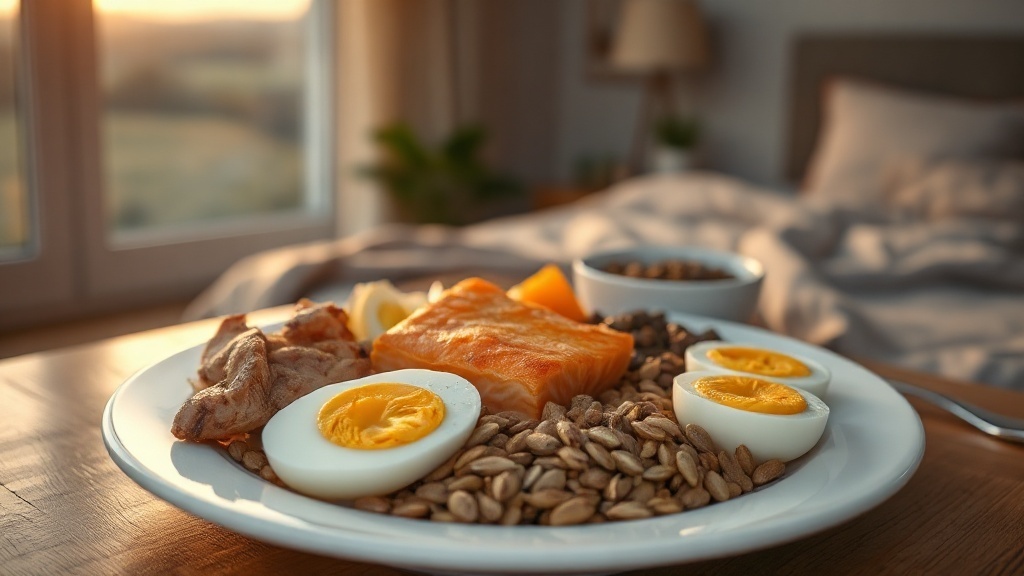
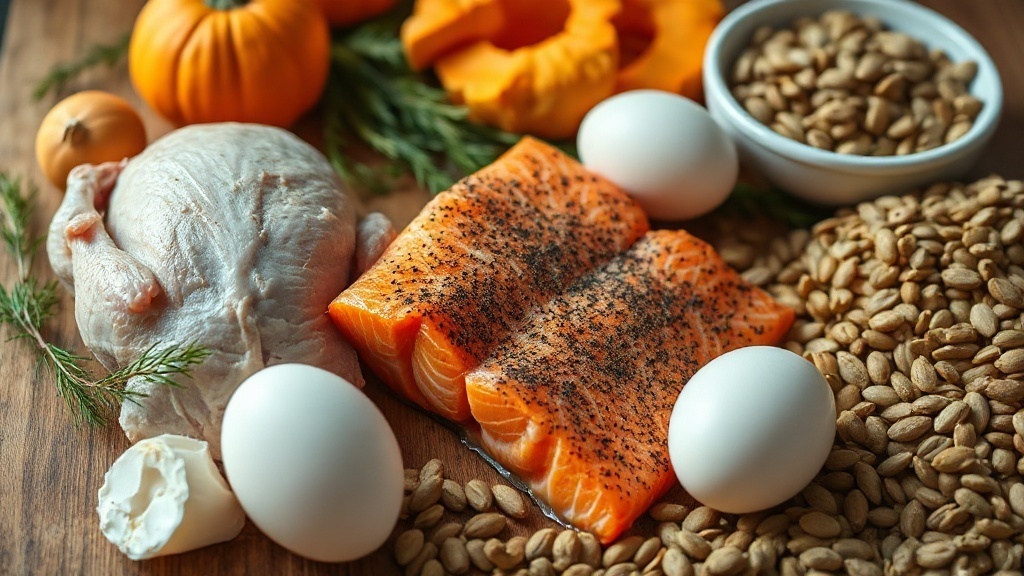
No internal synthesis is possible: it comes entirely from daily food intake. Animal proteins (poultry, fish, eggs, dairy) and some plant sources (soy and soy products, legumes, pumpkin and sunflower seeds, whole grains) provide notable amounts. An evening meal combining a protein source with a portion of complex carbohydrates mirrors the pattern tested in several clinical trials, though it is not a validated protocol for every profile. Sleep is increasingly treated as a public health priority in its own right, on par with nutrition or physical activity, according to the NHS.
People affected by frequent nighttime awakenings, rather than by difficulty falling asleep, match the benefit seen in the available literature most closely. For other nutritional levers of sleep, UltraSanté has looked in detail at magnesium and which form to choose, along with nine proven keys to better sleep. The link between sleep quality and aging is covered in our article on sleep and longevity.
Protocol and tips for adding tryptophan
Before any supplement, the first step remains dietary: spread intake across the day rather than relying on a single meal.
- Favor a dinner combining a protein source rich in this amino acid (poultry, fish, legumes) with complex carbohydrates, two to three hours before bedtime.
- Keep bedtimes regular: melatonin synthesis also responds to the consistency of the sleep-wake cycle, not just nutrient intake.
- Limit blue light in the evening, which delays natural melatonin release independently of diet.
- Do not combine tryptophan or 5-HTP supplementation with a serotonergic antidepressant without medical advice, because of the risk of serotonin syndrome.
- See a doctor if sleep problems persist beyond a few weeks, rather than extending self-supplementation.
Frequently asked questions about tryptophan and sleep
Does tryptophan really help you fall asleep faster?
Current data mainly show an effect on nighttime awakenings, not on how quickly someone falls asleep. The Sutanto et al. (2022) meta-analysis found a reduction in wake time after sleep onset, without a significant effect demonstrated on overall sleep onset latency across the trials analyzed.
Which foods contain tryptophan?
Poultry, fish, eggs, dairy products, soy and its derivatives, legumes, and pumpkin and sunflower seeds naturally supply it. A varied diet with enough protein generally covers daily needs without requiring supplementation for a healthy adult.
Should you take tryptophan supplements to sleep better?
Not automatically. The trials showing an effect used controlled doses, around 1 gram per day, in specific populations. Standalone supplementation should be discussed with a healthcare professional, especially if you are on other treatment.
What are the risks linked to tryptophan?
At typical dietary doses, tryptophan is well tolerated. As a high-dose supplement, it can cause daytime drowsiness, nausea or headaches, and carries a risk of serotonergic interaction with certain antidepressants. Caution is therefore warranted for people already under treatment, as well as pregnant or breastfeeding women.
What is the difference between tryptophan and 5-HTP?
5-HTP is a metabolic intermediate between tryptophan and serotonin. It crosses the blood-brain barrier more easily, which makes it pharmacokinetically different, but clinical data on sleep also remain limited for this molecule.
Medical disclaimer. The information provided here is for informational purposes only and does not constitute medical advice. It does not replace a consultation. Ask a healthcare professional before changing your diet, taking dietary supplements or starting a new practice, especially if you have a medical condition, are pregnant or are under treatment. Dietary supplements do not replace a balanced diet or medical follow-up.