Rhodiola rosea is an adaptogenic plant from Arctic regions whose root extracts have been tested in several clinical trials against stress-related fatigue. Used in Scandinavia and Russia for centuries to support endurance against cold and physical exertion, it now draws research interest for workplace stress and burnout. What do randomized trials actually show, at what dose, and who should avoid it?
In brief – Rhodiola rosea is an adaptogenic plant in the Crassulaceae family, whose standardized root extract (SHR-5) has shown, in several randomized trials involving 40 to 101 participants, a reduction in stress-related fatigue and improvements in some concentration markers. The best-documented effects concern workplace stress, night-shift fatigue, and symptoms of stressful living, at doses of 200 to 600 mg per day over 4 weeks. A systematic review of 11 trials, however, describes these findings as contradictory, and a controlled trial in nursing students working shifted schedules found no benefit, with results slightly favoring placebo. It is not recommended alongside certain antidepressants or in people with a history of bipolar disorder.
What Is Rhodiola Rosea?
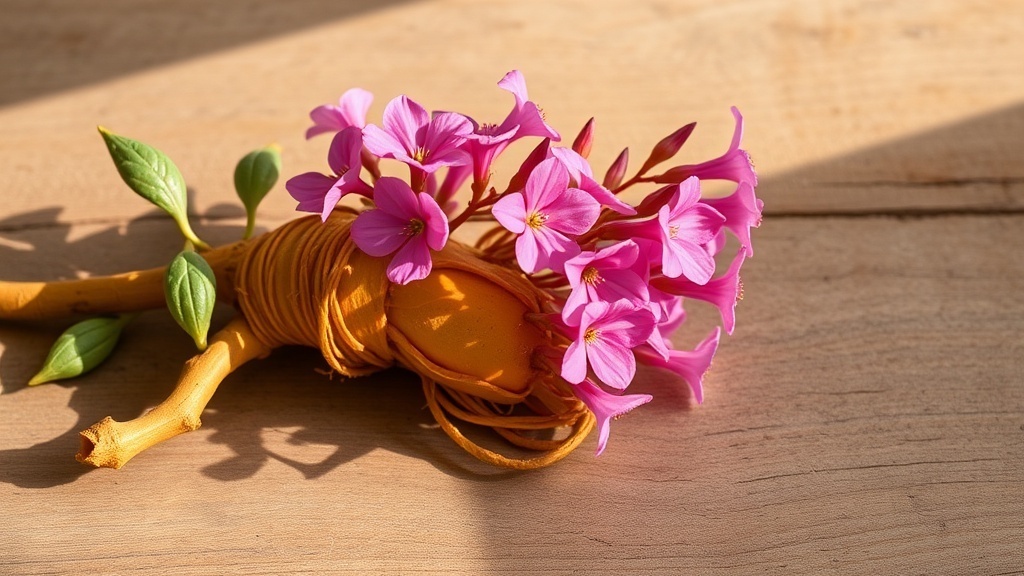
Rhodiola grows in the cold, rocky soils of the Arctic, Siberia, and the Scandinavian mountains, where its fleshy root has long served as a traditional remedy for fatigue and altitude sickness. Its botanical name, Rhodiola rosea, comes from the rose-like scent released when the root is cut.
Classified among adaptogenic plants alongside ashwagandha and ginseng, it has been studied since the 1960s in former USSR countries for its purported effects on resistance to physical and mental stress. More recent Western clinical trials focus almost exclusively on a standardized extract called SHR-5, which limits direct comparison with other preparations sold on store shelves.
Composition and Mechanism of Action
Rhodiola root contains several families of active compounds, whose concentration varies widely depending on geographic origin and extraction method. Extracts used in clinical research are standardized to guarantee a reproducible content.
- Rosavins: a family of glycosides unique to this species, used as a standardization marker (generally 3% in tested extracts).
- Salidroside: a phenolic compound also found in related species, studied for its activity on cells under oxidative stress in the laboratory.
- Phenolic acids and flavonoids: minor compounds that contribute to the extract’s overall antioxidant activity.
The proposed mechanism involves modulation of the hypothalamic-pituitary-adrenal axis, with a blunted cortisol awakening response observed in patients with burnout. Preclinical work also points to an effect on cellular stress resistance and mitochondrial energy production, a mechanism that still needs confirmation in humans through dedicated studies.
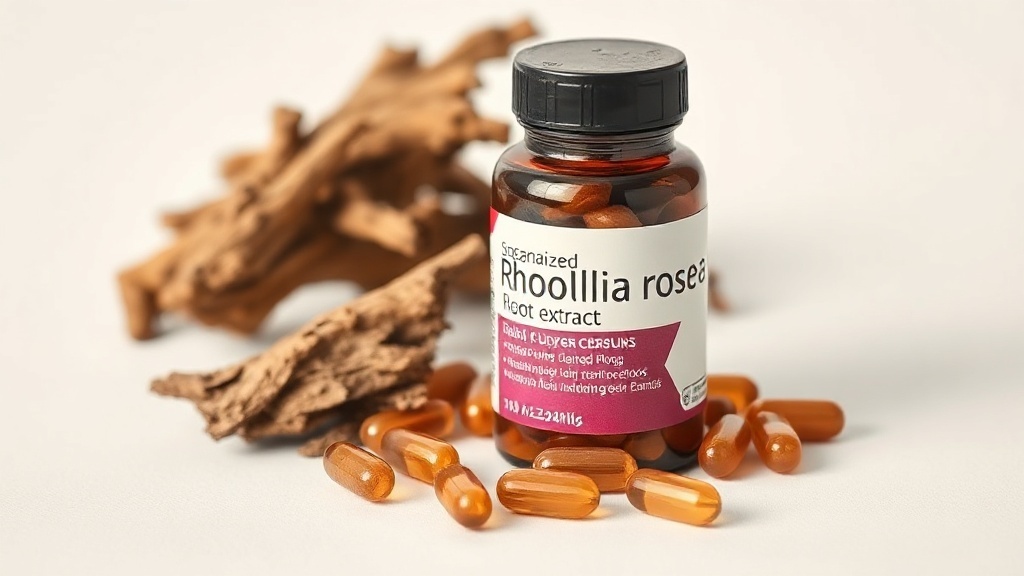
What the Research Shows on Rhodiola Rosea
The earliest result comes from a double-blind crossover trial in 56 young physicians on night duty: the SHR-5 extract significantly improved performance on tests of short-term memory, associative thinking, calculation, and audiovisual perception compared with placebo (Darbinyan et al., 2000).
In patients with burnout, a 28-day randomized double-blind trial tested 576 mg of standardized extract per day in 60 participants: the treated group showed better concentration and a blunted cortisol awakening response compared with placebo (Olsson et al., 2009). An open-label trial in 101 adults with symptoms of stressful living reported a clinically significant reduction in fatigue and perceived stress after 4 weeks at 200 mg twice daily (Edwards et al., 2012).
These positive results are not universally accepted, however. A systematic review of 11 clinical trials concludes that evidence for effects on physical and mental fatigue remains contradictory, due to recurring methodological flaws in the available studies (Ishaque et al., 2012). A more rigorous controlled trial in 40 nursing students working shifted schedules found no benefit on fatigue after 42 days: vitality scores even shifted slightly in favor of placebo (Punja et al., 2014). Association does not equal causation, and all of these trials remain small: rhodiola has not demonstrated a uniform effect across every form of fatigue.
In Practice: Who Is It For?
The positive trials on rhodiola mainly concern situational workplace stress or shift-work fatigue, not chronic fatigue in the medical sense. Our Mitochondrial Dysfunction pillar covers other well-documented ways to support daily cellular energy production.
On the terrain of chronic stress, rhodiola is often compared with ashwagandha, another adaptogenic plant whose effects on cortisol are more consistently replicated. For readers already tracking their elevated cortisol, it can complement non-pharmacological approaches already documented on UltraSanté, such as heart coherence breathing, without replacing them.
| Study | Population | Duration / dose | Main result |
|---|---|---|---|
| Darbinyan et al., 2000 | 56 physicians on night duty | Single dose, crossover trial | Improved memory and concentration test scores |
| Olsson et al., 2009 | 60 patients with burnout | 576 mg/day, 28 days | Better concentration, lower cortisol awakening response |
| Edwards et al., 2012 | 101 adults with stressful lives | 400 mg/day, 4 weeks | Reduced fatigue and perceived stress |
| Punja et al., 2014 | 40 nursing students | Standardized extract, 42 days | No benefit, slight advantage to placebo |
Protocol and Usage Tips
Nearly all of the positive clinical trials use a rosavin-standardized extract (SHR-5 or equivalent), over short durations of 4 to 6 weeks. A few practical points emerge from the available literature:
- Choose an extract standardized to 3% rosavins and 1% salidroside rather than an unstandardized raw powder.
- Stay within the doses tested in clinical trials, between 200 and 600 mg per day, split into one or two doses.
- Take rhodiola in the morning or early afternoon: its stimulating profile can disrupt sleep onset if taken late in the day.
- Reassess whether to continue after 4 to 6 weeks, since data on use beyond a few months is lacking.
It has a stimulating profile that makes it inadvisable alongside MAOI antidepressants, due to a theoretical risk of serotonin syndrome, as well as in people with a history of bipolar disorder, where it could trigger a manic episode. The National Center for Complementary and Integrative Health more broadly notes that herbal dietary supplements, even those seen as harmless, can carry risks of drug interaction or toxicity depending on individual sensitivity, and recommends medical advice before any prolonged use. As a precaution, it is not recommended during pregnancy or breastfeeding, given the lack of safety data for this period.
Frequently Asked Questions
How Long Does It Take to Feel the Effects of Rhodiola Rosea?
Positive clinical trials measure an effect on fatigue and concentration after 4 weeks of daily use, sometimes after a single dose in the case of night-shift fatigue. It has not shown consistent efficacy beyond a few weeks, since trials on prolonged use are lacking.
Rhodiola Rosea or Ashwagandha: Which Should You Choose for Stress?
Ashwagandha has a larger and more consistent body of randomized trials on lowering cortisol and perceived stress. It has shown positive results for situational mental fatigue, but a systematic review describes its evidence as contradictory. The choice depends on the symptom targeted: situational fatigue for rhodiola, better-documented chronic stress for ashwagandha.
Is Rhodiola Rosea Dangerous With Antidepressants?
A theoretical risk of serotonin syndrome exists in combination with MAOI antidepressants, due to its stimulating profile. Any combination with an antidepressant treatment, regardless of class, requires prior medical advice before adding this plant.
What Dose of Rhodiola Rosea Should You Take?
Clinical trials use doses of 200 to 600 mg per day of an extract standardized to 3% rosavins, taken in the morning. Exceeding these doses has not shown any additional demonstrated benefit and increases the risk of side effects such as agitation or insomnia.
Can You Take Rhodiola Rosea During Pregnancy?
No, as a precaution. Safety data on pregnancy and breastfeeding are insufficient to recommend rhodiola during this period, as is the case for most adaptogenic plants sold as dietary supplements.
Medical disclaimer. The information on this page is provided for informational purposes only and does not constitute medical advice. It does not replace a consultation. Ask a healthcare professional before changing your diet, taking dietary supplements or starting a new practice, especially if you have a medical condition, are pregnant or are under treatment. Dietary supplements do not replace a balanced diet or medical follow-up.