What if Pilates and yoga together formed one of the most underrated secrets of longevity? Cardio and strength training get most of the attention, while flexibility and core control rarely do. Yet the ability to move freely, hold a stable center and keep your balance weighs heavily on how well you age. Combining the two brings together complementary practices that train exactly these qualities. Two simple, validated self tests can also tell you a great deal about your functional life expectancy right now.
In brief – Pilates and yoga are two complementary movement practices that build core strength, flexibility, balance and joint mobility, qualities linked to functional longevity. Pilates emphasizes deep core control and trunk stability, while yoga develops flexibility, joint range of motion, balance and breathing. Research links the ability to rise from the floor without using the hands, along with grip strength, to lower all cause mortality in adults. Practicing both two to three times a week, combined with two simple self tests (the floor to stand test and the hang test), offers a practical way to track the physical markers that predict how long you stay independent.
Pilates and Yoga: An Underrated Longevity Duo
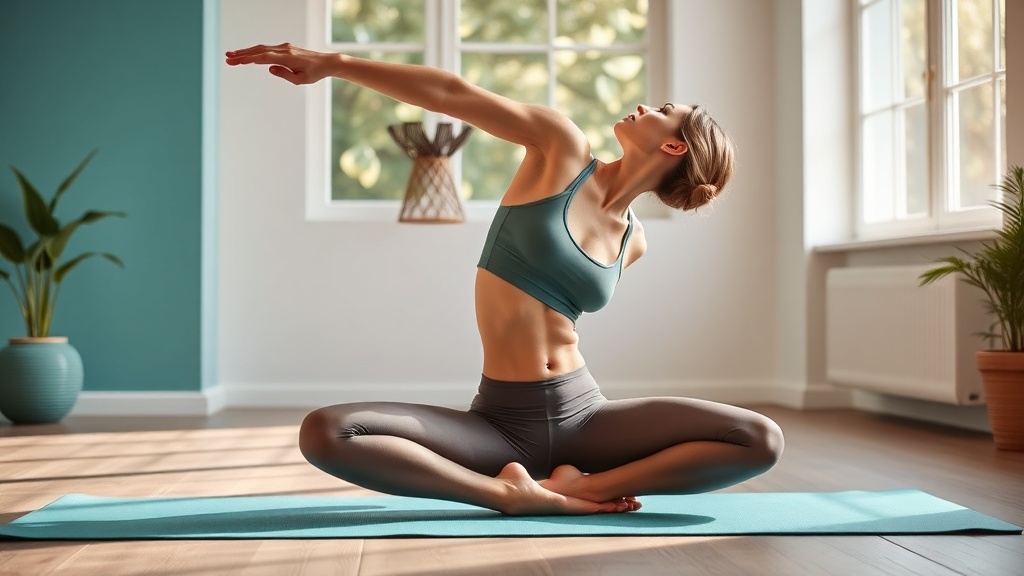
Taken separately, Pilates and yoga have each already proven their worth. Together, they form a remarkably complete pairing. Pilates mainly targets deep core engagement, trunk stability and control of movement. Yoga, meanwhile, develops flexibility, joint range of motion, balance and breathing.
Where Pilates builds a strong center, yoga opens up and loosens the body. This complementarity explains why combining the two produces better results than practicing either discipline alone: you gain postural strength and freedom of movement at the same time, two assets that naturally decline with age if left untrained. That is the core promise of pairing them together.
| Discipline | Primary focus | Key benefit |
|---|---|---|
| Pilates | Deep core control, trunk stability, precise movement | Protects the spine and supports posture |
| Yoga | Flexibility, joint range of motion, balance, breathing | Preserves mobility and lowers fall risk |
Flexibility and Core Strength: Two Pillars of Healthy Aging
Why do these qualities matter so much for aging well? Because they shape everyday independence. Here is what this combination provides:
- Better joint mobility: bending down, turning, or reaching for a high shelf stay easy, everyday movements.
- A protective trunk: solid abdominal and back engagement supports the spine and helps prevent back pain.
- Preserved balance: the number one factor in fall prevention, the leading cause of loss of independence after age 65.
- Straighter posture: less tension, fuller breathing and a more toned frame.
- A calmer mind: the breathing and mindfulness practiced in yoga reduce stress, another factor tied to longevity.
In other words, maintaining flexibility and core strength is an investment in a body that stays capable and independent for as long as possible. This idea builds directly on our article about freedom of movement. This duo puts it into practice every day.
What the Science Says
Research backs the value of these physical qualities for longevity. The ability to rise from the floor, a marker that combines strength and flexibility, is associated with all cause mortality in middle aged and older adults (PubMed data).
Likewise, grip strength is one of the most robust predictors of longevity, to the point of being considered a genuine biomarker of aging (PubMed data). Finally, practices such as yoga improve balance and reduce fall risk in older adults (PubMed data). These findings echo the physical activity guidance from the World Health Organization.
Test 1: The Floor to Stand Test (Sit to Stand Without Hands)
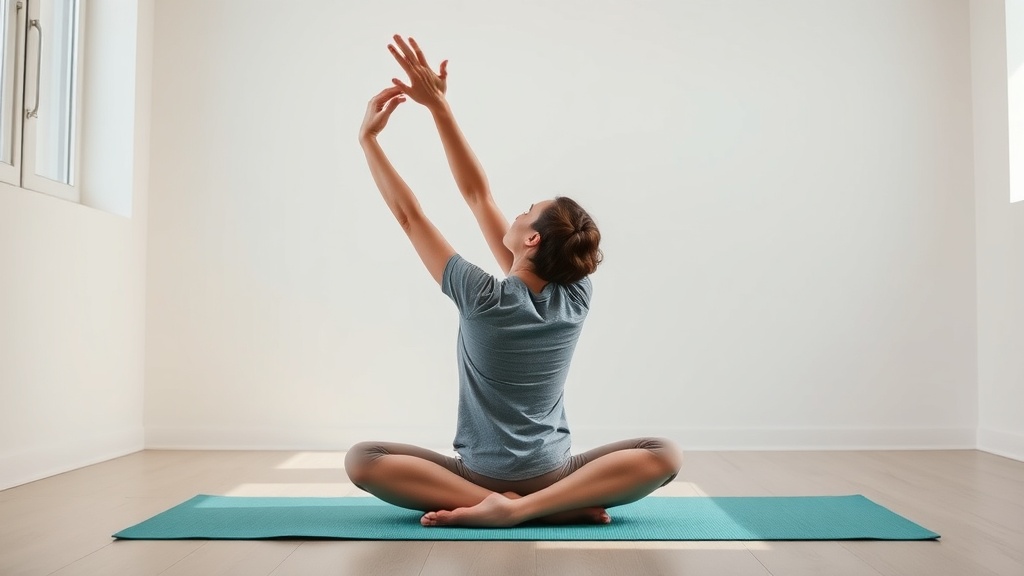
This test, known as the “sitting rising test,” is as simple as it is revealing. The goal: sit down on the floor and stand back up using as little support as possible, ideally without your hands.
Scoring works as follows: you start with 10 points, 5 for going down and 5 for standing back up. You subtract 1 point each time you use a hand, forearm, knee or the side of your leg for support, and half a point for every loss of balance. The closer your score is to 10, the better. Studies show that a low score is associated with higher mortality: this simple movement sums up leg strength, hip flexibility, balance and coordination.
How to do it, step by step:
- Stand barefoot on a mat, in a clear open space.
- Cross your legs and lower yourself slowly into a seated position, without using your hands.
- Once seated cross legged, stand back up in one fluid motion, again without any support.
- Count your points and note which supports you used. Repeat every few weeks to track your progress.
If the exercise feels difficult or risky, use a support at first: the goal is to measure your progress, not to get hurt.
Test 2: Grip Strength and the Hang Test
A second, equally telling marker of longevity is grip strength, essentially the strength of your handshake. In a clinical setting it is measured with a dynamometer, but there is a functional test anyone can try: the hang test, or dead hang.
The idea: hang from a pull up bar with straight arms and hold on for as long as you can. A useful benchmark to aim for is at least 60 seconds. This test works your grip, but also your shoulders, back and abdominal wall, all areas trained by this combination. Maintaining muscle mass is essential for building this kind of strength, as detailed in our article on creatine.
How to do it: grab a sturdy bar, hands shoulder width apart, let yourself hang with straight arms and start a timer. Keep your shoulders engaged, breathe, and note your time. Progress gradually, and never push through pain in a sore shoulder.
How to Combine Pilates and Yoga in Practice
You do not need hours of practice. Consistency matters more than duration. Here is a simple framework for pairing Pilates and yoga:
- 2 to 3 sessions per week of 20 to 40 minutes are enough for noticeable progress.
- Alternate the focus: one session leaning toward Pilates (core, center) and one leaning toward yoga (flexibility, balance).
- Start each session gently, with joint mobilization, and finish with stretching and a few mindful breaths.
- Retest yourself regularly: redo the floor to stand test and the hang test every few weeks to track progress.
- Be patient and consistent: flexibility and core strength build up over time, not in a single session.
Paired with walking and some resistance work, this mobility foundation does wonders for aging in good shape, much like the active lifestyles seen in the Blue Zones. For a broader routine, the NHS exercise guidance offers useful benchmarks for weekly activity.
Frequently Asked Questions
Do you need to already be flexible to start Pilates and yoga?
No, it is actually the opposite: you practice to become flexible. Every posture and exercise can be adapted to your level. Gains in flexibility and core strength come with regular practice, whatever your starting point.
Is the floor to stand test without hands dangerous?
Done on a mat and at your own pace, it is accessible to most adults. If you have joint issues, dizziness or unstable balance, it is best to use a support and ask a professional for advice before trying it without one.
How long should you hold the hang test?
A target of 60 seconds is a solid benchmark for grip strength and endurance. Many people start well below that: the priority is steady progress, without pushing through pain in a shoulder or wrist.
Can you practice Pilates and yoga at any age?
Yes. These disciplines are among the most adaptable there are, including after age 60 or 70. They are especially valuable at those ages, when flexibility, core strength and balance become central to staying independent.
Medical disclaimer. The information provided here is for informational purposes only and does not constitute medical advice. It does not replace a consultation. Ask a healthcare professional before changing your diet, taking dietary supplements or starting a new practice, especially if you have a medical condition, are pregnant or are under treatment. Dietary supplements do not replace a balanced diet or medical follow-up.