Inositol is a natural carbohydrate closely related to the B vitamins, found in fruit, whole grains and the human body, where it acts as a cellular messenger for insulin and several neurotransmitters. Since the 1990s, clinical trials have tested two specific uses: reducing anxiety and panic attacks, and improving insulin sensitivity in women with polycystic ovary syndrome (PCOS). This article details what verified PubMed studies actually show, along with their limits.
In brief – Inositol is a natural carbohydrate that acts as a second messenger in insulin and serotonin signal transmission, which explains its dual studied use for anxiety and insulin resistance. A controlled crossover trial from 1995 in 21 patients found panic attacks dropped from 10 to 3 per week under 12 grams a day, versus 10 to 6 under placebo (Benjamin et al.). On the metabolic side, a 2024 meta-analysis of 30 trials and 2,230 participants with PCOS linked its most common form to a drop in HOMA-IR when combined with folic acid, but found no significant difference against metformin, with an evidence level rated low to very low (Fitz et al.). Tested doses range from 2 to 18 grams per day, split between morning and evening, with mild digestive upset in case of excess.
Definition
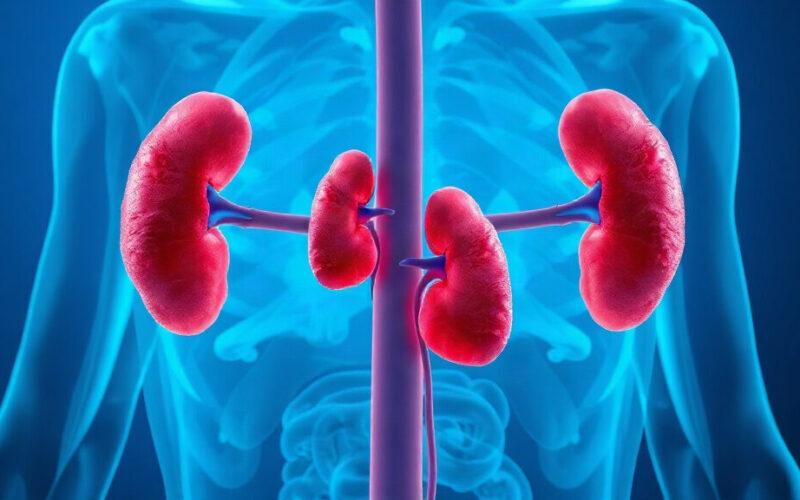
Inositol covers nine isomers of a six-carbon sugar, of which myo-inositol and D-chiro-inositol are the two active forms in humans. The body synthesizes about 4 grams of it per day from glucose, mainly in the kidneys, and supplements this supply through diet: citrus fruit, melon, dried beans, whole grains. Long classified as “vitamin B8,” this molecule is not actually a vitamin in the strict sense since the body produces it itself; the name persists mostly in dietary supplement marketing. The brain and ovaries concentrate particularly high amounts of it, which is why research focuses on two specific areas: mood regulation and fertility linked to insulin resistance.
Mechanism and active forms
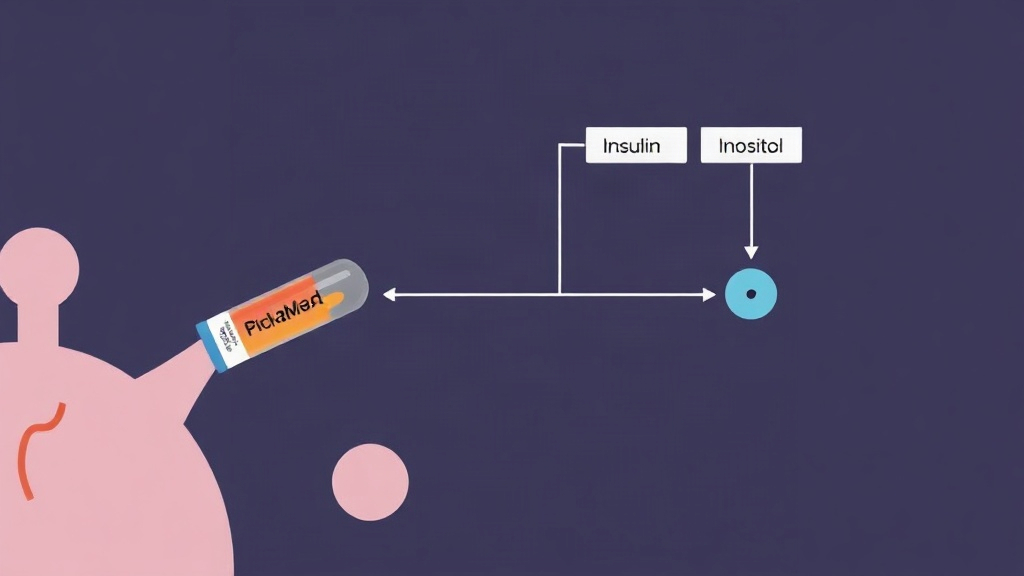
Inositol acts upstream of two distinct cell-signaling systems, which explains why the same molecule interests both psychiatry and endocrinology. In its phosphorylated form, it becomes a second messenger called IP3, which relays the action of membrane receptors into the cell.
- Insulin signaling: after the hormone binds to its receptor, a mediator derived from D-chiro-inositol activates glucose transport and glycogen synthesis in the liver and muscle.
- Serotonergic signaling: IP3 modulates intracellular calcium release downstream of 5-HT2 receptors, a pathway shared with several anxiolytics and antidepressants.
In women with PCOS, the leading hypothesis points to excessive conversion of the D-chiro form into the myo form within the ovaries, which would locally reduce insulin sensitivity, although this mechanism is not confirmed by robust human data.
What the science says
Clinical evidence on inositol remains limited in participant numbers, but two older controlled trials and a recent meta-analysis mark out what can reasonably be said.
On anxiety, a double-blind crossover trial led by Benjamin and colleagues in 21 patients with panic disorder compared 12 g/day of inositol to a placebo over four weeks: attacks fell from 10 to 3 per week in that group, versus 10 to 6 under placebo, with few side effects (Benjamin et al., 1995). A second crossover trial by Fux and colleagues, in 13 patients with obsessive-compulsive disorder, found a significantly lower Yale-Brown score under 18 g/day of the same compound than under placebo (Fux et al., 1996). Both cohorts remain too small to be conclusive, but the measured effect exceeds simple statistical noise on validated clinical scales.
On insulin resistance, the most comprehensive meta-analysis pools 30 randomized trials and 2,230 participants with PCOS. It reports an average HOMA-IR drop of 1.24 points when myo-inositol is combined with folic acid rather than folic acid alone (2 trials, 70 participants), but no significant difference against metformin on HOMA-IR or fasting insulin (5 trials, 374 participants); the authors rate the overall evidence level as low to very low (Fitz et al., 2024). The cellular mechanism of this molecule as an insulin mediator is well established in the lab; its translation into a net, reproducible clinical benefit still needs confirmation from larger trials. The MedlinePlus overview of PCOS notes that insulin resistance affects 20 to 50% of patients, with or without associated excess weight.
In practice: two indications, two levels of evidence
Inositol is used today in two distinct situations, with different levels of evidence depending on the indication. The mechanism linking it to insulin fits within the deregulated nutrient sensing pillar of longevity.
For anxiety disorder or obsessive-compulsive disorder, the available clinical trials remain old and small; inositol is neither a first-line treatment nor a substitute for validated approaches against chronic stress. For insulin resistance and PCOS, the literature is more abundant but heterogeneous: this form appears in several international guidelines as a second-line option, to be discussed with an endocrinologist or gynecologist before any self-medication. Elevated fasting blood glucose or a PCOS diagnosis warrants a prior medical workup rather than standalone supplementation.
The table below compares the two main forms of inositol tested in clinical settings.
| Criterion | Myo-inositol | D-chiro-inositol |
|---|---|---|
| Best-documented indication | PCOS, anxiety, panic disorder | Ovarian insulin resistance |
| Dose tested in trials | 2 to 18 g/day | 500 mg to 2 g/day |
| Effect on HOMA-IR | Variable depending on combination (metformin, folic acid) | Not significant versus placebo in pooled trials |
| Reported side effects | Mild digestive upset at high doses | Limited long-term data |
The physiological ratio observed in human plasma is close to 40 parts of the majority form for every 1 part of the other, a benchmark that some commercial formulations try to replicate, although no clinical consensus mandates this exact ratio.
Protocol and precautions
No standardized protocol has reached consensus, but published clinical trials offer useful benchmarks for caution.
- Start with the lowest dose studied for the targeted indication (2 g/day in a metabolic context, 12 g/day in anxiety trials) and adjust gradually.
- Split the dose in two, morning and evening, to limit the digestive upset seen at high doses.
- Allow an evaluation period of at least 8 to 12 weeks before judging any effect on metabolic markers, the window used in most PCOS trials.
- Tell your doctor about inositol use if you are on antidiabetic treatment, since the molecule may potentiate its blood-sugar-lowering effect.
In pregnant or breastfeeding women, safety data remain insufficient to recommend supplementation without medical advice, despite the common use of myo-inositol in some gestational diabetes prevention protocols.
Frequently asked questions
What is the difference between myo-inositol and D-chiro-inositol?
These are two isomers of the same sugar, converted into one another by an insulin-dependent enzyme. The myo form dominates by far in the body and holds most of the clinical evidence on anxiety and fertility. The D-chiro form is more specifically involved in glucose transport, with a natural plasma ratio of about 40 to 1 in favor of the first.
Can inositol replace treatment for anxiety?
No. The available trials involved small groups, 21 and 13 patients, with a short follow-up of four to six weeks. They suggest a measurable effect on panic attacks and obsessive-compulsive symptoms, without demonstrating equivalence with reference treatments. Any disabling anxiety warrants medical advice before considering inositol as a complement.
Does inositol lower blood sugar in everyone?
No, the documented effects mostly concern women with polycystic ovary syndrome, a specific insulin-resistance context. In these women, a 2024 meta-analysis links myo-inositol combined with folic acid to an improvement in HOMA-IR, but finds no clear advantage over metformin. No solid data confirms a comparable effect in someone without diagnosed insulin resistance.
What are the side effects of inositol?
At the high doses used in research, inositol mainly causes transient digestive issues: bloating, mild nausea, sometimes headaches. These effects generally subside by reducing the dose or splitting it into smaller portions. Published clinical trials report no serious adverse effects at the tested doses, but long-term follow-up remains limited.
How long before inositol shows an effect?
Trials on anxiety show a measurable difference within four weeks of continuous use. On the metabolic side, PCOS studies generally assess the effect after 8 to 12 weeks, the time needed for markers like HOMA-IR to stabilize. Stopping before that window does not allow a fair judgment of the supplement’s real effectiveness.
Medical disclaimer. The information provided here is for informational purposes only and does not constitute medical advice. It does not replace a consultation. Ask a healthcare professional before changing your diet, taking dietary supplements or starting a new practice, especially if you have a medical condition, are pregnant or are under treatment. Dietary supplements do not replace a balanced diet or medical follow-up.