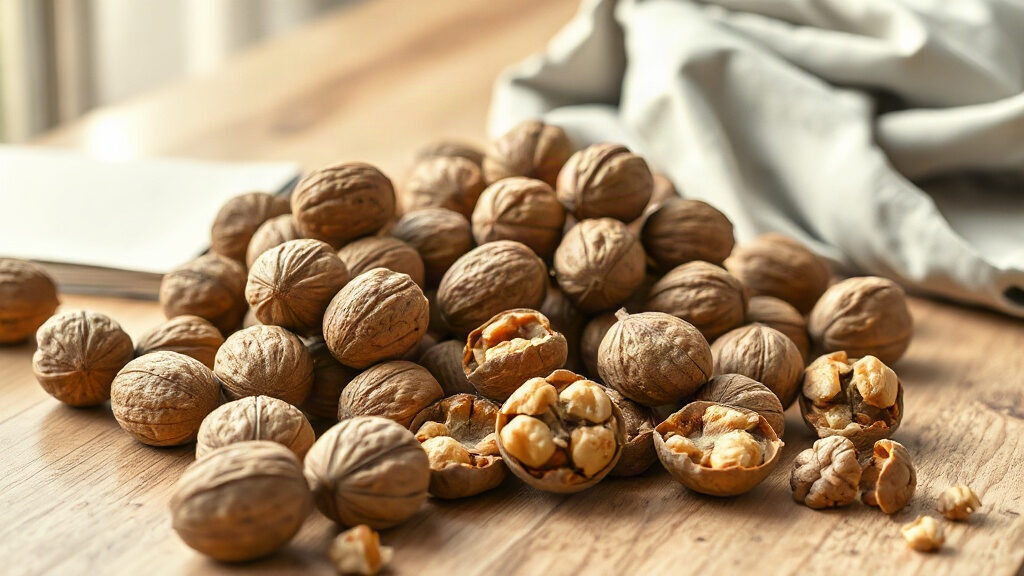
Walnuts improve several markers of cardiovascular health from 30 g (about 1 oz) a day, or roughly 7 whole walnuts or 14 halves. This is the amount behind the health claim authorized by the European Union on the elasticity of blood vessels. The Spanish PREDIMED trial tested it in 7,447 high-risk adults. With 30 g of nuts a day, half of them walnuts, a Mediterranean diet cut cardiovascular events by 28% compared with a low-fat diet.
In brief – The walnut is a tree nut that stands out for its richness in plant omega-3s: 30 g of walnuts provide about 2.7 g of alpha-linolenic acid (ALA), more than the daily reference set for an adult by ANSES, France’s food safety agency. This 30 g serving, or 7 walnuts or 14 halves, matches the European health claim on the elasticity of blood vessels. In 26 trials with 1,059 participants, walnut-enriched diets lowered LDL cholesterol by 5.5 mg/dL on average, with no weight gain. In the older adults of the WAHA trial, 30 to 60 g a day for two years reduced LDL by 3.6% and the number of LDL particles by 4.3%. In large US cohorts, eating walnuts once a week is associated with 19% less cardiovascular disease, an association that does not prove causation on its own. The practical rule fits in one sentence: a small daily handful, plain, in place of a less favorable food rather than on top of it.
Walnuts: definition and composition of a 30 g serving
The common walnut (Juglans regia) is the seed of the walnut tree, enclosed in a woody shell. What we eat is the kernel, made of two lobes. Nutritionally, it is a fatty food: 65 g of fat per 100 g, nearly three quarters of it as polyunsaturated fatty acids, according to the FoodData Central database of the US Department of Agriculture (USDA). This profile sets it apart from almonds and hazelnuts, which are dominated by monounsaturated fats. In France, two walnut productions hold a protected designation of origin, in Grenoble and in the Périgord.
What makes this tree nut special is its content of alpha-linolenic acid, the plant precursor of the omega-3 family. In France, ANSES sets the adult reference at 1% of energy intake, about 2.2 g a day for 2,000 kcal, above the adequate intake of 1.1 to 1.6 g used in the United States by the NIH Office of Dietary Supplements. A single 30 g serving exceeds both. The table below details what this handful contains.
| Nutrient | Amount in 30 g | Benchmark |
|---|---|---|
| Energy | 196 kcal | About 10% of a 2,000 kcal intake |
| Total fat | 19.6 g | Only 1.8 g of it saturated fat |
| Alpha-linolenic acid (omega-3) | 2.7 g | About 120% of the ANSES reference for 2,000 kcal |
| Linoleic acid (omega-6) | 11.4 g | ANSES reference: 4% of energy, or 8.9 g |
| Protein | 4.6 g | Equivalent of a small egg |
| Fiber | 2.0 g | A little less than almonds (3.8 g) |
| Magnesium | 47 mg | Close to hazelnuts (49 mg) |
| Gamma-tocopherol (vitamin E) | 6.2 mg | Dominant form of vitamin E in this nut |
Once shelled, 7 walnuts weigh about 28 g (1 oz), and 14 halves weigh the same, according to USDA reference servings. The amount fits in the palm of one hand. The kernels also provide polyphenols from the ellagitannin family, which the gut microbiota converts into urolithins.
Mechanism: how walnuts act on the heart and arteries
Walnuts act on the cardiovascular system through four pathways measured in humans: blood lipids, the artery wall, inflammation and the gut microbiota. None of them explains the observed effect on its own. They add up, and their relative weight varies from one study to the next.
- Blood lipids: by replacing saturated fats with polyunsaturated ones, the serving lowers LDL cholesterol and apolipoprotein B, the protein that carries atherogenic particles.
- The endothelium: the layer of cells lining the arteries dilates better after four weeks of a diet rich in walnut kernels. ALA and arginine, a precursor of the vasodilator nitric oxide, are the two leading explanations.
- Inflammation: over two years, the WAHA trial measured a drop in 6 of the 10 inflammatory markers tracked in 634 older adults (Cofán et al., 2020).
- The microbiota: 42 g (1.5 oz) a day for three weeks increases butyrate-producing bacteria, such as Faecalibacterium and Roseburia, and reduces secondary bile acids.
This last point comes from a crossover trial in 18 healthy adults. Deoxycholic and lithocholic acids, considered pro-inflammatory, fell by 25% and 45%, and LDL by 7% (Holscher et al., 2018). Cholesterol, blood sugar and low-grade inflammation depend on how the body handles nutrients, an axis of aging we follow in our pillar on deregulated nutrient sensing.
What science says about walnuts and the heart
Controlled trials show a modest but reproducible effect of walnuts on LDL cholesterol. Large cohorts associate regular consumption with fewer cardiovascular events and lower mortality. The evidence on blood pressure remains weaker.
LDL cholesterol: a modest, consistent drop
The reference meta-analysis pools 26 trials and 1,059 participants. Compared with control diets, walnut-enriched diets lowered LDL by 5.51 mg/dL, about 0.06 g/L (0.14 mmol/L), and total cholesterol by 6.99 mg/dL. Triglycerides fell by 4.69 mg/dL and apolipoprotein B by 3.74 mg/dL, with no effect on weight (Guasch-Ferré et al., 2018). The effect was clearer against a Western diet, with LDL down 8.28 mg/dL.
WAHA, the longest trial on the subject, followed 708 people aged 63 to 79 in Barcelona and California. For two years, the active group added 30 to 60 g (1 to 2 oz) of walnut kernels a day, about 15% of their calories. Among the 628 participants analyzed, LDL fell by 3.6%, the total number of LDL particles by 4.3% and the number of small particles by 6.1%. The response differed by sex: LDL down 7.9% in men and 2.6% in women (Rajaram et al., 2021).
The effect depends on the dose and the starting point. A pooled analysis of 25 trials, with an average of 67 g of nuts a day, measured a 7.4% drop in LDL. The drop was larger in people whose baseline LDL was high (Sabaté et al., 2010).
Arteries and blood pressure
In 21 adults with high cholesterol, four weeks of a diet in which this tree nut replaced part of the monounsaturated fats improved endothelium-dependent vasodilation. The adhesion molecule VCAM-1, a marker of artery wall activation, decreased, and LDL fell by 6.4% (Ros et al., 2004). This work underpins the claim listed in EU Regulation 432/2012: “Walnuts contribute to the improvement of the elasticity of blood vessels”, for a daily intake of 30 g.
On blood pressure, the picture is more nuanced. In the blood pressure substudy of WAHA, 236 older adults completed the trial. Office systolic pressure fell by 4.61 mmHg in the active group versus 0.59 mmHg in controls, a difference at the edge of statistical significance. In the third of participants whose 24-hour systolic pressure exceeded 125 mmHg, the drop reached 8.5 mmHg versus 2.5 mmHg (Domènech et al., 2019). The 2018 meta-analysis found no overall effect on blood pressure.
Cardiovascular events and life expectancy
PREDIMED is the main trial to have measured the effect of nuts on heart attacks and strokes. It enrolled 7,447 people aged 55 to 80 at high cardiovascular risk, followed for a median of 4.8 years. The nut group received 30 g a day: 15 g of walnuts, 7.5 g of almonds and 7.5 g of hazelnuts. Major events affected 3.4% of this group versus 4.4% of the control group, a 28% lower risk (Estruch et al., 2018). The first publication, in 2013, was retracted because of departures from the randomization protocol. The reanalysis gives similar results after excluding the 1,588 participants concerned.
The US cohorts provide data specific to walnuts, from 210,836 health professionals followed for up to 32 years. Eating them at least once a week was associated with 19% less cardiovascular disease and 21% less coronary heart disease (Guasch-Ferré et al., 2017). In a second analysis of 93,340 adults followed for 20 years, 5 or more servings a week were associated with 14% lower total mortality. Life expectancy at age 60 was 1.3 years longer in women and 1.26 years longer in men (Liu et al., 2021).
The limits to keep in mind
The cohorts compare regular consumers with non-consumers. The former smoke less and exercise more, gaps that statistical adjustments only partly correct. Several studies were also funded by the California Walnut Commission, including WAHA, which states that the funder played no role in the analysis. Finally, this daily handful does not act on everything: over two years, WAHA showed no effect on the global cognition of 636 older adults (Sala-Vila et al., 2020).
| Study | Participants | Amount tested | Main result |
|---|---|---|---|
| Guasch-Ferré meta-analysis, 2018 | 26 trials, 1,059 people | Diets enriched with walnut kernels | LDL -5.51 mg/dL, weight unchanged |
| WAHA trial, 2021 | 708 older adults aged 63 to 79, 2 years | 30 to 60 g a day | LDL -3.6%, LDL particles -4.3% |
| Ros trial, 2004 | 21 adults with high cholesterol | Replacement of monounsaturated fats | Better artery dilation |
| PREDIMED trial, 2018 | 7,447 high-risk adults, 4.8 years | 30 g of nuts, including 15 g of walnuts | Cardiovascular events -28% |
| Guasch-Ferré cohorts, 2017 | 210,836 adults | 1 serving of 28 g a week or more | Cardiovascular disease -19% (association) |
| Liu cohorts, 2021 | 93,340 adults, 20 years | 5 servings a week or more | Mortality -14%, +1.3 years of life expectancy at 60 |
In practice: how many walnuts a day for your profile
For most adults, 30 g (1 oz) of walnuts a day is enough: it is the dose of the European claim and of PREDIMED. In France, the National Nutrition and Health Program (PNNS) advises a small handful of unsalted nuts a day, in line with the Harvard T.H. Chan School of Public Health, which counts nuts among heart-protective foods. Both single out walnuts for their omega-3 content. Other nuts do not share the same profile, as the following comparison shows.
| Nut (30 g) | Energy | Omega-3 (ALA) | Fiber | Magnesium | Strong point |
|---|---|---|---|---|---|
| Walnuts | 196 kcal | 2.7 g | 2.0 g | 47 mg | Only notable source of omega-3s |
| Almonds | 174 kcal | Traces | 3.8 g | 81 mg | Vitamin E and magnesium |
| Hazelnuts | 188 kcal | 0.03 g | 2.9 g | 49 mg | Monounsaturated fats |
| Pistachios | 168 kcal | 0.09 g | 3.2 g | 36 mg | Lowest in calories |
Trials show similar effects on cholesterol across nuts. The value of variety lies in their complementary strengths: omega-3s on one side, vitamin E and fiber on the other. This is the logic of the Mediterranean diet, which pairs nuts with extra virgin olive oil. The useful amount then varies with each person’s situation.
| Situation | Benchmark amount | What this benchmark is based on |
|---|---|---|
| Healthy adult | 30 g a day | European claim, PNNS, PREDIMED trial |
| Minimum associated with a benefit | 28 g once a week | 19% less cardiovascular disease in the cohorts |
| High LDL | 30 to 60 g a day, in addition to medical follow-up | WAHA trial, stronger effect when baseline LDL is high |
| Overweight or weight control | 30 g in place of a sweet or salty snack | Less weight gain when they replace other foods |
| Child under 6 | Ground into dishes, never whole | Choking risk flagged by the PNNS |
| Tree nut allergy | None, unless an allergist advises otherwise | Allergen that must be declared on labels in Europe |
These benchmarks fit into a broader strategy for managing blood lipids. Our article on cholesterol and longevity details the values to aim for. For plant omega-3s, ground flaxseed is the other major source.
Tips for fitting 30 g of walnuts into your day
The benefit depends mostly on what the handful replaces. In 144,885 Americans followed for 20 to 24 years, adding half a serving of walnuts a day, or 14 g, was associated with 0.37 kg (0.8 lb) less weight gain every four years. Replacing red meat, processed meat, French fries, desserts or potato chips with nuts pointed the same way (Liu et al., 2019).
- Weigh 30 g of kernels once to learn what the handful looks like, then do without the scale.
- Choose plain nuts, with no salt, sugary coating or chocolate, as the PNNS recommends.
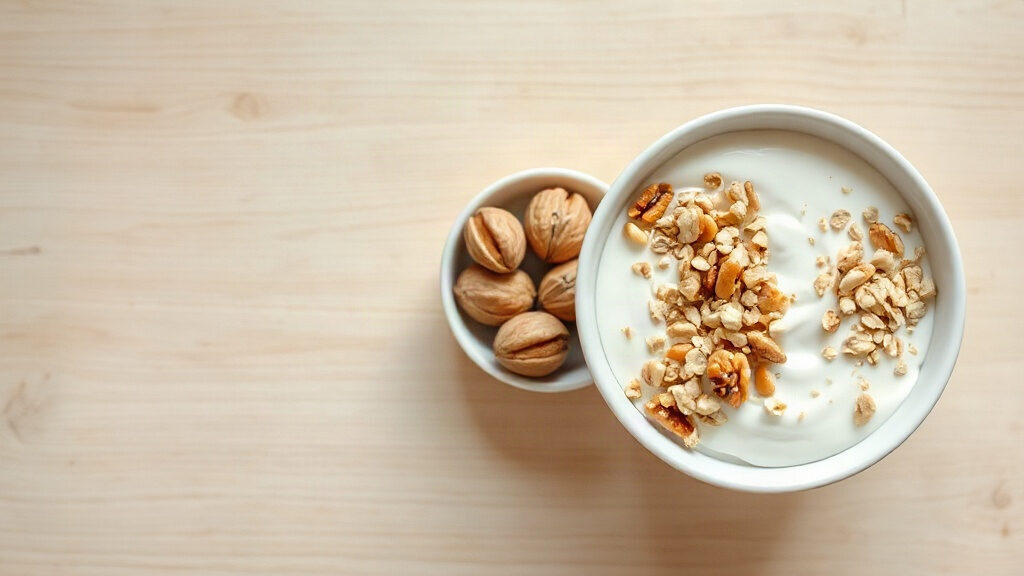
- Spread them over the day: in yogurt or oatmeal in the morning, on a salad or soup at lunch.
- Keep the kernels in a closed jar, somewhere cool and away from light, because their omega-3s oxidize quickly.
- Throw away any that taste bitter or like old butter: their fats have gone rancid.
- Use walnut oil raw, as a dressing, without heating it.
- Keep eating fish twice a week, including one oily fish, because ALA converts too poorly into DHA.
The Harvard T.H. Chan School of Public Health stresses this last point: the conversion rate of ALA into DHA is too low to cover needs. Walnut kernels therefore complement oily fish without replacing it. To receive the studies that matter on nutrition and healthy aging every month, subscribe to our health newsletter.
Frequently asked questions about walnuts
How many walnuts should you eat a day for your heart?
The reference amount is 30 g (about 1 oz) of walnuts a day, or roughly 7 whole walnuts or 14 halves. It is the dose chosen by the European Union for the claim on the elasticity of blood vessels, and the one used in the PREDIMED trial. In US cohorts, a 28 g serving once a week is already associated with 19% less cardiovascular disease.
Do walnuts make you gain weight?
A 30 g serving provides 196 kcal, but trials show no weight gain. A meta-analysis of 33 controlled trials found no increase in weight, BMI or waist circumference with nuts. In the cohorts, adding half a serving a day was even associated with 0.37 kg (0.8 lb) less weight gain every four years.
Can you eat too many walnuts?
Trials have tested up to 60 g (about 2 oz) a day for two years in older adults, with good tolerance. Above 30 g, cholesterol falls a little more, because the effect depends on the dose, but calories climb quickly: 60 g provide about 390 kcal. People allergic to tree nuts must avoid them completely, and a large amount can upset sensitive bowels.
What is the difference between walnuts and almonds for the heart?
Both lower LDL cholesterol to a similar extent. Per 30 g, walnuts provide 2.7 g of plant omega-3s, while almonds contain only traces. Almonds, on the other hand, supply more fiber (3.8 g versus 2.0 g), magnesium and vitamin E. Alternating the two, as in the PREDIMED trial, combines their strengths.
Do walnuts lower LDL cholesterol?
Yes, modestly. A meta-analysis of 26 trials puts the drop at 5.5 mg/dL of LDL on average, about 0.06 g/L. In the WAHA trial, LDL fell by 3.6% over two years, with a sharper drop in men. This effect complements a balanced diet and medical follow-up, without replacing a prescribed treatment.
At what age can children be given walnuts?
France’s National Nutrition and Health Program (PNNS) advises against whole nuts before age 6, because of the risk of inhaling food and choking. Before that age, they can be offered ground, mixed into dishes. If there is a family history of allergy or the child has severe eczema, it is best to talk to the pediatrician before the first introduction.
Medical disclaimer. The information on this page is provided for informational purposes only and does not constitute medical advice. It does not replace a consultation. A handful of nuts is no substitute for treatment of high cholesterol or high blood pressure: never stop or change a prescribed treatment without medical advice. If you have a known tree nut allergy, do not eat them without an allergist’s approval. Ask a healthcare professional before changing your diet, taking dietary supplements or starting a new practice, especially if you have a medical condition, are pregnant or are under treatment. Dietary supplements do not replace a balanced diet or medical follow-up.