Cholesterol shows up on nearly every blood panel after age 40, yet few patients can read this number beyond the verdict of “too high” or “normal.” This lipid marker, measured in labs since the 1950s, tells a more nuanced story about cardiovascular risk and life expectancy than the single total printed on the lab report.
In brief – Cholesterol is a lipid molecule essential for building cell membranes and several hormones, carried through the blood by two main families of lipoproteins, LDL and HDL. Elevated LDL promotes plaque buildup in the arteries and stays linked to cardiovascular risk in the general population (Ference et al. 2017, more than 2 million participants). In older adults, the relationship partly reverses: very low LDL is associated with higher mortality, and HDL follows a U shaped curve where extreme values, both high and low, lose their protective effect (Wu et al. 2022, Shanghai Aging Study, n equals 3,239). Triglycerides, the third parameter of the lipid panel, are linearly linked to cardiovascular risk above 200 mg/dL (2 g/L). Interpreting a lipid panel therefore requires weighing age, all three values and personal history together, not applying one universal threshold.
Definition: what cholesterol actually is
Cholesterol is a sterol lipid, 70 to 80% synthesized by the liver, with the rest coming from food. It forms part of the membrane of every cell in the body and serves as a precursor for vitamin D, steroid hormones (cortisol, estrogen, testosterone) and the bile acids needed to digest fat. Insoluble in blood, it travels packaged inside lipoproteins: LDL (low-density lipoprotein), often called “bad cholesterol” because it deposits its lipid cargo in the artery wall, and HDL (high-density lipoprotein), which collects the excess and carries it back to the liver.
A standard lipid panel measures four values: total cholesterol, LDL, HDL and triglycerides, another family of blood lipids tied to calorie intake and to sugar and alcohol consumption. In France, the reference units are grams per liter (g/L) and, in research, millimoles per liter (mmol/L): 1 g/L of cholesterol equals roughly 2.58 mmol/L, or about 100 mg/dL, the unit most commonly used on US lab reports.
Mechanism: how it circulates and builds up
The liver continuously adjusts its output based on dietary intake: eating more saturated fat slightly reduces the liver’s own synthesis, which explains why diet alone shifts total cholesterol by only 10 to 15% in most adults. The rest depends on genetic factors, especially LDL receptors, which capture circulating particles and clear them from the blood.
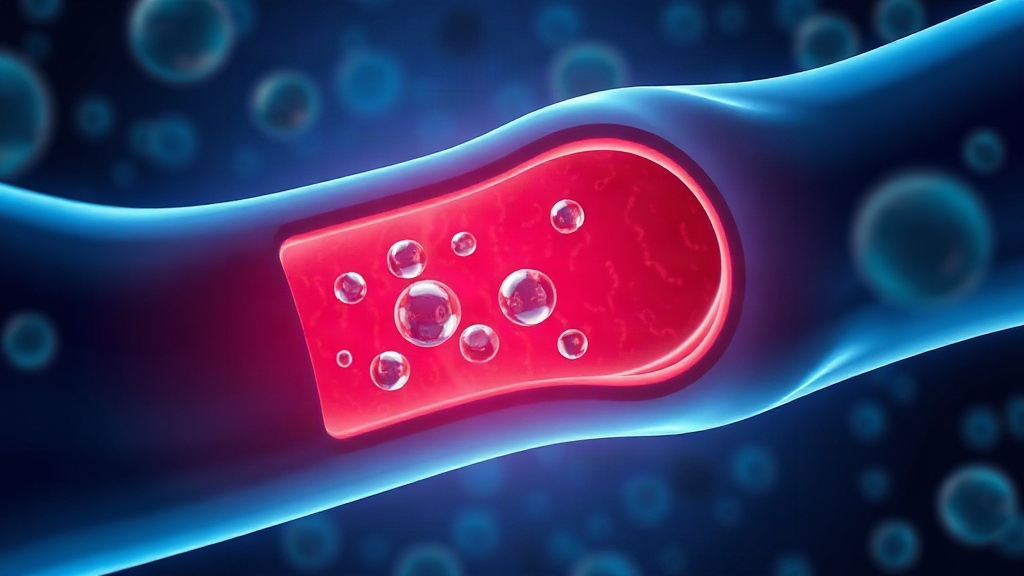
When these receptors become saturated or less active, LDL particles linger in circulation and eventually infiltrate the artery’s inner lining, where they oxidize and trigger a local inflammatory reaction. This cascade gradually builds an atherosclerotic plaque, the biological basis of heart attack and ischemic stroke, a mechanism detailed by MedlinePlus, the National Library of Medicine’s consumer health resource, which describes atherosclerosis as a major public health concern.
- LDL: carries cholesterol from the liver to tissues and builds up in the artery wall in excess.
- HDL: collects excess cholesterol from tissues and returns it to the liver for elimination.
- Triglycerides: a circulating energy reserve, elevated with excess calories, sugar or alcohol.
- Lipoprotein(a): a genetic variant of LDL, not modifiable through lifestyle, tested separately when there is a family history of early heart attack.
What the science says about cholesterol and longevity
The link between LDL and cardiovascular disease is one of the most thoroughly documented in modern medicine. A consensus statement from the European Atherosclerosis Society, led by Ference et al. (2017), pooled more than 200 prospective studies and randomized trials covering more than 2 million participants and 150,000 cardiovascular events: the relationship between cumulative LDL exposure and atherosclerosis risk is linear and causal, not merely associative.
Past age 75 to 80, the picture gets more complicated. A study of 3,239 Chinese seniors from the Shanghai Aging Study (Wu et al., 2022, Frontiers in Medicine) followed these adults for a median of 10 years: those in the lowest LDL quintile had a higher risk of all-cause mortality than those in the highest quintile. HDL followed a U shaped curve, with both the lowest and highest values linked to higher mortality compared with the middle range. A very high HDL is therefore not automatically a sign of good health in older adults, association does not mean causation, and this finding does not apply to a 40 year old adult who is not on lipid lowering treatment.
Triglycerides follow a more linear pattern. A meta-analysis of 61 prospective studies covering 726,030 participants (Liu et al., 2013, Lipids in Health and Disease) measured a relative risk of cardiovascular mortality of 1.25 for triglycerides at 200 mg/dL (2 g/L) or above, compared with the reference range of 90 to 149 mg/dL (0.9 to 1.49 g/L), and a lowered risk of 0.83 for the lowest values.
On the treatment side, the largest individual patient data meta-analysis of statins (CTT Collaborators, 2012, The Lancet, 27 trials, 174,000 participants) shows that each 1 mmol/L (about 39 mg/dL) reduction in LDL prevents roughly 11 major vascular events per 1,000 people treated over five years, in people whose 5 year cardiovascular risk is below 10%. A real effect, but a modest one at this risk level, one to weigh against possible muscle related side effects.
In practice: how to read your lipid panel
A single total tells you almost nothing: two people with the same total can have opposite risk profiles depending on the LDL/HDL split and the context (age, smoking, diabetes, family history, insulin resistance). As with waist circumference, one number from a blood panel is never enough to judge metabolic health; French guidelines actually set different LDL thresholds depending on overall cardiovascular risk, not a single value for everyone.
| Parameter | Desirable value | Point of caution |
|---|---|---|
| LDL cholesterol | Depends on individual cardiovascular risk | Lower threshold if diabetes, smoking or family history |
| HDL cholesterol | Above 40 mg/dL (0.4 g/L) in men, 50 mg/dL (0.5 g/L) in women | Extremely high values worth discussing with a doctor after age 75 |
| Triglycerides | Below 150 mg/dL (1.5 g/L) fasting | Higher cardiovascular risk above 200 mg/dL (2 g/L) |
| Total cholesterol | Below 200 mg/dL (2 g/L) in the general population | Interpret alongside the LDL/HDL ratio, not alone |
Age changes how the same number should be read: low LDL in a healthy 40 year old remains favorable, while very low LDL discovered after age 80, without treatment, deserves a search for an underlying cause (malnutrition, inflammatory disease, undiagnosed cancer) rather than simple reassurance. Excess chronic inflammation can also artificially lower measured LDL while worsening the overall prognosis.
Protocol: the levers that actually move this number
Soluble fiber (oats, legumes, psyllium) binds part of the cholesterol in the gut before it is absorbed and lowers LDL measurably within a few weeks. Replacing saturated fat (butter, processed meats) with unsaturated fat (olive oil, nuts, omega-3 from fatty fish) remains the best documented dietary lever for LDL and triglycerides combined.
- Favor soluble fiber at every meal rather than as a standalone supplement.
- Cut back on alcohol and fast digesting sugars, the main drivers of excess triglycerides.
- Walk or do regular endurance activity: it raises HDL modestly but reproducibly.
- Quit smoking, which lowers HDL and oxidizes circulating LDL particles.
- Get lipoprotein(a) tested once in a lifetime if there is a family history of early heart attack.
These measures do not replace treatment prescribed for confirmed high cardiovascular risk. An overall risk score, not the LDL number alone, guides the decision of whether to treat.
Frequently asked questions about cholesterol
What is the difference between total cholesterol, LDL and HDL?
Total cholesterol adds up LDL, HDL and a fraction of triglycerides. LDL carries cholesterol to tissues and accumulates in excess in the artery wall. HDL makes the reverse trip, returning the surplus to the liver. The same total can correspond to very different risks depending on the split between these two fractions.
Is low cholesterol always a good sign?
Not always. In young, healthy adults, low LDL is generally favorable. In older adults, several observational studies link very low LDL to increased mortality, often because it reflects an underlying illness (malnutrition, inflammation, cancer) rather than a protective effect of the number itself.
Is diet alone enough to lower cholesterol?
Diet mainly affects triglycerides and has a moderate effect on LDL, on the order of 10 to 15% in most cases, because the liver offsets part of dietary intake by adjusting its own synthesis. Soluble fiber and replacing saturated fat with unsaturated fat produce the most reproducible effects. Beyond that, genetics and medication take over.
Should eggs and shellfish be avoided because of dietary cholesterol?
The cholesterol found in food has a limited effect on blood cholesterol for most people, because the body regulates its own production in response. Saturated fat and refined sugar weigh more heavily on the lipid panel than an egg yolk or a portion of shrimp eaten in moderation.
At what age should cholesterol first be checked?
A first lipid panel is recommended for young adults without risk factors, then repeated roughly every five years, more often in case of overweight, smoking, diabetes or a family history of early cardiovascular disease. A doctor adjusts this schedule based on individual profile.
Medical disclaimer. The information provided here is for informational purposes only and does not constitute medical advice. It does not replace a consultation. Ask a healthcare professional before changing your diet, taking dietary supplements or starting a new practice, especially if you have a medical condition, are pregnant or are under treatment. Dietary supplements do not replace a balanced diet or medical follow-up.