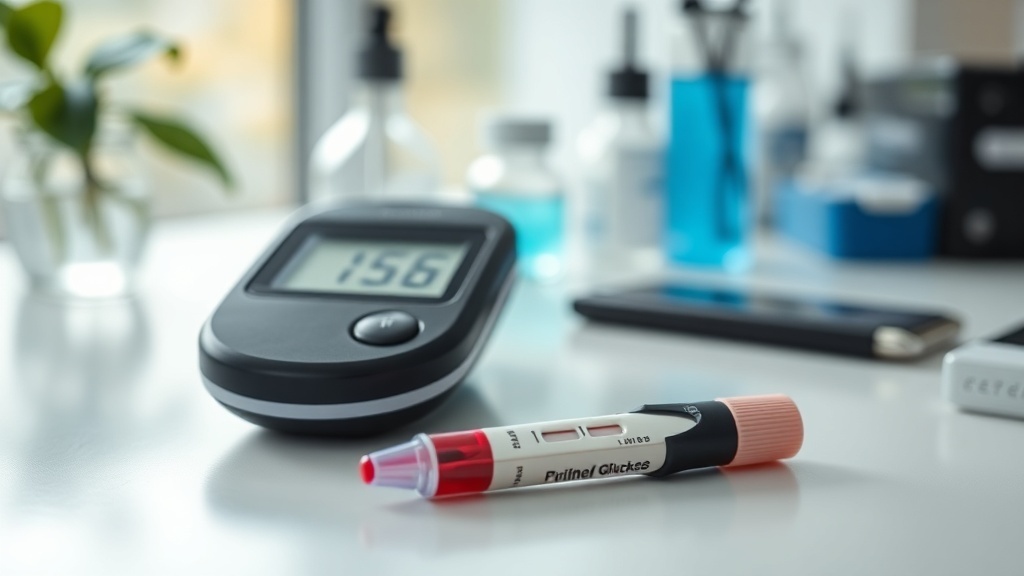
Fasting blood glucose measures the concentration of glucose in the blood after at least eight hours without eating. This simple blood test serves as a screening marker for prediabetes and type 2 diabetes, but a single value is never enough on its own to draw a conclusion. Here are five keys, backed by the scientific literature, to read it correctly.
In brief – Fasting blood glucose is a blood test that measures circulating glucose after a fast of at least eight hours, and it serves as a first line marker for detecting an imbalance in sugar metabolism. In adults without known diabetes, the reference range sits between 70 and 99 mg/dL (0.70 to 0.99 g/L, 3.9 to 5.5 mmol/L). Between 100 and 125 mg/dL, the term used is prediabetes. From 126 mg/dL upward, confirmed twice, diabetes is diagnosed. A single fasting reading stays fragile: the previous night’s sleep, acute stress or the timing of the blood draw can shift it by several points. Cohort data also show that this level staying in the high normal zone, year after year, is associated with a higher risk of death and cognitive decline than in people whose levels remain stable and low.
Definition: what does fasting blood glucose measure?
This test quantifies glucose in blood plasma after a strict fast of eight to twelve hours, usually during a morning blood draw before breakfast. It reflects the ability of the pancreas and peripheral tissues to keep sugar levels stable outside of any recent food intake. In a metabolically healthy person, the National Institute of Diabetes and Digestive and Kidney Diseases notes that blood glucose is physiologically maintained at close to 100 mg/dL (1 gram per liter), with a fasting floor near 70 mg/dL (NIDDK). This test is among the most frequently ordered blood analyses in primary care, because it precedes the clinical symptoms of diabetes by several years.
This marker is only a single snapshot, however. It differs from glycated hemoglobin (HbA1c), which reflects the average of the past three months, and from postprandial glucose, measured after a meal or a glucose load. A study comparing the diagnostic value of these tests in nondiabetic adults confirmed that this test remains a relevant first line option for detecting prediabetes, provided its margins of error are understood (Cheng et al., 2006).
Mechanism: why does blood sugar vary from one test to another?
Blood glucose results from a constant balance between liver glucose production, intestinal absorption and uptake by muscle and fat tissue under the action of insulin. An elevated fasting blood glucose reading reflects either insufficient insulin secretion, cell resistance to its action, or both at once. Several factors unrelated to diabetes change this reading from one day to the next:
- A late dinner high in fast carbohydrates, or intense physical activity the day before the blood draw.
- Acute stress, which raises cortisol and liver glucose production.
- A shortened night of sleep: a controlled trial in healthy young adults found that after just three nights of sleep restricted by one to three hours, fasting insulin and the insulin response rose significantly, with a measurable drop in insulin sensitivity (HOMA-IR and Matsuda indices) (Wang et al., 2016).
- Certain medications (corticosteroids, thiazide diuretics) or an ongoing infection.
This variability explains why a single, slightly elevated result should never be interpreted in isolation, but always recontextualized against the conditions of the blood draw.
What the science says about interpreting fasting blood glucose
Its thresholds were established from large cohorts linking this marker to the risk of long term complications. In nondiabetic men followed for twenty years in the Whitehall, Paris and Helsinki studies, those whose fasting glucose fell in the top 2.5% had an all cause mortality risk 2.0 times higher than men with the lowest levels, after adjusting for age (Balkau et al., 1998). The link between a high normal level and cognitive health was confirmed more recently: a national cohort of more than 1.46 million middle aged and older adults showed a progressive rise in dementia risk, on the order of 7 to 14%, as cumulative exposure to an altered level (100 to 125 mg/dL) persisted over time (Yu et al., 2023).
The link between this marker and cardiovascular events, however, is less linear than commonly assumed. The fifteen year follow up of the Scottish WOSCOPS study, covering 6,447 nondiabetic men, found no significant excess cardiovascular risk for the highest quintile compared with the reference group. That same quintile did show a 22 fold higher risk of developing diabetes (Preiss et al., 2010). In other words, this test primarily predicts metabolic trajectory, not systematically a future heart attack.
In practice: reading your result without relying on a single number
A fasting glucose result should always be read against precise thresholds, summarized in the table below, then confirmed with a second measurement if the value is abnormal.
| Category | Level (mg/dL) | Level (mmol/L) | Recommended action |
|---|---|---|---|
| Normal | 70 to 99 (0.70 to 0.99 g/L) | 3.9 to 5.5 | Routine monitoring |
| Prediabetes (mildly elevated fasting glucose) | 100 to 125 (1.00 to 1.25 g/L) | 5.6 to 6.9 | Further testing, HbA1c, lifestyle changes |
| Diabetes | 126 or higher, confirmed twice (1.26 g/L or higher) | 7.0 or higher | Medical evaluation, specialist follow up |
| Hypoglycemia | Below 70 (below 0.70 g/L) | Below 3.9 | Investigate the cause if recurrent |
A reading in the prediabetes zone does not automatically confirm a diagnosis: it calls for repeating the test later, pairing it with an HbA1c, and examining the trajectory over several years rather than the value on a given day. For more on this metabolic ground, two internal resources detail the signals worth watching: our article on insulin resistance and our overview of blood markers worth monitoring for prevention. This metabolic ground also fits into our broader approach to the deregulated nutrient sensing pillar, one of the aging mechanisms tied to glucose metabolism.
Protocol: how to get a reliable reading
A few simple precautions limit unwanted variation and make this test easier to interpret from one check to the next:
- Observe a genuine fast of 8 to 12 hours; unsweetened water is allowed.
- Avoid a very high carbohydrate meal or excess alcohol the day before the blood draw.
- Keep a stable, morning blood draw time from one check to the next.
- Tell the lab about a very short night of sleep, an infection or unusual stress: these factors skew the interpretation of an isolated result.
- Have a doctor review the result alongside HbA1c and family history, rather than comparing it against a threshold on its own.
For ongoing monitoring, our 4 lever protocol for longevity blood markers details how to coordinate this marker, HbA1c and the lipid panel within a single monitoring schedule.
Frequently asked questions about this test
What is a normal fasting blood glucose level?
In adults without diabetes, this normal level falls between 70 and 99 mg/dL (0.70 to 0.99 g/L, 3.9 to 5.5 mmol/L), measured after a fast of at least eight hours. Above 100 mg/dL, the reading enters the prediabetes zone, and the diabetes threshold is set at 126 mg/dL, confirmed by a second test.
Why does my level vary from one check to another?
The previous night’s sleep, stress, a late meal or unusual physical activity change insulin secretion and sensitivity. A controlled study found that one night of restricted sleep is enough to measurably reduce insulin sensitivity in healthy young adults, which can raise an isolated result without reflecting a lasting imbalance.
What is the difference between this marker and HbA1c?
This test gives an instant value at the moment of the blood draw, sensitive to the previous day’s conditions. HbA1c reflects the average blood glucose of the past two to three months, based on the glucose bound to hemoglobin. The two tests are complementary: fasting glucose guides screening, HbA1c confirms the trend over time.
Is a slightly elevated level below the diabetes threshold harmless?
Not necessarily. Long term cohorts link a fasting reading that stays in the high normal zone, or cumulative exposure to prediabetes, to a higher risk of death and cognitive decline than in people with stable, low levels. This supports regular monitoring rather than a single reading.
Should the test be repeated if a result is abnormal?
Yes. Guidelines require confirming any result suggestive of diabetes with a second test later on, under the same fasting conditions, before making a diagnosis. An isolated value in the prediabetes zone also deserves a follow up check a few months later rather than an immediate conclusion.
Medical disclaimer. The information provided here is for informational purposes only and does not constitute medical advice. It does not replace a consultation. Ask a healthcare professional before changing your diet, taking dietary supplements or starting a new practice, especially if you have a medical condition, are pregnant or are under treatment. Dietary supplements do not replace a balanced diet or medical follow-up.