Cinnamon has a reputation for balancing blood sugar, an idea born in 2003 from a small Pakistani trial and repeated since in thousands of recipes and supplement labels. More than twenty randomized trials have been published since then, in people with type 2 diabetes or prediabetes. Their results point to a real but modest effect on fasting blood glucose, conflicting data on glycated hemoglobin and a safety question linked to coumarin. Here is what these studies actually measure, with their figures and their limits.
In brief – Cinnamon is a spice taken from the bark of several trees of the genus Cinnamomum, whose polyphenols and cinnamaldehyde slow the entry of glucose into the blood. In people with type 2 diabetes, a meta-analysis of 28 trials (3,054 patients, 2025) measured an average drop of 15 mg/dL in fasting blood glucose, with highly heterogeneous results from one study to the next. The effect on glycated hemoglobin (HbA1c) remains uncertain: null in a 2013 meta-analysis, while the 2012 Cochrane review judged the evidence insufficient. Since 2025, the founding 2003 trial has carried an expression of concern from the journal Diabetes Care. Chinese cinnamon (cassia), the most widely sold, contains coumarin, which is toxic to the liver at high doses. Cinnamon does not replace any diabetes treatment.
Cinnamon: definition and the different species
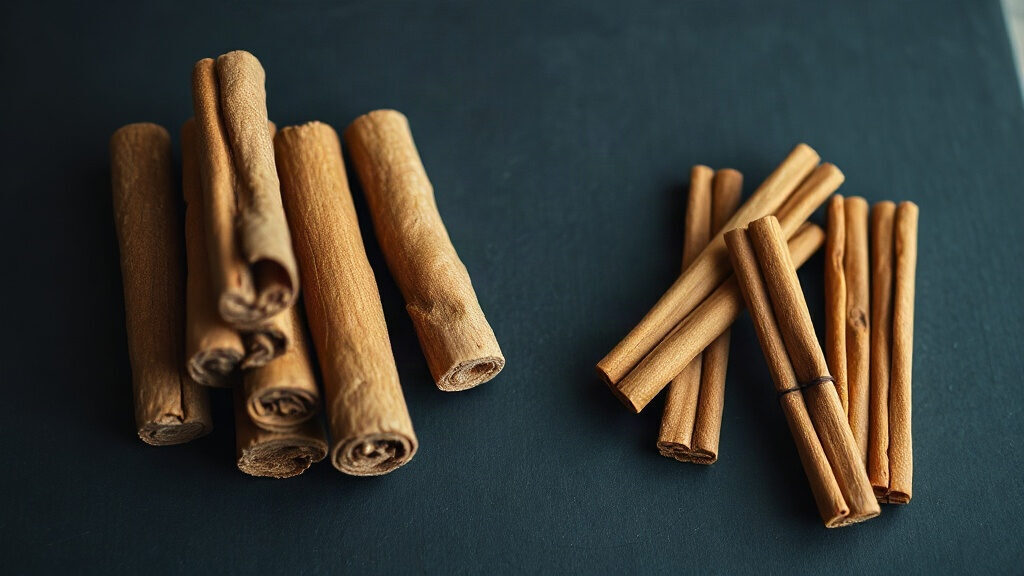
The word cinnamon refers to the dried, rolled bark of several trees in the laurel family, not to a single plant. Two species dominate the European market. Ceylon cinnamon (Cinnamomum verum or zeylanicum), grown mainly in Sri Lanka, comes as thin sticks made of many layers. The Chinese species, or cassia (Cinnamomum cassia), forms a thick bark rolled in a single layer, spicier and cheaper.
This distinction matters for two reasons. Most clinical trials on blood sugar used cassia, and their results do not automatically apply to the other species. Above all, cassia contains coumarin, an aromatic compound that is toxic to the liver at high doses, whereas Ceylon holds only traces of it. On the label of a supermarket powder, the species is rarely specified: without the word “Ceylon”, it is usually cassia.
How cinnamon acts on glucose: the mechanisms studied
The effects of cinnamon on blood sugar rest on a few compounds in the bark, studied mostly in the laboratory and in animals. The proposed mechanisms are the following:
- Cinnamaldehyde, the compound behind the smell, improves glucose uptake by muscle and fat cells in culture.
- Polyphenols (type A procyanidins) partly mimic the action of insulin on its receptors, according to in vitro work.
- Extracts inhibit intestinal alpha-glucosidase, the enzyme that breaks starch down into glucose, in animal models.
- The spice slows stomach emptying, which spreads out the absorption of a meal’s carbohydrates: this is the only mechanism measured directly in humans.
This last effect was observed in Malmö, Sweden, in 14 healthy volunteers. Adding 6 g of cinnamon to 300 g (10.6 oz) of rice pudding lowered the median gastric emptying rate from 37% to 34.5%. It also reduced the rise in glucose after the meal (Hlebowicz et al., 2007). The authors note that the drop in blood sugar was larger than the slowing of gastric emptying, which suggests other mechanisms. The rest of the model (insulin-like effect, enzyme inhibition) has not been confirmed in humans at dietary doses.
Cinnamon and blood sugar: what the clinical trials show
Randomized trials show a modest drop in fasting blood glucose in people with type 2 diabetes, with wide disparity between studies. The largest meta-analysis to date pools 28 trials and 3,054 patients followed for 30 to 120 days. On average, it measures -15.3 mg/dL in fasting glucose, -39 mg/dL in post-meal glucose and -0.56 points of HbA1c (de Moura et al., 2025). Heterogeneity reaches 88% for fasting glucose and 94% for HbA1c: the trials do not all measure the same thing.
Older reviews are less favorable. In 2012, the Cochrane review (10 trials, 577 participants) judged the effect on fasting glucose inconclusive and found no difference in HbA1c. The risk of bias was high or unclear in 8 of the 10 trials (Leach and Kumar, 2012). A year later, a meta-analysis of 10 trials (543 patients) found -24.6 mg/dL in fasting glucose, but no significant effect on HbA1c (-0.16%) (Allen et al., 2013).
The study that launched the trend deserves a separate mention. In 2003, 60 Pakistani patients taking 1, 3 or 6 g of cinnamon a day for 40 days saw their fasting glucose fall by 18 to 29% (Khan et al., 2003). In August 2025, Diabetes Care published an expression of concern about this paper. Independent statisticians point to groups that already differed at baseline, a poorly described randomization and a surprising absence of dropouts (Diabetes Care, 2025). Several European trials never reproduced its figures. One example is Maastricht, in 25 postmenopausal women with diabetes (1.5 g a day for 6 weeks, no effect on insulin sensitivity) (Vanschoonbeek et al., 2006).
In people with prediabetes, recent data are encouraging but small. In a Joslin Diabetes Center trial (54 adults, 500 mg three times a day, 12 weeks), fasting glucose rose on placebo. It stayed stable on the spice, a gap of 5 mg/dL (Romeo et al., 2020). At UCLA, 18 adults with obesity and prediabetes took 4 g a day for 4 weeks in a crossover design against placebo. Their glucose was tracked with a continuous monitor, and post-meal peaks fell from 11.7 to 9.6 mg/dL on average (Zelicha et al., 2024).
| Study | Population | Dose and duration | Main result |
|---|---|---|---|
| Khan 2003 (expression of concern in 2025) | 60 people with type 2 diabetes | 1, 3 or 6 g/day, 40 days | Fasting glucose -18 to -29% |
| Mang 2006 | 79 people with type 2 diabetes | Aqueous extract equivalent to 3 g/day, 4 months | Fasting glucose -10.3% versus -3.4% on placebo, HbA1c unchanged |
| Vanschoonbeek 2006 | 25 postmenopausal women with diabetes | 1.5 g/day of cassia, 6 weeks | No effect on insulin or glucose tolerance |
| Romeo 2020 | 54 adults with prediabetes | 3 x 500 mg/day, 12 weeks | Gap of 5 mg/dL in fasting glucose versus placebo |
| Zelicha 2024 | 18 adults with obesity and prediabetes | 4 g/day, 4 weeks (crossover) | Lower 24-hour glucose and post-meal peaks |
| de Moura 2025 (meta-analysis) | 28 trials, 3,054 patients | 30 to 120 days | Fasting glucose -15.3 mg/dL, HbA1c -0.56 points |
Ceylon or cassia cinnamon: which one to choose in practice?
For daily use, Ceylon exposes you to far less coumarin, but its effect on blood sugar is less documented. In a Swedish trial, 6 g of Ceylon taken with a glucose tolerance test changed neither blood glucose nor insulin in 10 people with impaired glucose tolerance (Wickenberg et al., 2012). Conversely, a 2025 Sri Lankan trial in 210 people with diabetes reports a drop in fasting glucose and HbA1c with a 250 or 500 mg Ceylon extract. Its authors hold a patent on this extract (Ranasinghe et al., 2025).
The coumarin content of cassia varies enormously. Researchers at the German Federal Institute for Risk Assessment (BfR) analyzed commercial sticks. They found levels ranging from undetectable traces to about 10,000 mg per kilo, sometimes within the same tree (Woehrlin et al., 2010). At that maximum level, a level teaspoon of 2.5 g of powder would provide up to 25 mg of coumarin.
| Criterion | Cassia (Chinese cinnamon) | Ceylon (“true” cinnamon) |
|---|---|---|
| Stick appearance | Thick bark, a single rolled layer | Many thin layers, brittle stick |
| Coumarin | High and highly variable content, up to about 10 g/kg | Traces |
| Blood sugar trials | Majority of published trials | Few trials, conflicting results |
| Price and availability | Cheap, found in most powders | More expensive, “Ceylon” stated on the label |
The spice fits into a broader strategy for controlling sugar spikes, which matters far more than the spice itself. Food order, fiber and activity after meals weigh more heavily, as detailed in our feature on carbohydrates, blood sugar and aging. Apple cider vinegar works through a similar mechanism, slower gastric emptying, with effects that are also modest. Berberine has stronger trials, but behaves almost like a drug. All these levers belong to the deregulated nutrient sensing pillar, one of the hallmarks of aging.
A cautious protocol: how to use cinnamon
Cinnamon is best used as an everyday spice, at culinary doses, rather than in capsules dosed at several grams. The 2025 meta-analysis also observes that doses of 2 g a day or less give results at least as good as higher doses. A few practical guidelines:
- Choose Ceylon for regular use, and keep cassia for occasional baking.
- Do not eat cassia every day: its coumarin content varies too much from one batch to another to guarantee a safe daily dose, especially in children.
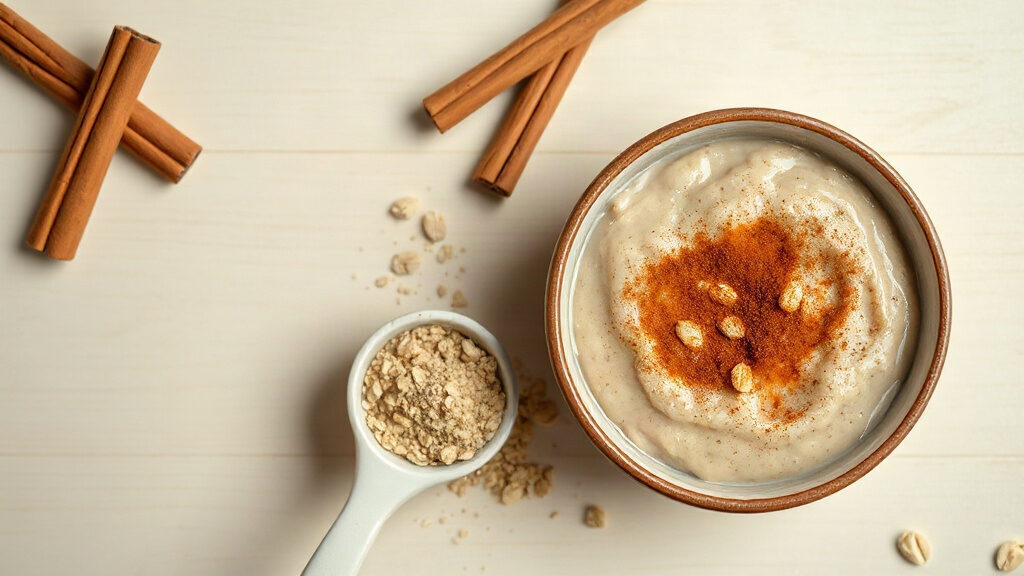
- Pair it with a carbohydrate-rich meal (porridge, yogurt, stewed fruit, rice pudding), where its effect on the glucose spike was measured.
- Avoid cassia capsules that are not standardized for coumarin, as they expose you to intakes that are hard to know.
- If you are treated for diabetes, talk to your doctor: an additive effect with diabetes drugs theoretically carries a risk of hypoglycemia.
In France, health authorities cap coumarin from supplements at 4.8 mg per day for a 60 kg (132 lb) adult and advise people with a history of liver disease against cinnamon-rich foods. The US National Center for Complementary and Integrative Health also warns that the coumarin in cassia can harm the liver in sensitive people. A case of acute hepatitis was described in a 73-year-old woman one week after starting cinnamon capsules taken with a statin (Brancheau et al., 2015). For diabetes itself, the foundation remains diet, physical activity and prescribed treatment, as the World Health Organization points out in its diabetes fact sheet.
| Benchmark | Value | What it represents |
|---|---|---|
| Tolerable daily intake (EFSA) | 0.1 mg/kg of body weight | 6 mg per day for a 60 kg adult |
| French limit for supplements (Anses) | 4.8 mg per day | 60 kg adult, leaving a margin for food |
| Very rich cassia (10,000 mg/kg) | 25 mg per 2.5 g | One level teaspoon exceeds the tolerable dose |
To receive the latest studies on nutrition and metabolism every month, subscribe to our health newsletter.
Frequently asked questions about cinnamon and blood sugar
Does cinnamon really lower blood sugar?
Yes, but modestly. In people with type 2 diabetes, the 2025 meta-analysis (28 trials, 3,054 patients) measures an average of -15 mg/dL in fasting glucose, with highly variable results across studies. The effect on glycated hemoglobin is still debated: the 2012 Cochrane review and a 2013 meta-analysis found none. Cinnamon replaces neither treatment nor a suitable diet.
How much cinnamon should you have per day?
Trials have tested 120 mg to 6 g a day, and doses of 2 g or less appear as effective as higher ones. With cassia, the most common type, coumarin content varies so much that no safe daily dose can be guaranteed. Ceylon cinnamon, almost free of coumarin, is better suited to daily use, even though its effect on blood sugar is less documented.
What is the difference between Ceylon and cassia cinnamon?
They come from two different tree species. Cassia, sold in most powders, forms a thick bark and contains a lot of coumarin, up to about 10 g per kilo depending on the batch. The Ceylon type forms thin, flaky sticks, contains only traces, costs more and has been less studied for blood sugar.
Can cinnamon damage the liver?
At high and repeated doses, the coumarin in cassia can cause liver injury in sensitive people. EFSA sets the tolerable intake at 0.1 mg per kilo of body weight per day, and French health authorities advise against cinnamon-rich foods for people with a history of liver disease. One teaspoon of a very rich cassia can be enough to exceed this threshold.
Can you take cinnamon with diabetes medication?
Culinary use is generally not a problem, but capsules call for medical advice. Their effect, even if modest, adds to that of diabetes drugs and can promote hypoglycemia, especially with insulin or sulfonylureas. Coumarin can also add to the liver toxicity of other medicines, as in a hepatitis case described with a statin in 2015.
Medical disclaimer. The information provided here is for informational purposes only and does not constitute medical advice. It does not replace a consultation. If you have diabetes, never change your treatment because you eat or take cinnamon, and talk to your doctor, especially if you are on insulin or sulfonylureas, or if you have liver disease. Ask a healthcare professional before changing your diet, taking dietary supplements or starting a new practice, especially if you have a medical condition, are pregnant or are under treatment. Dietary supplements do not replace a balanced diet or medical follow-up.