A vegetarian diet protects the heart but can weaken the bones if it is poorly planned: that is the twofold finding of 18 years of follow-up in the United Kingdom. In the EPIC-Oxford cohort, people who ate no meat or fish had fewer heart attacks, but more hip fractures. Here is what the studies measure, why these two effects coexist and how to keep supple arteries without sacrificing your skeleton.
In brief – A vegetarian diet is an eating pattern without meat or fish that lowers the risk of coronary heart disease by about 22%, according to 48,188 British adults followed for 18 years. This effect runs through lower LDL cholesterol (0.30 mmol/L, about 12 mg/dL, lower on average across 30 randomized trials) and lower blood pressure (4.8 mmHg lower systolic). The downside concerns the skeleton: lower bone density and a hip fracture risk 25% higher in vegetarians and 131% higher in vegans. This excess risk disappears when calcium intake reaches at least 525 mg a day. Well planned (calcium, protein, vitamins D and B12), this way of eating keeps its heart benefits without a cost to the bones.
Vegetarian diet: definition and variants
A vegetarian excludes meat, poultry and fish, but usually keeps eggs and dairy products. Nutritionists then speak of a lacto-ovo-vegetarian diet. A vegan also removes all animal products: milk, cheese, eggs, honey. A pescatarian, for their part, keeps fish.
These distinctions matter, because studies clearly separate these groups and their results diverge, especially for bones. With milk and yogurt, the lacto-ovo version keeps two major sources of calcium. A vegan has to find this mineral elsewhere, which changes everything for bone density.
In France, eating without meat remains a minority choice, but the general guidance of the World Health Organization on a healthy diet points in the same direction: more vegetables, fruit, legumes and whole grains, less salt and saturated fat.
Mechanism: how a vegetarian plate acts on arteries and the skeleton
The heart benefit of a vegetarian menu comes mainly from three levers that can be measured in the blood and with a blood pressure cuff. The effects on bone, by contrast, depend on nutrients that meat and fish used to supply effortlessly.
For the heart, the documented mechanisms are the following:
- Less saturated fat and more soluble fiber: oats, lentils and chickpeas trap part of the cholesterol in the gut, which lowers LDL and apolipoprotein B.
- More potassium and often less sodium, two factors that lower blood pressure.
- A lower BMI: in EPIC-Oxford, non-meat eaters had a BMI 1.2 kg/m² lower on average than meat eaters.
For bone, the picture is reversed. The skeleton needs calcium, protein, vitamin D and a minimum of mechanical loading. A lower BMI means less pressure on weight-bearing bones and less fat tissue to cushion a fall on the hip. Average calcium and protein intakes are also lower in vegans, and vitamin B12, absent from plant foods, is involved in bone metabolism. The NHS page on osteoporosis notes that bones lose density as we age, and that women lose bone faster in the years after menopause.
What science says about the vegetarian diet, the heart and the bones
The data converge: less coronary heart disease, but more fractures and a signal for hemorrhagic stroke. The largest prospective cohort on the subject, EPIC-Oxford, provides most of the figures.
Heart: a lower coronary risk
Among 48,188 adults followed for 18.1 years, vegetarians had 22% less coronary heart disease than meat eaters (HR 0.78), or 10 fewer cases per 1,000 people over 10 years (Tong et al., BMJ 2019). After adjustment for cholesterol, blood pressure, diabetes and BMI, the ratio rose to 0.90: these factors therefore explain a good part of the effect. An earlier analysis of the same cohort, in 44,561 participants, found a 32% lower risk (HR 0.68), largely explained by non-HDL cholesterol 0.45 mmol/L lower and systolic pressure 3.3 mmHg lower (Crowe et al., 2013).
Randomized trials confirm this mechanism. A meta-analysis of 30 trials shows that switching to a vegetarian or vegan menu lowers LDL by 0.30 mmol/L (about 12 mg/dL) and apolipoprotein B by 12.9 mg/dL (Koch et al., European Heart Journal 2023). For blood pressure, 7 controlled trials (311 participants) report a 4.8 mmHg drop in systolic and 2.2 mmHg in diastolic pressure (Yokoyama et al., 2014). A meta-analysis of 96 observational studies found 25% less ischemic heart disease, with no significant reduction in total mortality (Dinu et al., 2017).
A major caveat: in EPIC-Oxford, the same meat-free group also had 20% more strokes (HR 1.20), or 3 extra cases per 1,000 people over 10 years, mostly hemorrhagic strokes. The authors suggest very low cholesterol or certain deficiencies, with no proof of causation at this stage.
Bones: lower density and more fractures
Across 20 studies and 37,134 participants, non-meat eaters, vegans included, had lower bone mineral density at the femoral neck and lumbar spine; vegans also had more fractures (Iguacel et al., 2019). In EPIC-Oxford, over 17.6 years, the risk of hip fracture was 25% higher in vegetarians and 131% higher in vegans (HR 2.31), or 14.9 more cases per 1,000 vegans over 10 years (Tong et al., BMC Medicine 2020). Among 26,318 British women in the UK Women’s Cohort Study, vegetarian women had 33% more hip fractures (Webster et al., 2022).
The most useful figure comes from an older EPIC-Oxford analysis. Among participants consuming at least 525 mg of calcium a day, the excess fracture risk of vegans disappeared (rate ratio 1.00), according to Appleby et al. (2007). These studies remain observational: they show associations, not cause and effect.
In practice: which vegetarian diet profile for which effects?
The effect of a meat-free diet depends above all on what replaces the meat and which animal products are kept. The table below summarizes the risks measured in EPIC-Oxford compared with meat eaters.
| Dietary profile | Coronary heart disease | Total stroke | Hip fracture |
|---|---|---|---|
| Meat eater (reference) | 1.00 | 1.00 | 1.00 |
| Pescatarian | 0.87 (13% lower) | No significant excess risk | 1.26 (26% higher) |
| Lacto-ovo-vegetarian | 0.78 (22% lower, vegans included) | 1.20 (20% higher) | 1.25 (25% higher) |
| Vegan | Included in the previous group | Included in the previous group | 2.31 (131% higher) |
These hazard ratios were adjusted for smoking, physical activity and socioeconomic status. The fracture gaps narrow slightly after adjustment for calcium and protein, which points to these two nutrients as priority targets.
Protein quality matters as much as quantity: our comparison of plant protein vs animal protein details how to combine legumes and grains. For vitamin B12, the only near-certain deficiency without a supplement in vegans, see our guide vitamin B12: deficiency and dose. If you are torn between several eating patterns, the Mediterranean diet offers a well-studied middle path. These topics belong to our pillar page on deregulated nutrient sensing.
Tips: a vegetarian diet that protects the heart and bones
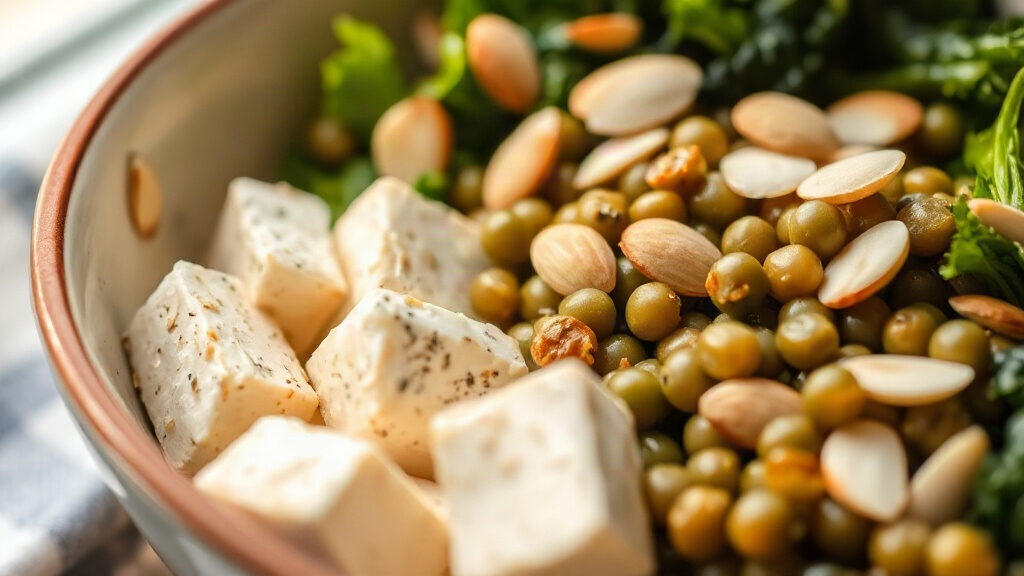
The principle fits in one sentence: keep the legumes, fiber and healthy fats that serve the heart, and secure the nutrients the skeleton needs. The following table lists the points to watch and concrete plant-based sources.
| Nutrient | Main role | Sources without meat or fish |
|---|---|---|
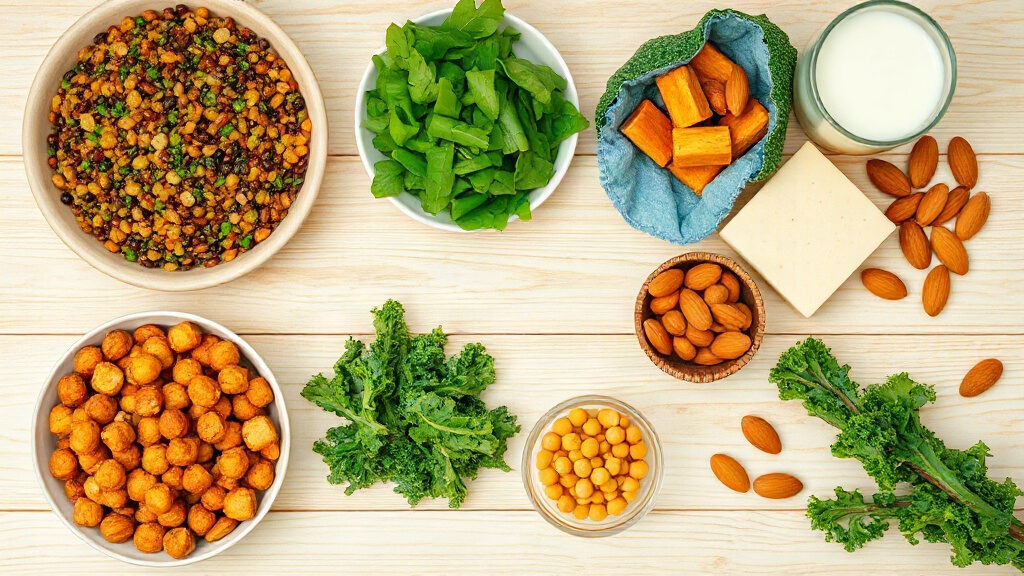
| Calcium | Bone mineralization | Dairy, tofu set with calcium sulfate, calcium-rich mineral water, kale, almonds |
| Protein | Bone matrix and muscle mass | Lentils, chickpeas, soy, eggs, cheese, quinoa |
| Vitamin D | Intestinal absorption of calcium | Sun exposure, eggs, fortified plant-based drinks, supplement on medical advice |
| Vitamin B12 | Blood, nerves and bone metabolism | Eggs and dairy (lacto-ovo), supplement essential (vegan) |
| Long-chain omega-3s | Heart rhythm, triglycerides | Walnuts, flaxseed and hemp seed (ALA precursor), algae oil |
Day to day, these simple habits cover the essentials:
- Aim for at least 525 mg of calcium a day, the threshold below which EPIC-Oxford observed an excess fracture risk, and ideally the recommended intake in France for your age.
- Include a serving of legumes or soy at every main meal to cover your protein needs.
- Choose calcium-fortified plant-based drinks if you do not drink cow’s milk.
- Have your vitamin B12 and vitamin D checked once a year, especially after age 50.
- Add brisk walking, light jumping or strength training: mechanical loading stimulates bone formation.
- Avoid replacing meat with salty ultra-processed products, which cancel out the blood pressure benefit.
To receive our monthly study summaries on nutrition and aging, sign up for the UltraSanté newsletter.
Frequently asked questions about the vegetarian diet
Does a vegetarian diet really lower the risk of heart attack?
Yes, in large cohorts. EPIC-Oxford (48,188 adults, 18 years of follow-up) observed 22% less coronary heart disease among vegetarians, or 10 fewer cases per 1,000 people over 10 years. The effect runs through lower LDL and lower blood pressure, confirmed by randomized trials. These are associations: physical activity and smoking also play a part, even after adjustment.
Why do vegetarians have more hip fractures?
Studies point to three explanations: lower calcium intake, less protein and a lower BMI, which reduces both the load on the bones and the cushioning during a fall. In EPIC-Oxford, the risk of hip fracture was 25% higher in vegetarians and 131% higher in vegans compared with meat eaters.
What is the difference between vegetarian and vegan for bone health?
A vegetarian keeps dairy and eggs, which provide calcium, protein and vitamin B12. A vegan removes them all. The result in EPIC-Oxford: a 25% higher risk of hip fracture for the first group, 131% for the second. Among vegans consuming at least 525 mg of calcium a day, this excess risk no longer appears.
Does a vegetarian diet increase the risk of stroke?
There is a signal. In EPIC-Oxford, participants who ate no meat had 20% more strokes, or 3 extra cases per 1,000 people over 10 years, mostly hemorrhagic strokes. This finding has not been confirmed everywhere and the cause remains unknown. Very low cholesterol or vitamin B12 deficiency are among the leads researchers are exploring.
How can you protect your bones on a vegetarian diet?
Get at least 525 mg of calcium a day from dairy, calcium-set tofu, calcium-rich mineral water or fortified drinks. Cover your protein needs with legumes and soy. Have your vitamin D and B12 levels tested, and do weight-bearing activity such as brisk walking or strength training. These measures target the factors identified in the cohorts.
Medical disclaimer. The information on this page is provided for informational purposes only and does not constitute medical advice. It does not replace a consultation. Ask a healthcare professional before changing your diet, taking dietary supplements or starting a new practice, especially if you have a medical condition, are pregnant or are under treatment. Dietary supplements do not replace a balanced diet or medical follow-up.