Curcumin is the main active compound in turmeric, a yellow polyphenol studied for its antioxidant and anti-inflammatory effects on cellular aging. Animal and human trials suggest benefits for oxidative stress, cognitive function and vascular health, but its low intestinal absorption and a possible liver risk at high doses call for precise precautions. Here is what verified studies show and how French food safety regulators frame its use as a dietary supplement.
In brief – Curcumin is the main curcuminoid found in turmeric (Curcuma longa), recognized for antioxidant and anti-inflammatory properties studied as possible levers against cellular aging. In mice and in the roundworm C. elegans, it extends lifespan by reducing oxidative stress (Liao et al., 2011). In humans, a meta-analysis of 626 participants shows a significant drop in oxidation markers and a rise in antioxidant enzymes (Qin et al., 2018), while a trial in 39 adults reports a 36% improvement in vascular function (Santos-Parker et al., 2017). Its oral bioavailability stays very low without pairing it with piperine, and in France the food safety agency Anses recommends not exceeding 153 mg per day for a 60 kg (132 lb) adult, due to rare reported cases of hepatitis.
Definition: What Is Curcumin?
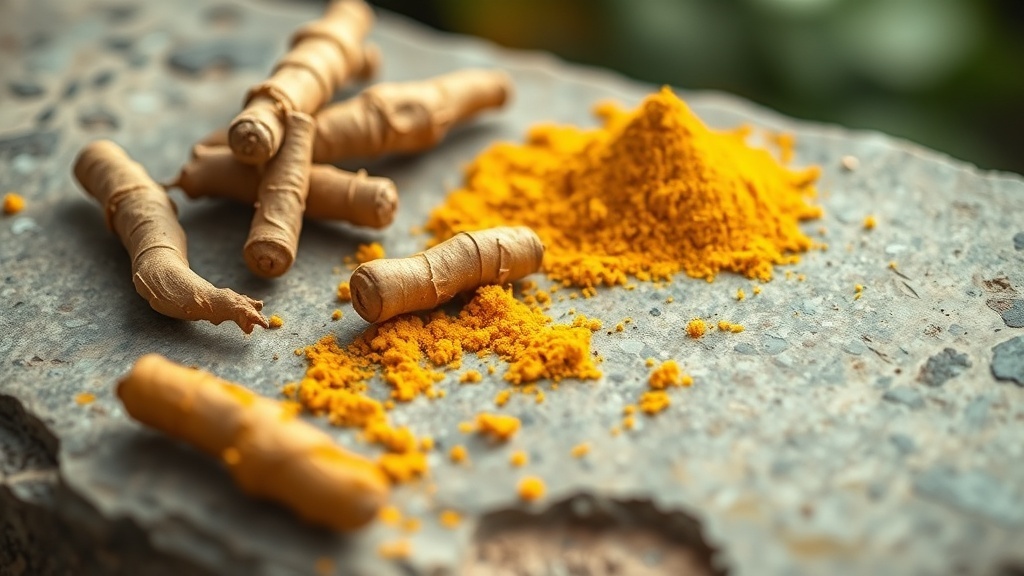
Curcumin is the main curcuminoid extracted from the rhizome of turmeric, a rhizomatous plant native to South Asia. It makes up 2 to 8% of the weight of turmeric powder, alongside two more minor compounds, demethoxycurcumin and bisdemethoxycurcumin. This yellow-orange pigment gives curry its characteristic color and has been the subject of several thousand scientific publications over the past twenty years, mainly because of its antioxidant activity and its ability to modulate cellular inflammatory pathways.
It should not be confused with the turmeric powder used in cooking: the spice contains only a small fraction of it, not enough to reproduce the doses tested in the clinical trials discussed below.
Mechanisms: How Curcumin Acts on Cells
Curcumin acts on several biological pathways linked to cellular aging, though no single one fully explains its effects observed in practice. In the roundworm Caenorhabditis elegans, a Taiwanese team showed that it extends lifespan through a direct antioxidant action, an effect that disappears in mutants lacking the skn-1, sir-2.1 or age-1 genes (Liao et al., 2011).
- Reduction of oxidative stress: lower malondialdehyde (MDA), a marker of lipid peroxidation, and higher superoxide dismutase (SOD), an endogenous antioxidant enzyme.
- Modulation of cellular inflammatory pathways involved in inflammaging, the chronic low-grade inflammation linked to age.
- Effect on endothelial function, the inner lining of blood vessels, through improved availability of nitric oxide.
- Low oral bioavailability: it is quickly metabolized by the liver and intestine, which limits its active blood concentration.
This last limitation explains why research has developed formulations paired with piperine, a black pepper alkaloid that slows the compound’s hepatic breakdown and multiplies its bioavailability by 20, according to a landmark human trial (Shoba et al., 1998).
What Science Says About Curcumin and Longevity
The strongest evidence concerns intermediate markers of aging rather than a proven extension of human lifespan, something no trial can establish over an entire lifetime. A meta-analysis of eight randomized trials in 626 participants confirms a significant reduction in oxidative stress under supplementation, with a stronger effect when paired with piperine (Qin et al., 2018).
On the vascular side, 39 healthy adults aged 45 to 74 saw their flow-mediated arterial dilation improve by 36% after supplementation, versus no change under placebo (Santos-Parker et al., 2017). On the cognitive side, an 18-month trial in 40 adults aged 51 to 84 reports improved verbal memory and attention with Theracurmin, a micronized form, along with a reduction in amyloid deposits visible on imaging (Small et al., 2018).
These positive results contrast with a larger meta-analysis: across 988 participants on curcumin and 356 on turmeric, no significant drop in CRP, IL-6 or TNF-alpha was found across pooled trials (White et al., 2019). This divergence illustrates a classic limitation of supplement research: results vary widely depending on formulation, dose and population studied, and an association measured on one marker does not prove an overall clinical benefit. The same caution applies to inflammaging, described by researchers as a driver of aging (Furman et al., 2019): slowing one isolated inflammatory marker is not the same as slowing aging as a whole.
In Practice: Which Form Should You Take?
The form chosen almost entirely determines the effectiveness observed, since the native form is poorly absorbed by the intestine. Formulations enriched with piperine, micronized, or encapsulated in liposomes all aim to work around this limitation, with uneven levels of evidence. This bioavailability question connects to the broader issues of diet and the fight against chronic inflammation already covered on UltraSante, where other plant compounds such as the polyphenols in dark chocolate show comparable antioxidant mechanisms.
| Form | Bioavailability | Level of evidence | Point of caution |
|---|---|---|---|
| Native form (powder) | Very low | Limited | Blood concentrations nearly undetectable alone |
| With piperine | Multiplied by 20 | Landmark human trial (Shoba 1998) | Higher liver risk flagged by Anses, France’s food safety agency |
| Micronized (Theracurmin type) | High | 18-month controlled trial (Small 2018) | Higher cost, long-term medical follow-up recommended |
| Liposomal | High | Pharmacokinetic data, clinical trials still limited | Quality varies by manufacturer |
To go further on monitoring the biological markers involved in these mechanisms, our article on blood markers of longevity explains how to interpret a drop in oxidative stress within an overall panel.
Protocol and Precautions Before Taking It
In France, the national food safety agency Anses sets the safety limit at 153 mg of curcumin per day for a 60 kg (132 lb) adult from dietary supplements, a threshold calculated from the European acceptable daily intake minus the usual dietary intake. This caution follows more than 100 reports of adverse effects in France, including 15 cases of hepatitis, often linked to high-bioavailability formulations (piperine, liposomes, nanoparticles). The NCCIH similarly warns that these supplements can affect the liver and interact with certain medications at high doses.
- Do not exceed the dose recommended on the label or combine several supplements that contain it.
- Avoid it if you have gallstones or a biliary tract condition, since this compound stimulates bile secretion.
- Tell your doctor if you take anticoagulant, anticancer or immunosuppressant medication, because of possible interactions.
- Take it with a meal containing some fat, which improves absorption of curcuminoids.
- Stop and seek medical advice if you notice unusual fatigue, jaundice or abdominal pain, signs suggestive of liver damage.
Frequently Asked Questions About Curcumin
What daily dose of curcumin is safe?
Anses, France’s food safety agency, recommends not exceeding 153 mg of curcumin per day from dietary supplements for a 60 kg (132 lb) adult. This threshold accounts for the amount already provided by a typical diet. High-bioavailability formulations, such as those paired with piperine, call for extra caution because of reported cases of hepatitis.
Can it really slow aging?
In animals, curcumin extends lifespan through specific antioxidant pathways. In humans, trials show benefits on intermediate markers: oxidative stress, vascular function, memory. No study has yet demonstrated an extension of human lifespan, and effects on inflammation remain inconsistent across meta-analyses.
Why pair curcumin with black pepper’s piperine?
Curcumin alone is quickly broken down by the liver and intestine, which sharply limits its blood concentration. A landmark trial showed that 20 mg of piperine multiplied its bioavailability by 20 in humans, based on a 2 g dose. This pairing also raises the liver risk flagged by food safety regulators, which is why maximum doses should be respected.
Is it dangerous for the liver?
At dietary levels, curcumin poses no known liver risk. At high doses as a supplement, particularly with piperine or in liposomal formulations, Anses has logged more than 100 reports in France, including 15 cases of hepatitis. People with gallstones or liver disease should avoid these supplements without medical advice.
Turmeric and curcumin: what is the difference?
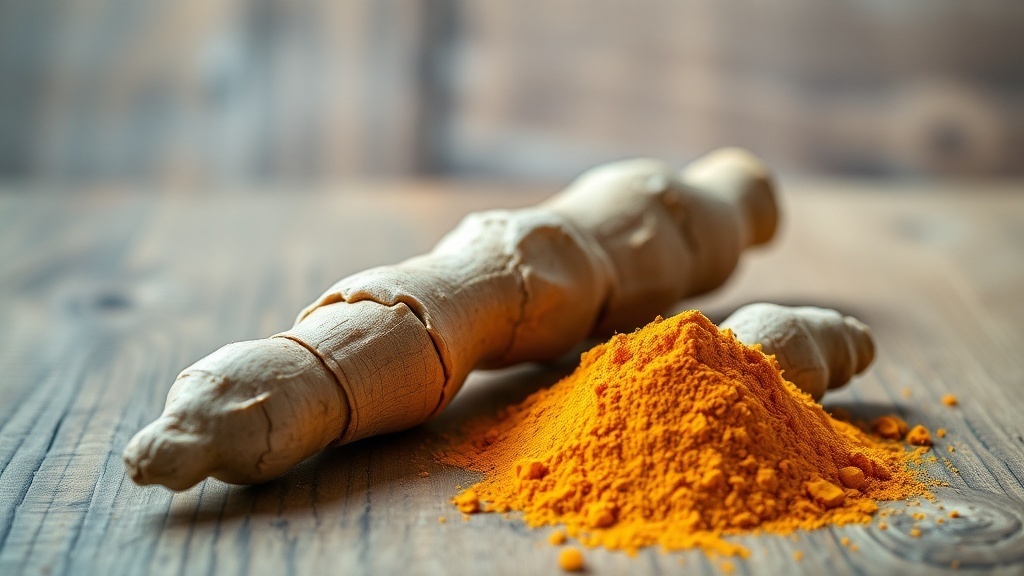
Turmeric is the whole plant used as a spice, of which curcumin makes up only 2 to 8% of the powder’s weight. Doses tested in clinical trials, often above 500 mg per day, are impossible to reach through turmeric consumption in cooking alone.
Medical disclaimer. The information provided here is for informational purposes only and does not constitute medical advice. It does not replace a consultation. Ask a healthcare professional before changing your diet, taking dietary supplements or starting a new practice, especially if you have a medical condition, are pregnant or are under treatment. Dietary supplements do not replace a balanced diet or medical follow-up.