
A blood sugar spike is the rise in blood glucose that follows every meal, before levels come back down within a few hours. In an adult without diabetes, it usually stays below 1.40 g/L (140 mg/dL) and returns toward 1 g/L (100 mg/dL) within two hours. Continuous glucose monitors, now sold to the general public, nonetheless show a post-meal peak that differs widely from one person to the next. Here are the reference values, what the studies actually measure and the habits that flatten the curve.
In brief – A blood sugar spike is the temporary rise in blood glucose after a meal, which usually peaks within an hour to an hour and a half of starting to eat. In people whose regulation is normal, blood sugar stays between 0.70 g/L (70 mg/dL) fasting and 1.40 g/L (140 mg/dL) after a meal, returning toward 1 g/L within two hours. Measured two hours after 75 g of glucose, a value of 1.40 to 1.99 g/L signals impaired glucose tolerance, and 2.00 g/L or more signals diabetes. In 153 healthy adults and children wearing a sensor, blood sugar stayed between 0.70 and 1.40 g/L 96% of the time and exceeded 1.40 g/L for only about 30 minutes a day. A single spike after a large meal is nothing abnormal. Repeated values above these thresholds are what justify a conversation with a doctor.
Blood sugar spike: definition and normal values
A blood sugar spike is the highest point blood glucose reaches after you eat carbohydrates. Blood sugar is a tightly regulated constant, at around one gram of glucose per liter of blood. It stays between roughly 0.70 g/L fasting and 1.40 g/L after a meal, whatever the meal’s carbohydrate content, then falls back toward 1 g/L within two hours. MedlinePlus, the health site of the US National Library of Medicine, likewise treats a value under 140 mg/dL two hours after a glucose drink as normal.
Three units are in use depending on the laboratory and the device, which makes results harder to read. In France, blood tests report g/L; imported meters and sensors often display mg/dL, the standard unit in the United States; the international literature uses mmol/L. To convert, 1 g/L equals 100 mg/dL and 5.55 mmol/L.
| Situation | Value in g/L | In mg/dL | In mmol/L | Interpretation |
|---|---|---|---|---|
| Fasting, normal regulation | 0.70 to 1.00 | 70 to 100 | 3.9 to 5.6 | Expected value in the morning, before breakfast. |
| Peak after a meal, without diabetes | Up to 1.40 | Up to 140 | Up to 7.8 | Physiological rise, back toward 1 g/L within two hours. |
| 2 h after 75 g of glucose (oral test) | Under 1.40 | Under 140 | Under 7.8 | Normal glucose tolerance. |
| 2 h after 75 g of glucose | 1.40 to 1.99 | 140 to 199 | 7.8 to 11.0 | Impaired glucose tolerance (prediabetes). |
| 2 h after 75 g of glucose | 2.00 or more | 200 or more | 11.1 or more | Diagnostic threshold for diabetes, to be confirmed. |
These thresholds come from the oral glucose tolerance test, performed in a laboratory with a standardized drink. An ordinary meal is not a standardized test: its two-hour value depends on what it contained and how quickly it was eaten. Reading a glucose peak measured at home therefore calls for more caution than reading a lab result.
How a blood sugar spike forms after a meal
The spike is the outcome of a race between glucose entering the blood and its uptake by the tissues. Dietary carbohydrates are broken down into glucose in the gut, absorbed, then sent to the liver and the general circulation. The pancreas then releases insulin, which opens the door of muscle and fat tissue to glucose and slows the liver’s own sugar production.
Several factors set the height and duration of the post-meal peak:
- The amount and type of carbohydrate. White bread, white rice and sugary drinks pass quickly into the blood, which is what the glycemic index measures.
- How fast the stomach empties. Fiber, protein and fat slow it down and spread absorption over time.
- The insulin response. When cells respond less well to insulin (insulin resistance), the pancreas has to produce more of it for a weaker result.
- Gut hormones. GLP-1, released by the gut during the meal, amplifies insulin secretion and slows the stomach.
- Muscle activity. A working muscle takes up glucose, even without any rise in insulin.
From a longevity standpoint, insulin signaling is one of the nutrient-sensing pathways that aging research links to metabolic health. A repeated, high glucose peak puts demand on these pathways, and glucose that runs too high promotes the glycation of proteins. This link remains mechanistic: no study has directly measured the effect of a moderate post-meal peak on the pace of aging in a healthy person.
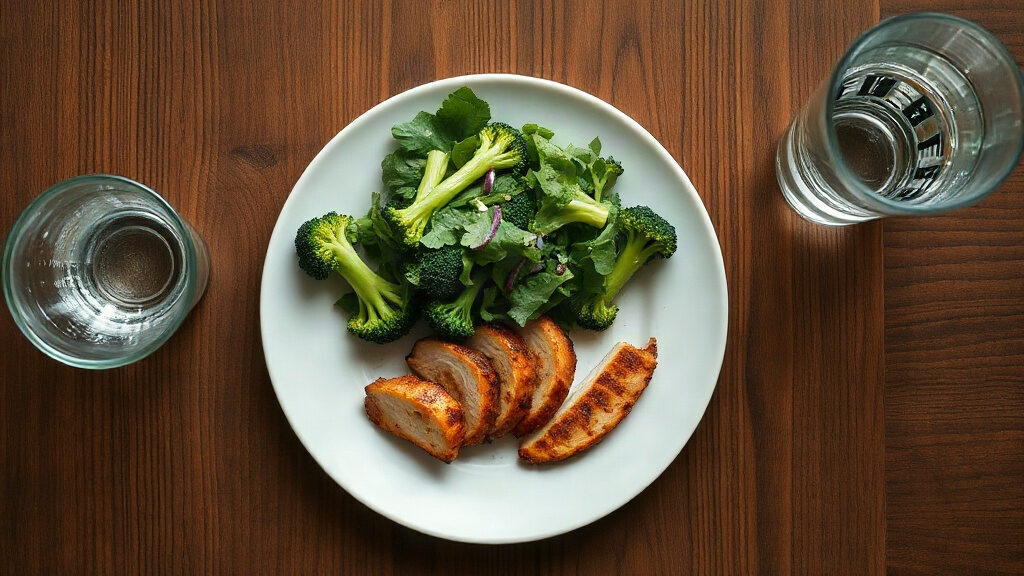
What the science says about blood sugar spikes
Continuous glucose monitors have made it possible to measure the post-meal glucose peak of healthy people in daily life, not just in the lab. Their results confirm the classic benchmarks while revealing strong variability between individuals. The observational studies below describe associations, not cause-and-effect relationships.
In people without diabetes: what the sensors show
In a US multicenter study, 153 participants aged 7 to 80, without diabetes and of normal weight, wore a Dexcom G6 sensor for up to ten days. Their mean blood sugar was 0.98 to 0.99 g/L, and 1.04 g/L after age 60. They spent a median 96% of the time between 0.70 and 1.40 g/L, and only 2.1% of the time above 1.40 g/L, or about 30 minutes a day (Shah et al., 2019). In the same cohort, the average peak went from 0.93 g/L before the meal to 1.30 g/L after it (DuBose et al., 2021).
An older German study followed 24 healthy young adults with a microdialysis sensor. The highest peak came after breakfast, at 1.32 g/L on average (from 1.01 to 1.68 g/L depending on the person), compared with 1.18 g/L after lunch and 1.23 g/L after dinner. It was reached 46 to 50 minutes after the start of the meal, versus 97 minutes on average in the US cohort, where participants logged their own mealtimes. For the same amount of carbohydrate (50 g), a meal rich in fiber, protein and fat peaked at 0.99 g/L, against 1.33 to 1.37 g/L for fast-absorbing meals (Freckmann et al., 2007).
A Stanford team added nuance to this reassuring picture. Among 57 adults monitored by sensor, some people classed as normoglycemic by standard tests reached values in the prediabetic range 15% of the time, and in the diabetic range 2% of the time (Hall et al., 2018). The authors see these as glucose response profiles, or “glucotypes”, that may come before the abnormalities picked up by fasting glucose.
A very personal response to the same meal
Two large studies show that the same meal does not produce the same spike in everyone. In Israel, 800 people wearing sensors recorded their responses to 46,898 meals: variability between individuals was so large that a food well tolerated by one person triggered a marked spike in another (Zeevi et al., 2015). In the United Kingdom, the PREDICT 1 study tested identical meals in 1,002 healthy twins and adults. The coefficient of variation of the glycemic response between individuals reached 68%, and the meal’s macronutrient composition explained only 15.4% of this variability (Berry et al., 2020).
Why post-meal blood sugar matters for health
The height of the glucose peak after a sugar load predicts risks that fasting blood sugar misses. The European DECODE analysis pooled 13 cohorts, or 25,364 adults aged 30 and over, followed for 7.3 years on average. Impaired glucose tolerance, meaning a blood sugar of 1.40 to 1.99 g/L two hours after 75 g of glucose, was associated with a 51% higher risk of death in men and a 60% higher risk in women. At equal fasting glucose, mortality rose with the two-hour value (DECODE, 1999).
The one-hour value is now drawing attention. In 2024, the International Diabetes Federation proposed treating a blood sugar of 1.55 g/L (155 mg/dL) or more, one hour after 75 g of glucose, as a sign of intermediate hyperglycemia, even when the two-hour value is normal (Bergman et al., 2024). In the San Antonio Heart Study, 42.5% of people with normal tolerance but above this threshold became prediabetic within 7.5 years, compared with 22.5% of the others (Abdul-Ghani et al., 2025).
On the mechanism side, a clamp experiment imposed controlled blood sugar levels on healthy and diabetic volunteers. Making blood sugar swing between 0.90 and 2.70 g/L every six hours impaired blood vessel function and raised oxidative stress more than blood sugar kept high continuously (Ceriello et al., 2008). These swings go far beyond a normal post-meal peak: the experiment sheds light on a mechanism, but it does not prove that an ordinary curve damages the arteries.
| Study | Population | Key result |
|---|---|---|
| Shah 2019 | 153 people aged 7 to 80 without diabetes | 96% of the time between 0.70 and 1.40 g/L, about 30 min a day above. |
| Freckmann 2007 | 24 healthy young adults | Average peak of 1.32 g/L after breakfast, reached in 46 to 50 min. |
| Hall 2018 | 57 adults, including normoglycemic people | Prediabetic range reached 15% of the time in some normoglycemic people. |
| Berry 2020 (PREDICT 1) | 1,002 adults, including twins | 68% variability between individuals for the same meal. |
| DECODE 1999 | 25,364 adults, 13 cohorts | Impaired glucose tolerance: mortality +51% (men), +60% (women). |
| Abdul-Ghani 2025 | 1,557 adults, 7.5-year follow-up | 42.5% prediabetes if one-hour blood sugar above 1.55 g/L. |
Blood sugar spike in practice: how to read your value
A single value is not enough to draw a conclusion, especially if it comes from a personal sensor or meter. An Israeli study of 8,315 adults aged 40 to 70 shows that fasting blood sugar itself varies from one morning to the next: 40% of people classed as normal on day one would have been reclassified into the prediabetic range over the following measurements (Shilo et al., 2024). The post-meal peak varies even more, depending on the meal, the previous night’s sleep, stress or the previous day’s activity.
Diagnosis relies on laboratory tests: fasting blood glucose, glycated hemoglobin (HbA1c) and, if needed, an oral glucose tolerance test. Our guide to fasting blood glucose and how to interpret it details these tests. In people with diabetes, the target is different: the international consensus on sensors aims for more than 70% of the time between 0.70 and 1.80 g/L, or 70 to 180 mg/dL (Battelino et al., 2019), and the individual goal is set with the doctor.
| What you observe | Likely reading | What to do |
|---|---|---|
| Spike under 1.40 g/L, back toward 1 g/L within 2 h | Normal response | Nothing in particular; keep your healthy habits. |
| Occasional spike around 1.50 g/L after a meal rich in fast sugars | Response to the meal, not a diagnosis | Look at what the meal contained and the activity that followed. |
| Repeated values above 1.40 g/L at 2 h | Possible impaired glucose tolerance | Talk to your doctor, who will order laboratory tests. |
| Value of 2.00 g/L or more, with thirst, heavy urination or fatigue | Suspected diabetes | See a doctor promptly. |
| Known diabetes | Personalized targets | Follow the goals set with your care team. |
Some situations raise the likelihood of an excessive post-meal peak: abdominal overweight, a family history of diabetes, diabetes during a past pregnancy, a sedentary lifestyle or high blood pressure. Our article on insulin resistance and its signs helps identify this background. The deregulated nutrient sensing pillar places these mechanisms within the biology of aging.
Tips to blunt a blood sugar spike every day
The habits that lower post-meal glucose are simple, inexpensive and measured in controlled trials, often small ones. Their effect is real but modest in a healthy person, whose post-meal peak is already well regulated.
- Eat vegetables and protein before starchy foods. In 16 people with type 2 diabetes, saving carbohydrates for the end of the meal reduced the height of the spike by 54% compared with eating carbohydrates first (Shukla et al., 2017).
- Walk after meals. In 10 at-risk people aged 60 and over, three 15-minute walks after each meal lowered average 24-hour blood sugar from 1.29 to 1.16 g/L, and controlled blood sugar in the three hours after dinner better than a single 45-minute walk (DiPietro et al., 2013).
- Break up long periods of sitting. A meta-analysis of 7 trials finds that short breaks of light walking lower post-meal blood sugar more clearly than simple standing breaks (Buffey et al., 2022).
- Pair carbohydrates with fiber, protein and quality fats, rather than eating a starchy food on its own.
- Choose whole grains, legumes and whole fruit over refined products and sugary drinks. Our article on carbohydrates and blood sugar compares the sources.
- Add a sour touch to the meal. In 12 healthy volunteers, vinegar served with white bread reduced the 30-minute glucose peak, with a dose-dependent effect (Östman et al., 2005).
| Habit | Measured effect | Level of evidence |
|---|---|---|
| Carbohydrates at the end of the meal | Spike reduced by 54% | Crossover trial, 16 people with type 2 diabetes |
| 10 min of walking after each meal | Post-meal curve reduced by 12%, by 22% after dinner | Crossover trial, 41 people with type 2 diabetes |
| 3 walks of 15 min after meals | 24-hour blood sugar from 1.29 to 1.16 g/L | Crossover trial, 10 people aged 60 and over |
| Light walking breaks | Clearer effect than standing breaks | Meta-analysis of 7 one-day trials |
| Vinegar with a white bread meal | 30-min blood sugar reduced, dose effect | Trial, 12 healthy volunteers |
The 12% figure comes from a New Zealand trial in which 41 adults with diabetes compared 10 minutes of walking after each meal with 30 minutes in one go (Reynolds et al., 2016). For vinegar, the highest dose tested corresponds to about two tablespoons, diluted in water or used in a salad dressing. Vinegar is still acidic: diluting it protects tooth enamel and the stomach. You do not need a glucose sensor to apply these habits: for a person without diabetes, the priority remains consistent habits, not chasing every spike.
Blood sugar spike: frequently asked questions
What is a normal blood sugar spike after a meal?
In an adult without diabetes, the post-meal peak usually stays below 1.40 g/L, or 140 mg/dL or 7.8 mmol/L. It generally peaks within an hour of starting the meal, then blood sugar falls back toward 1 g/L in about two hours, according to standard reference values. Sensors worn by healthy people show blood sugar above 1.40 g/L for only 30 minutes a day at the median.
How long after a meal does a blood sugar spike occur?
The peak most often occurs within an hour to an hour and a half after the start of the meal. In a German study of 24 healthy adults, it was reached in 46 to 50 minutes; in a US cohort wearing sensors, in 97 minutes on average. A meal rich in fiber, protein and fat delays and flattens the curve. Sensors under the skin display the value with a slight lag compared with the blood.
Is a blood sugar of 1.60 g/L (160 mg/dL) after a meal serious?
A single value of 1.60 g/L after a meal rich in fast sugars is not a diagnosis. If blood sugar repeatedly stays above 1.40 g/L two hours after meals, it may reflect impaired glucose tolerance. The doctor checks this with a laboratory fasting blood glucose test, a glycated hemoglobin test and sometimes an oral glucose tolerance test.
How can you avoid a blood sugar spike after eating?
Three habits have been measured in controlled trials. Eating vegetables and protein before starchy foods reduced the height of the spike by 54% in people with diabetes. Walking for 10 to 15 minutes after the meal lowers the curve. Pairing fiber and protein with carbohydrates slows their absorption. In a healthy person, these effects remain modest.
Should you wear a glucose sensor if you do not have diabetes?
No official guideline recommends it routinely. Sensors have been validated for people with diabetes, and in a healthy person, small repeated rises do not prove any disorder. Blood sugar also varies from day to day with sleep, stress or activity. If in doubt or if you have risk factors, laboratory tests ordered by a doctor remain the reference.
Medical disclaimer. The information on this page is provided for informational purposes only and does not constitute medical advice. It does not replace a consultation. Blood sugar that is repeatedly high, or that comes with intense thirst, heavy urination or weight loss, warrants prompt medical advice. If you have diabetes, do not change your treatment or your blood sugar targets without your doctor. Ask a healthcare professional before changing your diet, taking dietary supplements or starting a new practice, especially if you have a medical condition, are pregnant or are under treatment. Dietary supplements do not replace a balanced diet or medical follow-up.