
The GLP-1 hormone is released by the gut within minutes of every meal. It tells the pancreas to secrete insulin, slows the emptying of the stomach and sends the brain a signal of fullness. For about twenty years, drugs that mimic its action have treated type 2 diabetes, then obesity. Their large trials revealed an unexpected benefit: fewer heart attacks and strokes. Here is what natural GLP-1 does, what its analogs change, and what depends on your plate.
In brief – The GLP-1 hormone (glucagon-like peptide-1) is a gut messenger that curbs appetite and helps control blood sugar after meals. Secreted by the L cells of the intestine, it stimulates insulin, lowers glucagon, slows the stomach and acts on the hunger centers of the brain. Natural GLP-1 is inactivated within minutes, whereas its drug analogs, such as semaglutide, act for a whole week. Infused into volunteers, it cuts the amount eaten at the next meal by about 12%. In 17,604 overweight adults who already had cardiovascular disease, semaglutide reduced the risk of heart attack, stroke or cardiovascular death by 20% (SELECT trial, 2023). These treatments require a prescription and medical follow-up: one year after stopping, two thirds of the lost weight has returned, and part of the loss involves muscle. Dietary habits (protein and vegetables at the start of a meal, fiber) modestly raise natural GLP-1, without reproducing the effect of a drug.
GLP-1 hormone defined: a messenger made by the gut
The GLP-1 hormone is a peptide of 30 amino acids produced by the L cells of the intestinal wall, from the same gene as glucagon. The reference review by Jens Juul Holst, in Copenhagen, describes its release in response to a meal and its two main actions: stimulating insulin and restraining glucagon (Holst, 2007). Its full name, glucagon-like peptide-1, says it plainly: a type 1 peptide that resembles glucagon. It belongs to the incretin family, alongside a second gut hormone, GIP.
The incretin effect is simple to measure. At an identical blood sugar level, swallowed glucose triggers far more insulin than glucose infused into a vein. A German team quantified it in 1986 in six volunteers: gut factors explained up to 93% of the insulin response measured in the blood after 100 g of glucose (Nauck et al., 1986). GLP-1 is one of the two messengers in this dialogue between the gut and the pancreas.
Natural GLP-1 has a very short life. A circulating enzyme, DPP-4, cuts and inactivates it before it has even left the intestinal wall, according to the Holst review. Thirty minutes after an injection under the skin, the inactive form accounted for 78% of the GLP-1 measured in healthy volunteers and 88.5% in patients with type 2 diabetes (Deacon et al., 1995). This fragility explains why the drugs are modified analogs: semaglutide, for example, has a half-life of about one week. In type 2 diabetes, the gut releases less GLP-1 after a meal, while its elimination remains identical to that of people without diabetes (Vilsbøll et al., 2003).
How the GLP-1 hormone works: 5 effects, from pancreas to heart
GLP-1 acts on several organs through a single receptor, found in the pancreas, the digestive tract, the brain, the heart, the blood vessels and the kidney. The review by Daniel Drucker, in Toronto, details these circuits and distinguishes the action of GLP-1 secreted by the gut from the broader action of the drugs (Drucker, 2018). Its five established effects break down as follows:
- It increases insulin secretion, but only when blood sugar rises: used alone, it carries little risk of hypoglycemia.
- It reduces the secretion of glucagon, the hormone that pushes the liver to release sugar.
- It slows stomach emptying and intestinal motility, a mechanism called the “ileal brake” that prolongs the feeling of fullness.
- It acts on the hypothalamus and the brainstem, the regions that decide when a meal ends and modulate the urge to eat.
- It influences the heart and blood vessels: lower blood pressure and lower inflammation markers under treatment, with a slight rise in heart rate.
The action on the brain has been mapped in animals. Fluorescently labeled liraglutide enters the arcuate nucleus of the hypothalamus, where it activates satiety neurons (POMC/CART) and indirectly restrains hunger neurons (NPY/AgRP), in rats and mice (Secher et al., 2014). Semaglutide does not cross the barrier that protects the brain: it reaches it through more permeable areas near the ventricles, then activates 10 brain regions in rodents, some of them linked to food reward (Gabery et al., 2020).
| Target organ | Action of GLP-1 | Measured consequence |
|---|---|---|
| Pancreas (beta cells) | More insulin when blood sugar rises | Incretin effect: up to 93% of the insulin response after 100 g of swallowed glucose |
| Pancreas (alpha cells) | Less glucagon | The liver releases less sugar after the meal |
| Stomach and intestine | Slower gastric emptying | Prolonged fullness, lower blood sugar peak |
| Brain (hypothalamus, brainstem) | Activation of satiety neurons | About 12% fewer calories at the next meal (infusion) |
| Heart and blood vessels | Lower blood pressure and inflammation under treatment | Heart attacks, strokes and cardiovascular deaths reduced by 14% in 8 trials |
This role as a meal sensor places GLP-1 among the nutrient-sensing signals, one of the biological hallmarks of aging presented in our pillar on deregulated nutrient sensing. When these signals go awry, with abdominal weight gain and insulin resistance, the risk of diabetes and cardiovascular disease rises.
GLP-1 hormone and appetite: what the studies show
The GLP-1 hormone reduces the amount of food eaten, in humans as in animals. The first controlled demonstration dates from 1998: in 20 young men of normal weight, a GLP-1 infusion increased satiety after breakfast and cut the calories eaten at a lunch served ad libitum by 12%, compared with a saline infusion (Flint et al., 1998).
A meta-analysis then pooled the individual data of 115 participants, drawn from published and unpublished studies. GLP-1 infusion lowered energy intake by 727 kJ (about 174 kcal), or 11.7%, with an effect proportional to the infused dose (Verdich et al., 2001). The relative drop was comparable in lean people (13.2%) and in people with overweight (9.3%). Stomach emptying was slower, which contributes to satiety, and the well-being of participants remained unchanged.
Analogs amplify this effect because they act continuously. In 30 people with obesity treated for 12 weeks with semaglutide at 1 mg a week, meals served ad libitum provided 24% fewer calories over the day, a drop of 3,036 kJ, about 726 kcal (Blundell et al., 2017). Participants felt less hungry, had fewer food cravings and showed a weaker preference for fatty foods. Their resting energy expenditure, adjusted for lean mass, had not changed: the 5 kg (11 lb) loss came mainly from fat mass. The study was funded by the manufacturer, like most trials in this drug class.
Over the long term, phase 3 trials measure weight losses never seen before with a drug. In STEP 1, 1,961 adults without diabetes lost 14.9% of their weight in 68 weeks on semaglutide 2.4 mg, versus 2.4% on placebo, with lifestyle advice in both groups (Wilding et al., 2021). Tirzepatide, which activates both GIP and GLP-1 receptors, reached 20.9% at the 15 mg dose in SURMOUNT-1, in 2,539 adults followed for 72 weeks (Jastreboff et al., 2022). In the SELECT trial, the loss still reached 10.2% after 4 years of treatment, versus 1.5% on placebo (Ryan et al., 2024).
| Trial | Molecule and dose | Participants | Duration | Average weight loss |
|---|---|---|---|---|
| Blundell 2017 | Semaglutide 1 mg per week | 30 adults with obesity | 12 weeks | 5.0 kg (11 lb), mostly fat; 24% fewer calories |
| STEP 1 (2021) | Semaglutide 2.4 mg per week | 1,961 adults without diabetes | 68 weeks | 14.9% vs 2.4% on placebo |
| SURMOUNT-1 (2022) | Tirzepatide 15 mg per week | 2,539 adults without diabetes | 72 weeks | 20.9% vs 3.1% on placebo |
| SELECT (2024) | Semaglutide 2.4 mg per week | 17,604 adults with cardiovascular disease | 208 weeks | 10.2% vs 1.5% on placebo |
GLP-1 and the heart: what the large trials reveal
GLP-1 analogs reduce the risk of heart attack, stroke and cardiovascular death in high-risk people, with or without diabetes. This result comes from trials originally designed only to check the cardiac safety of these drugs. In LEADER, 9,340 high-risk patients with type 2 diabetes received liraglutide or a placebo for a median of 3.8 years: 13.0% had a major cardiovascular event on treatment, versus 14.9% on placebo (Marso et al., 2016). Cardiovascular mortality fell by 22%.
The same year, SUSTAIN-6 showed a 26% reduction in major events in 3,297 people with diabetes treated with semaglutide, driven mainly by non-fatal strokes (Marso et al., SUSTAIN-6, 2016). A meta-analysis of 8 trials pooling 60,080 patients confirmed the class effect: 14% fewer major cardiovascular events, 12% lower all-cause mortality and 11% fewer hospitalizations for heart failure (Sattar et al., 2021). It found no increase in severe hypoglycemia, retinopathy or pancreatic harm.
The SELECT trial extended this benefit to people without diabetes. It enrolled 17,604 adults aged 45 or older, with a BMI of at least 27 and established cardiovascular disease. After a mean follow-up of 39.8 months, 6.5% of patients on semaglutide had had a heart attack, a stroke or a cardiovascular death, versus 8.0% on placebo, a 20% reduction in risk (Lincoff et al., 2023). On the other side of the ledger, 16.6% of patients stopped treatment because of an adverse event, versus 8.2% on placebo.
A heart benefit that does not depend on weight alone
The heart benefit of semaglutide is only partly explained by weight loss. In an analysis of SELECT published in 2025, protection was the same whatever the starting weight, and weight loss over the first 20 weeks did not predict later risk (Deanfield et al., 2025). The reduction in waist circumference explained only about 33% of the effect. The authors point to other mechanisms, including inflammation: in the STEP-HFpEF trial, conducted in 529 patients with obesity and heart failure with preserved ejection fraction, C-reactive protein fell by 43.5% on semaglutide, versus 7.3% on placebo (Kosiborod et al., 2023).
The kidney benefits too. In the FLOW trial, 3,533 people with diabetes and chronic kidney disease saw their risk of major kidney deterioration fall by 24% on semaglutide, and their all-cause mortality by 20% (Perkovic et al., 2024). These figures concern sick or high-risk populations. No trial has tested these molecules in healthy people of normal weight: nothing today supports turning them into a longevity treatment for everyone.
| Trial | Population | Molecule | Main result |
|---|---|---|---|
| LEADER (2016) | 9,340 high-risk people with diabetes | Liraglutide | Major events: 13.0% vs 14.9%; cardiovascular deaths reduced by 22% |
| SUSTAIN-6 (2016) | 3,297 high-risk people with diabetes | Semaglutide | Major events reduced by 26%, non-fatal strokes by 39% |
| Sattar meta-analysis (2021) | 60,080 people with diabetes, 8 trials | Several analogs | Major events reduced by 14%, all-cause mortality by 12% |
| SELECT (2023) | 17,604 overweight adults without diabetes, known cardiovascular disease | Semaglutide 2.4 mg | Heart attack, stroke or cardiovascular death: 6.5% vs 8.0% |
| STEP-HFpEF (2023) | 529 patients with obesity and heart failure | Semaglutide 2.4 mg | Improved symptoms, 20 m (66 ft) gained in the 6-minute walk test, CRP down 43.5% |
| FLOW (2024) | 3,533 people with diabetes and kidney disease | Semaglutide 1 mg | Major kidney events reduced by 24%, all-cause mortality by 20% |
GLP-1 analog drugs: who they are for and their limits
In France, GLP-1 analogs are prescription drugs reserved for two situations. The first is type 2 diabetes that is not well controlled (Ozempic, Trulicity, Victoza, Mounjaro). The second is obesity as a second-line treatment, with Wegovy, Mounjaro and Saxenda: a BMI of at least 30, or between 27 and 30 with a comorbidity such as high blood pressure or sleep apnea, the same thresholds listed in the European Medicines Agency overview of Wegovy. More than 840,000 people were treated in France between February 2025 and January 2026, according to the third national pharmacovigilance report on these drugs, published in October 2026 by France’s medicines agency.
The World Health Organization published its first guideline on GLP-1 medicines for obesity on December 1, 2025. It allows their long-term use in adults, except during pregnancy, combined with a healthy diet and supervised physical activity. The recommendation remains conditional: the WHO cites the lack of data on long-term efficacy and safety, on maintaining treatment and on stopping it. These drugs belong to the incretin mimetics, which mimic the action of incretins, and the WHO fact sheet on obesity points out that the causes of obesity are multiple, from genetics to the environment.
Weight comes back when treatment stops
The effect of a GLP-1 analog lasts only as long as the treatment. In the STEP 1 extension, 327 participants were followed for one year after stopping: they had lost 17.3% of their weight, then regained 11.6 percentage points, or two thirds of the loss (Wilding et al., 2022). Most cardiometabolic markers, such as blood pressure and blood sugar, also drifted back toward their starting values. The STEP 4 trial confirmed this by randomization: after 20 weeks of treatment, patients switched to placebo regained 6.9% of their weight, while those who continued lost a further 7.9% (Rubino et al., 2021). This rebound echoes the mechanisms described in our article on the yo-yo effect.
Part of the loss affects muscle
About a quarter of the weight lost on a GLP-1 analog comes from lean mass. A network meta-analysis of 22 trials (2,258 participants) puts this share at 25%, with the percentage of lean mass stable relative to total weight (Karakasis et al., 2025). Semaglutide and tirzepatide, the most potent for weight, preserved this lean mass least well. The French SEMALEAN study, conducted at Rouen University Hospital in 106 patients with severe obesity (mean BMI of 46), qualifies this finding: lean mass fell by 3 kg (6.6 lb) over 7 months, then stabilized, and grip strength gained 4.5 kg (9.9 lb) in one year (Alissou et al., 2026). After 60, this question matters more, as our article on muscle loss explains.
Side effects and misuse
Digestive problems are the most common side effects. In STEP 4, 49.1% of patients on semaglutide reported them, versus 26.1% on placebo. A meta-analysis of 76 trials (103,371 patients) associates these treatments with a 1.37-fold risk of gallbladder disease, rising to 2.29-fold in weight-loss trials (He et al., 2022). France’s medicines agency recorded 2,801 adverse event reports in one year, 515 of them serious. It also reports cases of pancreatitis, nutritional deficiencies and interactions with certain anticoagulants. In some patients taking metformin, dehydration caused by vomiting could increase the risk of lactic acidosis.
Misuse makes these risks worse. Of 36 reports linked to use for weight loss outside medical supervision, 17 were serious, including 5 cases of acute pancreatitis. In 2 cases out of 3, the product came from the internet, from friends and family or from abroad, and in more than 9 cases out of 10 the dose was too high or increased too quickly. As for supplements marketed as a “natural Ozempic”, including berberine, none has shown a reduction in heart attacks or strokes in a trial comparable to SELECT.
| Criterion | GLP-1 produced by the gut | Analogs (liraglutide, semaglutide, tirzepatide) |
|---|---|---|
| Duration of action | A few minutes, inactivated by the DPP-4 enzyme | One day (liraglutide) to one week (semaglutide) |
| Timing of action | After each meal, for a few hours | Continuously, day and night |
| Effect on appetite | About 12% fewer calories during infusion | 24% fewer calories on semaglutide (12 weeks) |
| Effect on weight | No weight loss demonstrated through diet alone | 14.9 to 20.9% over 68 to 72 weeks in trials |
| Cardiovascular benefit | Not demonstrated | Demonstrated in high-risk people |
| Access | Meals, protein, fiber | Prescription, pharmacy and medical follow-up |
Supporting your natural GLP-1 hormone: 5 evidence-based habits
The order in which foods are eaten, a serving of protein at the start of a meal and fiber all increase GLP-1 secretion after a meal. These effects are real but modest, measured over a few hours and in small groups, often of people with diabetes. They do not replace a prescribed drug and have not, on their own, produced comparable weight loss. Here are the best-documented habits:
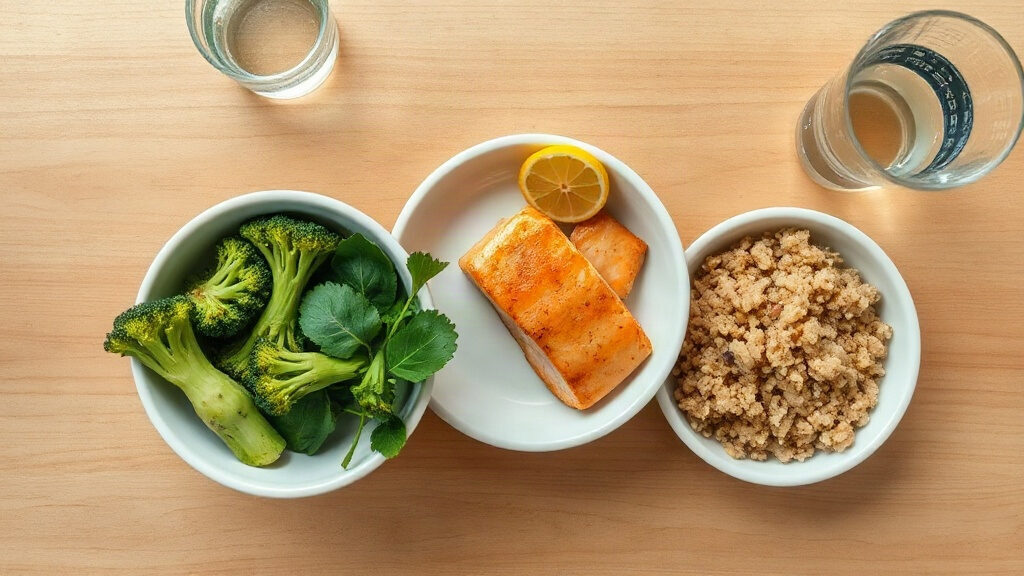
- Eat vegetables and protein before starches. In 16 people with type 2 diabetes, saving carbohydrates for the end of the meal increased GLP-1 secretion by 38% and reduced the blood sugar peak by 54% compared with the reverse order (Shukla et al., 2017).
- Start the meal with a source of protein. In 15 people with diabetes, 50 g of whey protein taken before breakfast multiplied total GLP-1 by 2.4 and lowered blood sugar by 28% over 3 hours (Jakubowicz et al., 2014). This dose is high: in everyday life, an egg, a plain yogurt or a serving of fish at the start of a meal follows the same logic, without having been tested in the same way.
- Aim for 30 g of fiber a day, the adult benchmark set by France’s food safety agency, with legumes, oats and vegetables. In the gut, their fermentation produces short-chain fatty acids that stimulate GLP-1 secretion by L cells, a mechanism demonstrated in vitro and in mice (Tolhurst et al., 2012).
- If you are on treatment, add regular physical activity. After a low-calorie diet, 195 adults with obesity were followed for one year: combining exercise and liraglutide reduced body fat by 3.9 percentage points, twice as much as either strategy alone, and only the combination improved glycated hemoglobin (HbA1c) and physical fitness (Lundgren et al., 2021).
- Protect your muscles during weight loss: a source of protein at every meal and at least two muscle-strengthening sessions a week, the minimum the WHO recommends for adults, adapted with your doctor.
| Habit | Study | Participants | Measured effect |
|---|---|---|---|
| Carbohydrates at the end of the meal | Shukla 2017 | 16 people with type 2 diabetes | GLP-1 secretion up 38%, blood sugar peak down 54% |
| Whey before the meal (50 g) | Jakubowicz 2014 | 15 people with type 2 diabetes | Total GLP-1 multiplied by 2.4, blood sugar down 28% over 3 hours |
| Whey before the meal (55 g) | Ma 2009 | 8 people with type 2 diabetes | Highest GLP-1 peak, slowest gastric emptying |
| Fermentable fiber | Tolhurst 2012 | Cells and mice | Short-chain fatty acids stimulate L cells |
For whey, a second study points in the same direction: in 8 people with diabetes, 55 g taken 30 minutes before a potato meal produced the highest GLP-1 peak and the slowest gastric emptying (Ma et al., 2009). These levers serve prevention: they improve the response to a meal, without claiming to match a treatment.
Frequently asked questions about the GLP-1 hormone
What is the GLP-1 hormone in simple terms?
GLP-1 is a hormone released by the gut during digestion. It warns the pancreas that sugar is on its way, which increases insulin and lowers glucagon. It also slows the stomach and signals to the brain that the meal can end. Natural GLP-1 is inactivated within minutes by an enzyme, DPP-4, which limits its action to the period that follows a meal.
How can you boost the GLP-1 hormone naturally?
Two habits have a measured effect in humans. Eating vegetables and protein before starches increased GLP-1 by 38% in 16 people with diabetes, and a serving of protein at the start of a meal also strengthens the response. Fiber works through a mechanism demonstrated in animals. These effects remain modest and do not reproduce those of a drug.
What is the difference between GLP-1 and Ozempic?
GLP-1 is the natural hormone; Ozempic contains semaglutide, an analog modified to resist breakdown. The natural hormone acts for a few minutes after each meal, semaglutide for about a week after a single injection. This continuous action explains its much stronger effect on appetite and weight. In France, Ozempic is reserved for type 2 diabetes and Wegovy for obesity.
Why do GLP-1 analogs protect the heart?
The mechanisms have not all been identified yet. Weight loss explains only part of the effect: in the SELECT trial, about 33% of the benefit came through the reduction in waist circumference. These treatments also lower blood pressure and inflammation, with C-reactive protein down 43.5% in a heart failure trial.
What happens when you stop GLP-1 treatment?
Weight comes back in most cases. One year after stopping semaglutide, participants in the STEP 1 trial had regained two thirds of the weight they had lost, and most of their cardiometabolic markers had drifted back toward their initial values. Stopping should be discussed with your doctor and paired with stronger attention to diet and physical activity.
Do you lose muscle on a GLP-1 analog?
Yes, in part. A meta-analysis of 22 trials estimates that about 25% of the weight lost is lean mass, more with the most potent molecules. Muscle strength can still improve: the French SEMALEAN study measured a 4.5 kg (9.9 lb) gain in grip strength after one year. Protein at every meal and strength training limit this loss.
Medical disclaimer. This content is provided for informational purposes only and does not constitute medical advice. It does not replace a consultation. GLP-1 analogs are prescription drugs: obtain them only with a prescription, from a pharmacy, never online, and do not change the dose or the injection schedule without your doctor. They are not recommended during pregnancy. Tell your doctor if you take an anticoagulant or metformin. Severe, persistent abdominal pain, with or without vomiting, requires urgent medical attention. Ask a healthcare professional before changing your diet, taking dietary supplements or starting a new practice, especially if you have a medical condition or are under treatment. Dietary supplements do not replace a balanced diet or medical follow-up.