Honey and blood sugar: does honey raise glucose levels less than white sugar? The question matters to anyone who sweetens their tea, yogurt or herbal infusions, and especially to people with prediabetes. Glycemic index measurements, trials lasting a few weeks and two recent meta-analyses give a nuanced answer: a small advantage spoonful for spoonful, no free pass on quantity. Here is what the studies show, what remains uncertain and how to use honey without throwing your blood sugar off balance.
In brief – Honey is a free sugar made mostly of fructose and glucose: on honey and blood sugar, the evidence shows a rise slightly slower than with white sugar, but honey remains a sugar to limit. Its average glycemic index is 61, compared with 65 for sucrose and 103 for glucose, according to the 2008 international tables. In 55 adults, 27 of them glucose intolerant, 50 g of carbohydrate a day for two weeks as honey, sugar or corn syrup produced the same effects on blood sugar, insulin and triglycerides. A meta-analysis of 18 trials (1105 participants) found fasting glucose lower by 0.20 mmol/L (about 3.6 mg/dL), with low-certainty evidence. The WHO classifies honey among free sugars, to be kept below 10% of daily calories.
Honey: definition and composition of a natural sugar
Honey is a concentrated sweet solution that bees make from flower nectar or from the sugary secretions some insects leave on leaves. Sugars make up most of it. The Codex Alimentarius requires at least 60 g of fructose plus glucose per 100 g, no more than 5 g of sucrose and no more than 20% water, criteria cited in the review by da Silva (Food Chemistry, 2016) on the composition and authenticity of the product.
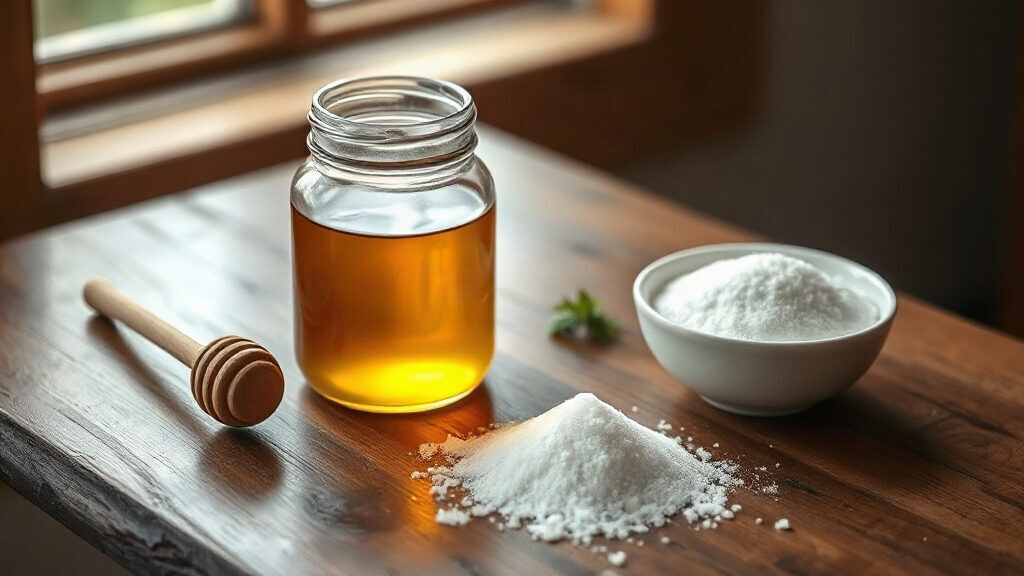
The rest, in small amounts, is made up of organic acids, enzymes, amino acids, minerals and polyphenols. Their levels vary widely with the flower the bees foraged, the color of the honey and the way it is processed. A heated or finely filtered product loses some of them. White sugar, by contrast, is pure sucrose, a molecule that joins one glucose to one fructose.
Nutritionally, honey does not escape the free sugars category. The WHO fact sheet on healthy diet explicitly lists “sugars naturally present in honey” in this category, alongside syrups and fruit juices. The recommended limit is 10% of energy intake, or 50 g a day for a 2000 kcal diet, and ideally 5%.
Honey and blood sugar: why the rise is a little slower
This hive product raises blood sugar slightly less than white sugar because part of its sugar is fructose, which does not enter the bloodstream directly as glucose. The liver takes up most of the fructose and turns it into glycogen, lactate or fat. Only a fraction ends up as circulating glucose again, and with a delay.
Several factors determine the size of the glycemic response:
- The share of fructose: the higher it is, the lower the glycemic index. Acacia (black locust) and clover honeys contain about 40 to 44% fructose.
- The share of glucose: glucose-rich varieties crystallize quickly and produce a response close to that of sugar.
- The amount eaten: the glycemic load depends as much on the serving size as on the index.
- The meal context: fiber, protein and fat slow stomach emptying and flatten the curve.
- The person’s profile: at the same dose, blood sugar climbs higher in an insulin-resistant adult than in a young, lean adult.
The glycemic index measures the rise in blood sugar over two hours after 25 to 50 g of carbohydrate from a food, compared with the rise after pure glucose. The table below compares the main kitchen sugars.
| Sugar | Glycemic index | Source | What to remember |
|---|---|---|---|
| Glucose (dextrose) | 103 | Atkinson, 2008 | Reference, goes straight into the blood. |
| Sucrose (white sugar) | 65 | Atkinson, 2008 | Half glucose, half fructose. |
| Honey, average of varieties | 61 | Atkinson, 2008 | Very close to white sugar. |
| Malaysian variety / Australian variety | 65 / 59 | Robert, 2009 | Intermediate index in 8 healthy adults. |
| Fructose-rich German varieties | below 55 for 5 varieties out of 8 | Deibert, 2010 | The index follows the fructose content. |
| Pure fructose | 15 | Atkinson, 2008 | Low index, but metabolized by the liver. |
The average gap between this hive product and white sugar therefore comes down to 4 index points. It widens for fructose-rich varieties such as acacia and disappears for glucose-rich ones.
Honey or sugar: what the science says
Studies show a slight advantage for honey on the blood sugar peak after a single intake, but no clear difference in blood sugar after several weeks when it replaces sugar in equal amounts. The details depend on the type of study.
Glycemic index: a modest and variable advantage
The international tables by Atkinson (Diabetes Care, 2008) give an index of 61 ± 3 for honey and 65 ± 4 for sucrose. Their 2021 update lists more than 4000 foods and confirms the wide variability from one product to another. Two varieties tested in 8 healthy adults by Robert (2009) scored 65 for one and 59 for the other. In the work by Deibert (2010), carried out in 10 healthy adults, 5 German honeys out of 8 had an index below 55, and the glycemic load of a 20 g serving stayed under 10 for 6 of them.
In children with type 1 diabetes, Abdulrhman’s team measured a lower index and a lower peak with honey than with sucrose, in 50 patients and 30 controls (2013). In 5 adults with type 2 diabetes, Al-Waili (2004) observed higher blood sugar at 30 minutes after 30 g of honey than after 30 g of sugar, then lower values at 1, 2 and 3 hours. The peak comes quickly, then falls back sooner.
Over several weeks: no difference at equal doses
The most rigorous trial on the question comes from the US Department of Agriculture. Raatz and colleagues (Journal of Nutrition, 2015) gave 55 adults, 27 of them glucose intolerant, 50 g of carbohydrate a day as honey, sugar or high-fructose corn syrup. Each period lasted two weeks, in a randomly assigned order.
The result: fasting glucose, insulin, the HOMA index of insulin resistance and the oral glucose tolerance curve did not differ between the three sugars. Triglycerides rose with all three, and high-sensitivity CRP, a marker of inflammation, went up in the glucose-intolerant participants whatever the sugar.
Some older trials are more favorable to honey, with important limitations. Yaghoobi (2008) compared 70 g of honey and 70 g of sucrose a day for 30 days in 55 overweight adults. Fasting glucose fell by 4.2% in participants whose values were normal, but the groups were unbalanced (38 versus 17 people).
In people with diabetes: contradictory signals
In 48 adults with type 2 diabetes, the randomized trial by Bahrami (2009) added this hive product to the diet for 8 weeks. Weight and lipids improved and fasting glucose did not change, but glycated hemoglobin (HbA1c) rose significantly. The authors advise cautious consumption in people with diabetes.
Conversely, a 12-week crossover trial (Abdulrhman, 2013) in 20 children with type 1 diabetes reports a drop in fasting glucose. It is a small pilot study, run by a single team, with no independent confirmation since.
The meta-analyses: a small effect, low-certainty evidence
The most complete synthesis comes from Sievenpiper’s team in Toronto (Ahmed, Nutrition Reviews, 2023): 18 controlled trials, 33 comparisons and 1105 participants, at a median dose of 40 g a day for 8 weeks. Honey lowered fasting glucose by 0.20 mmol/L, or about 3.6 mg/dL, with certainty rated as low. The effect was concentrated in raw honey and in acacia and clover varieties.
Two details of this meta-analysis temper the conclusion. In 70% of the trials, the control group kept its usual diet: honey was therefore compared with “nothing extra”, not with sugar. Only 5 comparisons out of 33 pitted the hive product against sucrose. The inflammatory markers IL-6 and TNF-α also rose slightly.
A more recent Iranian umbrella review, published by Norouzzadeh (Nutrition & Diabetes, 2025), pooled 69 trials and 3544 participants on honey, royal jelly and propolis. For 10 g a day, it notes a possible drop in HbA1c, but also unfavorable effects on systolic blood pressure, triglycerides, fasting glucose and CRP. The authors urge caution with high or prolonged intake.
| Study | Participants | Protocol | Main result |
|---|---|---|---|
| Raatz, 2015 | 55 adults, 27 of them glucose intolerant | 50 g of carbohydrate a day, 2 weeks per sugar, crossover trial | No difference between the three sugars. |
| Bahrami, 2009 | 48 people with type 2 diabetes | Daily addition for 8 weeks | HbA1c up, fasting glucose unchanged. |
| Yaghoobi, 2008 | 55 overweight adults | 70 g of honey or sucrose a day, 30 days | Fasting glucose down 4.2% (normal values). |
| Abdulrhman, 2013 | 50 children with type 1 diabetes, 30 controls | Load tests with three sugars | Lower index and peak than with sucrose. |
| Ahmed, 2023 (meta-analysis) | 18 trials, 1105 participants | Median dose 40 g a day, 8 weeks | Fasting glucose down 0.20 mmol/L, low certainty. |
| Norouzzadeh, 2025 (umbrella review) | 69 trials, 3544 participants | Three hive products | Mixed effects, call for caution. |
In practice: who really needs to care about honey vs sugar
For most adults, swapping sugar for honey changes almost nothing in blood sugar if the amount stays the same. The benefit lies mainly in taste: its sweetening power, driven by fructose, often lets you use a little less. You still have to actually measure it, because the thick liquid pours quickly into the cup.
Spoon for spoon, the gap even runs the other way. This natural syrup is denser than granulated sugar: a full teaspoon holds more sugars than a level teaspoon of sugar. To understand how a sweet food translates into a blood sugar curve, our article on the blood sugar spike after a meal details the normal values.
The fructose question also deserves nuance. Stanhope (Journal of Clinical Investigation, 2009) showed in overweight adults that fructose drinks providing 25% of calories for 10 weeks increased visceral fat and reduced insulin sensitivity, unlike glucose. These doses far exceed a teaspoon, but they are a reminder that a low glycemic index does not protect the liver from excess fructose. This mechanism belongs to deregulated nutrient sensing, one of the hallmarks of aging.
| Criterion | Honey | White sugar |
|---|---|---|
| Composition | Free fructose and glucose, up to 20% water, traces of polyphenols | Pure sucrose |
| Average glycemic index | 61 (59 to 65 depending on origin, lower for acacia) | 65 |
| Effect on blood sugar in a 2-week trial | Same as sugar (Raatz, 2015) | Same as the hive product |
| WHO status | Free sugar | Free sugar |
| Sweetening power | Slightly higher, thanks to fructose | Reference |
| Specific precaution | Not for babies under 1 year (risk of botulism) | None in particular |
For people with diabetes, this sugar counts like any other carbohydrate in the meal, and the HbA1c rise seen by Bahrami is a reason not to add it on top of everything else. Other sources of free sugars, such as fruit juice, draw on the same daily budget. The WHO fact sheet on diabetes covers the disease, and the WHO fasting thresholds are as follows: prediabetes between 1.10 and 1.25 g/L (110 to 125 mg/dL), diabetes from 1.26 g/L (126 mg/dL) on two tests.
One precaution applies without exception: no honey before 12 months of age. According to the review by Aricò (Acta Paediatrica, 2026), it is the only food source regularly confirmed as a cause of infant botulism, with a median age at onset of 3 to 4 months.
Honey and blood sugar: tips for using it without disrupting your glucose
The most useful habit is to treat honey like sugar: it counts toward the 25 to 50 g of free sugars the WHO sets as a daily benchmark for an adult. The longevity reading is simple: fewer repeated spikes mean less demand on insulin over the years.
- Measure the dose: a level teaspoon rather than a drizzle poured straight from the jar.
- Replace, don’t add: honey should take the place of granulated sugar instead of coming on top of it.
- Choose light, runny, fructose-rich varieties such as acacia if you are watching your blood sugar.
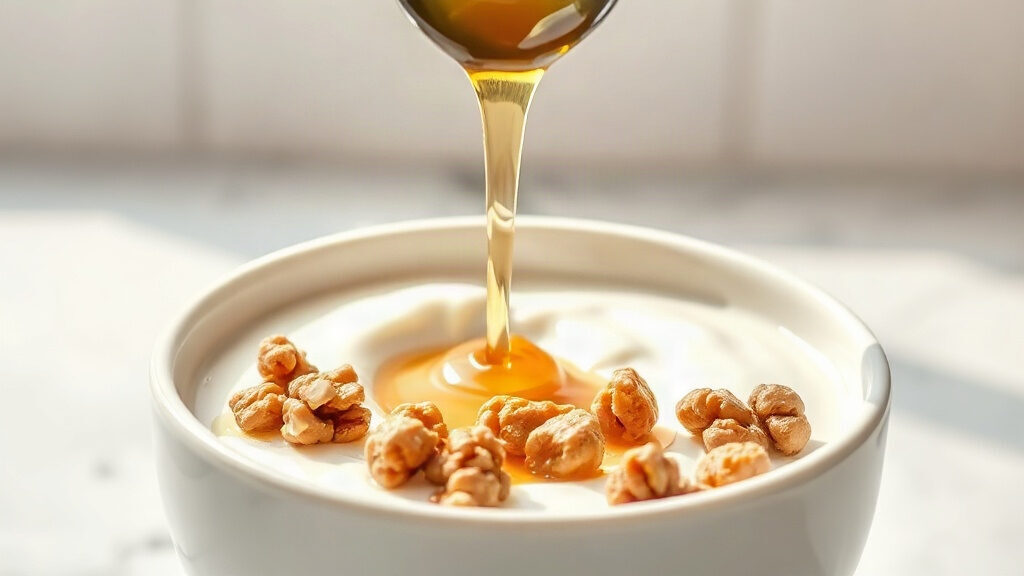
- Pair it with a meal that contains protein and fiber (plain yogurt, oatmeal, nuts) rather than eating it alone.
- Avoid it in hot drinks taken on an empty stomach, which pass through the stomach quickly.
- Pick a jar whose label states the floral and geographic origin, so you know which variety you are eating.
- Never give it to a child under one year old, not even on a pacifier or in a bottle.
Raw honey retains more enzymes and polyphenols, and it is the type that achieved the best results in the 2023 meta-analysis. That advantage, however, rests on only 5 comparisons. For an overview of fast and slow sugars, our guide to carbohydrates and aging completes these benchmarks.
Frequently asked questions about honey and blood sugar
Does honey raise blood sugar?
Yes. Honey is nearly 80% sugars, mostly fructose and glucose, and its average glycemic index is 61, compared with 65 for white sugar. The rise is a little slower than with sugar for fructose-rich varieties such as acacia. At equal amounts of carbohydrate, a 2015 trial in 55 adults found no difference in blood sugar after two weeks.
What is the difference between honey and sugar for someone with diabetes?
It is small. The glycemic index of honey is close to that of sugar, and the WHO classifies both as free sugars. In a 2009 trial in 48 people with type 2 diabetes, adding honey for 8 weeks raised glycated hemoglobin. A person with diabetes should count it like the other carbohydrates in the meal, and discuss it with their doctor.
Which honey has the lowest glycemic index?
The varieties richest in fructose, such as acacia (black locust) and clover, which contain about 40 to 44% of it. In a 2010 German study, 5 varieties out of 8 had an index below 55, and that index tracked the fructose content. Varieties that crystallize quickly, which are richer in glucose, produce a response close to that of white sugar.
How much honey can you eat per day?
Honey counts as a free sugar, which the WHO recommends limiting to 10% of calories, or 50 g a day for a 2000 kcal diet, and ideally to 25 g. That budget also includes added sugar, sodas and fruit juices. In practice, one to two teaspoons a day leave room for the rest of your diet.
Is raw honey better for blood sugar?
Possibly, but the evidence remains thin. In the Toronto meta-analysis published in 2023, raw honey and acacia and clover varieties were associated with slightly lower fasting glucose. This result rests on only 5 comparisons, with low certainty. Raw honey is still a free sugar to be measured like the others.
Why is honey off-limits before one year of age?
Because it can contain spores of the bacterium that causes botulism. An infant’s gut cannot yet eliminate them, and they can produce a toxin there that paralyzes the muscles. A 2026 review describes honey as the only food source regularly confirmed as a cause of infant botulism, with onset around 3 to 4 months.
Medical disclaimer. The content of this article is provided for informational purposes only and does not constitute medical advice. It does not replace a consultation. If you have diabetes, especially if you take insulin or sulfonylureas, do not change your sugar intake without medical advice, and never give honey to a child under one year old. Ask a healthcare professional before changing your diet, taking dietary supplements or starting a new practice, especially if you have a medical condition, are pregnant or are under treatment. Dietary supplements do not replace a balanced diet or medical follow-up.