
Invisible in the mirror, visceral fat surrounds the liver, the intestine and the pancreas, and its mass climbs over the years. In an Austrian cohort of 10,894 adults measured by dual-energy X-ray absorptiometry (DXA), it triples in women and rises 2.5-fold in men between their thirties and their sixties. Yet there is no single official standard. Here are the published reference values by age and sex, the thresholds linked to cardiometabolic risk and simple ways to see where you stand without a scan.
In brief – Visceral fat is a deep fat deposit, located around the abdominal organs, that weighs more heavily on the risk of type 2 diabetes and cardiovascular disease than the fat under the skin. Its normal value depends on age, sex and the measuring device. With DXA, a European study of 10,894 adults finds an average of 523 g (about 1.2 lb) in women aged 40 to 49 versus 1,243 g (about 2.7 lb) in men of the same age, then 1,053 g and 1,904 g between 60 and 69. In the Norwegian Tromsø cohort, the risk of metabolic syndrome is multiplied by 3.6 above 1,134 g in women and by 4 above 1,859 g in men. On CT scans, the most widely used benchmark is an area of 100 cm² at the level of the navel. Without any test, the French threshold for abdominal obesity is a waist above 100 cm (39 in) in men and 88 cm (35 in) in women. Endurance activity shrinks this deep fat by more than 30 cm² in women and 40 cm² in men in 12 weeks, even without dieting.
Visceral fat: definition and difference from subcutaneous fat
Visceral fat is the adipose tissue stored inside the abdominal cavity, behind the muscles of the abdominal wall. It lines the mesentery (the membrane that suspends the intestine), the greater omentum (a fatty apron hanging in front of the intestinal loops) and the space around the kidneys. Subcutaneous fat, by contrast, sits just under the skin: it is the fat you can pinch between two fingers, on the belly as well as on the thighs.
The two deposits do not behave the same way. Blood draining this deep fat flows directly to the liver through the portal vein, which exposes this organ to the fatty acids and inflammatory molecules released by this tissue. An international position statement published in 2019 in The Lancet Diabetes & Endocrinology (Neeland et al., 2019) describes it as a marker of cardiovascular and metabolic risk independent of weight, just like the so-called “ectopic” fat that infiltrates the liver or builds up around the heart.
Two people with the same weight and the same body mass index (BMI) can therefore carry very different amounts of deep belly fat. A firm, protruding belly that is hard to pinch points to a deep deposit. A soft, pinchable roll suggests subcutaneous fat instead. This visual test remains crude: only imaging truly measures the deep compartment.
Why visceral fat increases with age and differs by sex
This deep fat builds up with age even when weight stays stable. A Canadian review published in 2009 (Kuk et al., 2009) describes a redistribution of fat stores: less fat under the skin of the legs, more in the abdomen, the liver and the muscles. The shift often goes unnoticed on the scale. Several well-identified factors explain it:
- Sex hormones. Before menopause, estrogens steer storage toward the hips and thighs. Their decline shifts fat stores toward the abdomen.
- Menopause itself. Among 156 women followed for four years with CT scans, only those who became postmenopausal saw their deep abdominal fat increase, with fat oxidation falling by 32% (Lovejoy et al., 2008).
- Male sex. At any age, men store fat primarily in the abdomen: their average visceral mass is about twice that of a woman of the same age.
- Lower energy expenditure. Energy expenditure during sleep fell by 7.9% in women who went through menopause, versus 5.3% in those who remained premenopausal.
- Ethnic background. At the same BMI, people of Chinese or South Asian origin accumulate more deep fat than Europeans, according to a Canadian study of 822 adults (Lear et al., 2007).
- Genetics. In the Framingham cohort, heritability is estimated at 36% for the visceral depot, versus 57% for subcutaneous fat.
In women, the menopausal transition clearly speeds up the trend. The American SWAN study, which tracked body composition by DXA (Greendale et al., 2019), shows that the rate of fat mass gain doubles at the start of this transition, while lean mass declines. These changes continue until two years after the final menstrual period, then level off, whereas weight gain does not accelerate: the body shape changes without the scale announcing it.
Normal visceral fat: what studies show by age and sex
The most robust reference values in Europe come from two cohorts measured with DXA. The results only apply to the device used (GE Lunar Prodigy) and to populations of European descent, which explains why there is no universal standard.
The Austrian LEAD cohort measured 10,894 adults aged 18 to 81 (Ofenheimer et al., 2020). Visceral mass increases with each age bracket, in both sexes, and is always higher in men. The table below shows the published averages. Each average hides a wide spread: the standard deviation often exceeds half the value.
| Age group | Women, average | Men, average | Men-to-women ratio |
|---|---|---|---|
| 18 to 29 years | 236 g | 425 g | 1.8 |
| 30 to 39 years | 340 g | 767 g | 2.3 |
| 40 to 49 years | 523 g | 1,243 g | 2.4 |
| 50 to 59 years | 760 g | 1,613 g | 2.1 |
| 60 to 69 years | 1,053 g | 1,904 g | 1.8 |
| 70 to 81 years | 1,147 g | 2,038 g | 1.8 |
The Norwegian Tromsø cohort measured 3,675 adults aged 40 to 84 by DXA, with a mean age of 66 (Lundblad et al., 2021). The median reaches 832 g in women and 1,578 g in men. Above all, the authors calculated thresholds that predict metabolic syndrome: above 1,134 g in women, the risk is multiplied by 3.63; above 1,859 g in men, by 4.03. In this population, visceral mass increases up to age 70, then declines slightly.
On CT scans, the unit changes: an area in cm² is measured on a slice passing through the navel. In 2002, a Japanese committee set the risk threshold at 100 cm² (about 15.5 sq in), after studying 1,193 people (Japan Society for the Study of Obesity, 2002). From this value upward, the average number of associated disorders (blood sugar, lipids, blood pressure) exceeds one per person. This benchmark remains the most cited in imaging studies, including outside Japan.
The link between this abdominal depot and health is documented by large cohorts. In the Framingham study, among 3,001 adults who underwent CT scans, each additional standard deviation of deep abdominal fat comes with a 4.7-fold higher risk of metabolic syndrome in women and 4.2-fold in men, versus 3.0 and 2.5 for subcutaneous fat (Fox et al., 2007). In 3,086 participants followed for five years, cardiovascular risk rises by 44% and cancer risk by 43% per standard deviation, after adjustment for BMI (Britton et al., 2013). The same study, however, finds no association with all-cause mortality, over a short follow-up period. These are observational associations: on their own, they do not prove cause and effect.
Visceral fat in practice: how to see where you stand without a scan
Waist circumference remains the most accessible tool for estimating this deep fat. An international consensus published in 2020 recommends making it a “vital sign” measured during medical visits, just like blood pressure, because BMI alone is not enough to assess risk (Ross et al., 2020). In France, the threshold for abdominal obesity is a waist above 100 cm (39 in) in men and 88 cm (35 in) in women, outside pregnancy; the US National Heart, Lung, and Blood Institute uses very similar cutoffs of 40 inches and 35 inches.
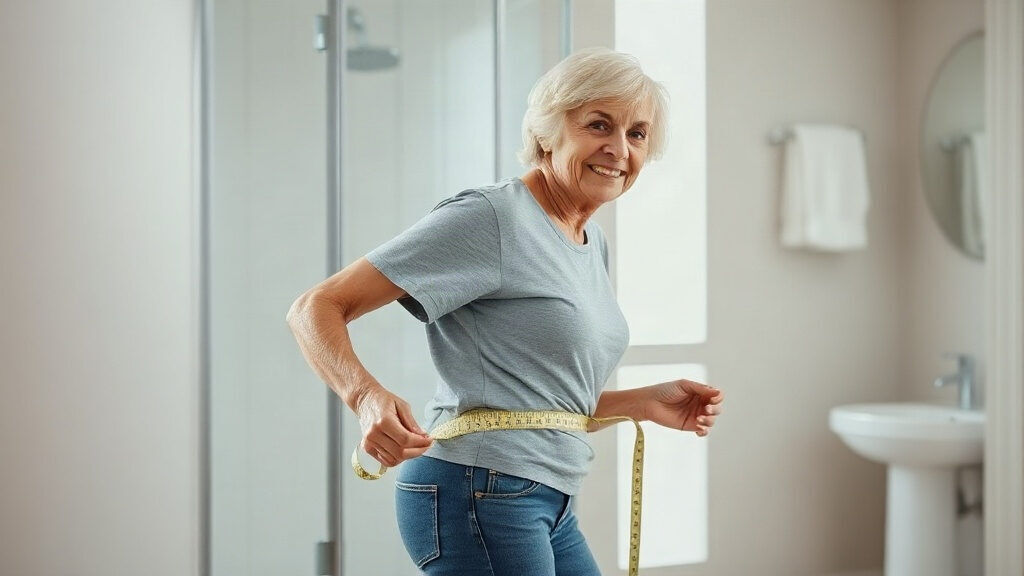
For a reliable measurement, place the tape measure midway between the lowest rib and the top of the hip bone, standing, at the end of a normal breath out, without sucking in your stomach. Note the value in the morning, before eating, and repeat it every three months rather than every week. Our article on waist circumference and longevity details the thresholds and their link with life expectancy.
| Method | What is measured | Published risk benchmark | Realistic use |
|---|---|---|---|
| Abdominal CT or MRI scan | Area or volume of deep fat, direct measurement | 100 cm² at the level of the navel | Research reference, rarely prescribed for this reason alone |
| DXA with visceral software | Estimated mass in grams in the abdominal region | 1,134 g (women) and 1,859 g (men), Tromsø cohort | Specialized centers, low radiation |
| Bioimpedance scale | Index calculated by the manufacturer’s algorithm | No threshold validated by an independent study | Tracking a personal trend, not a diagnosis |
| Waist circumference | Total abdominal fat, deep and subcutaneous | 100 cm (men) and 88 cm (women), French threshold | At-home measurement, free |
| Waist-to-height ratio | Waist circumference corrected for height | Waist greater than half your height | Useful for shorter or taller people |
The waist-to-height ratio corrects a bias of raw waist circumference, which penalizes tall builds and wrongly reassures short ones. A meta-analysis covering more than 300,000 adults of several ethnic backgrounds finds it outperforms BMI and waist circumference for detecting diabetes, hypertension and cardiovascular disease (Ashwell et al., 2012). After 60, muscle loss makes BMI even less meaningful, as explained in our article on BMI after 60.
An excess of deep belly fat often goes hand in hand with insulin resistance: high triglycerides, low HDL and borderline fasting blood sugar form a telling trio on a blood test. This link between energy stores and hormonal signaling relates to a hallmark of aging that we detail in the deregulated nutrient sensing pillar.
Reducing visceral fat: 6 evidence-based levers
Deep belly fat responds faster than subcutaneous fat to lifestyle changes. Controlled trials show a measurable decrease within a few months, sometimes without visible weight loss. The six levers below rest on published studies, with their level of evidence:
- Do endurance exercise. In a meta-analysis of 15 studies (852 participants with overweight), aerobic exercise without dieting reduces deep abdominal fat by more than 30 cm² in women and more than 40 cm² in men, from 12 weeks onward (Vissers et al., 2013).
- Add intervals. Across 39 studies and 617 people, high-intensity interval training also reduces visceral mass, with an advantage for running over cycling (Maillard et al., 2018).
- Adopt a Mediterranean plate. In the CENTRAL trial (278 adults, 18 months, MRI), deep abdominal fat fell by 22%; physical activity added its own effect, independent of weight loss (Gepner et al., 2018).
- Replace sugary drinks. Over six years, daily drinkers of sugar-sweetened sodas gained 852 cm³ of deep abdominal fat, versus 658 cm³ in non-consumers; diet sodas were not associated with this gain (Ma et al., 2016).
- Protect your sleep. Among participants under 40 in the IRAS cohort, sleeping 5 hours or less was associated with 13 cm² more deep abdominal fat over five years, compared with 6 to 7 hours (Hairston et al., 2010).
- Track your waist rather than your weight. In CENTRAL, moderate weight loss poorly reflected the loss of deep fat: the tape measure tells you more than the scale about real progress.
| Lever | Study | Observed effect | Type of evidence |
|---|---|---|---|
| Endurance exercise without dieting | Vissers 2013, 852 participants | More than 30 cm² (women) and 40 cm² (men) in 12 weeks | Meta-analysis of trials |
| High-intensity intervals | Maillard 2018, 617 participants | Significant reduction in visceral mass | Meta-analysis of trials |
| Mediterranean diet and activity | Gepner 2018, 278 participants | 22% less deep abdominal fat in 18 months | Randomized trial |
| Fewer sugary sodas | Ma 2016, 1,003 participants | 852 versus 658 cm³ gained over six years | Cohort, association |
| 6 to 7 hours of sleep | Hairston 2010, 1,107 participants | 13 cm² less over five years in people under 40 | Cohort, association |
These studies involve whole-body endurance activities, not targeted abdominal exercises: planks strengthen the abdominal wall, but they do not target any particular fat deposit. For a sedentary person, 150 minutes of brisk walking per week, the minimum recommended by the World Health Organization, spread over five days, offers a realistic starting point. For women around menopause, starting these habits before the hormonal transition limits the redistribution that speeds up at that time.
Frequently asked questions about visceral fat
What is a normal visceral fat level for women?
Measured by DXA in an Austrian cohort, average visceral fat in women rises from 236 g between ages 18 and 29 to 523 g between 40 and 49, then 1,053 g between 60 and 69. In the Norwegian Tromsø cohort, the risk of metabolic syndrome is multiplied by 3.6 above 1,134 g. These benchmarks only apply to the same type of device.
What is a normal visceral fat level for men?
In men, average visceral fat measured by DXA reaches 425 g between ages 18 and 29, 1,243 g between 40 and 49 and 1,904 g between 60 and 69, about twice as much as in women of the same age. In the Tromsø cohort, the risk of metabolic syndrome is multiplied by 4 above 1,859 g.
How can you tell if you have too much visceral fat without a test?
Waist circumference gives the best estimate at home. In France, abdominal obesity is defined as a waist above 100 cm (39 in) in men and 88 cm (35 in) in women. A waist greater than half your height is another simple signal. High triglycerides, low HDL and borderline fasting blood sugar on a blood test strengthen the suspicion.
Why does visceral fat increase after menopause?
The drop in estrogens shifts storage from the hips to the abdomen. In a study of 156 women followed for four years with CT scans, only those who became postmenopausal saw this deep fat increase, with fat oxidation down by 32%. The SWAN study shows that the rate of fat mass gain doubles at the start of the menopausal transition.
How reliable is the visceral fat rating of a bioimpedance scale?
This index is calculated by an algorithm specific to each manufacturer, from weight, height, age and the body’s electrical resistance. It does not directly measure deep tissue, and no threshold has been validated by an independent study. It can help track a personal trend, provided you weigh yourself under the same conditions, but it cannot be used to make a diagnosis.
How long does it take to reduce visceral fat?
The first effects can be measured within a few weeks. A meta-analysis of 15 studies shows a drop of more than 30 cm² in women and 40 cm² in men after 12 weeks of aerobic exercise, without dieting. In the CENTRAL trial, combining a Mediterranean diet with physical activity reduced it by 22% in 18 months.
Medical disclaimer. The information provided here is for informational purposes only and does not constitute medical advice. It does not replace a consultation. A waist that grows quickly for no apparent reason, or a belly that swells in an unusual way, warrants a medical opinion. Ask a healthcare professional before changing your diet, taking dietary supplements or starting a new practice, especially if you have a medical condition, are pregnant or are under treatment. Dietary supplements do not replace a balanced diet or medical follow-up.