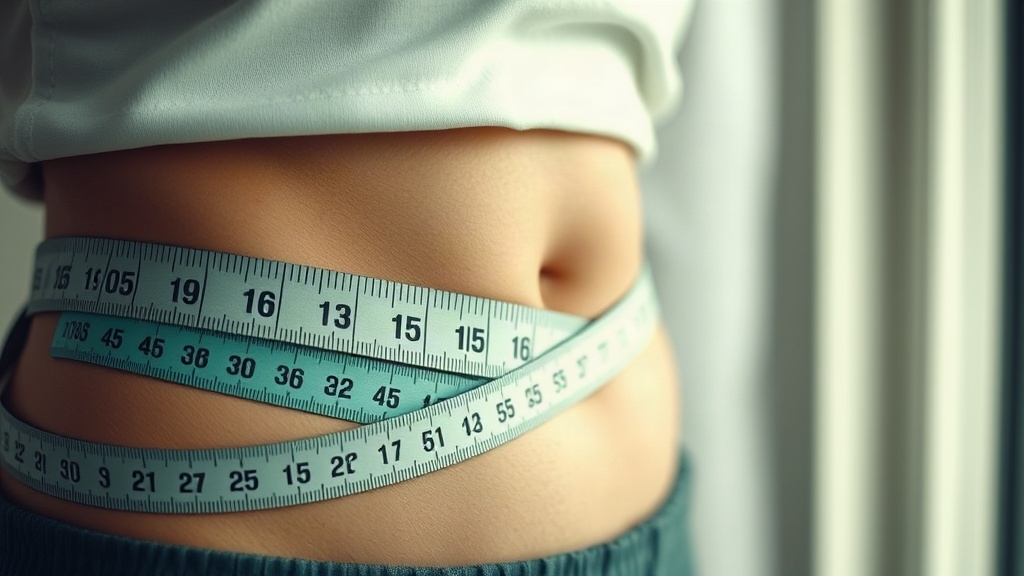
Waist circumference takes seconds to measure with a tape measure, yet it says more about cardiometabolic risk than a number on a scale. In adults, a high abdominal circumference signals excess visceral fat, the fat that surrounds internal organs and disrupts metabolism. Cohorts followed over several decades link this marker, independent of body weight, to a higher risk of death.
In brief – Waist circumference is a measurement of abdominal girth that reflects the amount of visceral fat, a cardiometabolic risk factor distinct from body mass index. In France, national guidelines set the abdominal obesity threshold at more than 100 cm (39.4 in) for men and more than 88 cm (34.6 in) for women. A pooled analysis of 650,000 adults (Cerhan et al., 2014) shows that a high reading remains linked to excess mortality at any given BMI, and the European EPIC study (Pischon et al., 2008, NEJM) confirms this link independent of body weight. Measuring this abdominal circumference regularly, at the midpoint between the lowest rib and the top of the hip bone, helps catch a shift in risk before BMI moves at all.
Definition: what does waist circumference measure?
This abdominal circumference is measured at the midpoint between the bottom of the ribs and the top of the hip bone, at the end of a normal exhale. Unlike weight or BMI, it specifically targets abdominal fat without depending on skeletal frame or muscle mass.
This measurement distinguishes between two types of body fat: subcutaneous fat, sitting just under the skin, and visceral fat, which builds up around the liver, pancreas and intestines. A high abdominal circumference mainly reflects excess visceral fat, a metabolically active tissue that continuously releases fatty acids and inflammatory molecules into the bloodstream.
Why abdominal fat weighs on longevity
Visceral fat behaves like a disruptive endocrine organ. It secretes pro-inflammatory cytokines and free fatty acids that travel directly to the liver through the portal vein, promoting insulin resistance, high blood pressure and dyslipidemia. This mechanism explains why the measurement predicts cardiometabolic risk even in people of normal weight.
- Excess free fatty acids that disrupt glucose metabolism in the liver and muscles.
- Secretion of inflammatory cytokines (IL-6, TNF-alpha) linked to atherosclerosis.
- Reduced production of adiponectin, a hormone that protects against type 2 diabetes.
- Mechanical compression of abdominal organs, linked to sleep-related breathing disorders.
A high abdominal circumference remains linked to these disruptions even when BMI classifies someone as normal weight, a profile sometimes described in the literature as “metabolically obese normal weight.”
What science says about waist circumference and mortality
Three large cohorts establish the link between this measurement and risk of death. The EPIC study, conducted with 359,387 participants across nine European countries, shows that the relative risk of death in the highest quintile of abdominal circumference reaches 2.05 in men and 1.78 in women, compared with the lowest quintile (Pischon et al., 2008, New England Journal of Medicine).
A pooled analysis of 650,386 adults confirms this association at every BMI level, from 20 to 50 kg/m². Men with a waist circumference above 109 cm (42.9 in) have a 50% higher risk of death than those below 89 cm (35.0 in), equivalent to roughly three fewer years of life expectancy after age 40 (Cerhan et al., 2014, Mayo Clinic Proceedings).
The international consensus from the IAS and ICCR on visceral obesity recommends integrating this measurement as a vital sign in clinical practice, on par with blood pressure. This working group proposes thresholds adjusted by BMI category rather than a single value (Ross et al., 2020, Nature Reviews Endocrinology).
For international reference, the World Health Organization also publishes abdominal circumference and obesity thresholds by sex, broadly consistent with the French guidelines cited above (World Health Organization).

In practice: interpreting and tracking this indicator
This indicator falls into three risk levels according to the World Health Organization and French public health guidelines. The table below summarizes these benchmarks by sex.
| Risk category | Men | Women |
|---|---|---|
| Low risk | Less than 94 cm (37.0 in) | Less than 80 cm (31.5 in) |
| Moderate risk | 94 to 102 cm (37.0 to 40.2 in) | 80 to 88 cm (31.5 to 34.6 in) |
| High risk (abdominal obesity) | More than 102 cm (40.2 in) | More than 88 cm (34.6 in) |
BMI, abdominal circumference and waist-to-hip ratio do not measure the same thing. The table below compares these three indicators, drawing on data from the EPIC study and the IAS-ICCR consensus.
| Indicator | What it measures | Main limitation |
|---|---|---|
| BMI | Total body mass relative to height | Does not distinguish fat from muscle, nor how fat is distributed |
| Abdominal circumference | Abdominal adiposity, mostly visceral | Measurement technique varies if not standardized |
| Waist-to-hip ratio | Android versus gynoid fat distribution | Requires two measurements, more complex for self-tracking |
To dig deeper into the metabolic mechanisms tied to abdominal adiposity, our article on insulin resistance covers the early warning signs to watch for. The deregulated nutrient sensing pillar brings together our content on this hallmark of aging, of which this measurement is a frontline clinical marker. Hormonal metabolism also plays a role, as shown in our article on iodine and the thyroid.
Protocol: sustainably reducing this indicator
Cutting visceral fat requires combined action on diet, physical activity and sleep. The levers below rely on documented mechanisms rather than promises of rapid weight loss.
- Cut back on fast-acting sugars and alcohol, two direct drivers of liver and visceral fat storage.
- Prioritize fiber and protein at every meal to limit blood sugar spikes.
- Add regular endurance exercise: running and brisk walking reduce abdominal fat even without significant weight loss, as detailed in our article on running and cardiovascular health.
- Add two strength training sessions a week to preserve lean mass during fat loss.
- Watch sleep duration and quality: chronic sleep debt is linked to preferential abdominal fat gain.
Measuring once a month, always at the same spot and under the same conditions, is enough to track progress without slipping into obsessive monitoring.
Frequently asked questions
How do you correctly measure waist circumference?
Place the tape measure midway between the bottom of the last rib and the top of the hip bone, while standing. Measure at the end of a normal exhale, without pulling in your stomach or pulling the tape tight. Repeat the measurement twice to check consistency.
What is the difference between this measurement and BMI for assessing risk?
BMI relates total weight to height without distinguishing fat from muscle. Abdominal circumference specifically targets abdominal adiposity, linked to cardiometabolic risk independent of overall weight. The two indicators complement each other rather than replace one another.
Does a normal waist circumference rule out all metabolic risk?
No. A measurement within the normal range reduces the likelihood of excess visceral fat, but other factors (genetics, inactivity, smoking, family history) also influence cardiometabolic risk. It is one indicator among several, not a diagnosis on its own.
Is this measurement relevant at every age?
The usual WHO thresholds were mainly validated in middle-aged adults. In older adults, muscle mass loss changes how the measurement should be read: a stable reading can mask an unfavorable shift in body composition. A doctor’s assessment refines the picture after age 65.
How long does it take to reduce this measurement?
Clinical trials on exercise and diet show measurable reductions in visceral fat within 8 to 12 weeks of sustained change. The pace depends on the starting point, the calorie deficit and the amount of added physical activity.
Medical disclaimer. The information provided here is for informational purposes only and does not constitute medical advice. It does not replace a consultation. Ask a healthcare professional before changing your diet, taking dietary supplements or starting a new practice, especially if you have a medical condition, are pregnant or are under treatment. Dietary supplements do not replace a balanced diet or medical follow-up.