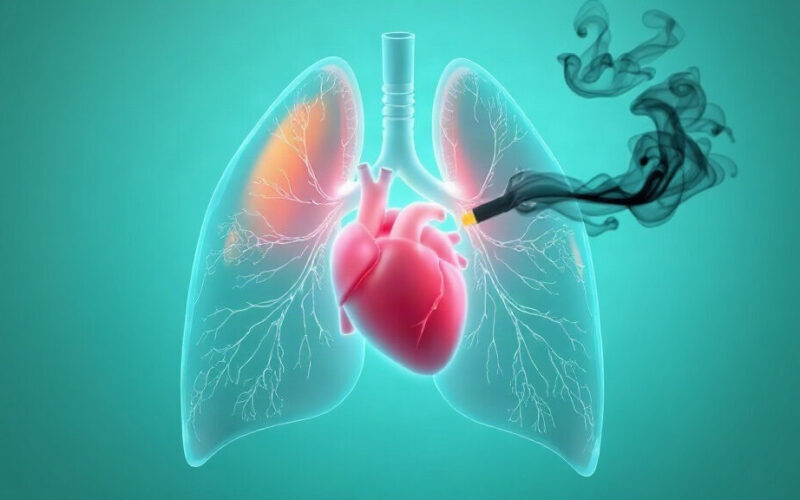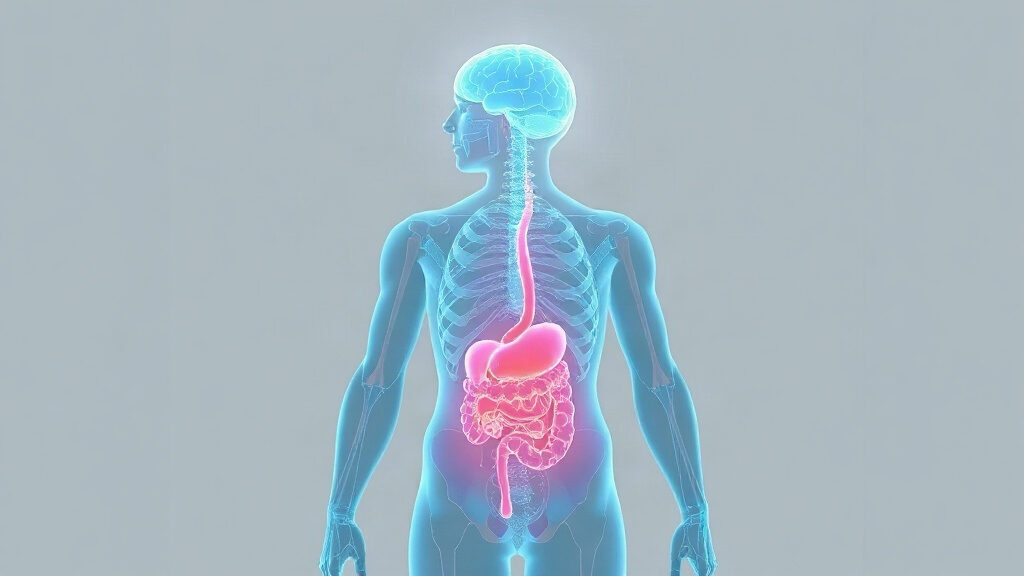
Histamine acts every day on your gut, your skin and your brain, well beyond allergies. Made by the body from an amino acid called histidine, it triggers stomach acid secretion, hive welts and wakefulness. When its breakdown slows down, or when the diet supplies too much of it, digestive trouble, skin symptoms or headaches can appear. Here is how it works, what the studies show and how to limit its excesses.
In brief – Histamine is a biogenic amine that serves as a chemical messenger for immunity, digestion and the nervous system. It acts through four receptors (H1 to H4): in the stomach, it stimulates gastric acid; in the skin, it causes redness, swelling and itching; in the brain, neurons of the hypothalamus release it only during wakefulness. Two enzymes break it down: diamine oxidase (DAO), mostly found in the gut, and N-methyltransferase (HNMT). A DAO deficiency is the main hypothesis behind histamine intolerance, a condition that remains hard to diagnose. In a trial of 55 patients with irritable bowel syndrome, an H1 blocker relieved 46% of participants versus 13% on placebo. In people over 65, long-term use of first-generation antihistamines is worth discussing with a doctor.
Definition: what is histamine?
This small molecule is produced by decarboxylation of histidine, an amino acid supplied by dietary protein. The enzyme that drives this conversion, histidine decarboxylase, is found in several types of specialized cells. The molecule was identified in the early 20th century and remains one of the best-studied mediators in human physiology.
It plays three distinct roles. First, it is a mediator of inflammation, stored in mast cells and basophils, two families of white blood cells. It is also a digestive regulator, released by cells of the stomach lining. Finally, it is a neurotransmitter. The review by Haas, Sergeeva and Selbach (Physiological Reviews, 2008) describes it as a signal shared by the brain, the gut, the skin and the immune system.
There is also a dietary supply. Some foods contain a lot of it, because bacteria produce it during fermentation, ripening or poor storage. This double source, internal and dietary, explains why the symptoms of excess are so varied.
Mechanism: how histamine acts on the body
This amine only has an effect when it binds to one of its four receptors, named H1, H2, H3 and H4, and their distribution determines what it triggers in each organ. The reference classification was published by the International Union of Basic and Clinical Pharmacology (Panula, Pharmacological Reviews, 2015). Its main sources in the body are the following:
- mast cells, found in the skin, the lungs and the intestinal wall, which release it within seconds during an allergic reaction;
- basophils circulating in the blood;
- enterochromaffin-like cells of the stomach, which control acid secretion;
- neurons of the tuberomammillary nucleus, located in the posterior hypothalamus.
Its breakdown relies on two enzymes. Diamine oxidase (DAO) works outside cells, mostly in the gut, and neutralizes the amount that comes from meals. Histamine N-methyltransferase (HNMT) works inside cells, notably in the brain. According to Maintz and Novak (American Journal of Clinical Nutrition, 2007), alcohol and certain medications can release the molecule or block DAO.
| Receptor | Main location | Dominant effect | Drugs that target it |
|---|---|---|---|
| H1 | Blood vessels, skin, airways, brain | Vasodilation, itching, wakefulness | Anti-allergy antihistamines |
| H2 | Stomach, heart | Gastric acid secretion | H2 blockers for heartburn |
| H3 | Central nervous system | Brake on neurotransmitter release | Pitolisant (narcolepsy) |
| H4 | Immune cells, mast cells | Immune cell recruitment, itch | None marketed in France to date |
What science says about histamine in the gut, skin and brain
The strongest data concern its role in allergy, wakefulness and digestive pain; food intolerance remains a field where the evidence is still thin. Each organ deserves a separate reading.
Gut: intolerance and irritable bowel syndrome
Histamine intolerance results from an imbalance between the amount accumulated and the capacity to break it down. Schnedl and Enko (Nutrients, 2021) consider it a disorder of digestive origin, linked to reduced DAO activity in the intestinal lining. They point out that blood DAO levels have no established correlation with intestinal activity. The review by Comas-Basté (Biomolecules, 2020) concludes that its definition, diagnosis and management still lack evidence.
Irritable bowel syndrome offers a clearer result. The team led by Wouters (Gastroenterology, 2016) showed that the amine sensitizes the TRPV1 pain receptor in patient biopsies. In the related randomized trial, 55 patients received 20 mg a day of ebastine, an H1 blocker, or a placebo for 12 weeks. Global relief was reported by 46% of the treated group versus 13% on placebo. This treatment is not approved for this indication.
The microbiome is involved too: some gut bacteria make it. Barcik and colleagues (Journal of Allergy and Clinical Immunology, 2016) found more of them in the stools of adults with asthma. This is an association, not proof that these bacteria cause asthma.
Skin: hives and itching
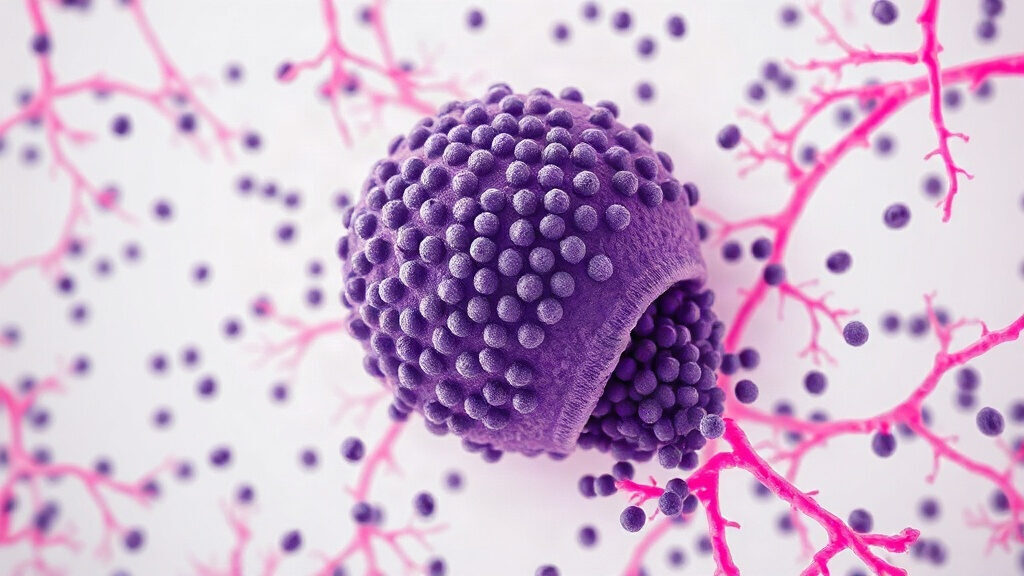
In the skin, its release by mast cells produces redness, swelling and itching within minutes, through the H1 and H4 receptors. The review by Thangam (Frontiers in Immunology, 2018) stresses that H1 antihistamines alone do a poor job of calming the itch of atopic dermatitis, where the H4 receptor plays a role. MedlinePlus, from the US National Library of Medicine, explains that allergic reactions involve several chemicals released by immune cells, this amine being only one of them.
One lead concerns chronic hives (urticaria). In a double-blind crossover trial (Yacoub, International Archives of Allergy and Immunology, 2018), 22 patients took oral DAO for 30 days. In those with low blood DAO, the urticaria score fell by 3.8 points compared with placebo. The small sample calls for caution.
Brain: a wakefulness signal
In the brain, the molecule sustains wakefulness and attention. Its neurons, clustered in the tuberomammillary nucleus, are active only during waking hours and fall silent during sleep (Haas, 2008). This explains the drowsiness caused by first-generation antihistamines, which cross the blood-brain barrier. Yoshikawa (British Journal of Pharmacology, 2021) also highlights the role of this system in appetite and memory, and the arrival in 2016 of pitolisant for narcolepsy.
The longevity angle concerns these sedating drugs, many of which have an anticholinergic effect. In a cohort of 3434 people aged 65 and older followed for 7.3 years (Gray, JAMA Internal Medicine, 2015), the highest cumulative use of anticholinergics was associated with a 54% higher risk of dementia. These older allergy drugs were among the three most used classes. This association does not prove causation.
In practice: recognizing a histamine excess
This excess shows up as symptoms that often affect several organs at once, shortly after a meal or an exposure, while allergy tests stay negative. Maintz and Novak (2007) list diarrhea, headaches, runny nose, flushing, hives, itching, low blood pressure and palpitations. These signs are not specific and first call for ruling out a true allergy or a digestive disease.
The amine also takes part in the low-grade inflammation described in our feature on chronic inflammation and its levers. It belongs to the pillar devoted to intercellular communication, one of the hallmarks of aging. Its link with digestive bacteria connects with our guide to the gut microbiome, and its immune role with our article on the aging immune system.
| Organ | Main effect | Signs of excess | Key data | Level of evidence |
|---|---|---|---|---|
| Stomach | Gastric acid (H2) | Heartburn | Target of H2 blockers | Established |
| Gut | Motility, pain sensitivity | Diarrhea, bloating, pain | Ebastine: 46% relieved versus 13% (n=55) | One randomized trial |
| Skin | Vasodilation, itch (H1, H4) | Hives, redness, itching | Oral DAO: 3.8 points less urticaria (n=22) | Preliminary |
| Brain | Wakefulness, attention (H1, H3) | Headaches, sleep problems | Neurons active only during wakefulness | Established |
The richest foods are those that have fermented, aged for a long time or been poorly stored. The review by Comas-Basté (2020) notably cites:
- aged cheeses and dry-cured meats;
- poorly refrigerated oily fish (tuna, mackerel, sardines) and canned fish;
- sauerkraut, soy sauce and other fermented vegetables;
- wine and beer, whose alcohol also slows DAO.
Tips: limiting histamine excess in daily life
Freshness is the most effective measure against dietary intake: the molecule withstands cooking, so poorly stored fish remains risky even when well cooked. Fish poisoning known as scombroid is the textbook example. The World Health Organization points out that keeping food cold is one of the keys to food safety. For everyday life, a few guidelines are enough:
- refrigerate fresh fish as soon as you buy it and eat it quickly, without going past the date on the label;
- keep a food diary if symptoms keep coming back after meals, then show it to your doctor;
- do not follow a low-histamine diet on your own over a long period, but have it supervised by a doctor or a dietitian;
- ask your doctor or pharmacist whether a sedating allergy drug taken long term could be replaced, especially after 65;
- tell your doctor if you take a DAO supplement, whose efficacy has only been shown in small groups.
Regular sleep also helps this signaling system follow its natural rhythm, active by day and silent at night. The NHS sleep and tiredness pages explain how to support a steady sleep-wake cycle. To follow these topics, the UltraSanté health newsletter sums up the useful studies every week.
Frequently asked questions about histamine
What is histamine intolerance?
Histamine intolerance is an inability to properly break down the amine supplied by food, most often attributed to a deficiency in intestinal diamine oxidase (DAO). It causes digestive problems, headaches, flushing or hives after certain meals. Its diagnosis remains difficult: it relies mainly on the patient’s history and on ruling out an allergy, because no blood test has been reliably validated.
Which foods contain the most histamine?
Fermented, aged or poorly stored foods concentrate the most: aged cheeses, dry-cured meats, sauerkraut, soy sauce, wine and beer. Poorly refrigerated oily fish, such as tuna or mackerel, can build up large amounts. Cooking does not destroy the molecule. Freshness and an unbroken cold chain therefore matter more than the way the food is prepared.
Why do antihistamines make you sleepy?
First-generation antihistamines cross the blood-brain barrier and block H1 receptors in the brain. Yet this brain messenger sustains wakefulness: its neurons in the hypothalamus are active only during waking hours. Blocking them therefore causes drowsiness. Second-generation drugs enter the brain far less and cause much less sleepiness at usual doses.
What is the difference between an allergy and histamine intolerance?
An allergy involves the immune system: IgE antibodies recognize a specific food and trigger histamine release by mast cells, sometimes severely. Histamine intolerance is not immune-related. It comes from insufficient breakdown of the amount supplied by meals. Allergy tests are negative and symptoms depend on the total amount consumed.
Do antihistamines increase the risk of dementia?
A cohort of 3434 people aged 65 and older linked the highest cumulative use of anticholinergic drugs, including first-generation antihistamines, to a 54% higher risk of dementia (Gray, 2015). This link is observational and does not prove causation. It is a good reason to review any long-term sedating treatment with your doctor.
Medical disclaimer. The information on this page is provided for informational purposes only and does not constitute medical advice. It does not replace a consultation. Ask a healthcare professional before changing your diet, taking dietary supplements or starting a new practice, especially if you have a medical condition, are pregnant or are under treatment. Dietary supplements do not replace a balanced diet or medical follow-up. Never stop or change an antihistamine or antacid treatment without medical advice, and seek emergency care if your face swells or you have trouble breathing.