Vaping exposes the heart and lungs to far fewer toxic substances than cigarettes, but it is not harmless. Since 2014, randomized trials and cohorts of several thousand adults have compared the two habits in smokers, former smokers and young people who have never smoked. Their verdict depends on one simple question: are you replacing tobacco, or adding a new exposure to lungs that had none?
In brief – Vaping is the inhalation of an aerosol produced by heating an e-liquid (propylene glycol, glycerin, flavorings and, most often, nicotine), with no burning of tobacco. That absence of combustion changes everything: the toxicants measured in the vapor are 9 to 450 times less concentrated than in smoke (Goniewicz et al., 2014). One month after switching from cigarettes to e-cigarettes, artery function is already better (George et al., 2019). To quit smoking, nicotine vaping outperforms nicotine replacement therapy, according to the 2025 Cochrane review (9 trials, 2,703 participants). In non-smokers, however, taking up vaping is associated with 62% more wheezing, and dual use (cigarettes plus vape) brings almost no benefit. Vaping is better than smoking; doing neither remains the only choice with no added respiratory risk.
Definition: what is vaping?
Vaping means using an electronic cigarette, a device that heats a liquid to produce an aerosol that is inhaled. The liquid contains propylene glycol, vegetable glycerin, food-grade flavorings and, in the vast majority of cases, nicotine at a strength chosen by the user. No tobacco leaf burns, so there is no tar and no carbon monoxide from combustion.
At the opposite end, a conventional cigarette burns tobacco at more than 800°C (1,470°F) and releases several thousand chemical compounds. Tobacco kills more than 7 million people a year worldwide, including 1.6 million non-smokers exposed to other people’s smoke, according to the World Health Organization. In France, it was still responsible for 68,000 premature deaths in 2023, or 11% of total mortality, according to French national public health data (for an English overview of the harms of smoking, see MedlinePlus).
| Criterion | Tobacco cigarette | Electronic cigarette |
|---|---|---|
| Combustion | Yes, above 800°C (1,470°F) | No, a liquid is heated |
| Carbon monoxide | High in exhaled air | Absent from the aerosol |
| Tar and carcinogens | Reference level | 9 to 450 times lower (Goniewicz, 2014) |
| Nicotine | Present, highly addictive | Usually present, adjustable dose |
| Artery function | Impaired | Better 1 month after switching |
| Years of scientific data | More than 70 years | About 15 years |
| Risk for a non-smoker who starts | Major | Real, mostly respiratory |
Mechanism: how vaping and smoke act on the heart and lungs
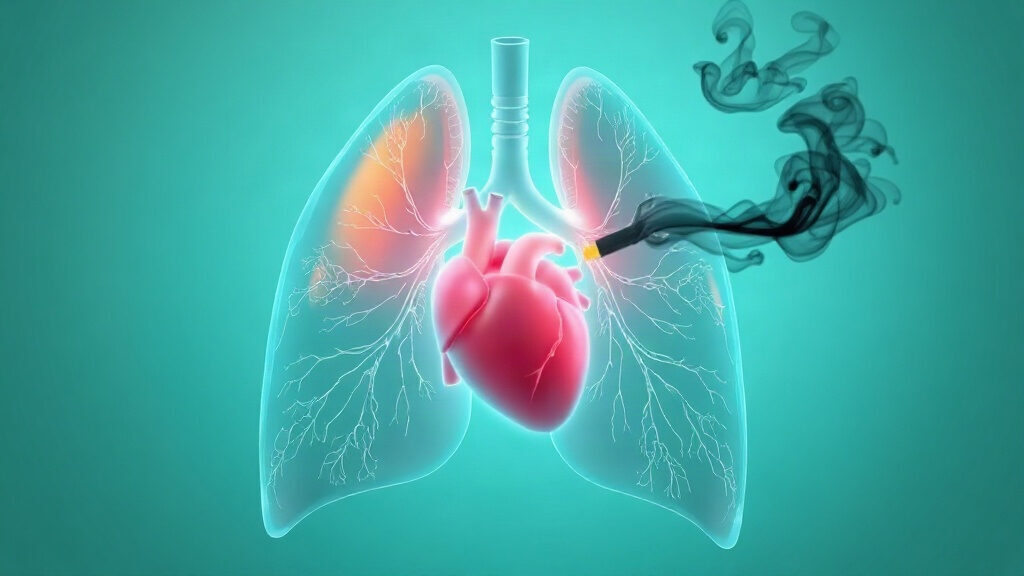
The difference in risk comes first from combustion. Tobacco smoke delivers carbon monoxide, which deprives the blood of oxygen, and oxidizing particles that damage the endothelium, the thin layer of cells lining the inside of the arteries. E-cigarettes remove combustion but keep three sources of biological effects:
- nicotine, which speeds up the heart, raises blood pressure and narrows the blood vessels;
- aldehydes (formaldehyde, acrolein), formed when the coil overheats the liquid;
- fine particles and flavorings, some of which irritate the airways.
Nicotine is not the main cause of smoking-related heart attacks. A pharmacology review concludes that nicotine without combustion carries a low cardiovascular risk compared with cigarettes. It remains a concern, however, in people who already have heart disease (Benowitz and Burbank, 2016, PubMed). For the lungs, the e-cigarette aerosol is still a foreign substance inhaled hundreds of times a day: it keeps the bronchi chronically irritated, even without combustion.
This mechanism ties into an aging process we follow closely: chronic low-grade inflammation, described in our pillar page on altered intercellular communication.
What the science says about vaping and smoking
Studies agree on one point: switching completely from tobacco to e-cigarettes sharply reduces exposure to toxicants. Analyzing the vapor of 12 brands, Maciej Goniewicz’s team measured carbonyls, volatile organic compounds and nitrosamines. Their levels were 9 to 450 times lower than in smoke, sometimes close to those of a medical nicotine inhaler (Goniewicz et al., 2014, PubMed).
Users’ urine confirms these laboratory measurements. Among 181 British adults, former smokers who had been vaping exclusively for at least 6 months had the lowest levels of NNAL (a tobacco-specific carcinogen) of all groups. Dual users, by contrast, had toxicant levels close to those of exclusive smokers (Shahab et al., 2017, PubMed).
For the heart, the Scottish VESUVIUS trial randomized smokers of at least 15 cigarettes a day to an e-cigarette with or without nicotine. One month later, artery dilation (FMD) had improved by 1.49 points compared with participants who kept smoking, and arterial stiffness had decreased. Women benefited more than men (George et al., 2019, PubMed).
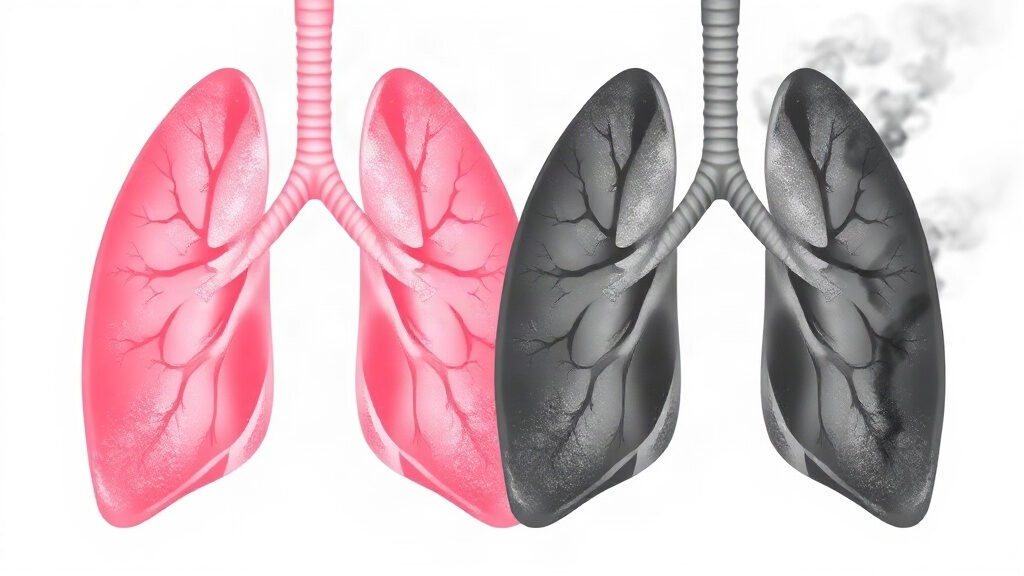
For the lungs, the picture is more nuanced. In the US PATH cohort, current vaping was associated with a 29% higher risk of respiratory disease (COPD, chronic bronchitis, emphysema, asthma), versus 156% for smoking. Combining both multiplied the risk by 3.3 compared with people who had never smoked or vaped (Bhatta and Glantz, 2020, PubMed). An analysis of 13,528 participants from the same cohort shows that moving from no use to exclusive vaping is associated with 1.62 times more wheezing. Conversely, moving from dual use to vaping alone cuts wheezing by almost two thirds (Berlowitz et al., 2023, PubMed). These data are associations: on their own, they do not prove cause and effect.
The track record of e-cigarettes is still short. A small Italian study found no lung or heart damage after 3.5 years in 9 vapers who had never smoked, a sample far too small to draw conclusions (Polosa et al., 2017, PubMed). As for the 2019 US outbreak of lung injuries (EVALI), it mainly involved illicit THC liquids. Vitamin E acetate was found in the lung fluid of 48 of 51 patients (Blount et al., 2020, PubMed).
| Study | Population | Main finding |
|---|---|---|
| Goniewicz, 2014 | Vapor from 12 brands | Toxicants 9 to 450 times less concentrated than in smoke |
| Shahab, 2017 | 181 British adults | Lowest NNAL in exclusive vapers; dual users close to smokers |
| George, 2019 (VESUVIUS) | Smokers of at least 15 cigarettes a day | Artery function improved by 1.49 points in 1 month |
| Hajek, 2019 | 886 smokers, randomized trial | 18.0% abstinence at 1 year vs 9.9% with nicotine replacement |
| Bhatta and Glantz, 2020 | PATH cohort, US adults | Respiratory risk x1.29 (vaping), x2.56 (smoking), x3.30 (both) |
| Berlowitz, 2023 | 13,528 PATH participants | Wheezing x1.62 in non-smokers who take up vaping |
In practice: for whom does vaping change the risk?
The benefit of e-cigarettes depends entirely on the starting point. For a smoker who quits cigarettes completely, the e-cigarette is a documented form of harm reduction. Peter Hajek’s trial of 886 smokers in the UK National Health Service achieved 18.0% confirmed abstinence at 1 year with e-cigarettes, versus 9.9% with nicotine replacement therapy. Cough and phlegm also declined more in the e-cigarette group (Hajek et al., 2019, PubMed). The 2025 Cochrane review confirms this with high-certainty evidence: 55% more people quit than with nicotine replacement, or about 3 extra people out of 100 (Lindson et al., 2025, PubMed).
The stakes are high, because quitting tobacco gives back years of life. In British doctors followed for 50 years, stopping at age 60, 50, 40 or 30 restored about 3, 6, 9 or 10 years of life expectancy (Doll et al., 2004, PubMed). We break down these figures in our article on the 10 years of life lost to smoking and how to win them back.
| Situation | Likely effect of the e-cigarette | Practical guide |
|---|---|---|
| Smoker who switches to the e-cigarette only | Sharp drop in toxicants, healthier arteries within 1 month | Aim to stop cigarettes completely |
| Dual user (cigarettes and vape) | Toxicant exposure close to an exclusive smoker | A situation not to prolong |
| Former smoker who vapes | Prevents relapse, but maintains nicotine dependence | Lower nicotine step by step |
| Non-smoker or teenager | Added respiratory risk, possible dependence | Do not start |
| Person with heart disease | Nicotine still a concern, but less harmful than smoke | Decide with your cardiologist |
For the lungs, the first lever after quitting tobacco is to limit other inhaled exposures. That is what our report on air pollution and its effects on the heart and lungs shows. For the heart, regular physical activity speeds up recovery: see our guide to VO2 max.
Tips: using vaping to get off tobacco
The e-cigarette serves your health when it fully replaces cigarettes, and then when it stops in turn. The WHO points out that the aerosol contains nicotine and other potentially toxic substances, and that long-term effects remain poorly understood (WHO, questions and answers on e-cigarettes). The most useful steps for using an e-cigarette as a transition, based on the trials cited:
- choose a nicotine strength high enough at the start to stop feeling cravings, otherwise the cigarette comes back;
- set a date to stop tobacco completely rather than cutting down gradually, since dual use offers almost no protection;
- buy regulated e-liquids from legal retailers and never add products, oils or THC to them;
- avoid maximum power settings, which increase aldehyde formation;
- lower the nicotine step by step once cigarettes have been forgotten for several months;
- get support: a stop-smoking specialist or a quitline (1-800-QUIT-NOW in the US, NHS Stop Smoking Services in the UK) helps you get through the first weeks.
A persistent cough, unusual shortness of breath or chest pain should prompt a medical visit, whether or not you vape. In a smoker over 40, spirometry can also detect early COPD.
Frequently asked questions about vaping
Is vaping less dangerous than smoking for the heart?
Yes, for a smoker who stops cigarettes completely. In the VESUVIUS trial, artery function improved by 1.49 points one month after switching to e-cigarettes, with a greater benefit in women. Nicotine still speeds up the heart and raises blood pressure: in someone who already has heart disease, use should be discussed with a doctor.
What are the effects of vaping on the lungs?
The aerosol irritates the bronchi, even without combustion. In the US PATH cohort, vaping is associated with a 29% higher risk of respiratory disease, versus 156% for cigarettes. Non-smokers who start vaping report 1.62 times more wheezing. The available data cover no more than about fifteen years, so very long-term effects remain unknown.
What is the difference between vaping and smoking at the same time?
Dual use, which combines cigarettes and an e-cigarette, keeps most of the toxicants in smoke. Among 181 British adults, dual users had urinary carcinogen levels close to those of exclusive smokers. In the PATH cohort, combining both multiplied the risk of respiratory disease by 3.3. The benefit only appears once tobacco is stopped completely.
Do e-cigarettes really help people quit smoking?
Yes, with high-certainty evidence. The 2025 Cochrane review, which pools 9 trials and 2,703 participants, concludes that nicotine e-cigarettes increase quit rates by 55% compared with nicotine replacement therapy. In Hajek’s trial (2019), 18.0% of vapers were abstinent at 1 year, versus 9.9% on patches or gum.
What is EVALI linked to vaping?
EVALI refers to a wave of severe lung injuries that occurred in the United States in 2019. Investigators found vitamin E acetate, an additive in THC oils, in the lung fluid of 48 of 51 patients, and 94% had used THC. Regulated e-liquids, such as those sold legally in France, do not contain it: never add anything to them.
Medical disclaimer. The information on this page is provided for informational purposes only and does not constitute medical advice. It does not replace a consultation. E-cigarettes are not recommended for non-smokers, teenagers or pregnant women. To quit smoking, ask a doctor, a pharmacist or a stop-smoking specialist for advice (quitlines: 1-800-QUIT-NOW in the US, NHS Stop Smoking Services in the UK), especially if you have heart or lung disease, are pregnant or are under treatment. A persistent cough, shortness of breath or chest pain warrants a prompt medical visit.