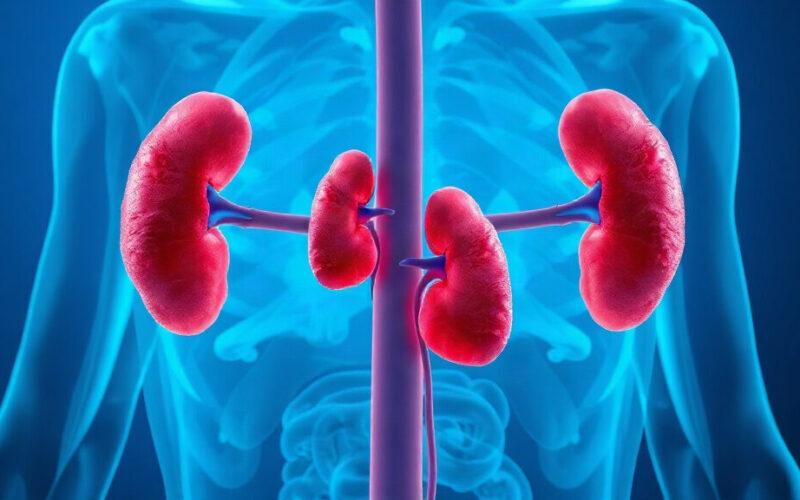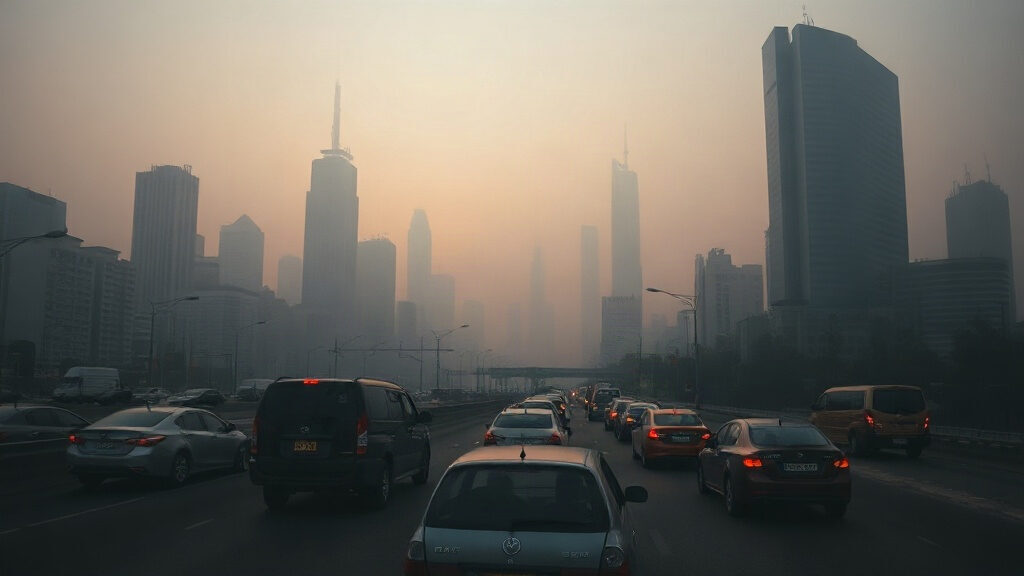
Air pollution reaches every breath long before any symptom appears: fine particles, ozone and nitrogen dioxide penetrate the lungs and then pass into the bloodstream, where they sustain an inflammation that wears down the heart and arteries. In France, this chronic exposure remains associated with roughly 40,000 premature deaths a year according to Sante publique France, the national public health agency. The pattern shows up in large cities as well as rural areas near busy roads or intensive livestock farms.
In brief – Air pollution is a mix of fine particles, ozone and gases from road traffic, heating and industry that penetrates the airways and then the bloodstream. The finest particles (PM2.5) cross the alveolar barrier and trigger systemic inflammation that speeds up atherosclerosis and weakens lung function. According to Pope et al. (2002, JAMA, a cohort of 1.2 million adults), every 10 microgram per cubic meter rise in fine particles raises cardiopulmonary mortality by about 6%. In Europe, Lelieveld et al. (2019, European Heart Journal) attribute most pollution-related deaths to cardiovascular disease, well ahead of lung cancer. Sante publique France estimates the loss of life expectancy at roughly eight months for an adult exposed to current fine particle levels. Limiting exposure peaks and airing rooms at the right times measurably lowers part of this risk.
What is air pollution?
This term covers all the particles and gases foreign to the natural composition of the atmosphere, emitted mainly by road traffic, wood heating, farming and industry. The pollutants tracked routinely include fine particles PM10 and PM2.5, nitrogen dioxide (NO2), ozone (O3) and sulfur dioxide (SO2). Their size determines how deep they travel: PM10 mostly settles in the nose and throat, while PM2.5, ten times finer than a human hair, reaches the lung alveoli and then crosses the alveolar-capillary barrier to enter the bloodstream.
The World Health Organization considers that no exposure level to fine particles is entirely risk-free. Its 2021 guidelines set an annual target value of 5 micrograms per cubic meter for PM2.5, a level most large French cities do not yet meet continuously.
How these pollutants damage the heart and lungs
Inhaled fine particles first trigger a local inflammatory reaction in the lungs, activating alveolar macrophages and releasing pro-inflammatory cytokines. A fraction of these ultrafine particles then crosses the alveolar wall and enters the blood directly, where it promotes oxidative stress, vascular endothelial dysfunction and instability of atherosclerotic plaques. This mechanism explains why a pollution spike can precede a heart attack or stroke by just a few hours in people who are already vulnerable.
Several damage pathways combine over time:
- Chronic systemic inflammation sustained by repeated exposure to fine particles, with elevated markers such as CRP.
- Endothelial dysfunction: blood vessels lose their ability to dilate normally, a precursor of hypertension.
- Airway remodeling: prolonged exposure to ozone and NO2, linked to an accelerated decline in forced expiratory volume (FEV1).
- Activation of the autonomic nervous system, with reduced heart rate variability during fine particle spikes.
- Cumulative effect with age: arteries that are already stiffer cope less well with the added oxidative load.
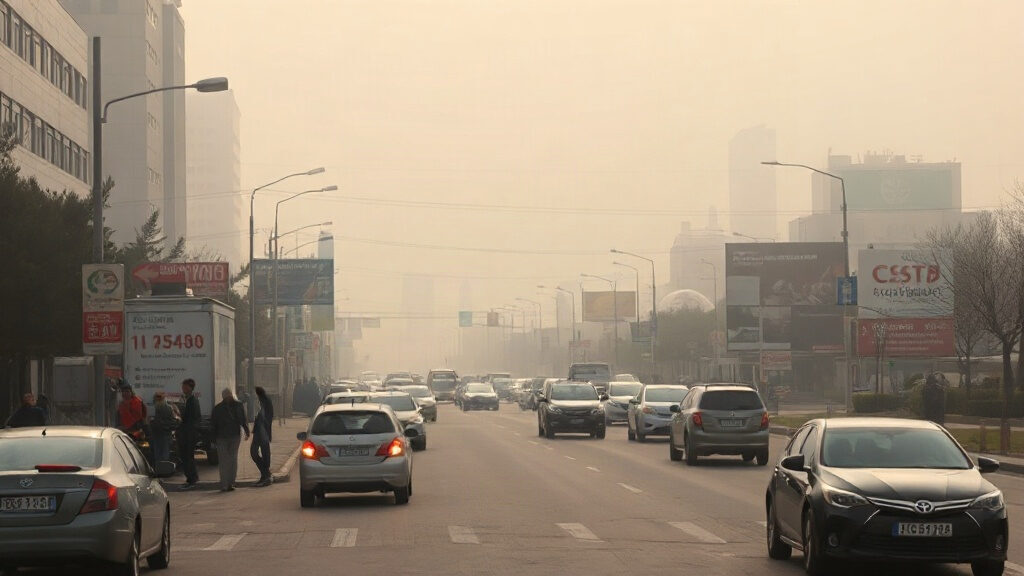
What the science says about air pollution
The American cohort of Pope et al. (2002, JAMA), covering 1.2 million adults followed by the American Cancer Society, remains the reference study for quantifying the long-term effect of fine particles: every 10 microgram per cubic meter rise in PM2.5 is associated with a 4% increase in all-cause mortality, 6% in cardiopulmonary mortality and 8% in lung cancer mortality (Pope et al. 2002, PMID 11879110).
In Europe, Lelieveld et al. (2019, European Heart Journal) reassessed the cardiovascular burden of this exposure using updated risk functions: cardiovascular disease accounts for most pollution-attributable deaths on the continent, ahead of respiratory disease and cancer (Lelieveld et al. 2019, PMID 30860255). On the lung side, a Mendelian randomization analysis published in 2024 confirms a causal link between PM2.5 exposure and declining respiratory function, with a higher risk of chronic obstructive pulmonary disease (Feng et al. 2024, PMID 38904841). These three studies converge on the same point: the association is a robust, repeatedly confirmed statistical correlation, not proof of causation for any single case, but the biological and epidemiological evidence is consistent.
In France, national public health authorities link chronic exposure to fine particles to roughly 40,000 premature deaths a year and an average loss of life expectancy of eight months from age 30, alongside a 61% drop in PM2.5 emissions between 2000 and 2019. For a broader picture beyond France, the MedlinePlus air pollution overview from the US National Library of Medicine outlines the same core health risks for the general population.
In practice: reducing daily exposure
Checking local air quality indexes before a workout limits exposure during peaks, especially for people with asthma or coronary disease. Official monitoring apps give an hourly reading by pollutant, useful for shifting a run to another time of day when an ozone alert is in effect. This habit complements the other cardiovascular prevention strategies covered in our guide to inflammation and cellular aging.
Indoors, ventilation remains decisive: airing rooms early in the morning or late at night in urban areas, when traffic is lighter, limits the entry of fine particles compared with airing during rush hour. Other environmental exposures add to outdoor air, as detailed in our article on radon in the home or our investigation into microplastics, which share with fine particles the ability to cross biological barriers and sustain low-grade inflammation.
| Pollution source | Main pollutant | Accessible reduction step |
|---|---|---|
| Road traffic | PM2.5, nitrogen dioxide | Avoid busy roads at rush hour when walking or running |
| Individual wood heating | Fine particles | Choose a certified low-emission appliance and dry wood |
| Indoor air (cooking, candles) | Fine particles, volatile organic compounds | Ventilate during and after cooking, limit decorative burning |
| Summer ozone peaks | Ozone | Shift physical effort to later in the day |
A simple protocol to limit the impact on heart and lungs
No single habit cancels out chronic exposure in an urban area, but several practices reduce the dose received day after day.
- Check the air quality index before outdoor physical activity and postpone intense efforts during peaks.
- Avoid walking or running directly alongside heavy-traffic roads; stepping back just a few dozen meters lowers the fine particle concentration.
- Air out the home outside rush hours, including in winter, to renew indoor air.
- Maintain mechanical ventilation systems and change their filters according to the manufacturer’s recommendations.
- Do not smoke indoors: tobacco remains, alongside outdoor pollution, one of the two biggest contributors to inhaled fine particle load, as detailed in our article on smoking and life expectancy.
Frequently asked questions
How does air pollution affect the heart?
Inhaled fine particles pass into the blood and trigger inflammation that damages the vessel wall and destabilizes atherosclerotic plaques. This mechanism explains the rise in heart attack and stroke risk observed during pollution peaks, particularly in people who already have cardiovascular disease.
Which pollutants are most dangerous for the lungs?
Fine particles PM2.5, nitrogen dioxide and ozone are the three pollutants most closely linked to declining respiratory function. PM2.5 penetrates deepest into the alveoli, while ozone directly irritates the airways during summer peaks.
Is indoor air pollution as dangerous as outdoor pollution?
Yes, it can contribute heavily, notably through cooking, tobacco smoke and poorly ventilated wood heating. Since most of the day is spent indoors, poor ventilation extends cumulative exposure even in a lightly polluted neighborhood.
Is there a safe exposure threshold?
No, the World Health Organization considers that no threshold is entirely safe for fine particles. Risk rises in an almost linear fashion with concentration, which is why reducing exposure matters even below regulatory limits.
Is outdoor exercise still advisable during moderate pollution?
Yes for most people, since the cardiovascular benefits of physical activity generally outweigh the risk of a one-off, moderate exposure. Caution matters most during declared peaks and for people with asthma, coronary disease or older adults, who benefit from shifting the effort or moving it indoors on those days.
Medical disclaimer. The information provided here is for informational purposes only and does not constitute medical advice. It does not replace a consultation. Ask a healthcare professional before changing your diet, taking dietary supplements or starting a new practice, especially if you have a medical condition, are pregnant or are under treatment. Dietary supplements do not replace a balanced diet or medical follow-up.