Kidney stones affect close to one adult in ten in France, and the most repeated advice for avoiding them fits in three words: drink more water. What are those three words really worth? A randomized trial published in The Lancet in 2026 on 1,658 patients has just qualified this apparent certainty. Here is what the studies show about hydration, the drinks to favor and the other dietary levers that weigh as much as the glass of water against kidney stones.
In brief – Kidney stones are solid mineral crystals (calcium oxalate in most cases) that form when urine is too concentrated in salts. Drinking more dilutes the urine and remains the first preventive measure: in the Borghi trial (1996), reaching 2 liters of urine a day cut recurrences from 27% to 12% over five years. But water does not explain everything. The PUSH trial (The Lancet, 2026, 1,658 participants) shows that an intensive program to make people drink more did not reduce recurrences compared with standard follow-up. Sugary sodas raise the risk, and so do salt and excess animal protein, while a normal intake of dietary calcium lowers it. The useful target: clear urine all day long, meaning about 2 liters (roughly half a US gallon) of urine per 24 hours, and a DASH-style plate rich in fruit, vegetables and dairy.
Kidney stones: definition and key figures in France
A kidney stone is a mineral concretion that forms in the kidney from substances normally dissolved in urine. According to the 2022 recommendations of the Lithiasis Committee of the French Urology Association (Daudon et al., 2023), the prevalence of stone disease reaches 10% of the French population, and renal colic accounts for 1 to 2% of emergency department visits. Incidence is rising steadily in industrialized countries, in step with overweight and diabetes.
The composition of the stone guides all prevention. Calcium oxalate dominates by far, ahead of calcium phosphate, uric acid (linked to overweight and insulin resistance), infection stones and cystine, which is much rarer. Without lifestyle changes, recurrence is the rule rather than the exception, hence the value of analyzing every passed stone to tailor the measures. Most stones under 5 mm (0.2 in) pass on their own in the urine, as the NHS guidance on kidney stones also explains.
| Stone type | Frequency | Contributing factors | Main lever |
|---|---|---|---|
| Calcium oxalate | The most common. | Concentrated urine, excess salt, low-calcium diet, lack of citrate. | Hydration, normal dietary calcium, less salt. |
| Calcium phosphate | Common. | Alkaline urine, hypercalciuria, certain tubular abnormalities. | Medical work-up, hydration. |
| Uric acid | Common, on the rise. | Acidic urine, overweight, diabetes, excess meat. | Alkalinizing the urine, weight loss. |
| Struvite (infection) | Uncommon. | Recurrent urinary tract infections. | Treating the infection. |
| Cystine | Rare. | Genetic disease (cystinuria). | Specialist follow-up, high fluid intake. |
How kidney stones form: urine supersaturation
Stones arise when the urinary concentration of calcium, oxalate or uric acid exceeds its solubility threshold: this is supersaturation. Crystals appear, aggregate, then anchor to the tubule wall or to the Randall’s plaques of the renal papilla. A low urine volume concentrates everything: in the study by Borghi et al. (1996), men who formed calcium oxalate stones passed on average 1,057 ml (about 36 fl oz) of urine a day, against 1,401 ml (47 fl oz) in stone-free controls.
Several factors push urine toward stone formation:
- A low urine volume, from insufficient intake, heat or heavy sweating.
- Hypercalciuria, an excess of calcium in the urine, made worse by a salty diet.
- Hyperoxaluria, an excess of oxalate, paradoxically favored by a low-calcium diet (the oxalate is no longer captured in the gut and passes into the blood, then the urine).
- Hypocitraturia, a lack of citrate, the natural inhibitor of crystallization supplied by fruit and vegetables.
- An acidic urinary pH, which favors uric acid stones and is common with insulin resistance.
- Overweight: in three cohorts totaling 241,000 participants, the relative risk of stones was 1.33 in obese men and 1.90 to 2.09 in obese women (Taylor et al., 2005).
This close link with weight, insulin and diet explains why stone disease belongs to the deregulated nutrient sensing pillar: the kidney only reflects, in the urine, what the metabolism sends it.
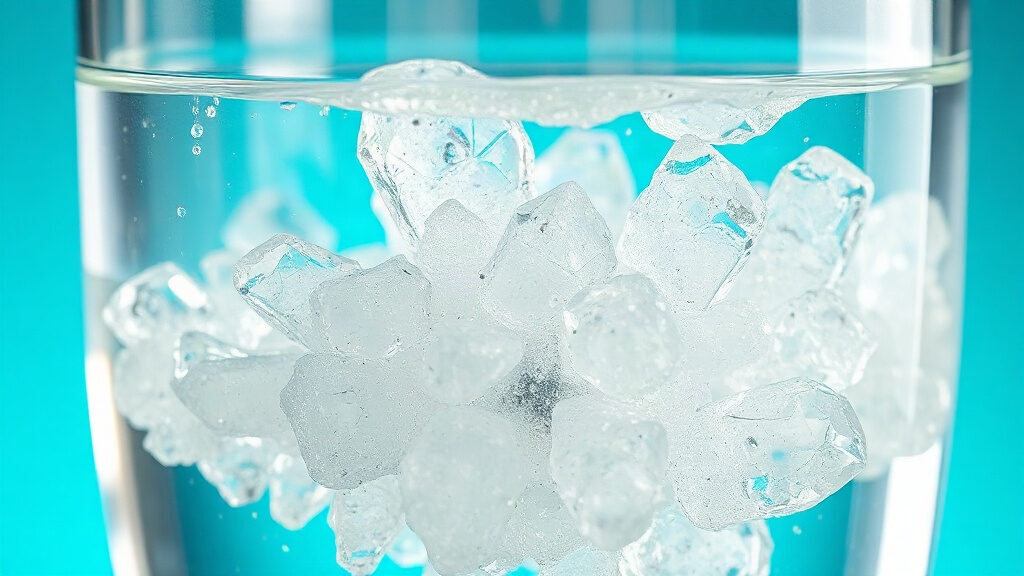
Drinking more against kidney stones: what the science says
Drinking more reduces stone recurrences, but the proof rests on a single, old randomized trial, and the largest recent trial tempers the enthusiasm. The Borghi trial (1996) followed 199 patients for five years after a first calcium stone. The group asked to drink enough to produce 2 liters of urine a day had 12 recurrences among 99 patients, against 27 among 100 in the group given no instruction. The mean time to recurrence rose from 25 to 39 months.
The 2020 Cochrane review (Bao et al.) retained only that trial: a relative risk of recurrence of 0.45, or 149 recurrences avoided per 1,000 patients over five years, with a level of evidence judged low. No randomized trial exists in primary prevention, in people who have never had a stone. Observational data point the same way: the meta-analysis by Cheungpasitporn et al. (2016), on 273,685 people, links a high fluid intake to a risk of stones cut in half (RR 0.49).
In the UK Biobank (Littlejohns et al., 2020, 439,072 participants, 2,057 first stones), each additional 200 ml (about 7 fl oz) glass of fluid a day came with a 13% lower risk. An interesting detail: the association held for tea, coffee and alcohol, but not for water taken on its own, which suggests that total volume is what counts, and perhaps certain compounds in the drinks.
The PUSH trial, published in The Lancet (Desai et al., 2026), randomized 1,658 people with a history of stones and a low urine volume. The intervention group received a numerical fluid prescription, financial incentives, coaching and text message reminders; the control group received the standard advice to drink more. After two years, 19% of participants in the intervention group and 20% in the control group had another symptomatic stone (HR 0.96), even though urine volume was much higher in the coached group. Two readings are possible: the standard advice is already enough to get people drinking, and water alone does not correct the other factors (salt, weight, protein) that feed crystallization.
| Study | Design and size | Main result | What to take away |
|---|---|---|---|
| Borghi 1996 | Randomized trial, 199 patients, 5 years. | Recurrences: 12% with 2 liters of urine a day versus 27% without instruction. | Drinking more halves the risk of recurrence. |
| Cochrane 2020 | Systematic review, 1 trial retained. | RR 0.45, 149 recurrences avoided per 1,000 patients. | Low-certainty evidence, nothing in primary prevention. |
| Cheungpasitporn 2016 | Meta-analysis, 9 studies, 273,685 people. | RR 0.49 (observational) and 0.40 (trials). | Cohorts confirm the direction of the effect. |
| UK Biobank 2020 | Cohort, 439,072 participants. | 13% lower risk per additional 200 ml glass. | Total fluid volume counts, not just water. |
| PUSH 2026 | Randomized trial, 1,658 participants, 2 years. | Recurrences: 19% with intensive coaching versus 20% with standard advice. | Intensive coaching adds nothing to basic advice. |
In practice: how much to drink and which drinks to favor
The goal adopted by the American College of Physicians (Qaseem et al., 2014) to prevent stone recurrence is a urine volume of at least 2 liters a day, with drinks spread across the whole day. That represents about 2.5 liters (85 fl oz) of fluids, more in summer or with physical activity, above the general benchmark of 1.5 to 2 liters of water a day for an adult, close to the 6 to 8 glasses of fluid a day suggested by the NHS. The simplest marker remains the color of the urine: clear, straw-colored, at every trip to the bathroom. For older people, whose sense of thirst dulls, the habit of drinking without waiting for thirst also protects overall kidney function, as our article on hydration and longevity explains.
Not all drinks are equal against kidney stones. In three American cohorts (Ferraro et al., 2013, 194,095 participants, 4,462 stones), heavy consumers of sugar-sweetened cola had a 23% higher risk, and 33% for other sugar-sweetened sodas. Conversely, caffeinated coffee was associated with 26% less risk, tea with 11% and orange juice with 12%. The fructose in sodas increases the urinary excretion of calcium and oxalate, while orange juice supplies citrate.
| Drink | Change in risk | Likely explanation |
|---|---|---|
| Sugar-sweetened cola | +23%. | Fructose and phosphates, higher urinary calcium. |
| Other sugar-sweetened sodas | +33%. | Fructose load. |
| Caffeinated coffee | -26%. | Diuretic effect, higher urine volume. |
| Decaffeinated coffee | -16%. | Fluid volume. |
| Tea | -11%. | Fluid volume, despite its oxalate content. |
| Orange juice | -12%. | Supply of citrate and potassium. |
| Water | Reference. | Dilutes the urine without adding sugar. |
Mineral waters rich in bicarbonate raise urinary pH and citrate, two favorable parameters against calcium oxalate and uric acid stones, according to a 2025 narrative review (Mansouri et al.), but long-term trials are still lacking. Waters high in sodium should be limited. The citrate in citrus fruit and the potassium in fruit and vegetables act in the same direction, as detailed in our article on potassium, its benefits and its precautions.
Beyond water: five dietary levers against kidney stones
Five modifiable factors explain 57% of first kidney stones in the Harvard cohorts (Ferraro et al., 2017, 192,126 participants). Low hydration alone accounts for 26%, with 67 people needing to drink more for ten years to prevent one stone episode. Weight, a DASH-style diet, dietary calcium and sugary drinks share the rest. Here is how to act on each one:
- Keep a normal intake of dietary calcium. Counterintuitive but solid: among 45,619 men followed for four years (Curhan et al., 1993), the quintile richest in dietary calcium had a risk reduced by one third (RR 0.66). Calcium from meals traps oxalate in the gut. The trial by Borghi et al. (2002) confirms it: in 120 men with recurrent stones, a normal-calcium diet low in salt and animal protein produced 12 recurrences among 60, against 23 among 60 with the classic low-calcium diet. Calcium supplements taken away from meals do not share this effect.
- Cut back on salt. Sodium drags calcium into the urine and promotes stone formation. In the UK Biobank, systematically salting one’s food came with a 33% higher risk of stones. Aiming for under 5 g of salt a day, the WHO benchmark, mostly means limiting bread, cured meats, cheese and ready meals.
- Go easy on animal protein. It acidifies the urine, raises urinary calcium and uric acid and lowers citrate. In the Curhan cohort (1993), the heaviest consumers had a relative risk of 1.33. The right amount is detailed in our guide on protein per day and longevity.
- Adopt a DASH-style plate. Fruit, vegetables, legumes, nuts, dairy, whole grains, little sodium, sugar and red meat: in three cohorts totaling more than 240,000 people (Taylor et al., 2009), the quintile closest to this pattern had a stone risk reduced by 40 to 45% (RR 0.55 to 0.60), even among people eating little calcium.
- Watch your weight and drop sugary sodas. Every extra kilo increases the excretion of calcium, oxalate and uric acid. Gaining more than 16 kg (35 lb) since age 21 multiplied the risk by 1.39 in men and by 1.70 to 1.82 in women (Taylor 2005).
These five levers are exactly the ones that protect the arteries, blood pressure and kidney function over the long term. Preventing kidney stones therefore amounts to investing in the longevity of the whole kidney: dilute, low-salt urine today also means a renal filter under less strain at 70.
Frequently asked questions about kidney stones
How much water should you drink a day to avoid kidney stones?
The validated target is a urine volume of at least 2 liters per 24 hours, which requires about 2.5 liters of drinks spread over the day, more in strong heat or during sport. The practical marker is clear, straw-colored urine at every void. In the Borghi trial (1996), this goal reduced stone recurrences from 27% to 12% over five years.
Does dietary calcium promote kidney stones?
No, it is the opposite for calcium from food. Among 45,619 men (Curhan 1993), the highest dietary intake reduced the risk by one third, because calcium binds oxalate in the gut and keeps it from reaching the urine. A low-calcium diet, on the contrary, increases urinary oxalate. Calcium supplements taken outside meals do not provide this protective effect and call for medical advice.
What is the difference between a calcium oxalate stone and a uric acid stone?
Among kidney stones, the calcium oxalate stone, the most common, forms in concentrated urine rich in calcium and oxalate, often because of salt and a low urine volume. The uric acid stone forms in urine that is too acidic, typical of overweight, diabetes and very meat-heavy diets. The first is prevented by hydration and less salt, the second by weight loss and alkalinizing the urine.
Should you give up spinach, rhubarb and chocolate?
Not systematically. These foods are rich in oxalate, but eaten during a meal containing calcium (dairy, for example), their oxalate is largely neutralized in the gut. The Borghi trial (2002) shows that a normal-calcium diet protects better than a restrictive one. Targeted restriction is justified only in cases of hyperoxaluria confirmed by a 24-hour urine test.
Why did the PUSH trial show no benefit from drinking more?
The PUSH trial (The Lancet, 2026) compared intensive coaching with standard advice in 1,658 people who had already had kidney stones. Both groups increased their urine volume, and recurrences were identical (19% versus 20%). The result does not say that drinking is useless: it shows that basic advice is enough to get people drinking, and that water alone does not make up for salt, weight or sodas.
Medical disclaimer. The information provided here is offered for informational purposes only and does not constitute medical advice. It does not replace a consultation. Intense low back or flank pain, especially with fever, vomiting or an inability to urinate, requires emergency care. Ask a healthcare professional before changing your diet, taking dietary supplements or starting a new practice, especially if you have a kidney or heart condition, are pregnant or are under treatment. Dietary supplements do not replace a balanced diet or medical follow-up.