Uric acid in an adult’s blood usually falls between 210 and 420 µmol/L in men and between 150 and 350 µmol/L in women before menopause. This test appears on many routine blood panels, often labeled serum urate. Its value depends on age, sex, kidney function, diet and, above all, genetics. Here is how to read your result, what makes it change over a lifetime and at what level medical advice becomes necessary.
In brief – Uric acid is a waste product of purine metabolism that circulates in the blood, about two thirds of it removed by the kidneys. French laboratories generally use 210 to 420 µmol/L (35 to 70 mg/L) for adult men and 150 to 350 µmol/L (25 to 60 mg/L) for women before menopause, with limits specific to each laboratory. Levels rise at puberty in boys and after menopause in women. Above 6.8 mg/dL (about 404 µmol/L), urate can form crystals in the joints: this is the mechanism behind gout. In an analysis of 18,889 adults, gout risk was 6.6 times higher between 7 and 7.9 mg/dL than below 6 mg/dL. High urate without any symptoms generally does not call for medication, but a joint attack, kidney stone pain or a level above 9 mg/dL (535 µmol/L) means you should see a doctor.
Uric acid: definition and test units
This compound is the end product of purine breakdown in humans. Purines come partly from food (meat, organ meats, seafood, beer) and mostly from the turnover of our own cells. Most mammals convert this compound into allantoin using an enzyme called uricase. Great apes and humans lost this enzyme during evolution, which explains blood levels far higher than in dogs or mice.
In most French laboratories, a serum urate result is expressed in micromoles per liter (µmol/L), sometimes in milligrams per liter (mg/L). International studies and guidelines use milligrams per deciliter (mg/dL). The conversion is simple: 1 mg/dL equals 59.5 µmol/L and 10 mg/L. A threshold of 6 mg/dL therefore corresponds to 60 mg/L, or about 360 µmol/L.
The test uses a standard venous blood draw, ideally fasting in the morning. A very meat-heavy meal or an evening of drinking the day before can slightly skew the number. A single value should therefore be confirmed by a second test before drawing any conclusion.
How the body produces and eliminates uric acid
The blood urate level reflects the balance between what the liver makes and what the kidneys and gut eliminate. The kidneys filter almost all urate, then reabsorb about 90% of it through specialized transporters. MedlinePlus notes that a core role of the kidneys is to remove waste products from the blood, including urea, creatinine and this same waste product (MedlinePlus, kidney diseases).
A review published in The Lancet in 2021 describes the main players in this regulation (Dalbeth et al., 2021):
- GLUT9 (SLC2A9 gene): a kidney transporter that reabsorbs urate, the first known genetic determinant of serum urate.
- URAT1 (SLC22A12 gene): another reabsorption transporter, targeted by some uricosuric drugs.
- ABCG2: a transporter that excretes urate into the gut and urine; its low-activity variants increase the risk of gout.
- Xanthine oxidase: a liver enzyme that produces urate, blocked by allopurinol.
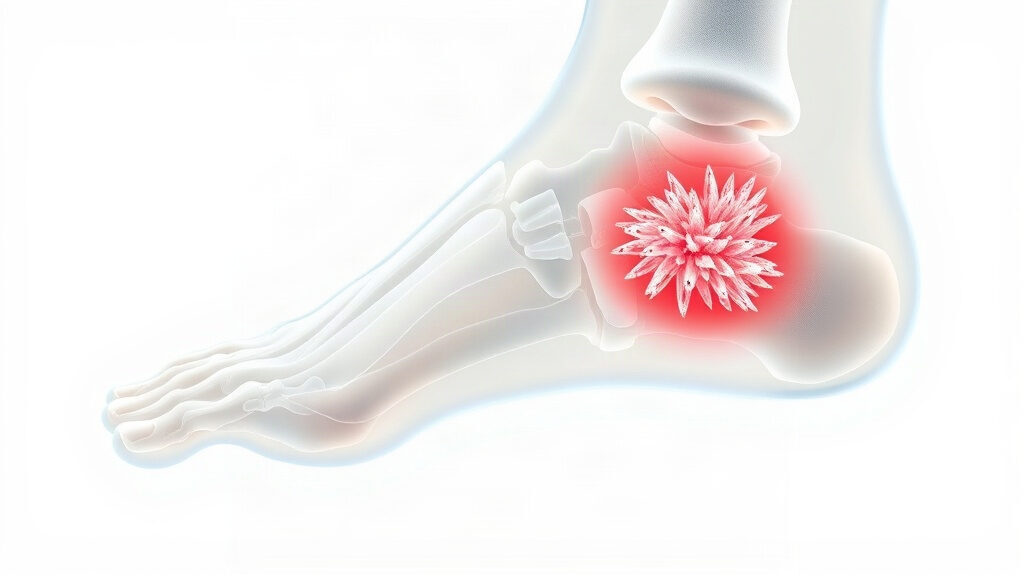
When the concentration exceeds about 6.8 mg/dL at 37°C (98.6°F), sodium urate reaches its solubility limit. Needle-shaped crystals can then settle in the coolest joints, such as the big toe. These crystals activate the NLRP3 inflammasome in immune cells, which releases interleukin 1 beta: this is the trigger of a gout attack. MedlinePlus describes gout as a form of arthritis caused by urate crystals building up in the joint (MedlinePlus, gout).
High uric acid: what the science says
The higher the urate level, the higher the risk of gout, but the rise is nonlinear and nothing is inevitable. An individual-level analysis of 18,889 adults from four US cohorts (ARIC, CARDIA and Framingham), followed for 11 years on average, quantified this gradient (Dalbeth et al., 2018). Over 15 years, gout affected 1.1% of people below 6 mg/dL versus 49% of those at 10 mg/dL or more. In other words, half of the people with the highest levels never had an attack.
| Uric acid (mg/dL) | Equivalent (µmol/L) | Relative risk of gout | Interpretation |
|---|---|---|---|
| Below 6 | Below 357 | Reference (1.1% at 15 years) | No crystallization zone |
| 6.0 to 6.9 | 357 to 410 | 2.7 | Close to the saturation threshold |
| 7.0 to 7.9 | 416 to 470 | 6.6 | Moderate hyperuricemia |
| 8.0 to 8.9 | 476 to 529 | 15 | Clear hyperuricemia |
| 9.0 to 9.9 | 535 to 589 | 30 | Medical advice recommended |
| 10 or more | 595 or more | 64 (49% at 15 years) | Medical advice needed |
An older study reached the same order of magnitude. In the Normative Aging Study, 2,046 healthy men were followed for 14.9 years (Campion et al., 1987). The annual rate of a first attack reached 4.9% above 9 mg/dL, versus 0.5% between 7 and 8.9 mg/dL and 0.1% below 7 mg/dL. The authors observed no kidney deterioration attributable to high urate without symptoms.
Beyond gout, high urate is associated with hypertension, diabetes, chronic kidney disease and heart failure. An umbrella review in the BMJ examined 136 health outcomes (Li et al., 2017). None of the observational associations was rated “convincing”, and Mendelian randomization studies confirmed a clear causal link only for gout. Two trials published in the New England Journal of Medicine in 2020 point the same way. In CKD-FIX, allopurinol did not slow kidney decline in 363 patients with chronic kidney disease (Badve et al., 2020). In PERL, lowering serum urate from 6.1 to 3.9 mg/dL in 530 people with type 1 diabetes brought no measurable kidney benefit (Doria et al., 2020).
An elevated level therefore remains a good marker of metabolic background, without being proven as a direct cause of these diseases. Diet matters less than people think. A meta-analysis of five US cohorts (16,760 adults) shows that dietary patterns explain at most 0.3% of the variation in serum urate, versus 23.9% for common genetic variants (Major et al., 2018).
In practice: normal uric acid levels by age and sex
The normal level depends first on sex, then on age, and each laboratory prints its own reference range on the report. The figures below match the most common limits used in France. Always read your result against the limits printed on your own lab report.
| Profile | Usual range (µmol/L) | Equivalent (mg/L) | What changes the level |
|---|---|---|---|
| Child before puberty | 120 to 330 | 20 to 55 | Low levels, similar in girls and boys |
| Adult man | 210 to 420 | 35 to 70 | Rise at puberty under the effect of testosterone |
| Woman before menopause | 150 to 350 | 25 to 60 | Estrogens promote kidney excretion of urate |
| Woman after menopause | Moves closer to male values | Up to about 60 to 65 | Lower estrogens, weight, diuretics |
| Adult over 65 | Adult limits, often in the upper part | Depends on sex | Kidney function, medications, hypertension |
In men, average serum urate measured in the US NHANES 2007-2008 survey reached 6.14 mg/dL, or about 365 µmol/L (Zhu et al., 2011). In women, the average was 4.87 mg/dL, or about 290 µmol/L. The authors defined hyperuricemia as above 7.0 mg/dL in men and 5.7 mg/dL in women: it affected 21% of adults, while gout affected 3.9% of them.
In women, menopause marks a turning point. In an analysis of 7,662 American women, serum urate in postmenopausal women exceeded that of premenopausal women by 0.34 mg/dL, or about 20 µmol/L, with other factors equal (Hak and Choi, 2008). Menopausal hormone therapy went with a level 0.24 mg/dL lower. Between ages 20-29 and 70 or older, the raw gap reached 1.03 mg/dL, and it disappeared after adjustment: the age-related rise thus runs through menopause and age-associated factors, not through age itself.
After 60, three factors push urate upward: the natural decline in kidney filtration, abdominal weight gain and certain medications. Our article on kidney function and GFR with age details this decline. Diuretics are the prime suspect: in the ARIC cohort, 5,789 people with hypertension were followed for 9 years, and starting a diuretic raised serum urate by 0.72 mg/dL (McAdams-DeMarco et al., 2012). Gout risk rose by 44% with a thiazide and by 131% with a loop diuretic. Never stop a treatment on your own: if needed, your doctor can choose another drug.
High urate also promotes certain urinary stones, especially when urine is acidic, as with excess weight or diabetes. The habits that limit this risk are detailed in our article on kidney stones and hydration. Finally, this marker fits into the broader disruption of nutrient handling, presented on our pillar page on deregulated nutrient sensing.
When to see a doctor about abnormal uric acid
Medical advice is needed as soon as a high level comes with symptoms, or when the number clearly exceeds the laboratory’s limits. The following situations warrant a consultation:
- A joint that suddenly becomes red, hot, swollen and very painful, often at night and in the big toe: this is the typical picture of a gout attack.
- Intense pain in the lower back spreading to the groin, or blood in the urine: kidney stone pain (renal colic) is possible.
- A level above 9 mg/dL (535 µmol/L) confirmed on two tests, even without pain.
- Small hard lumps under the skin near the joints, the elbow or the ear (tophi).
- A very low level, below 120 µmol/L: a rare situation, sometimes linked to a medication or a kidney disorder, that deserves medical advice.
A hot joint with fever is an emergency: infectious arthritis can look like a gout attack and must be ruled out the same day. For people who already have gout, the European EULAR guidelines set a treatment target below 6 mg/dL (360 µmol/L), and below 5 mg/dL for severe gout with tophi (Richette et al., 2017). The American College of Rheumatology, by contrast, advises against prescribing urate-lowering drugs for hyperuricemia without symptoms (FitzGerald et al., 2020).
Protocol: habits associated with lower uric acid
Lifestyle levers have a measurable but modest effect on serum urate, on the order of 0.3 to 1 mg/dL, and do not replace treatment once gout is established. The following table summarizes the strongest data.
| Factor | Measured effect | Study | Study type |
|---|---|---|---|
| Beer | Gout risk x 1.49 per daily glass | Choi, Lancet 2004 (47,150 men) | Cohort |
| Sugary sodas | Risk x 1.85 from 2 per day; diet sodas no effect | Choi, BMJ 2008 (46,393 men) | Cohort |
| Meat / seafood | Risk x 1.41 / x 1.51 (highest quintile) | Choi, NEJM 2004 (47,150 men) | Cohort |
| Dairy products | Risk x 0.56 (highest quintile) | Choi, NEJM 2004 | Cohort |
| DASH diet | Serum urate -0.35 mg/dL, -1.29 mg/dL if 7 mg/dL or more at baseline | Juraschek 2016 (103 adults) | Randomized trial |
| Vitamin C (median 500 mg/day) | Serum urate -0.35 mg/dL | Juraschek 2011 (13 trials, 556 subjects) | Meta-analysis |
The sources for these figures are as follows: alcohol (Choi et al., 2004), sodas and fructose (Choi and Curhan, 2008), meat, seafood and dairy (Choi et al., 2004), DASH diet (Juraschek et al., 2016) and vitamin C (Juraschek et al., 2011). In the 2004 NEJM study, purine-rich vegetables (spinach, lentils, mushrooms) did not increase the risk.
In concrete terms, here are the habits backed by these data to keep urate in check:
- Limit beer and spirits; our feature on alcohol, the liver and the arteries points out that no amount is free of effects.
- Replace sugary sodas and fruit juices with water, or unsweetened coffee or tea.
- Keep red meat, organ meats and seafood to a few meals per week, without cutting out legumes.
- Keep low-fat dairy products on the menu every day.
- Lose weight gradually if you are overweight: a review of 10 studies found a favorable effect on attacks in 6 out of 8 studies (Nielsen et al., 2017). Strict fasting raises serum urate in the short term.
- Drink enough to produce about 2 liters (roughly half a gallon) of urine per day if you have already had a stone.
Coffee and cherries often come up in advice. Among 45,869 men, drinking 4 to 5 cups of coffee per day was associated with a 40% lower risk of gout (Choi et al., 2007). Among 633 people who already had gout, eating cherries over two days was associated with 35% fewer attacks (Zhang et al., 2012). These are observational associations, with no proof of cause and effect. To receive our monthly summaries on biomarkers of aging, subscribe to our health newsletter.
Frequently asked questions about uric acid
What is a normal uric acid level for women?
In women before menopause, the level usually ranges from 150 to 350 µmol/L, or 25 to 60 mg/L. Estrogens promote its elimination by the kidneys. After menopause, the level rises by about 20 µmol/L with other factors equal and moves closer to male values. Each laboratory states its own limits on the report.
At what uric acid level should you worry?
Above 6.8 mg/dL, or about 404 µmol/L, urate can crystallize in the joints. Gout risk becomes markedly higher from 9 mg/dL (535 µmol/L), with 4.9% first attacks per year in the Normative Aging Study. A high value confirmed on two tests, or linked to joint pain, warrants a consultation.
Why does uric acid rise with age?
Serum urate rises with age mainly because of menopause in women, declining kidney filtration, weight gain and medications such as diuretics. Among 7,662 American women, the age-related gap disappeared once these factors were taken into account. Age therefore acts mostly through what comes with it.
Should high uric acid without symptoms be treated?
Generally, no. The American College of Rheumatology advises against prescribing urate-lowering medication for hyperuricemia without gout or kidney stones. Two 2020 trials showed no kidney benefit from allopurinol in these patients. Monitoring, lifestyle and looking for a cause, such as a diuretic, remain the foundation. The decision belongs to your doctor.
Which foods raise uric acid?
Beer, spirits, sugary sodas, fruit juices, red meat, organ meats and seafood are associated with higher urate or more gout. Purine-rich vegetables do not increase the risk. Diet, however, explains less than 1% of differences in serum urate, versus nearly 24% for genetics.
Medical disclaimer. The information on this page is provided for informational purposes only and does not constitute medical advice. It does not replace a consultation. Ask a healthcare professional before changing your diet, taking dietary supplements or starting a new practice, especially if you have a medical condition, are pregnant or are under treatment. Dietary supplements do not replace a balanced diet or medical follow-up.