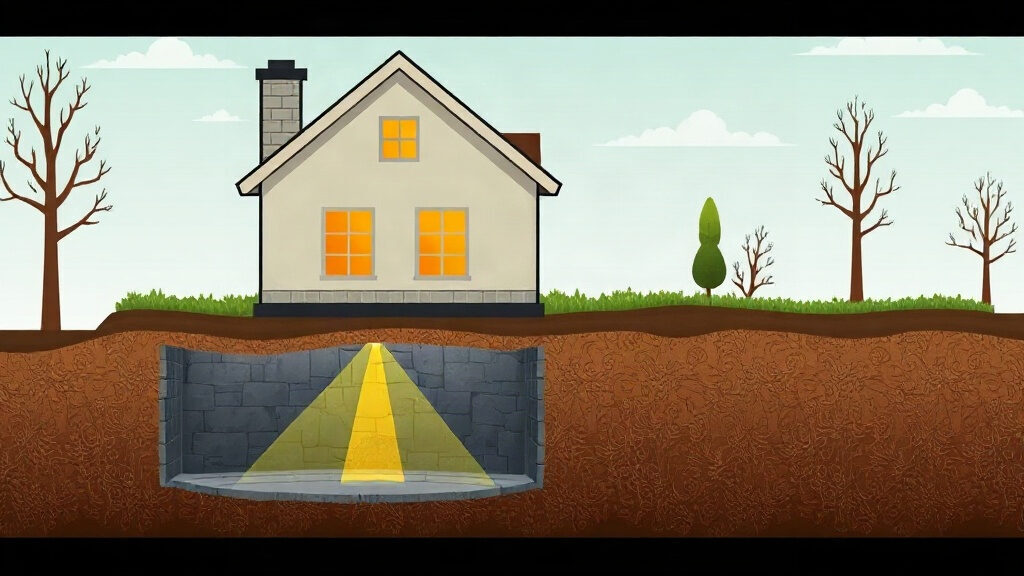
Radon seeps in through foundation cracks, builds up in poorly ventilated basements, and stays completely undetectable without a measuring device. This naturally occurring radioactive gas affects the entire French territory to varying degrees, from the Massif Central to Brittany, and turns up in old houses and poorly ventilated new builds alike. French health authorities rank it as the second leading cause of lung cancer after smoking.
In brief – Radon is a natural, colorless, odorless radioactive gas produced by the decay of uranium in granite and volcanic soils. It builds up in poorly ventilated spaces, especially basements and ground floors, and is the second leading cause of lung cancer in France after smoking, according to Sante publique France, the French national public health agency. The risk follows a linear, no-threshold relationship: each 100 Bq/m3 (2.7 pCi/L) rise in concentration raises lung cancer risk by about 16%, based on the pooled European analysis by Darby et al. (2005, BMJ, 13 case-control studies). France maps three potential zones for this gas, charted town by town by the ASNR. Only a dosimeter left in place for several weeks can reveal the real level in a given home, since geology only gives a probability.
What Is Radon?
Radon-222 comes from the natural decay of uranium and radium present in rock and soil since the Earth formed. A colorless, odorless noble gas, it rises through cracks in the ground and enters buildings through foundations, pipework or crawl spaces. Outdoors, it dilutes without significant risk. In an enclosed, poorly ventilated space, it accumulates and can reach high concentrations, measured in becquerels per cubic meter (Bq/m3, roughly equivalent to picocuries per liter, or pCi/L, the unit used in the United States).
The International Agency for Research on Cancer (IARC) has classified radon as a proven human carcinogen since 1988. Exposure happens mainly through inhalation at home, where people spend most of their time, more so than at work for most people.
How Radon Acts on Cells
Radon itself is not the main problem: its decay products, notably polonium-218 and polonium-214, pose the real risk. These radioactive particles attach to dust suspended in the air and settle in the bronchi during inhalation. They then emit alpha particles that directly damage the DNA of epithelial cells lining the airways, a genomic instability mechanism that can, over the long term, favor the onset of lung cancer. The National Cancer Institute lists radon exposure among the established causes of lung cancer, second only to tobacco (National Cancer Institute).
Several factors determine the radon level in a home:
- The geology of the subsoil: granite, volcanic rock and shale release more of this gas than sedimentary limestone soils.
- Ventilation quality: a poorly aired home retains the gas instead of renewing it.
- Foundation sealing: cracks, pipe joints and inspection hatches are common entry points.
- The floor occupied: basements and ground floors concentrate more gas than upper floors.
- The season: concentrations rise in autumn and winter, when windows stay closed longer.
What the Science Says About Radon and Lung Cancer
The pooled European analysis by Darby et al., published in 2005 in the BMJ, combined individual data from 13 case-control studies and found that lung cancer risk rises by about 16% for every 100 Bq/m3 (2.7 pCi/L) increase in residential radon, with no identified safety threshold (Darby et al. 2005, PMID 15613366). The same year, a pooled North American analysis of seven case-control studies (3662 cases, 4966 controls) confirmed this association and found it consistent with data from cohorts of miners exposed to high doses (Krewski et al. 2005, PMID 15703527).
The risk is not the same for everyone: smoking multiplies the effect of radon rather than simply adding to it. A smoker exposed to a high level of this gas carries a markedly higher lung cancer risk than a non-smoker exposed to the same level. This synergy is why the World Health Organization considers radon the second leading cause of lung cancer in the general population, and the first among non-smokers.
In Practice: Am I Exposed to Radon at Home?
The map of radon potential by geological formation, established by France’s Nuclear Safety and Radiation Protection Authority (ASNR, formerly IRSN), classifies each French town into three zones: zone 1 (low potential, Paris basin, Atlantic coast), zone 2 (low potential but with faults that can help the gas rise) and zone 3 (significant potential: the granite and volcanic massifs of the Massif Central, Brittany, Corsica, the Vosges, and some Alpine and Pyrenean valleys). This map gives a probability at the town level, not an individual measurement: two neighboring houses in zone 3 can show very different concentrations depending on their ventilation and sealing.
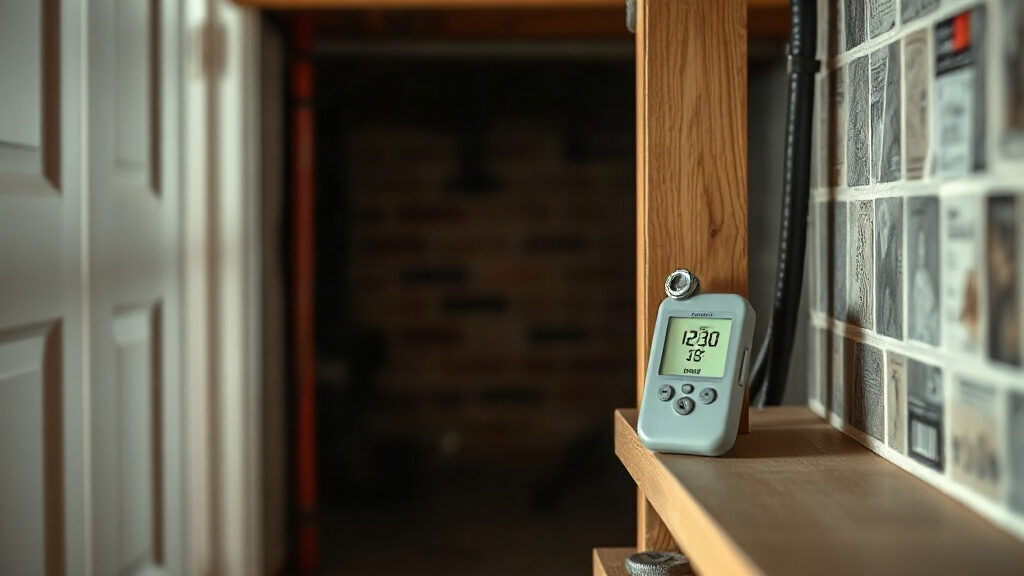
Only a dosimeter placed inside the home reveals the real level. To dig deeper into the cell biology shared with other cellular stressors, the article on telomeres and cellular aging explains how DNA wears down under repeated damage. This exposure connects to other environmental topics covered in our article on microplastics, and it combines dangerously with smoking, whose effects are detailed in our article on smoking. For the full classification of DNA-damage mechanisms, see the pillar page on genomic instability.
| Measured concentration | Interpretation | Recommended action |
|---|---|---|
| Below 100 Bq/m3 (2.7 pCi/L) | Low level, satisfactory situation | No action needed, routine airing is enough |
| 100 to 299 Bq/m3 (2.7 to 8.1 pCi/L) | Intermediate level | Improve daily airing and ventilation |
| 300 Bq/m3 (8.1 pCi/L) and above | French regulatory threshold exceeded in public buildings | Building diagnosis and reduction works |
| 1000 Bq/m3 (27 pCi/L) and above | High concentration | Priority works with a qualified professional |
A Practical Protocol to Reduce Radon at Home
Reducing exposure at home does not always require major work. A few simple steps are often enough to bring the concentration back below the vigilance threshold:
- Test the home with a passive dosimeter left in place for at least two months, ideally during the heating season (fall and winter), when concentrations are highest.
- Air out every room daily, even in winter: a few minutes of open windows renews the air and dilutes accumulated gas.
- Check and maintain mechanical ventilation, especially in basements, crawl spaces and cellars.
- Seal cracks in flooring, pipe joints and inspection hatches through which radon rises from the ground.
- Avoid setting up a bedroom or office in a zone 3 basement without testing the concentration first.
- Quitting smoking sharply cuts the combined risk, since the smoking-radon synergy is multiplicative, not additive.
Above 300 Bq/m3 (8.1 pCi/L) in a public building, a diagnosis by a qualified professional is required, with targeted work on sealing and sub-slab ventilation.
Frequently Asked Questions About Radon
How do I know if my home is affected by radon?
Check the ASNR map of geological formation potential to find your town’s zone. This map only gives a probability: to know the real level in your home, a dosimeter must be placed for several weeks, whatever the zone.
Is radon dangerous even at low concentrations?
Yes, according to Darby et al. (2005), lung cancer risk rises in a straight line even at low concentrations, with no identified safety threshold. The absolute risk, however, remains much lower for a non-smoker exposed to common levels than for a smoker exposed to the same level.
Can you smell or see radon in a house?
No. This gas is colorless and odorless, completely undetectable by human senses. Only a specific measuring device, such as a passive dosimeter or an electronic detector, can spot it and quantify its concentration.
How long does it take to measure radon correctly?
A passive dosimeter must stay in place for at least two months, ideally between October and April, since concentrations vary with ventilation and season. A measurement that is too short or taken in the middle of summer often underestimates the home’s real level.
What should I do if the radon level exceeds 300 Bq/m3?
This regulatory threshold for public buildings calls for a building diagnosis by a qualified professional. The work usually targets foundation sealing, basement ventilation and, sometimes, the installation of a soil depressurization system.
Medical disclaimer. The information provided here is for informational purposes only and does not constitute medical advice. It does not replace a consultation. Ask a healthcare professional before changing your diet, taking dietary supplements or starting a new practice, especially if you have a medical condition, are pregnant or are under treatment. Dietary supplements do not replace a balanced diet or medical follow-up.