
Vitamin B9, better known as folate, gives every cell the small chemical groups it needs to copy its DNA without errors and to place the methylation marks that control gene activity. It matters for everyone, but above all for women planning a pregnancy and for people over 60. Trials run since 1991 show both what this vitamin protects and what extra folic acid fails to do. Here is what the science says, with the figures to back it up.
In brief – Vitamin B9, or folate, is a B vitamin that supplies the one-carbon units needed to build DNA and to methylate it. Without it, the cell slips uracil into its DNA, up to 4 million times per cell according to a 1997 study, which promotes chromosome breaks. A moderate deficiency also lowers DNA methylation in white blood cells within a few weeks. The French food safety agency Anses sets an adult’s requirement at 330 µg per day, and at 600 µg before and during pregnancy. Taken at 400 µg per day around conception, folic acid cut neural tube defects by 72% in the MRC trial. In adults who already have enough, however, high doses showed no benefit against cancer.
Vitamin B9: definition, forms and daily needs
Vitamin B9 refers to a family of molecules, the folates, that the body cannot make and must get from food. Their name comes from the Latin folium, meaning leaf, because they were first isolated from spinach. Leafy green vegetables, legumes, liver and citrus fruits are the main sources of folate.
This vitamin reaches us in two forms. Food folates are reduced forms, sensitive to heat and light. Folic acid is a synthetic, oxidized form found in supplements and fortified foods, and almost absent from fresh foods. It must be converted by a liver enzyme, dihydrofolate reductase (DHFR), before the body can use it.
To compare the two, nutritionists use dietary folate equivalents (DFE): 1 µg DFE equals 1 µg of food folate or 0.6 µg of folic acid, which is better absorbed. The NIH Office of Dietary Supplements fact sheet on folate also points out the higher needs in early pregnancy. The French reference values published in 2021 are as follows:
- Adults: 330 µg DFE per day, men and women alike.
- Women planning a pregnancy, then pregnant: 600 µg DFE per day.
- Tolerable upper intake level: 1,000 µg per day of synthetic folic acid, with no limit for food folates.
How vitamin B9 acts on DNA and methylation
Folate works as a one-carbon shuttle: it picks up a small fragment (methyl, methylene or formyl) and hands it to the reaction that needs it. This one-carbon cycle feeds two vital tasks in the cell, copying DNA and methylating it. The review by Crider and colleagues (Advances in Nutrition, 2012) describes these molecular mechanisms in detail.
The pathway runs in a few steps:
- The active form, tetrahydrofolate, takes on a methylene group.
- To copy DNA, thymidylate synthase uses this group to turn uridine (dUMP) into thymidine (dTMP), one of the 4 letters of the genetic code.
- To methylate, the MTHFR enzyme converts the same compound into 5-methyltetrahydrofolate, the form that circulates in the blood.
- Methionine synthase, which depends on vitamin B12, transfers this methyl group to homocysteine and turns it into methionine.
- Methionine becomes S-adenosylmethionine (SAM), the universal methyl donor for DNA, proteins and neurotransmitters.
When folate runs short, two defects appear. Lacking thymidine, DNA polymerase incorporates uracil in its place, and repeated repairs leave breaks behind. Lacking SAM, the cytosines in CpG regions lose their methylation marks, and homocysteine builds up in the blood. Our guide to homocysteine and its normal levels by age explains this second signal.
| Role | Key reaction | Consequence of a folate shortfall |
|---|---|---|
| Building DNA | dUMP converted into dTMP (thymidine) | Uracil slipped into DNA, chromosome breaks. |
| DNA methylation | SAM production via methionine | Global DNA hypomethylation. |
| Homocysteine recycling | Homocysteine converted back into methionine | High homocysteine in the blood. |
| Rapid cell division | Supply of bases for bone marrow and the embryo | Large-cell (megaloblastic) anemia, neural tube defects. |
Genetics shapes how the body uses folate. A common variant of the MTHFR gene, called C677T, makes the enzyme less stable. According to Frosst and colleagues (Nature Genetics, 1995), it is found on about 38% of the chromosomes studied, and people carrying two copies have higher homocysteine. The human liver also converts folic acid slowly: DHFR works there at less than 2% of the rate measured in rats, with a fivefold range between individuals (Bailey and Ayling, PNAS, 2009).
What science says about vitamin B9 and DNA
The clearest evidence concerns deficiency: too little folate damages DNA and lowers its methylation in humans, and restoring adequate intake corrects these abnormalities. The landmark study by Blount and colleagues (PNAS, 1997) measured up to 4 million uracils per cell in deficient people, along with more micronuclei, the footprint of chromosome breaks. Both abnormalities receded after folate was given.
Methylation also responds within weeks to a lack of folate. In the trial by Jacob and colleagues (Journal of Nutrition, 1998), 8 postmenopausal women aged 49 to 63 received 56 µg of folate per day in a metabolic unit. Their homocysteine rose and the DNA of their lymphocytes became hypomethylated. An intake of 286 to 516 µg per day restored methylation.
In older women, recovery after a folate deficiency is slower. Rampersaud and colleagues (American Journal of Clinical Nutrition, 2000) followed 33 women aged 60 to 85 fed 118 µg of folate per day for 7 weeks. Leukocyte DNA methylation fell, and it had still not recovered after 7 weeks of repletion at 200 or 415 µg.
In adults who already have enough, the effect of a supplement is more modest. In the Australian trial by Fenech and colleagues (Carcinogenesis, 1998), high-dose folate and vitamin B12 reduced micronuclei by 25.4%, but only in the half of volunteers who had the most at baseline. DNA methylation did not change. In 87 seniors aged 65 to 75 from the B-PROOF trial, 2 years of 400 µg of folic acid and 500 µg of vitamin B12 changed the methylation of only 6 regions compared with placebo (Kok and colleagues, Clinical Epigenetics, 2015).
The period around conception is the most sensitive to folate status. Children whose mothers had taken 400 µg of folic acid showed, at 17 months, 4.5% higher methylation of the IGF2 gene (49.5% versus 47.4%), according to Steegers-Theunissen and colleagues (PLoS One, 2009). In Gambia, seasonal changes in mothers’ diets at the time of conception leave lasting methylation marks in their babies (Dominguez-Salas and colleagues, Nature Communications, 2014).
| Study | Population | Main finding |
|---|---|---|
| Blount, 1997 | Deficient people | Up to 4 million uracils per cell, corrected by folate. |
| Jacob, 1998 | 8 women aged 49 to 63 | 56 µg per day: hypomethylated DNA, rising homocysteine. |
| Rampersaud, 2000 | 33 women aged 60 to 85 | Falling methylation, slow recovery after repletion. |
| Fenech, 1998 | Adults aged 18 to 32 | Micronuclei reduced by 25.4% in the most affected. |
| Kok, 2015 (B-PROOF) | 87 seniors aged 65 to 75 | 6 DNA regions changed after 2 years. |
| Steegers-Theunissen, 2009 | 120 children aged 17 months | IGF2 methylation 4.5% higher. |
The best-established benefit of vitamin B9 remains the prevention of neural tube defects such as spina bifida. The Medical Research Council trial (Lancet, 1991) enrolled 1,817 women at risk: 6 cases in the folic acid groups versus 21 in the others, a 72% protective effect. In Hungary, Czeizel and Dudás (NEJM, 1992) observed 0 cases with multivitamins containing 0.8 mg of folic acid, versus 6 with placebo.
Vitamin B9 in practice: who should watch their intake
Three situations call for particular attention to folate: planning a pregnancy, getting older and certain medications. For pregnancy, the WHO recommends 400 µg of folic acid per day, from the moment contraception stops until 12 weeks of pregnancy. After a previous pregnancy affected by a neural tube defect, the dose rises to 5 mg per day, on prescription. France does not fortify its flour, which makes this supplement necessary even with a good diet.
After 60, vitamin B12 deserves as much attention as folate, because the two vitamins work on the same reaction. In 1,459 American seniors, Morris and colleagues (American Journal of Clinical Nutrition, 2007) observed a seesaw effect. With low B12, a high blood folate level went hand in hand with more anemia (OR 3.1) and more cognitive impairment (OR 2.6). With normal B12, the same high level was associated with less cognitive impairment. Our report on vitamin B12 deficiency and its optimal dose explains how to screen for it.
| Profile | Benchmark | Watch point |
|---|---|---|
| Healthy adult | 330 µg DFE per day (Anses, France) | Cover it through food, no routine supplement. |
| Planning a pregnancy, then the first 12 weeks | 400 µg of folic acid per day on top of food (WHO) | Start before conception. |
| Previous neural tube defect | 5 mg per day (WHO) | Only on prescription. |
| Over 60 | 330 µg DFE per day | Check vitamin B12 before any supplementation. |
| Treatment with methotrexate or certain antiepileptic drugs | Doctor’s advice | These drugs interfere with folate metabolism. |
For cardiovascular prevention, the effect of folate depends on the baseline. In the Chinese CSPPT trial, 20,702 people with hypertension and no added folate in their diet received enalapril alone or combined with 0.8 mg of folic acid. The risk of a first stroke fell by 21% (2.7% versus 3.4%, Huo and colleagues, JAMA, 2015). This result applies to a population whose folate status is often low, not to a well-fed European.
Tips: meeting your vitamin B9 needs without excess
For an adult, the plate is usually enough to cover the daily 330 µg DFE of folate. Folates are sensitive to heat and cooking water, hence a few simple habits:
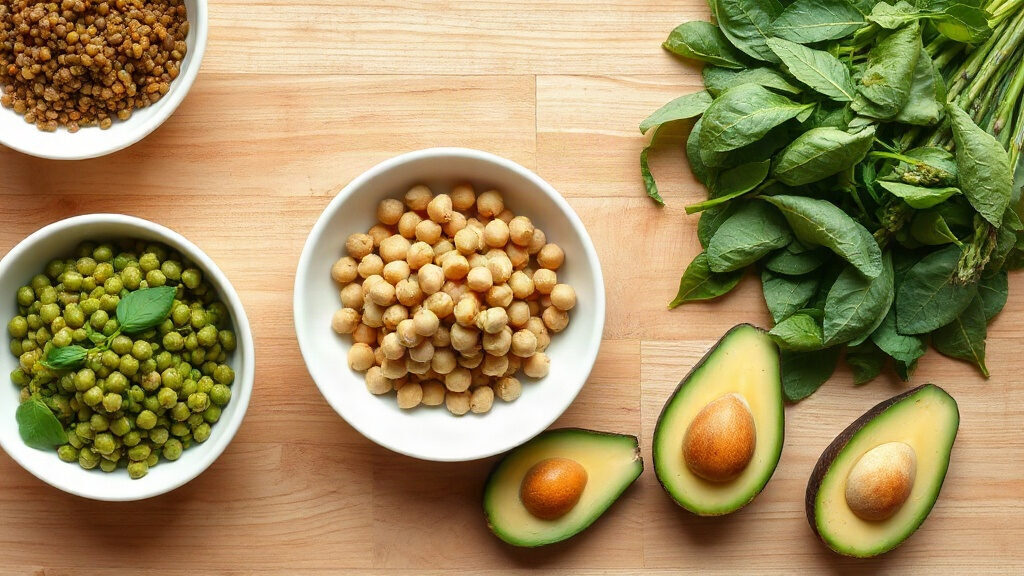
- Put leafy green vegetables on the menu every day: spinach, lamb’s lettuce, watercress, salad greens, broccoli.
- Eat legumes (lentils, chickpeas, beans) at least twice a week.
- Favor short steaming, and eat part of your vegetables raw.
- Keep citrus fruits, avocado and eggs as extra sources.
- After 60, ask for a vitamin B12 blood test before taking a folate supplement.
- When planning a pregnancy, take 400 µg of folic acid per day, as the WHO recommends.
Beyond what the body needs, folic acid has no proven benefit, and a few signals call for caution. In the trial by Cole and colleagues (JAMA, 2007), 1 mg per day did not reduce colon polyps in 1,021 people, and advanced lesions were more frequent at the second follow-up (11.6% versus 6.9%). In Norway, a country without flour fortification, 0.8 mg of folic acid and 0.4 mg of B12 were associated with 21% more cancers in 6,837 heart patients (Ebbing and colleagues, JAMA, 2009).
The largest meta-analysis is reassuring on cancer without making a case for high doses. Across 49,621 participants in 13 trials, Vollset and colleagues (Lancet, 2013) found no significant effect on cancer incidence over 5 years (RR 1.06). Separately, unmetabolized folic acid circulated in 78% of blood samples from 105 postmenopausal women. Its presence went with roughly 23% lower activity of NK cells, the white blood cells that fight tumors (Troen and colleagues, Journal of Nutrition, 2006).
For longevity, the reading is simple: DNA methylation drifts with age, and vitamin B9 supplies its raw material, but no trial shows that adding more in a well-nourished person slows this epigenetic aging. The useful step is still to avoid a shortfall, through diet and by keeping an eye on B12. Our article on epigenetics and the levers of aging and the pillar page on epigenetic alterations cover the other factors at play.
Frequently asked questions about vitamin B9
What is the difference between folate and folic acid?
Folate refers to the natural forms of vitamin B9, found in green vegetables, legumes and liver. Folic acid is its synthetic version, used in supplements and fortified foods. More stable and better absorbed, it must be converted by a liver enzyme, DHFR, whose activity in humans is slow and varies fivefold from one person to another.
How does vitamin B9 protect DNA?
It supplies the chemical group that turns uridine into thymidine, one of the 4 letters of DNA. Without it, the cell slips uracil into its DNA. A study published in PNAS in 1997 measured up to 4 million uracils per cell in deficient people, along with more chromosome breaks. These abnormalities receded once folate intake was restored.
Why does vitamin B9 affect DNA methylation?
Because it provides the methyl group that turns homocysteine into methionine, the precursor of S-adenosylmethionine (SAM). SAM is the methyl donor used by the enzymes that mark DNA. In 8 postmenopausal women fed 56 µg of folate per day, lymphocyte DNA became hypomethylated within a few weeks, then methylation recovered with 286 to 516 µg per day.
Which foods are richest in vitamin B9?
Leafy green vegetables (spinach, lamb’s lettuce, watercress), legumes such as lentils and chickpeas, broccoli, asparagus and liver provide the most. Citrus fruits, avocado and eggs round out the supply. Folate is partly destroyed by heat and leaches into cooking water: short steaming and a share of raw vegetables preserve intake better.
Should you take a vitamin B9 supplement after 60?
Not as a routine. Diet usually covers the daily 330 µg DFE set by the French agency Anses. After 60, the priority is to check vitamin B12: in 1,459 American seniors, a high folate level combined with low B12 went hand in hand with 3.1 times the odds of anemia. A supplement should be decided with a doctor, after a blood test.
Is too much folic acid dangerous?
The safety limit is set at 1,000 µg of folic acid per day for an adult. Beyond folate needs, no benefit has been shown. A meta-analysis of 13 trials (49,621 participants) found no significant effect on cancer over 5 years, but one trial recorded more advanced colon polyps with 1 mg per day. High intakes can also mask a vitamin B12 deficiency.
Medical disclaimer. The information in this post is provided for informational purposes only and does not constitute medical advice. It does not replace a consultation. Ask a healthcare professional before changing your diet, taking dietary supplements or starting a new practice, especially if you have a medical condition, are pregnant or are under treatment. Dietary supplements do not replace a balanced diet or medical follow-up.