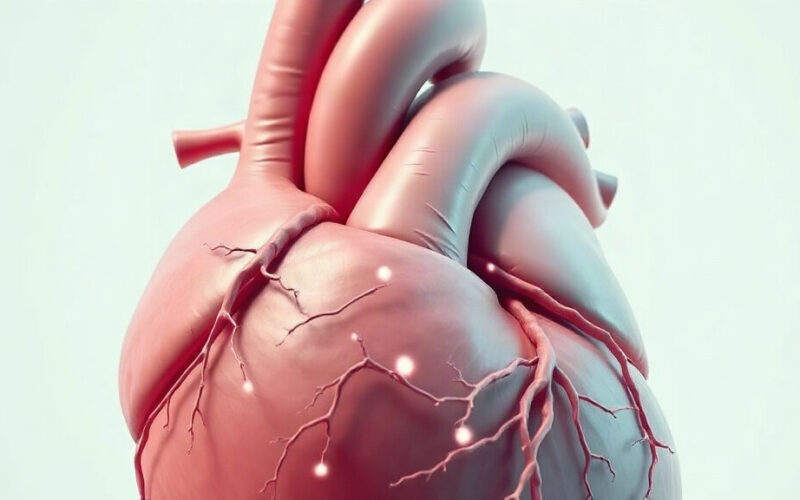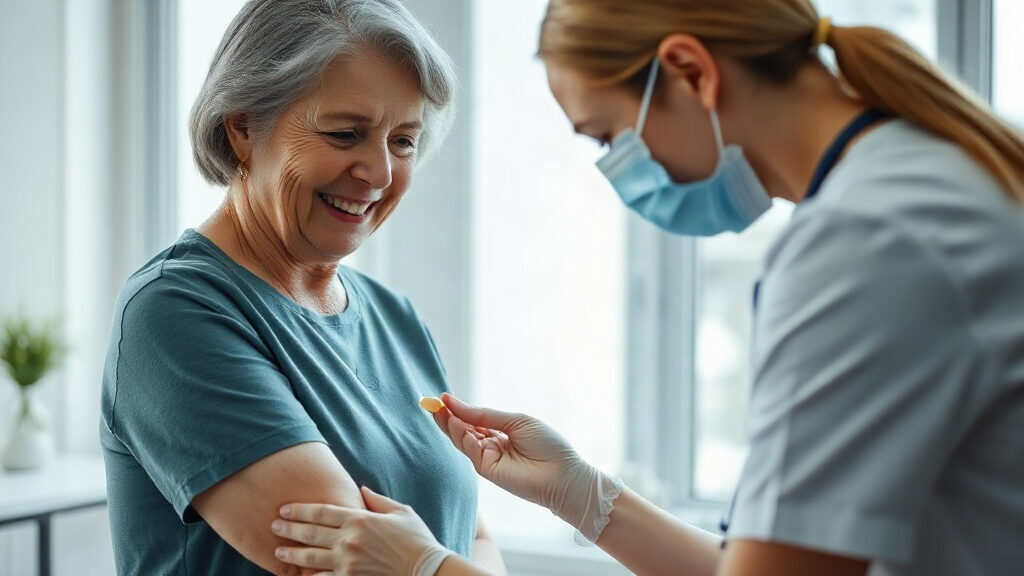
Shingles is the reawakening, decades later, of the chickenpox virus that has stayed dormant in a nerve ganglion. In France, about 90% of adults carry this virus and nearly one person in five will go through this reactivation, most often after age 50. The main reason lies in the aging of cell-mediated immunity. A recombinant vaccine, recommended in France from age 65, sharply reduces this risk and the risk of pain that lingers after the rash.
In brief – Shingles is a reactivation of the varicella-zoster virus that causes a painful rash on a strip of skin, on one side of the body only. The risk climbs clearly with age: in a US population study of 1,669 cases, 68% of episodes occurred after age 50. The most frequent complication is postherpetic neuralgia, a pain that lasts for months. It affected 18% of adult patients and 33% of those over 79. The adjuvanted recombinant vaccine, given in two doses, cut this risk by 97.2% in people aged 50 and over in the ZOE-50 trial, and its protection still stands at 82% eleven years after vaccination. In France, it is recommended from age 65, and from age 18 when immunity is weakened.
Shingles: definition of a viral reactivation
It is an infection caused by the varicella-zoster virus (VZV), a herpesvirus that causes chickenpox at first contact, often in childhood. Once chickenpox has healed, the virus is not cleared. It stays latent in the ganglia of sensory nerves, where they leave the spinal cord or along the cranial nerves.
Years later, the virus can reactivate, travel down the nerve and reach the skin. In France, about 90% of people carry this virus and about 20% of them will have a reactivation, mostly after 50 or when immunity is weakened; the NHS likewise notes that the condition is more common in older adults and in people with a weakened immune system (NHS, shingles). In the United States, the ACIP vaccine committee estimates that one person in three will develop it during their lifetime (Harpaz et al., 2008).
You cannot “catch” the disease from someone who has it. However, the fluid in the blisters contains live virus: a child or adult who has never had chickenpox can catch chickenpox through contact with it.
Mechanism: why shingles risk climbs after 50
This risk rises with age because virus-specific cell-mediated immunity, carried by T lymphocytes, declines over the decades. This process is part of immunosenescence, the gradual wear of the immune system. As long as these lymphocytes remain numerous and active, they keep the virus latent in the ganglion. When their surveillance weakens, reactivation becomes possible.
Several situations speed up this loss of control:
- age, the dominant factor: 68% of cases occur after 50 in the Olmsted County cohort;
- immunosuppressive treatments (chemotherapy, long-term corticosteroids, biologic therapies, anti-rejection drugs);
- autoimmune diseases, such as rheumatoid arthritis or lupus;
- chronic diseases that are common after 60: diabetes, chronic obstructive pulmonary disease, asthma;
- prolonged stress or severe fatigue, cited by French public health guidance as the only identifiable triggers in some cases.
During reactivation, the virus inflames and damages the nerve it travels along. This damage explains the pain, often present even before the spots appear, and the possible persistence of neuropathic pain once the skin has healed.
What the science says: 5 proven facts about shingles
Five results from population studies and randomized trials sum up what we know today about this disease in adults over 50.
1. Age multiplies the risk and the complications
A systematic review of 130 studies from 26 countries puts the incidence of shingles at 3 to 5 cases per 1,000 people per year in North America, Europe and Asia-Pacific, with higher hospitalization rates among older adults (Kawai et al., 2014). The same review reports a recurrence risk of 1 to 6%, higher with long follow-up. A first episode therefore does not give permanent protection.
2. The pain that lingers is the real threat
Postherpetic neuralgia, pain that persists after the skin has healed, affected 18% of adults and 33% of those aged 79 and over in the Olmsted County cohort of 1,669 patients (Yawn et al., 2007). A meta-analysis of 19 prospective studies also links this complication to severe acute pain (risk multiplied by 2.23), an extensive rash (2.63) and eye involvement (2.51) (Forbes et al., 2016).
3. Stroke risk rises for six months
A British study of 6,584 people, each compared with themselves, shows a stroke rate multiplied by 1.63 during the first month after an episode of shingles. The excess risk then declines and disappears after six months (Langan et al., 2014). Ophthalmic zoster, which affects the eye, tripled this rate between weeks 5 and 12. This is an association: inflammation of the arteries by the virus is the most studied hypothesis, with no proof of direct causation.
4. The recombinant vaccine protects at over 90%
In the ZOE-50 trial, 15,411 adults aged 50 and over received two doses of adjuvanted recombinant vaccine or a placebo. After an average of 3.2 years, 6 cases occurred in the vaccinated group versus 210 in the placebo group, an efficacy of 97.2% (Lal et al., 2015). In people aged 70 and over, the ZOE-70 trial found 89.8% efficacy, and 88.8% against postherpetic neuralgia in a pooled analysis (Cunningham et al., 2016). Long-term follow-up published in 2025 shows 82.0% protection in the eleventh year (Strezova et al., 2025).
5. In real life, the second dose matters
Among US Medicare beneficiaries over 65, the observed effectiveness of the recombinant vaccine reached 70.1% after two doses, versus 56.9% after a single dose (Izurieta et al., 2021). It remained similar after age 80 and when the second dose was given more than six months later. These figures are lower than in the trials, partly because diagnosis is less strict in routine care.
A more recent lead concerns memory. In Wales, eligibility for the vaccine depended on a precise date of birth, which created a natural experiment. The live attenuated vaccine used at the time reduced new dementia diagnoses over seven years by 20.0% in relative terms (Eyting et al., 2025). This result still needs confirmation and does not, on its own, justify vaccination.
In practice: who is most exposed to shingles and which vaccine
The most exposed people are those over 65 and adults with weakened immunity, whatever their age. A meta-analysis of 62 studies quantifies the effect of other factors, including sex and chronic diseases (Kawai and Yawn, 2017).
| Factor | Relative risk | Source |
|---|---|---|
| Family history of shingles | 3.59 (odds ratio) | Kawai and Yawn, 2017 |
| Systemic lupus erythematosus | 2.10 | Kawai and Yawn, 2017 |
| Rheumatoid arthritis | 1.67 | Kawai and Yawn, 2017 |
| Chronic obstructive pulmonary disease | 1.31 | Kawai and Yawn, 2017 |
| Female sex | 1.31 | Kawai and Yawn, 2017 |
| Diabetes | 1.30 | Kawai and Yawn, 2017 |
| Age 79 and over | Postherpetic neuralgia in 33% of patients | Yawn et al., 2007 |
In France, the vaccine is recommended for all adults aged 65 and over, including after one or more episodes, and from age 18 for people with weakened immune defenses. It is part of the French schedule for older adults, alongside flu, pneumococcal and RSV vaccines; the NHS describes the same non-live vaccine and how it is given (NHS, shingles vaccine). The vaccine used is the adjuvanted recombinant vaccine, which contains no live virus.
| Criterion | Adjuvanted recombinant vaccine | Live attenuated vaccine (older generation) |
|---|---|---|
| Composition | Viral gE protein and AS01B adjuvant | Weakened varicella-zoster virus |
| Schedule | 2 intramuscular doses 2 months apart | 1 subcutaneous dose |
| Efficacy against shingles | 97.2% from age 50, 89.8% from age 70 | 51.3% from age 60 |
| Efficacy against postherpetic neuralgia | 88.8% from age 70 | 66.5% from age 60 |
| Possible with weakened immunity | Yes, contains no live virus | No, live vaccine |
| Documented duration of protection | 82.0% in the eleventh year | Median follow-up of 3.1 years in the pivotal trial |
The live vaccine figures come from the Shingles Prevention Study, conducted in 38,546 adults aged 60 and over (Oxman et al., 2005). This reactivation is part of the broader decline in defenses described in our article on immunity and age. Why the response to vaccines weakens over the years, and how adjuvanted formulas make up for this drop, is the subject of our feature on vaccination and age. The whole topic belongs to our pillar on altered intercellular communication, one of the hallmarks of aging.
| Time | What happens | What to do |
|---|---|---|
| Before the rash | Burning, tingling or pain on a strip of skin on one side | Watch the area, see a doctor if spots appear |
| Within 72 hours | Redness, then blisters filled with clear fluid | See a doctor without delay: an antiviral is more useful if started within this window |
| 3 to 4 weeks | Scabs fall off, the skin heals in 90% of cases | Report any pain that persists |
| Beyond one month | Postherpetic neuralgia possible | Specific management of neuropathic pain |

Advice: reducing shingles risk and its after-effects
The most effective way to reduce this risk after 65 is full vaccination with both doses. The other steps aim to spot the rash early and to support immunity day to day.
- Review your vaccinations at 65 with your doctor or pharmacist, and ask for this vaccine at the same time as the flu or pneumococcal shot if your doctor considers it appropriate.
- Do not forget the second dose, about two months after the first: real-world effectiveness rises from 56.9% to 70.1%.
- If an immunosuppressive treatment is planned, raise the subject before starting it, because vaccination is possible from age 18 in this situation.
- If a band of pain on one side is followed by spots, see a doctor within three days; seek urgent care if the face, eye or ear is affected.
- During the rash, avoid contact with pregnant women who are not immune, infants and immunocompromised people.
- Support your immunity with the levers covered in our article on chronic inflammation: physical activity, sleep, a varied diet, quitting smoking.
Side effects of the recombinant vaccine are common but short-lived. In ZOE-50, 17.0% of vaccinated people reported at least one grade 3 symptom (sore arm, fatigue, chills interfering with activities) versus 3.2% on placebo. Serious events were equally rare in both groups. To receive our next articles on immunity, subscribe to our newsletter.
Frequently asked questions about shingles
How do you recognize shingles at the start?
Shingles often begins with burning, tingling or localized pain on a strip of skin, on one side of the body, two to three days before the rash. The skin then reddens, and blisters filled with clear fluid appear. They dry up in about a week. Involvement of the face, eye or ear calls for a prompt medical visit.
Why is shingles more common after 50?
Shingles is more common after 50 because the T lymphocytes that keep the chickenpox virus latent become less effective with age. In a population study of 1,669 cases, 68% of episodes occurred after age 50. Immunosuppressive treatments, diabetes and some autoimmune diseases also raise this risk.
Is the shingles vaccine recommended if you have already had shingles?
Yes. In France, vaccination is recommended from age 65, including for people who have already had one or more episodes, because the recurrence risk reaches 1 to 6% depending on the length of follow-up. The recombinant vaccine is given in two doses about two months apart. The timing of vaccination after a recent episode is decided with your doctor.
How long does the shingles vaccine protect?
The adjuvanted recombinant vaccine protects for at least eleven years according to the longest published follow-up. In the ZOE-LTFU study, its efficacy was still 82.0% in the eleventh year after vaccination, and 87.7% over the whole period in people aged 50 and over. The value of a booster has not been established to date.
What is the difference between shingles and chickenpox?
Chickenpox and shingles are caused by the same virus. Chickenpox is the first infection, usually in childhood, with spots all over the body. Shingles is the reactivation of this virus, which has stayed latent in a nerve, often decades later. The rash is then limited to the area served by a single nerve and comes with pain.
Medical disclaimer. The information on this page is provided for informational purposes only and does not constitute medical advice. It does not replace a consultation. The decision to get vaccinated, the choice of timing and what to do when a rash appears should be made with a doctor or pharmacist. If shingles affects the eye, face or ear, or if you have a high fever or unbearable pain, see a doctor promptly. Ask a healthcare professional before changing your diet, taking dietary supplements or starting a new practice, especially if you have a medical condition, are pregnant or are under treatment. Dietary supplements do not replace a balanced diet or medical follow-up.