The saffron mood pairing has intrigued researchers for twenty years: this spice, long confined to the kitchen, is now the subject of randomized clinical trials on mild to moderate depressive symptoms. Several Iranian and, more recently, Australian teams have tested a standardized Crocus sativus extract against placebo, and sometimes against a reference antidepressant. Here is what this research actually shows, at what dose, and for whom caution is warranted.
In brief – Saffron mood research examines the effect of a standardized Crocus sativus extract on mild to moderate depressive symptoms. Several double-blind randomized trials, including a 2025 study of 202 adults, report a greater reduction in depression scores than placebo at a dose of 28 to 30 mg per day for 6 to 12 weeks. One Iranian study even found effectiveness comparable to citalopram, a standard antidepressant. These findings still need confirmation by independent teams outside Iran, in larger cohorts. Saffron should never be self-prescribed by pregnant women and must never replace a prescribed antidepressant without medical advice.
Definition: what does “saffron mood” actually mean?
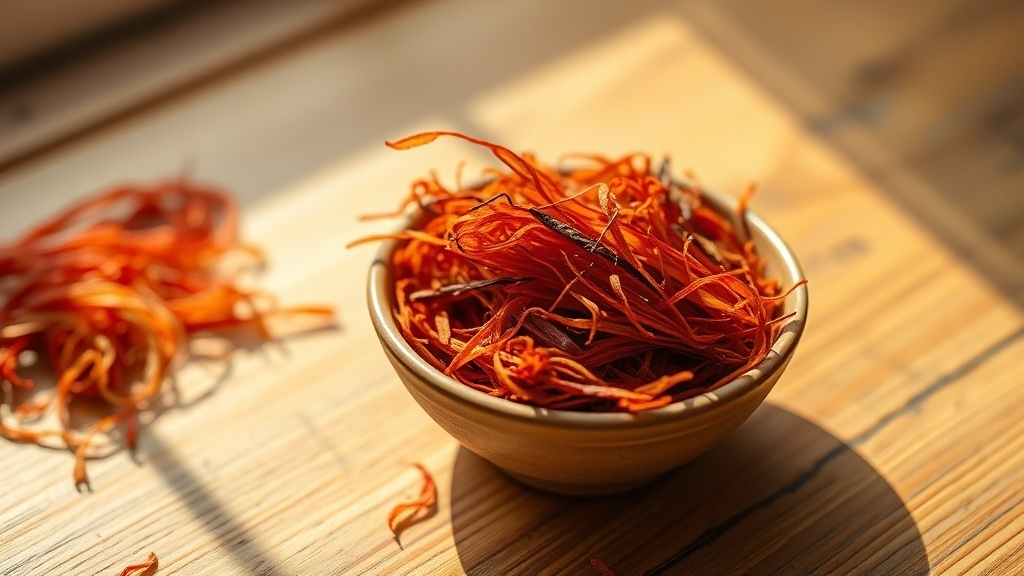
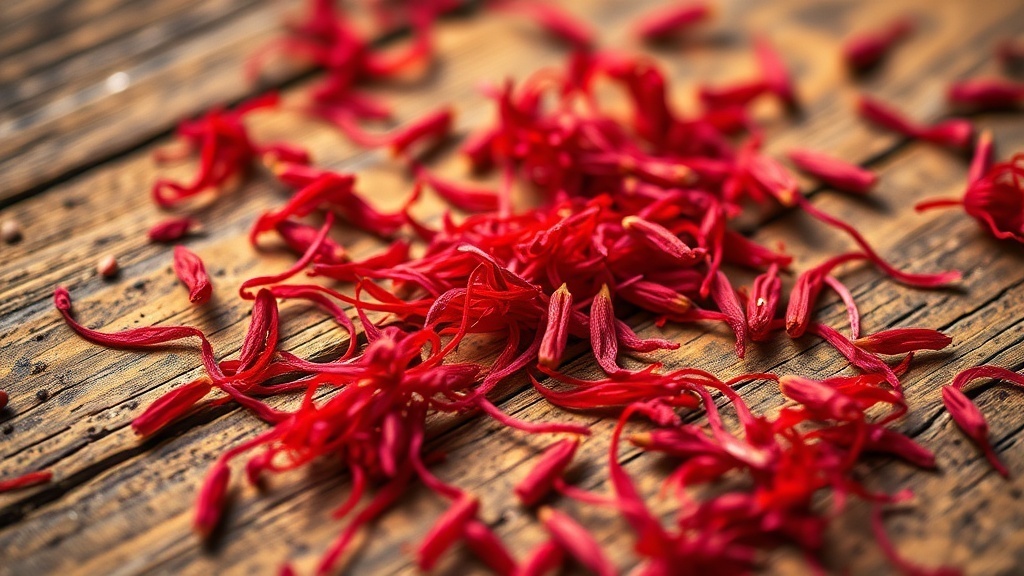
Saffron is the dried stigma of the Crocus sativus flower, hand-picked and then dried. In clinical research, the extract used is not the culinary spice but a standardized powder, dosed for precise active compounds (crocin, crocetin, safranal) and packed into capsules. Saffron mood refers to this specific use: clinical trials test this extract against placebo or against an antidepressant, using validated depression and anxiety scales (Hamilton, Beck).
This use differs from the culinary spice in dose and standardization: a pinch of saffron in a dish does not deliver the amount of crocin studied in clinical trials.
Mechanism: how saffron may act on mood
Saffron’s active compounds, crocin and safranal, are being studied for several possible pathways:
- Modulation of serotonin and dopamine reuptake, observed in vitro and in animal models.
- Antioxidant and anti-inflammatory properties, two mechanisms associated with the pathophysiology of depression.
- A neuroprotective effect suggested on BDNF in preclinical work.
- Possible interaction with the hypothalamic-pituitary-adrenal axis, involved in the stress response.
These mechanisms remain largely established in animals or in the lab. In humans, the measured clinical effect (fewer depressive symptoms) precedes a full understanding of the exact mechanism, a common gap in phytotherapy that does not invalidate the clinical results on saffron mood, but calls for staying factual about the “how.”
Saffron mood: what does the science say?
The first reference controlled trial dates to 2005: Akhondzadeh and colleagues compared 30 mg per day of saffron stigma extract to placebo in adults with mild to moderate depression, over 6 weeks. The saffron group showed a significantly greater improvement on the Hamilton scale (Akhondzadeh et al., 2005).
A meta-analysis pooling the available randomized trials calculated an effect size of 1.62 in favor of saffron over placebo, considered large in clinical statistics. The authors nonetheless recommend larger trials, conducted by teams outside Iran, before generalizing the findings (Hausenblas et al., 2013).
One study directly compared saffron to citalopram, a widely prescribed selective serotonin reuptake inhibitor: at a dose of 30 mg/day of saffron versus 40 mg/day of citalopram, both groups showed comparable improvement in depression and anxiety scores, with no significant difference between them (Ghajar et al., 2017).
A more recent meta-analysis, covering seven randomized trials, confirms effectiveness superior to placebo and comparable to reference antidepressants, with a safety profile judged favorable and no serious adverse effects reported (Yang et al., 2018).
An important nuance deserves mention: a meta-analysis looking at self-reported scales (Beck) versus clinician-rated scales (Hamilton) found a significant reduction in Beck depression and anxiety scores, but no significant effect on clinician-rated scales or on CRP, a marker of inflammation (Ghaderi et al., 2020). Saffron may work better on subjective perception than on objective clinical markers, a distinction few mainstream articles mention.
The most recent work, published in 2025, followed 202 adults with mild depressive symptoms taking 28 mg per day of standardized extract for 12 weeks: 72.3% of the saffron group reached a clinically significant improvement, versus 54.3% on placebo (Lopresti et al., 2025). The high placebo response in this study calls for reading the gap with measured caution rather than enthusiasm.
| Study | Population | Dose / duration | Main result |
|---|---|---|---|
| Akhondzadeh 2005 | Adults, mild-to-moderate depression | 30 mg/day, 6 weeks | Superior to placebo (Hamilton) |
| Ghajar 2017 | Adults, depression with anxiety | 30 mg/day, 6 weeks | Equivalent to citalopram 40 mg/day |
| Hausenblas 2013 (meta-analysis) | Pooled randomized trials | Variable | Effect size 1.62 vs placebo |
| Yang 2018 (meta-analysis) | 7 randomized trials | Variable | Comparable to antidepressants, safe |
| Lopresti 2025 | 202 adults, subclinical depression | 28 mg/day, 12 weeks | 72.3% vs 54.3% responders |
In practice: for whom and in what situations
Clinical trials target adults with mild to moderate depressive symptoms, not a severe clinical depressive disorder or a psychiatric emergency. Saffron mood fits into a logic of prevention and day-to-day support for mental wellbeing, not first-line treatment of a diagnosed disorder.
Other plants are studied for related or complementary mechanisms. Griffonia, a serotonin precursor, acts on a similar biochemical pathway. Ashwagandha instead targets the stress axis and cortisol. These three approaches do not substitute for one another and should not be combined without advice from a healthcare professional. Heart rate coherence remains a complementary non-drug option for associated anxiety.
| Form | Typical dose | Standardization | Documented use |
|---|---|---|---|
| Dried stigmas (culinary spice) | Not standardized | No guaranteed crocin content | Culinary use only |
| Generic standardized extract | 30 mg/day | Controlled crocin/safranal content | Akhondzadeh, Ghajar trials |
| Affron extract | 28 mg/day (14 mg x2) | Trademarked, consistent dosing | Lopresti 2025 trial |
Protocol and practical advice
The saffron mood protocol used in published trials shares a common logic, summarized here to inform sensible use:
- Dose studied: 28 to 30 mg per day of standardized extract, taken as one or two doses.
- Evaluation period: 6 to 12 weeks before judging an effect, never a few days.
- Check the product’s standardization (guaranteed crocin/safranal content), not plain culinary saffron powder.
- Tell your doctor if you are on an antidepressant, as a precaution against serotonergic potentiation.
- Never exceed the doses studied: above 1.5 g per day of raw saffron, digestive disturbances and toxicity appear according to pharmacovigilance data.
In the US, MedlinePlus, from the National Institutes of Health, advises telling a healthcare provider about any dietary supplement in use, saffron included, and reporting any unusual effect after taking one. Everyday culinary saffron does not carry this risk; it is the concentrated capsule form taken for a therapeutic purpose that requires a precise dose and follow-up.
Frequently asked questions
Is saffron really effective against mild low mood?
Several double-blind randomized trials show a reduction in mild to moderate depressive symptoms greater than placebo, using a standardized extract at 28-30 mg per day. One study even found it equivalent to citalopram. The evidence on saffron mood is still mostly drawn from Iranian teams and one recent Australian study, which calls for further independent confirmation before generalizing.
What dose of saffron is best for mood?
Clinical trials use 28 to 30 mg per day of standardized extract, in one or two doses, for at least 6 to 12 weeks before assessing an effect. This dose does not correspond to the culinary use of the spice, which is not standardized for crocin content. A product listing its guaranteed active compound content remains preferable to uncontrolled powder.
Can saffron replace a prescribed antidepressant?
No. One study observed effectiveness comparable to citalopram in a small sample, but this does not make saffron a validated substitute for a prescribed treatment. Any change to or discontinuation of an antidepressant must be decided with the prescribing doctor, never through self-medication, given the risk of relapse and serotonergic interactions.
Is saffron safe during pregnancy?
Not as self-medication. Saffron has dose-dependent uterotonic properties, documented in the pharmacological literature. As a precaution, saffron-based dietary supplements are not recommended during pregnancy at any dose. Occasional, moderate culinary use of the spice is a different matter.
How long before you feel an effect of saffron on mood?
Clinical trials assess the effect after 6 to 12 weeks of continuous use, never after a few days. The 2025 study of 202 adults measured depression scores at 12 weeks. An effect felt sooner may reflect a placebo response, which is common and documented in these same trials.
Medical disclaimer. The information provided here is for informational purposes only and does not constitute medical advice. It does not replace a consultation. Ask a healthcare professional before changing your diet, taking dietary supplements or starting a new practice, especially if you have a medical condition, are pregnant or are under treatment. Dietary supplements do not replace a balanced diet or medical follow-up.