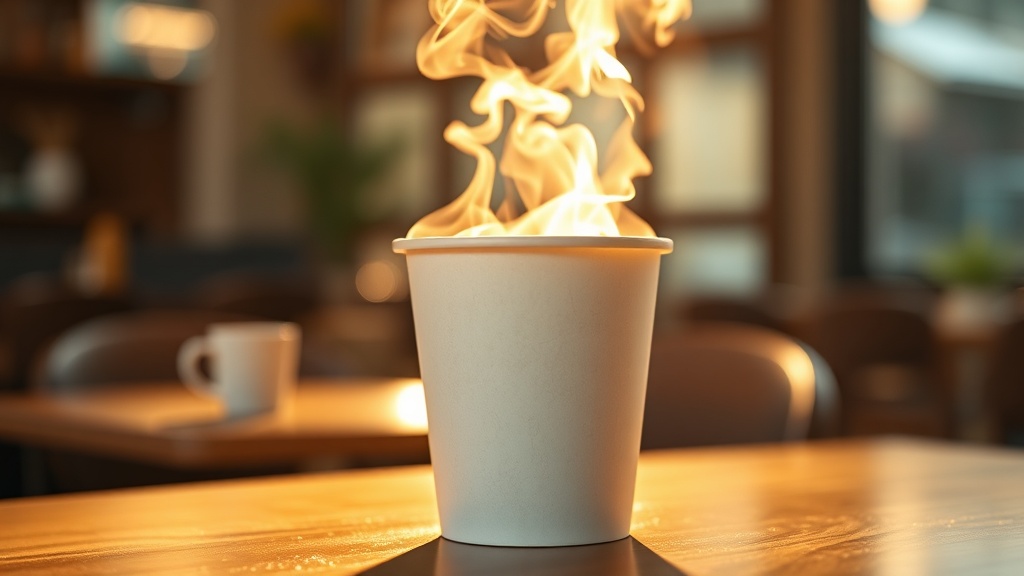
Paper cups look harmless enough at the coffee counter. Yet the moment a hot drink touches the inner wall, invisible particles start to release, and rigid plastic cups are not much better. Between microplastics, PFAS and trace metals, here is what recent research reveals about these everyday containers, and how to limit your exposure without giving up your coffee or tea.
In brief – Paper cups are not pure paper: a thin plastic film, and often PFAS chemicals, lines the inside to keep hot liquid from soaking through. Once hot coffee or tea touches that lining, they can shed tens of thousands of microplastic particles within minutes, while rigid plastic cups release more trace metals such as lead. The longer and hotter the contact, the more migrates into the drink. Occasional use appears to carry little risk, but daily habits add up, especially for children. Bringing a reusable cup, avoiding very hot drinks in disposable containers and never microwaving a paper or plastic cup are simple ways to cut exposure.
Paper Cups Are Not Just Paper
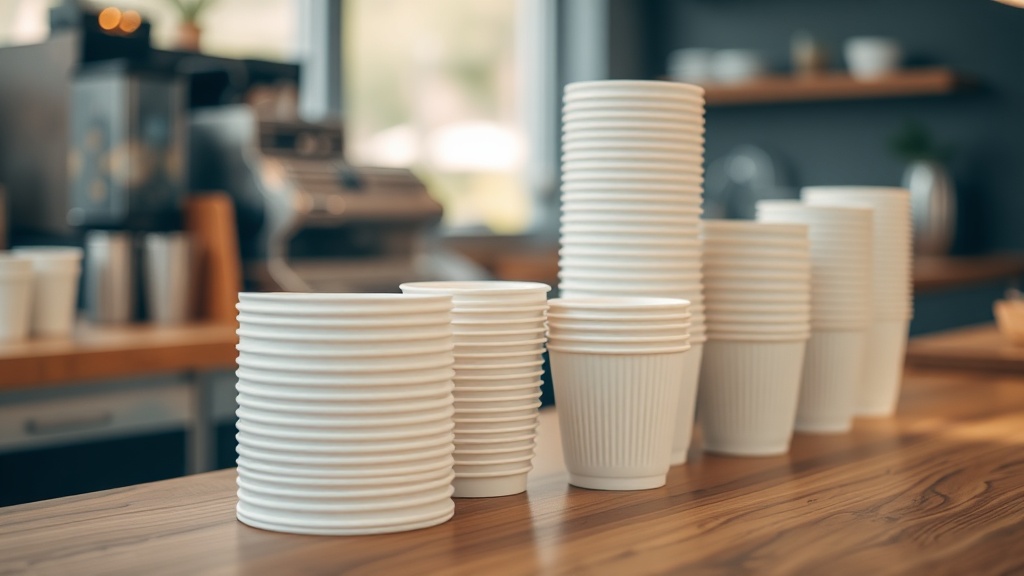
A disposable paper cup is never 100% paper. To stay watertight against a hot drink, its inner wall is lined with a thin plastic film (polyethylene) and, often, with per- and polyfluoroalkyl substances, the PFAS known as “forever chemicals” because they barely break down in the environment or in the body. Rigid plastic cups (polypropylene, polystyrene) raise a different problem: with no paper coating, the synthetic wall itself touches the hot drink from the first sip to the last.
Either way, whichever disposable container you pick, the daily ritual of a coffee to go comes with a small dose of chemical uncertainty that is rarely mentioned at the counter.
What Actually Migrates Into Your Coffee or Tea
Heat and contact time speed up the breakdown of these materials. Several types of substances then migrate into the coffee or tea:
- Microplastics: fragments of the plastic film break off under the effect of heat and abrasion.
- PFAS: these waterproofing compounds migrate more easily as the liquid gets hotter.
- Trace metals: lead, cadmium, chromium and zinc can also be released, in larger amounts from plastic cups than from paper ones.
- Ions and chemical compounds: nitrites, chlorides and fluorides have also been detected in the liquid after contact.
What the Research Shows About Paper Cups and Plastic Ones
A study measured microplastic release from a paper cup exposed to hot water: about 25,000 micron-sized particles were released within just 15 minutes in 100 ml (3.4 fl oz) of water at 85-90°C (185-194°F), on top of tens of millions of sub-micron particles (Ranjan et al., Journal of Hazardous Materials, 2021).
Another study, covering both paper and plastic cups, measured the release of potentially toxic elements (lead, cadmium, chromium, zinc) into hot water: plastic cups released more of these elements than paper ones, with a high non-carcinogenic risk from lead, and a relative exposure twice as high in children as in adults (Mohery et al., Toxics, 2025).
On PFAS, the CDC notes that these substances, used as watertight barriers in paper and cardboard food packaging, are associated with suspected effects on cholesterol, fertility, the liver, the kidneys, and the endocrine and immune systems, which is why limiting repeated exposure matters, especially for children and during pregnancy.
| Study | Cups tested | Key finding |
|---|---|---|
| Ranjan et al., 2021 | Paper cup | About 25,000 microplastic particles released in 15 minutes at 85-90°C (185-194°F) |
| Mohery et al., 2025 | Paper and rigid plastic cups | Plastic cups released more lead, cadmium, chromium and zinc; children’s relative lead exposure was double that of adults |
| Akbulut et al., 2024 | Polypropylene, polystyrene, expanded polystyrene, polyethylene-lined paper | Highest particle counts in polypropylene cups at 50°C (122°F) for 20 minutes; lowest in cold polyethylene-lined paper cups |
Why Heat and Contact Time Change Everything
The deciding factor is not just the material, but the combination of temperature and contact time. A study comparing several disposable container types (polypropylene, polystyrene, expanded polystyrene, polyethylene-lined paper) measured particle release at 4°C (39°F), 50°C (122°F) and 80°C (176°F), for periods of up to 20 minutes: the highest counts were seen in polypropylene cups heated to 50°C (122°F) for 20 minutes, and the lowest in cold, polyethylene-lined cups. In other words, a scalding tea or coffee sipped slowly over half an hour exposes you to more than a lukewarm drink finished in a few minutes (Akbulut et al., Foods, 2024).
In Practice: What You Can Actually Change
The risk from an occasional coffee in a disposable container remains low. It is the daily repetition that raises questions, a matter of preventive health in the same way as managing chronic low-grade inflammation, which regular exposure to microplastics and PFAS may contribute to. For more evidence-based habits, UltraSante’s longevity coverage is a good place to start.
4 Simple Habits to Cut Your Exposure
- Bring a reusable cup (stainless steel, glass, ceramic): the most effective solution, and one more and more cafes accept.
- Avoid very hot drinks and long contact time in a disposable cup: migration increases with both temperature and duration.
- Never reheat a paper or plastic cup in the microwave: concentrated heat sharply speeds up migration.
- Rinse this type of container before use when possible: one study found that a simple rinse with plain water cuts microplastic release by 52 to 65%.
Frequently Asked Questions
Are paper cups worse than plastic cups?
Not necessarily “worse,” but different: paper ones mainly release microplastics from their inner film and PFAS, while rigid plastic cups shed more trace metals such as lead. In both cases, heat speeds up migration.
Is one coffee a day in a disposable cup dangerous?
At this stage, nothing points to an acute danger from occasional use. The studies mainly flag a risk tied to daily repetition over several years, particularly for children, whose relative exposure is higher.
Are “biodegradable” or compostable cups a better option?
They are better for the environment at end of life, but that does not guarantee the inner lining is free of PFAS or microplastics: a “compostable” label refers to how the material breaks down, not its chemical makeup.
How can I tell if my cup contains PFAS?
There is no way to tell just by looking. Without an explicit “PFAS-free” claim from the manufacturer, the safest approach is to limit very hot drinks in this type of disposable container and favor a reusable cup instead.
Medical disclaimer. This article is provided for informational purposes only and does not replace medical advice. It is not meant to raise alarm about occasional consumption, but to share the available scientific data. If in doubt, especially during pregnancy or for young children, ask a healthcare professional for guidance.