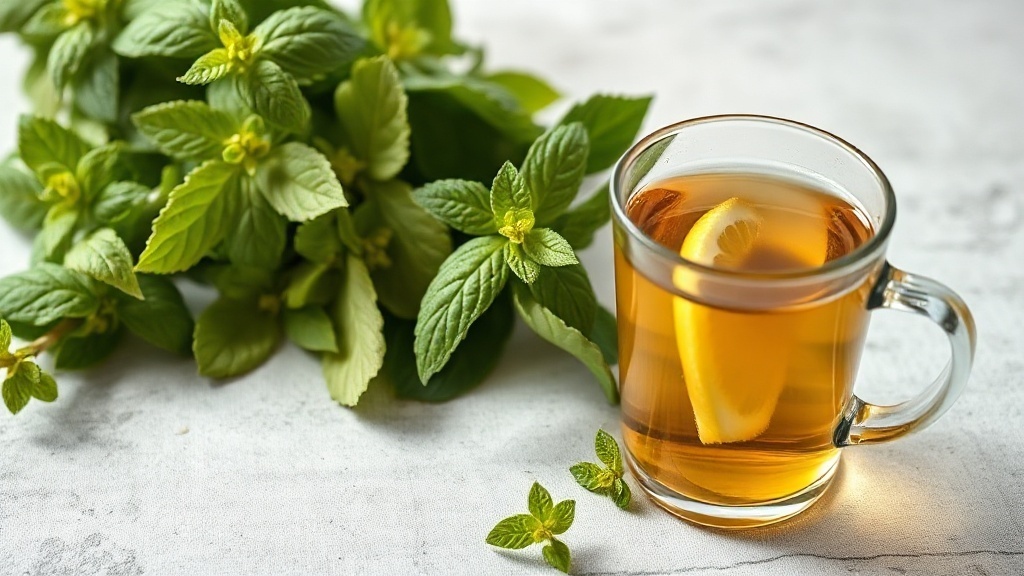
Lemon balm (Melissa officinalis) is a plant in the mint family (Lamiaceae) used since antiquity to soothe the digestive and nervous systems. Three clinical trials published between 2004 and 2018 measured its effect on acute stress, mild anxiety and sleep disturbances in adults, at doses of 300 mg to 3 g per day. Here is what this data actually shows, and its limits.
In brief – Lemon balm is a medicinal plant traditionally used against stress and difficulty falling asleep, and its calming effect relies on compounds (rosmarinic acid, citral) that modulate GABA activity, the main inhibitory neurotransmitter of the nervous system. A 2004 controlled trial (Kennedy et al., n=18) shows that a single 600 mg dose reduces markers of acute stress in a laboratory setting. A 2011 pilot trial (Cases et al., n=20, no placebo group) reports a 42% drop in insomnia after 15 days at 600 mg per day. A 2018 controlled trial in cardiac patients (Haybar et al., n=80) confirms improved sleep and stress scores at 3 g per day over 8 weeks. These results still need confirmation in larger trials; the plant does not reverse anything, it modulates a moderate stress response.
Definition: What Is Lemon Balm?
This plant, also called Melissa officinalis, is a perennial herb with a lemony scent, grown in Europe for centuries for culinary and medicinal use. The French Pharmacopoeia lists it among the plants traditionally used to promote relaxation and sleep onset in cases of temporary nervousness.
It is consumed in three main forms:
- Infusion of dried leaves, the most common traditional use.
- Standardized extract in capsules, dosed for active compounds (often standardized to rosmarinic acid content).
- Mother tincture or hydroalcoholic extract, at a more concentrated dose.
It also appears in combined formulas with passionflower, valerian or melatonin, which complicates attributing an effect to the plant alone in some studies.
Mechanism: How It Acts on Stress
The calming effect of this herb relies on two families of compounds that act on the central nervous system. Rosmarinic acid inhibits GABA-transaminase, the enzyme that breaks down GABA, thereby prolonging its inhibitory action on neuronal excitability. Volatile terpene compounds (citral, citronellal) may have a complementary action on receptors involved in mood regulation.
- Reduced neuronal excitability via the GABAergic pathway.
- A mild anxiolytic effect measured on perceived stress and anxiety scales.
- Subjective improvement in sleep onset in studies of mild sleep disturbances.
- No powerful sedative action comparable to a pharmacological treatment.
This mechanism sets it apart from a classic hypnotic: it lowers the level of nervous agitation rather than forcing sleep onset.
What the Science Says
Kennedy and colleagues tested the effect of a single dose in 2004 in 18 healthy volunteers exposed to a laboratory stress test, in a double-blind, placebo-controlled crossover trial. The 600 mg dose significantly increased self-rated calmness scores during the induced-stress phase (Kennedy et al. 2004, Psychosomatic Medicine).
Cases and colleagues followed twenty volunteers with mild to moderate anxiety and sleep disturbances for 15 days in 2011, giving 600 mg of standardized extract per day. Insomnia scores fell by 42% and anxiety scores by 18% (Cases et al. 2011, Mediterranean Journal of Nutrition and Metabolism). This protocol, however, did not include a placebo group: the results remain indicative, not conclusive.
Haybar and colleagues ran a placebo-controlled trial in 2018 in 80 patients with stable angina, who received a 3 g daily dose of the extract for 8 weeks. The treated group showed a significant reduction in depression, anxiety, stress and sleep-disturbance scores compared with placebo (Haybar et al. 2018, Clinical Nutrition ESPEN).
These three trials share a common limitation: small sample sizes (18 to 80 participants) and short durations (a single dose to 8 weeks). None evaluated extended use beyond two months. The NCCIH points out that dietary supplements, including herbal ones, can interact with medications or carry risks for certain health conditions, and it recommends talking with a healthcare provider before combining several sedative herbal products or using them for an extended period (NCCIH, Using Dietary Supplements Wisely).
In Practice: Who Is It For?
It suits occasional stress or mild, temporary difficulty falling asleep, not a diagnosed anxiety disorder or chronic insomnia that has lasted for months. In that case, a medical evaluation remains the first step, before turning to any plant remedy.
It is sometimes combined with other approaches already covered on UltraSante, such as tryptophan and its role in serotonin synthesis, magnesium for muscle and nerve relaxation, or rhodiola for fatigue linked to chronic stress. These plants and nutrients act on different pathways and are not interchangeable.
| Option | Dose studied | Measured effect | Time to effect |
|---|---|---|---|
| Lemon balm (extract) | 300 mg to 3 g/day | Perceived calm, drop in mild insomnia | Single dose to 8 weeks |
| Magnesium | 300 to 400 mg/day | Muscle relaxation, sleep quality | Several weeks |
| Rhodiola | 200 to 400 mg/day | Reduced stress-related fatigue | 2 to 4 weeks |
| Heart coherence breathing | 3 sessions of 5 min/day | Lower perceived cortisol, immediate calm | Immediate to a few days |
Protocol and Usage Tips
The clinical trials available used doses ranging from a single 300 mg dose to 3 g per day split across several intakes, over periods of 15 days to 8 weeks. No data cover continuous use beyond two months.
- Infusion: one teaspoon of dried leaves per 200 ml (about 6.8 fl oz) of hot water, 1 to 3 times a day, particularly in the evening.
- Standardized extract: follow the manufacturer’s stated dose, generally between 300 and 600 mg per intake.
- Avoid combining it with other sedative herbs or melatonin without medical advice, to limit the risk of excessive drowsiness.
- Not recommended for people with thyroid disorders, or during pregnancy and breastfeeding, due to insufficient safety data.
- Do not drive or operate machinery in the hours following a high dose.
It remains a supplementary aid for occasional discomfort, not a long-term treatment for a sleep disorder or persistent anxiety. For a broader approach to sleep hygiene, our guide to the 9 keys to better sleep covers complementary levers alongside this type of calming plant.
Frequently Asked Questions About Lemon Balm
Does lemon balm really help you fall asleep faster?
Available data show a reduction in mild insomnia scores, not a hypnotic effect comparable to a medication. The Cases et al. (2011) trial reports a 42% drop in the insomnia score after 15 days at 600 mg per day, but without a placebo group to confirm the exact size of the effect.
What is the difference between lemon balm and valerian?
Lemon balm mainly acts on stress and sleep-onset difficulty linked to nervousness, with an effect documented after a single dose. Valerian targets sleep maintenance more and generally requires several weeks of regular use before a noticeable effect appears.
Can it be combined with magnesium?
The two act on distinct pathways, lemon balm on the GABAergic pathway and magnesium on neuromuscular excitability, with no known interaction at usual doses. However, no clinical trial has tested this specific combination, so the combined effect remains an extrapolation, not a demonstrated finding.
How long can it be taken continuously?
Available clinical trials tested lemon balm only over periods of 15 days to 8 weeks at most. No data allow an assessment of the safety or efficacy of continuous use beyond that period, hence the recommendation to limit courses and avoid prolonged use without medical advice.
Does it carry any particular risks?
It is generally well tolerated at usual doses. The NCCIH notes that dietary supplements, including herbal ones, can interact with medications and carry risks for certain health conditions, and it recommends discussing any combination of sedative herbal products with a healthcare provider, particularly for older adults or those on long-term treatment.
Medical disclaimer. The information provided here is for informational purposes only and does not constitute medical advice. It does not replace a consultation. Ask a healthcare professional before changing your diet, taking dietary supplements or starting a new practice, especially if you have a medical condition, are pregnant or are under treatment. Dietary supplements do not replace a balanced diet or medical follow-up.