Griffonia 5-HTP comes from the seeds of a climbing plant native to West Africa, where it acts as a direct precursor of serotonin. Used as a supplement for nervous tension, appetite and sleep, it draws interest from both consumers and health authorities, who point out its limits and interaction risks. Here is a review of the available evidence, the doses studied and the precautions to know before taking it.
In brief – Griffonia 5-HTP comes from a West African plant (Griffonia simplicifolia) whose seeds concentrate 5-hydroxytryptophan, which the body converts into serotonin and then melatonin. Two clinical trials totaling 64 patients suggest an effect greater than placebo on mood, but a Cochrane review judged the evidence insufficient for a broad recommendation (Shaw et al., 2002). A study of 20 obese adults found that 900 mg of 5-HTP per day for 12 weeks reduced appetite and supported weight loss (Cangiano et al., 1992). Its main risk is serotonin syndrome when combined with an antidepressant, tramadol or a triptan: medical advice is essential before taking it.
Definition: What Is Griffonia?
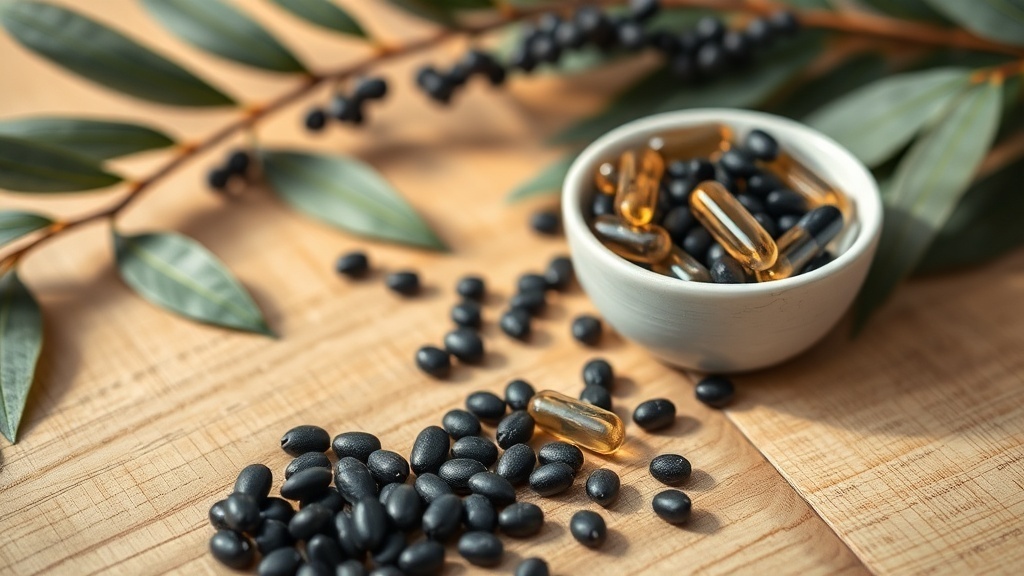
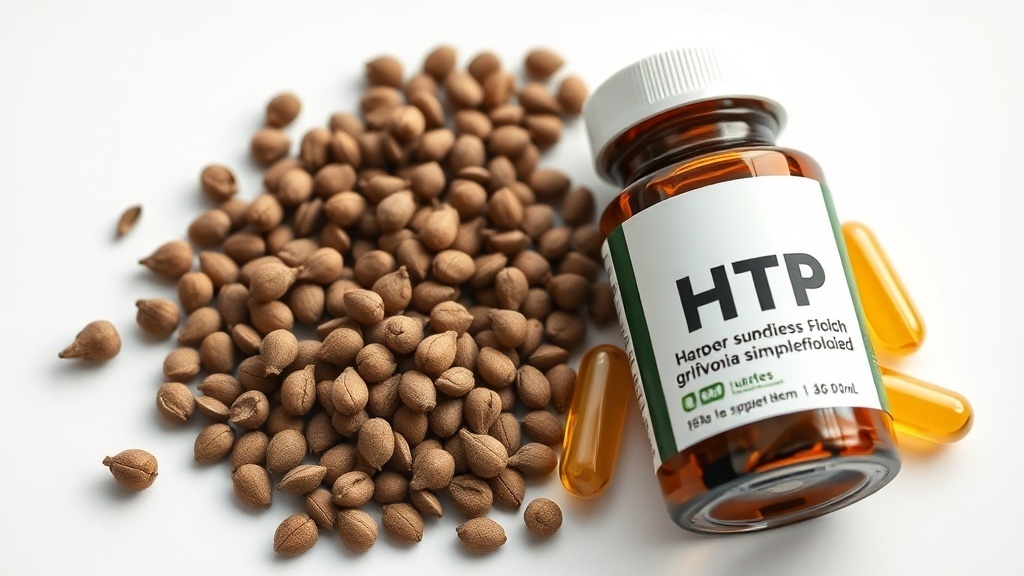
Griffonia simplicifolia is a climbing shrub native to the rainforests of West Africa, particularly Ghana and Togo. Its black seeds naturally contain a high concentration of 5-hydroxytryptophan, an amino acid intermediate in the production of serotonin from tryptophan. Unlike tryptophan, found in many protein-rich foods, 5-HTP crosses the blood-brain barrier directly, without relying on the competitive transporter used by other amino acids. This biochemical feature made the plant a popular plant-based alternative to pure tryptophan, which was withdrawn from the US market in 1989 after an industrial contamination linked to eosinophilia-myalgia syndrome.
Mechanism and Composition
The 5-HTP it contains follows a two-step metabolic pathway. The enzyme dopa-decarboxylase first converts it into serotonin in the brain and peripheral tissues, then a fraction of that serotonin is converted into melatonin by the pineal gland at night. This dual conversion explains why the plant is linked to both mood regulation and the sleep-wake cycle.
- Griffonia seeds standardized to between 5% and 20% 5-HTP depending on the commercial extract.
- Conversion into serotonin without competing with other amino acids, unlike L-tryptophan.
- A minor fraction of serotonin converted into melatonin at night.
- No associated vitamin B6: decarboxylation of 5-HTP still occurs, but its efficiency depends on the body’s cofactor status.
What the Science Says About Griffonia 5-HTP
A Cochrane review by Shaw and colleagues analyzed randomized trials comparing 5-HTP and tryptophan with placebo for depression. Of 108 studies identified, only two met the quality criteria used, totaling 64 patients. The pooled result favored 5-HTP over placebo (odds ratio of 4.10), but the authors concluded the evidence remained “of insufficient quality” to justify routine clinical use, and noted that a link with eosinophilia-myalgia syndrome had not been fully ruled out (Shaw et al., Cochrane Database Syst Rev, 2002).
On appetite, a placebo-controlled Italian study followed 20 obese adults over two six-week periods. The group receiving 900 mg of 5-HTP per day showed consistent early satiety, a spontaneous drop in carbohydrate intake and significant weight loss, without a strict diet prescription during the first phase (Cangiano et al., Am J Clin Nutr, 1992). For sleep, no controlled trial dedicated to griffonia has been identified: the hypothesis of a benefit rests on the serotonin-melatonin pathway, not on direct clinical proof.
In Practice: Indications and Benchmarks
Griffonia is mainly offered for three uses: easing occasional nervous tension, curbing sugar cravings and supporting sleep onset. These three indications do not rest on the same level of evidence, as the table below summarizes.
| Goal | Available evidence | Dose studied | Duration observed |
|---|---|---|---|
| Nervous tension / mood | 2 trials, n=64, better than placebo (OR 4.10), evidence judged insufficient | Variable across included trials | A few weeks |
| Appetite / satiety | 1 controlled trial, n=20, significant weight loss | 900 mg/day in 3 doses | 12 weeks |
| Sleep / sleep onset | Plausible mechanism (serotonin-melatonin pathway), no dedicated trial identified | Not established | Not established |
For sleep, melatonin has a much larger body of trials than this plant and remains the option to discuss first with a healthcare professional. For everyday stress management, heart coherence breathing and ashwagandha offer better-documented non-drug or plant-based alternatives. Find our full coverage of emotional regulation on our Mental Well-Being pillar page.
Protocol and Usage Tips
Available studies on this plant use 5-HTP doses ranging from 100 mg to 900 mg per day, split into several doses. Starting at the lowest dose and increasing it gradually limits digestive upset, the most commonly reported side effect.
- Take the 5-HTP from this plant away from protein-rich meals, which slow its absorption.
- Favor a short course of a few weeks, then reassess its usefulness with a healthcare professional.
- Never combine griffonia with an antidepressant, tramadol, dextromethorphan or a triptan: the combined serotonergic load can trigger serotonin syndrome, a medical emergency.
- Avoid during pregnancy or breastfeeding, given insufficient safety data.
The NIH Office of Dietary Supplements notes that herbal dietary supplements, often seen as harmless, can carry real health risks depending on interactions and the populations involved (NIH Office of Dietary Supplements, Dietary Supplements: What You Need to Know). A toxicology review of 5-HTP found no documented cases of serious toxicity over twenty years of use, but stressed the need to check extract purity to rule out cross-contamination with tryptophan (Das et al., Toxicology Letters, 2004).
Frequently Asked Questions
What is griffonia and what is it used for?
Griffonia is a climbing plant from West Africa whose seeds supply 5-HTP, a precursor of serotonin. It is used as a dietary supplement to help with occasional nervous tension, curb cravings and support sleep onset, with a level of evidence that varies by intended use.
Can griffonia help with anxiety or depression?
A Cochrane review of 64 patients found an effect greater than placebo, but judged trial quality insufficient to recommend routine clinical use. It does not replace a prescribed antidepressant or psychiatric follow-up in cases of clinical depression.
How much griffonia 5-HTP should you take per day?
Clinical trials have tested doses of 100 to 900 mg of 5-HTP per day, split into several doses. In France, no official dose has been set: it is best to start low, keep to a short course and ask a pharmacist or doctor for advice.
Can griffonia be combined with antidepressants?
No. Combining griffonia with a serotonergic antidepressant, tramadol or a triptan increases the risk of serotonin syndrome, a potentially serious reaction (agitation, fever, tremors). Anyone on treatment should consult a doctor before considering a 5-HTP supplement.
Does griffonia have side effects?
The most commonly reported effects are digestive: nausea, bloating or intestinal discomfort at the start of a course. A toxicology review found no serious long-term toxicity, but recommends checking the purity of commercial extracts to rule out contamination residue.
Medical disclaimer. The information provided here is for informational purposes only and does not constitute medical advice. It does not replace a consultation. Ask a healthcare professional before changing your diet, taking dietary supplements or starting a new practice, especially if you have a medical condition, are pregnant or are under treatment. Dietary supplements do not replace a balanced diet or medical follow-up.