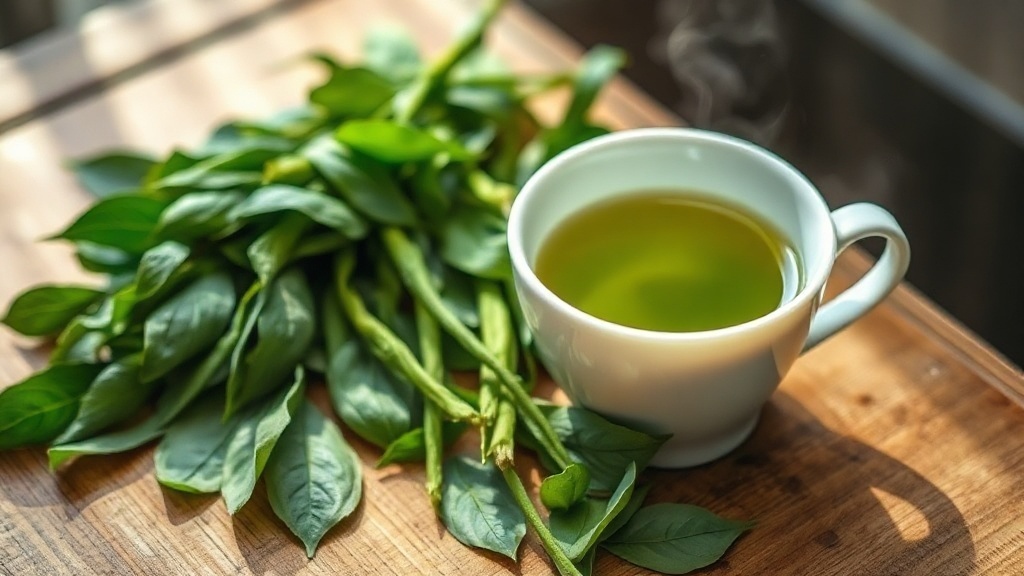
Green tea EGCG refers to epigallocatechin gallate, the most abundant polyphenol in green tea (Camellia sinensis), studied for twenty years in Japanese cohorts of tens of thousands of adults for its link to lower all-cause mortality. This article summarizes what the available observational studies and clinical trials actually show about this compound, and what they do not yet show.
In brief – Green tea EGCG is an antioxidant polyphenol, the main catechin in unfermented Camellia sinensis leaves. Two large Japanese cohorts (Ohsaki, JPHC) link regular green tea consumption to all-cause mortality 15 to 30% lower among heavy drinkers compared with occasional drinkers, with no demonstrated link to cancer mortality. In the lab, EGCG neutralizes free radicals and modulates cellular defense pathways against oxidative stress, a mechanism consistent with these observations but not proven causal in humans. One brewed cup provides 50 to 100 mg of EGCG; concentrated supplements can exceed 800 mg per day, a threshold that France’s food safety agency (Anses) has linked to signals of liver damage. No long-term randomized trial has yet shown that it extends human lifespan.
Definition: what is green tea EGCG?
EGCG (epigallocatechin gallate) belongs to the catechin family, a subclass of polyphenols called flavan-3-ols. It alone makes up 50 to 80% of the total catechins in a green tea leaf, far ahead of epicatechin gallate (ECG) and epigallocatechin (EGC). This high concentration comes from a processing method that avoids fermentation: leaves are dried or steamed quickly after picking, which preserves catechins that black tea or oolong tea partially oxidize during production.
Mechanism: how EGCG acts on cells
EGCG first acts as a direct antioxidant: its chemical structure, rich in hydroxyl groups, lets it neutralize free radicals and chelate certain metals that catalyze oxidative stress. Cell biology research also describes activation of the Nrf2 pathway, which drives production of the cell’s own antioxidant enzymes, and a dampening of the inflammatory NF-kB pathway. These mechanisms remain mostly documented in the lab and in animals; their exact relevance in humans, at dietary doses, is less well established.
- Direct neutralization of free radicals through its hydroxyl groups.
- Activation of the Nrf2 pathway, which boosts the cell’s internal antioxidant defenses.
- Modulation of the NF-kB inflammatory pathway, linked to low-grade chronic aging.
- Partial inhibitory effect on intestinal absorption of non-heme iron at high doses.
What the science says about EGCG
The Ohsaki cohort, led by Kuriyama and colleagues, followed more than 40,000 Japanese adults for 11 years and reported all-cause mortality 16% lower in men and 31% lower in women drinking at least 5 cups of green tea a day, compared with occasional drinkers; cardiovascular mortality fell by comparable margins, with no measurable effect on cancer mortality (Kuriyama et al. 2006, JAMA, PMID 16968850). The JPHC study, covering nearly 91,000 participants followed for 18.7 years, confirms lower all-cause and cardiac mortality among heavy green tea drinkers, again with no link to cancer mortality (Saito et al. 2015, Annals of Epidemiology, PMID 25900254). Both cohorts measure a statistical association, not an isolated effect of EGCG: other habits of heavy tea drinkers could explain part of the result.
On the trial side, a randomized study by Nagao and colleagues had overweight men drink either a catechin-rich tea (690 mg/day) or a catechin-poor tea (22 mg/day) for 12 weeks: the high-dose group reduced body fat and oxidized LDL, a marker of oxidative stress, compared with the control group (Nagao et al. 2005, American Journal of Clinical Nutrition, PMID 15640470). A Cochrane review covering green and black tea found favorable but modest effects on LDL and blood pressure, with a level of evidence judged low due to a lack of long-term trials (Hartley et al. 2013, Cochrane Database Syst Rev, PMID 23780706). None of these trials measured lifespan or a validated marker of biological aging.
In practice: EGCG doses, sources and supplements
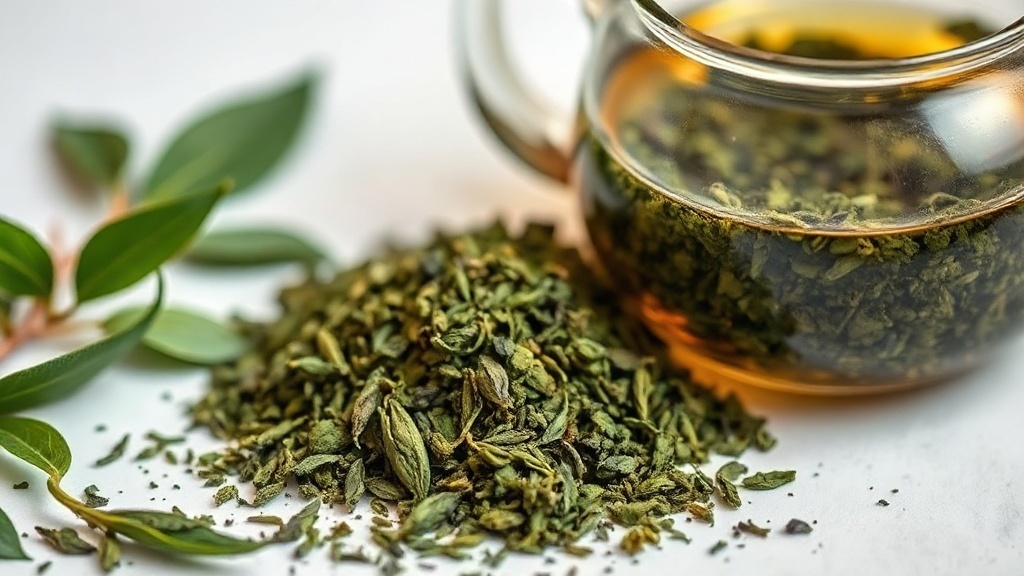
EGCG content varies widely by tea type and preparation method. Classic brewed green tea remains the most studied source in the mortality cohorts cited above; matcha, made from the whole ground leaf, concentrates more of it, as the Harvard T.H. Chan School of Public Health notes.
| Beverage | EGCG per serving | Leaf fermentation |
|---|---|---|
| Brewed green tea | 50 to 100 mg | None |
| Matcha | Up to 150 mg | None |
| Oolong tea | 10 to 30 mg | Partial |
| Black tea | 3 to 10 mg | Full |
The Japanese cohorts linked to lower mortality studied consumption of 3 to 5 cups a day, not concentrated extracts. To place EGCG among other compounds studied for prevention, the genomic instability pillar page details other approaches that protect DNA from oxidative stress. Coffee, another polyphenol-rich beverage, shows comparable associations with mortality in large cohorts; curcumin shares with green tea EGCG a similar antioxidant and anti-inflammatory mechanism.
Protocol and precautions with EGCG
Drinking brewed green tea with meals remains the best-documented approach: catechins are absorbed gradually, and the caffeine that comes with it discourages late-day servings. Concentrated EGCG supplements raise a different problem, tied to their dose.
| Form | Typical EGCG dose | Documented liver risk |
|---|---|---|
| Brewed green tea (3-5 cups/day) | 150 to 500 mg/day | Not reported at usual doses |
| Concentrated supplement (capsules) | Often 300 to 800 mg per capsule | Signals from 800 mg/day (Anses nutrivigilance, France) |
- Favor classic brewed tea (3 to 5 cups a day) over a concentrated extract, given the lack of long-term safety data on the latter.
- Avoid exceeding 800 mg of EGCG a day from supplements: France’s food safety agency (Anses) links this threshold to signals of liver damage reported through its nutrivigilance system. MedlinePlus outlines what to check before starting any high-dose supplement.
- Space intake away from meals containing non-heme iron, since EGCG can reduce its absorption.
- Ask a doctor before any concentrated course if you have liver disease, are pregnant or are on treatment.
This same note of caution applies to chronic inflammation: dietary levers act gradually, over years, not through a single course lasting a few weeks.
Frequently asked questions
What exactly is green tea EGCG?
Green tea EGCG is epigallocatechin gallate, the most abundant catechin in unfermented green tea. It is an antioxidant polyphenol that neutralizes free radicals and modulates cellular defense pathways. It makes up 50 to 80% of the total catechins in a green tea leaf, versus a much smaller share in fermented oolong or black tea.
How many cups of green tea do you need for a useful amount of EGCG?
The Japanese cohorts linking green tea to lower mortality studied 3 to 5 cups a day, roughly 150 to 500 mg of EGCG. No public health authority sets an official recommended dose. Drinking more has not shown any additional benefit in these observational studies.
Is EGCG dangerous for the liver?
At typical brewed doses, EGCG is not linked to any known liver risk. France’s food safety agency (Anses), however, has reported cases of liver damage in people taking concentrated supplements providing 800 mg of EGCG a day or more. The distinction between brewed tea and concentrated extract is therefore essential for safety.
Does EGCG help you lose weight?
A controlled trial found a modest reduction in body fat among men who drank a catechin-rich tea for 12 weeks, compared with a catechin-poor tea. The effect is modest and does not replace a balanced diet or physical activity. No study documents significant weight loss from EGCG alone.
Does green tea EGCG really extend lifespan?
No long-term randomized trial has shown that green tea EGCG extends human lifespan. Observational cohorts show an association with lower all-cause mortality among heavy green tea drinkers, without proving a direct causal link. Slowing certain markers of oxidative stress is not the same as demonstrated rejuvenation.
Medical disclaimer. The information provided here is for informational purposes only and does not constitute medical advice. It does not replace a consultation. Brewed green tea, consumed at usual doses, is generally safe for most adults; concentrated dietary supplements providing 800 mg per day or more of EGCG have, however, been associated with liver damage and should only be taken after medical advice, especially if you have liver disease, are pregnant, are breastfeeding or are under treatment. Ask a healthcare professional before starting any dietary supplement regimen.