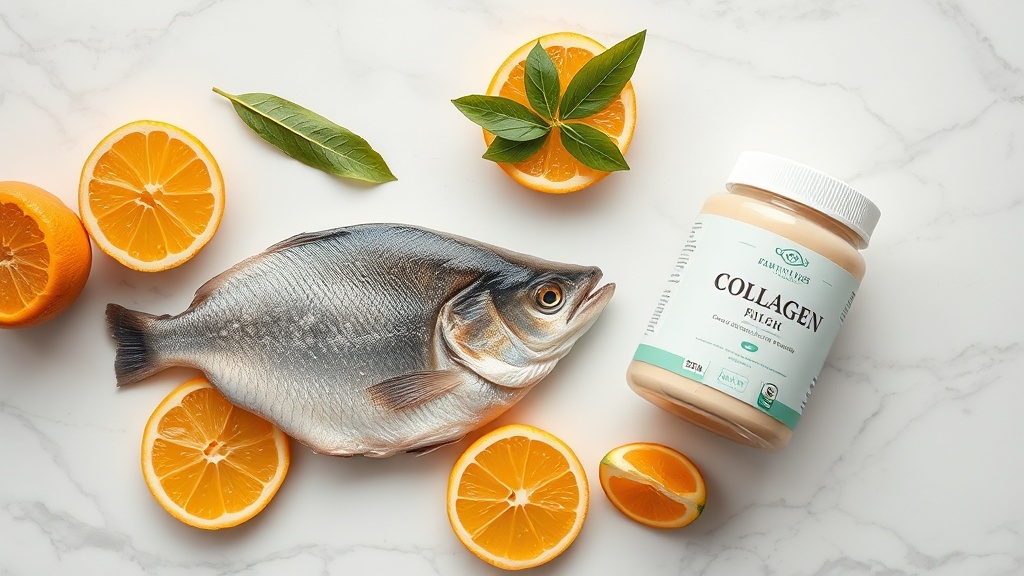
Collagen is everywhere: creams, powders, capsules, gummies. Marketed as the ultimate anti-aging ally for skin and joints, it has become one of the best-selling supplements in the world. But what does the science actually say once the marketing claims are stripped away? This guide sorts out the proven benefits, the gray areas and the limits, so you can decide with clear information, not a sales pitch.
In brief – Collagen is the most abundant protein in the body, giving structure to skin, tendons, bone and cartilage, and its natural production declines by about 1% a year after age 25 to 30. Clinical trials show that hydrolyzed collagen peptides produce real but modest improvements in skin hydration and elasticity, and a moderate reduction in knee osteoarthritis pain, though evidence quality varies. The protein you swallow is digested into amino acids and small peptides rather than delivered intact to the skin or joints. A varied diet with enough protein and vitamin C supports collagen synthesis on its own, and a supplement, typically 2.5 to 10 g per day of hydrolyzed peptides taken for at least 8 to 12 weeks, can offer a modest boost rather than a dramatic transformation.
Collagen, the protein that structures the whole body
It is the most abundant protein in the body, making up roughly 30% of our total protein content. It forms the scaffolding of skin, tendons, bone, cartilage and blood vessel walls, giving our tissues both strength and flexibility.
The catch: starting around age 25 to 30, production gradually declines, by about 1% a year. This natural decline is sped up by several everyday factors. Over time the effect becomes visible: skin loses firmness and joints grow more sensitive.
The types of collagen and why levels decline
There are close to 28 known types, but three stand out:
- Type I: the most common, found in skin, bone and tendons. It is the one responsible for skin firmness.
- Type II: the main component of cartilage, central to joint health.
- Type III: present in skin and blood vessels, often paired with type I.
Several factors speed up its breakdown: UV exposure, smoking and excess sugar, which triggers glycation, a process in which sugar molecules “caramelize” its fibers and stiffen them. These are levers you can act on before even considering a supplement.
One question keeps coming up: marine, bovine or “plant-based”? The marine form, sourced from fish skin and bones, is known for good absorption; bovine or porcine sources remain the most common and least expensive. As for “plant-based collagen,” the label is misleading: plants do not contain this protein. Those products mainly supply nutrients thought to support the body’s own synthesis, such as vitamin C and amino acids, not the protein itself.
| Type | Main location | Role |
|---|---|---|
| Type I | Skin, bone, tendons | Skin firmness and structural strength |
| Type II | Cartilage | Joint cushioning and health |
| Type III | Skin, blood vessel walls | Works alongside type I for tissue elasticity |
What the science actually says about collagen: skin and joints
This is where marketing claims tend to overreach. Contrary to popular belief, the protein you swallow is not delivered intact to the skin: it is digested into amino acids and small peptides, which the body then uses as it sees fit. That said, hydrolyzed peptides have been the subject of genuine clinical trials.
For skin, a meta-analysis of randomized controlled trials found a significant improvement in skin hydration and elasticity after supplementation (2024 meta-analysis). For joints, another meta-analysis reported a significant reduction in knee osteoarthritis pain, though with moderate quality evidence and some biases worth keeping in mind (Lin et al., 2023).
In short: real but modest effects, on specific markers, and a still-imperfect body of evidence. For background on osteoarthritis and how it develops, the NHS provides a detailed reference page.
One common-sense question remains: what should you realistically expect? The trials measure laboratory markers, hydration, elasticity, pain scores, not a dramatic transformation. A supplement can offer a modest boost, but it will never offset a lifestyle that damages tissue. It is a complement, not a treatment. People who already fall short on protein or vitamin C stand to gain the most; those with an already protein and vitamin-rich diet will likely notice little difference.
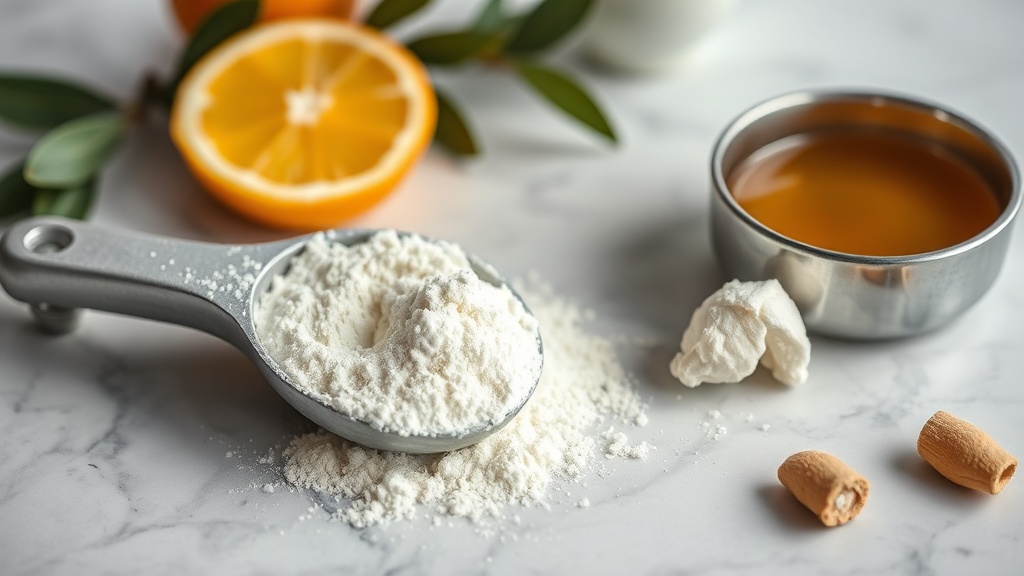
In practice: food first, supplements second
Before buying a powder, remember that the body makes its own supply, provided it has the right raw materials:
- Specific amino acids, particularly glycine and proline, supplied by an adequate intake of daily protein.
- Vitamin C, an essential cofactor for its synthesis.
- Natural sources: bone broth, gelatin, fish skin and fish bones.
If you do choose a supplement, hydrolyzed peptides, type I for skin and type II for joints, are the forms that have been studied, generally at doses of about 2.5 to 10 g per day (0.09 to 0.35 oz) depending on the trial. For more on how the body uses those building blocks, see our guide on cellular aging and senescence.
Protocol: getting the most out of a collagen routine
- Always pair it with a source of vitamin C (citrus, kiwi, bell peppers) to support synthesis.
- Allow at least 8 to 12 weeks: skin and joint effects build up gradually, never immediately.
- Protect your existing supply: limit unprotected UV exposure, smoking and excess sugar.
- Do not neglect sleep and physical activity, which support tissue renewal.
- Choose a simple product without unnecessary additives, and be wary of “lifting effect” claims that sound too good to be true.
FAQ
Does powdered collagen really work?
Hydrolyzed peptides show real but modest effects on skin hydration and elasticity, as well as on joint pain. Evidence quality varies from trial to trial: it is not a miracle, but it is not a simple placebo either.
Which type of collagen should you choose?
For skin, type I (often marine or bovine) is the most studied; for joints, type II. In every case, it is the hydrolyzed, peptide form that is absorbed and backed by research.
When should you take it?
The time of day matters little; consistency is what counts. Pair it with a source of vitamin C and stick with it for at least two to three months before judging the effects.
Can you boost your collagen without a supplement?
Yes. Getting enough protein and vitamin C, protecting your skin from the sun, quitting smoking and cutting back on sugar are the most solid levers for preserving your natural supply.
Medical disclaimer. The information provided here is for informational purposes only and does not constitute medical advice. It does not replace a consultation. Ask a healthcare professional before changing your diet, taking dietary supplements or starting a new practice, especially if you have a medical condition, are pregnant or are under treatment. Dietary supplements do not replace a balanced diet or medical follow-up.