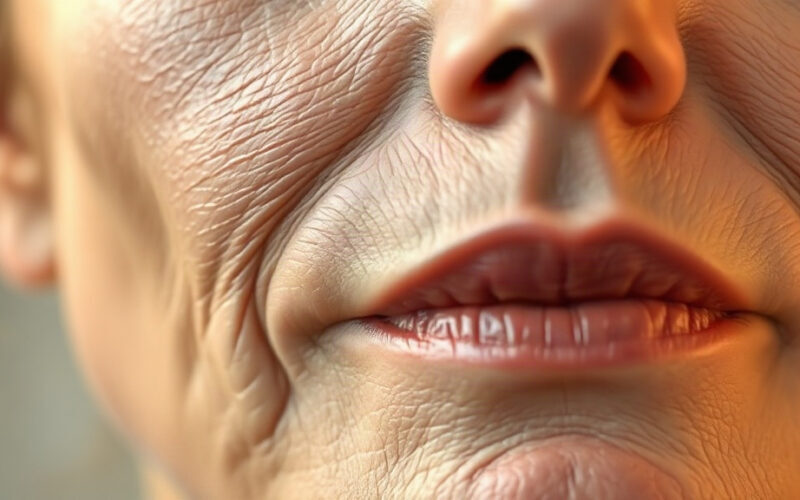
Brown spots (or solar lentigines) are flat pigmented patches that appear on the face, hands and forearms after decades of sun exposure. They affect more than 90% of fair skinned people over 60, according to available dermatological data. Their formation starts as early as the forties and speeds up with every summer spent without regular protection. Understanding their mechanism, the senescence of skin fibroblasts, makes it possible to tell an ordinary sign of aging apart from a lesion that needs watching.
In brief – Brown spots are benign areas of skin hyperpigmentation caused by the buildup of ultraviolet damage over several decades. They appear mainly on the face, the backs of the hands and the forearms, the areas most exposed to the sun. A study published in Theranostics identified their central mechanism: dermal fibroblasts enter senescence under UV exposure and secrete factors that stimulate melanin production in neighboring melanocytes (Yoon et al., 2018). More than 90% of fair skinned people over 60 have at least one. They stay benign in the vast majority of cases, but any spot that changes shape, color or size should be examined by a dermatologist to rule out melanoma.
Definition: What Is a Brown Spot?
A brown spot corresponds, in most cases, to a solar lentigo: a flat macule, light to dark brown, ranging from a few millimeters to several centimeters, with no raised texture. It results from a local proliferation of melanocytes and excess melanin in the epidermis, with no direct link to pigment heredity. It differs from freckles (ephelides), which appear in childhood and fade in winter: a solar lentigo does not fade and builds up with age (Bastiaens et al., 2004).
The popular term “age spot” is misleading: age is only an indirect factor. The cumulative dose of ultraviolet radiation received over a lifetime explains most of the risk, independent of a person’s chronological age.
Mechanism: How UV Exposure Triggers Pigment Cell Senescence
Brown spot formation begins in the dermis, not in the skin’s surface layer. UVA rays penetrate down to the fibroblasts, the cells that produce collagen, and cause cumulative DNA damage there. Some of these fibroblasts then enter a state of cellular senescence: they stop dividing but remain active and secrete a cocktail of growth factors.
- Hepatocyte growth factor and keratinocyte growth factor, which directly stimulate neighboring melanocytes.
- Stem cell factor, which supports the survival and migration of melanocytes toward the damaged area.
- Repression of the SDF1 gene through methylation of its promoter, a mechanism identified as a trigger for melanocyte differentiation (Yoon et al., 2018, pubmed.ncbi.nlm.nih.gov/30279727).
This phenomenon illustrates a broader principle of skin aging: senescent cells act on their surroundings from a distance rather than simply disappearing. Clearing these senescent fibroblasts with radiofrequency actually lightened pigmented skin in the original study, a still experimental approach. This mechanism is one of the biological markers covered in our overview of cellular senescence.
What the Science Says About Their Origin
Cumulative and intermittent sun exposure, particularly sunburns received before age 20, is the factor most strongly linked to the presence of brown spots in adulthood. A Dutch study established this link independent of age, sex and skin phototype, by comparing exposure on areas of the back that were never covered with exposure on areas usually protected (Bastiaens et al., 2004, Pigment Cell Research, pubmed.ncbi.nlm.nih.gov/15140067).
Prevention works: a randomized controlled trial conducted in Australia on 903 adults compared daily use of a broad spectrum sunscreen with discretionary use over four and a half years. Photographs of the daily application group’s faces showed measurably slower skin aging than those of the control group (Hughes et al., 2013, Annals of Internal Medicine, pubmed.ncbi.nlm.nih.gov/23732711). This result remains one of the strongest pieces of evidence that sun protection slows, without fully stopping, a biological mechanism already underway.
Skin phototype, genetics and occupational exposure strongly shape an individual’s risk: the association between UV exposure and pigmentation, well established at the population level, does not on its own predict how any single spot will evolve.
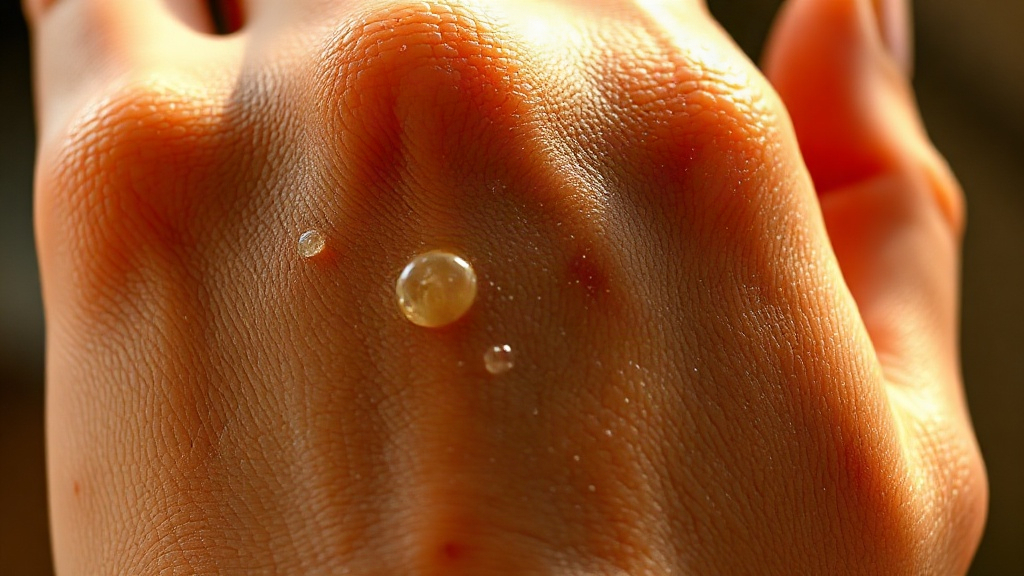
In Practice: Telling a Benign Brown Spot From a Warning Sign
The vast majority of brown spots are benign solar lentigines, with no consequence beyond appearance. The table below places a brown spot alongside other common pigmented lesions.
| Lesion type | Onset | Progression | Warning sign |
|---|---|---|---|
| Freckles (ephelides) | Childhood | Fade in winter, darken in the sun | None |
| Solar lentigo (brown spot) | From age 40 to 50 | Stable, builds up with exposure | Sudden change in color or size |
| Melasma | Adulthood, often hormone related | Fluctuates with sun exposure and hormonal cycles | Useful for differential diagnosis |
| Melanoma | Any age | Progressive, asymmetrical | ABCDE criteria: asymmetry, border, color, diameter, evolution |
Any pigmented lesion that changes shape, color or diameter, or that bleeds, calls for a prompt dermatological check regardless of how long it has been there. A typical solar lentigo, by contrast, stays stable from one year to the next. For everyday sun protection habits, our guide to sunscreen covers the right SPF for each skin phototype. Overall skin aging, of which brown spots are just one sign, is covered in our article on the factors that speed up wrinkles, and the link between senescence and skin is explored in our piece on apigenin and cellular senescence.
Protocol: Preventing and Fading Brown Spots
Daily sun protection remains the best documented way to slow the appearance of new spots, as shown by the Australian trial cited above. It does not erase lesions that have already formed.
- Broad spectrum sunscreen SPF 30 or higher, applied every morning to the face, neck and backs of the hands, even on cloudy days.
- Covering clothing and a wide brimmed hat during prolonged sun exposure, in addition to sunscreen, not instead of it.
- Avoiding sun exposure between 11am and 3pm, the hours of peak UV radiation in the UK, as noted by the NHS.
- Reapplying every two hours during prolonged exposure or after swimming.
For spots that are already present, several topical treatments have been evaluated in controlled trials. A recent systematic review covering 41 clinical trials and 3,234 patients compared their effectiveness (2025, pubmed.ncbi.nlm.nih.gov/40145274).
| Treatment | Mechanism | Reported outcome |
|---|---|---|
| Mequinol 2% plus tretinoin 0.01% | Inhibits melanogenesis and boosts epidermal turnover | More than 80% response on the face at 24 weeks (pubmed.ncbi.nlm.nih.gov/17177746) |
| Topical retinoids alone | Speeds up epidermal cell turnover | Moderate improvement after several months |
| Laser and intense pulsed light | Targeted destruction of melanin clusters | Fast response, frequent recurrence without accompanying sun protection |
No cosmetic treatment corrects the underlying cause, the senescence of dermal fibroblasts. A spot that has been lightened but is no longer protected from the sun repigments within a few months.
Frequently Asked Questions
Are brown spots dangerous?
A typical solar lentigo is a benign lesion, with no known risk of turning cancerous. It stays stable over time, unlike a melanoma, which changes in shape, color or size. Any spot that changes appearance quickly, bleeds or itches warrants a dermatological exam to rule out a suspicious lesion, particularly in fair skinned people or those with a history of severe sunburns.
Why do brown spots appear mainly on the hands and face?
These areas build up the highest level of ultraviolet exposure over a lifetime and are rarely covered by clothing. Dermal fibroblasts there accumulate DNA damage faster, enter senescence and secrete factors that locally stimulate melanocytes. The backs of the hands, exposed continuously while driving or during outdoor activities, are particularly affected after age 50.
What is the difference between a brown spot and melasma?
Melasma forms extensive, symmetrical patches, often on the cheeks and forehead, linked to hormones and sensitive to visible light as much as to UV. A solar lentigo, or brown spot, forms smaller, isolated macules, independent of hormonal status, and results from cumulative sun exposure over several decades rather than short term hormonal shifts.
Can sunscreen make existing brown spots disappear?
No. Sunscreen prevents new spots from forming and slows the darkening of existing lesions, but it does not reverse pigmentation that has already developed. A controlled trial in 903 adults showed that daily application over four and a half years slowed skin aging as measured by photography, without erasing lesions already present at the start.
Medical disclaimer. The information provided here is for informational purposes only and does not constitute medical advice. It does not replace a consultation. Ask a healthcare professional before changing your diet, taking dietary supplements or starting a new practice, especially if you have a medical condition, are pregnant or are under treatment. Dietary supplements do not replace a balanced diet or medical follow-up.