Blood pressure is too often reduced to a single number: 140/90 mmHg. That figure remains a diagnostic threshold used in France, but it hides the indicator that matters most after age 50: the gap between the two numbers, known as pulse pressure, and a newer alert threshold of 130/80 mmHg set by American cardiologists since 2017. Knowing which number to watch changes cardiovascular prevention in practice.
In brief – Blood pressure is the force exerted by blood against the artery walls, measured by two numbers: systolic and diastolic. After age 50, isolated diastolic readings no longer raise the most concern; pulse pressure, the gap between the two values, does, because it reflects arterial stiffness. American cardiologists lowered the alert threshold to 130/80 mmHg in 2017, well below the 140/90 mark still used as a diagnostic cutoff in France. Nearly one third of French adults live with elevated readings, and a third of them do not know it. A high pulse pressure, a systolic number that keeps climbing with age, or a reading that repeatedly exceeds 130/80 all warrant a doctor’s visit, even without symptoms.
Definition: What Do the Two Blood Pressure Numbers Measure?
This pressure is the force blood exerts against the artery walls with every heartbeat. It is expressed in millimeters of mercury (mmHg) as two values: systolic pressure, measured when the heart contracts and pumps out blood, and diastolic pressure, measured between beats, when the heart relaxes. A reading of “125 over 78” means a systolic pressure of 125 mmHg and a diastolic pressure of 78 mmHg.
In France, hypertension affects nearly one third of adults, around 17 million people, and a third of them are unaware of it, since the condition, as the World Health Organization notes, often progresses silently for years before causing any symptom. This absence of a warning sign is exactly what makes regular measurement essential, well before any discomfort or complication appears.
Mechanism: Why Blood Pressure Rises With Age
Arteries lose elasticity over time. The elastin fibers in their walls break down and are replaced by stiffer collagen, a process accelerated by chronic low grade inflammation and dysfunction of the endothelium, the cell layer lining the inside of blood vessels. A stiff artery amplifies every pressure wave generated by the heart: systolic pressure climbs, while diastolic pressure tends to drop slightly after age 60 as the vessels lose the elasticity needed to cushion flow between beats. This two-way shift explains why the gap between the two numbers, the pulse pressure, widens with age.
Several factors accelerate this arterial stiffening and this rise:
- Salt intake above the 5 grams a day recommended by the WHO, which promotes water retention and increases circulating blood volume.
- Physical inactivity, which reduces the ability of blood vessels to dilate under exertion.
- Abdominal excess weight, linked to insulin resistance and more pronounced vascular inflammation.
- Chronic stress and lack of sleep, which keep the sympathetic nervous system on high alert.
- A genetic predisposition and a family history of hypertension.
What the Science Says About the Number to Really Watch
The Framingham cohort study compared the predictive value of the three pressure indicators by age (Franklin et al., 2001, Circulation). Before age 50, diastolic pressure best predicts coronary risk. Between ages 50 and 59, the three indicators perform similarly. After age 60, pulse pressure becomes the strongest predictor of cardiovascular risk, ahead of systolic and diastolic pressure taken alone. A systolic reading of 150 mmHg therefore does not carry the same weight depending on whether it comes with a diastolic reading of 95 or 65 mmHg: the second case, with an 85 mmHg gap, points to stiffer arteries.
This arterial stiffness justified a change in reference points. Joint guidelines from eleven American medical societies lowered the threshold defining an elevated reading to 130/80 mmHg, down from 140/90 mmHg previously (Whelton et al., 2018, Hypertension). The SPRINT clinical trial tested this hypothesis in adults at high cardiovascular risk: targeting a systolic pressure below 120 mmHg rather than below 140 mmHg reduced major cardiovascular events by 25% and all cause mortality by 27% over a median follow up of 3.3 years (Wright et al., 2015, New England Journal of Medicine, n = 9361). Globally, the NCD-RisC collaboration estimates that 1.3 billion adults were living with elevated readings in 2019, half of them untreated (NCD-RisC, 2021, The Lancet, 104 million participants).
In Practice: Which Numbers Warrant a Doctor’s Visit?
The table below shows the 2017 American classification, still the most precise way to place a reading in context. French health authorities continue to use 140/90 mmHg as the diagnostic threshold for hypertension, but under this classification, 130/80 mmHg already marks the point where vigilance and lifestyle measures should begin.
| Category | Systolic (mmHg) | Diastolic (mmHg) | Recommended action |
|---|---|---|---|
| Normal | Below 120 | Below 80 | Routine follow up |
| Elevated | 120 to 129 | Below 80 | Lifestyle changes, no medication |
| Stage 1 | 130 to 139 | 80 to 89 | Lifestyle changes, medication based on overall risk |
| Stage 2 | 140 or higher | 90 or higher | Medication generally recommended |
| Hypertensive crisis | Above 180 | Above 120 | Urgent medical attention |
A single reading above these thresholds is not enough to make a diagnosis: the stress of a medical visit often inflates the values, a phenomenon known as white coat effect. Guidelines rely on the average of several measurements, ideally supplemented by home monitoring or a 24 hour recording. For more on the blood markers linked to cardiovascular risk, our article on cholesterol and our feature on Lp(a) cover other numbers worth knowing. Waist circumference also remains a simple indicator of metabolic risk that often accompanies elevated readings.
Protocol: The Habits That Lower Blood Pressure
Intervention studies converge on a core set of measures that lower these numbers by a few points to several dozen points, depending on the starting point and consistency:
- Limit salt to around 5 grams a day, favoring whole foods over processed ones.
- Walk or do moderate endurance activity most days of the week, a lever covered in detail in our altered intercellular communication pillar on vascular health.
- Cut back on alcohol, whose effect on it is dose dependent from the first regular drinks.
- Correct a potassium deficiency, a mineral that helps the body eliminate sodium, covered in our article on potassium.
- Address ongoing chronic stress or sleep debt, two factors that keep it elevated continuously.
These measures do not replace prescribed treatment when overall cardiovascular risk warrants it. They reinforce its effect and can help some people at stage 1 avoid or delay a first medication.
Frequently Asked Questions About Blood Pressure
What blood pressure is considered normal after age 50?
Blood pressure below 120/80 mmHg remains normal at any age. After 50, a systolic number that climbs gradually, even alongside a stable or slightly falling diastolic number, should raise concern, since it reflects growing arterial stiffness rather than a harmless effect of aging.
What is pulse pressure, and why does this number matter?
Pulse pressure is the gap between systolic and diastolic pressure. A value above 60 mmHg reflects a loss of elasticity in the large arteries. Data from the Framingham cohort show that after age 60, it becomes the strongest predictor of cardiovascular risk, ahead of systolic or diastolic pressure taken separately.
Does a blood pressure of 130/85 mmHg already warrant a doctor’s visit?
Under the 2017 American classification, this reading corresponds to stage 1 hypertension and calls for lifestyle measures, with or without medication depending on overall cardiovascular risk. French guidelines still use 140/90 mmHg for diagnosis, which is why it is worth discussing with a doctor rather than relying on a single isolated number.
How do you measure your blood pressure correctly at home?
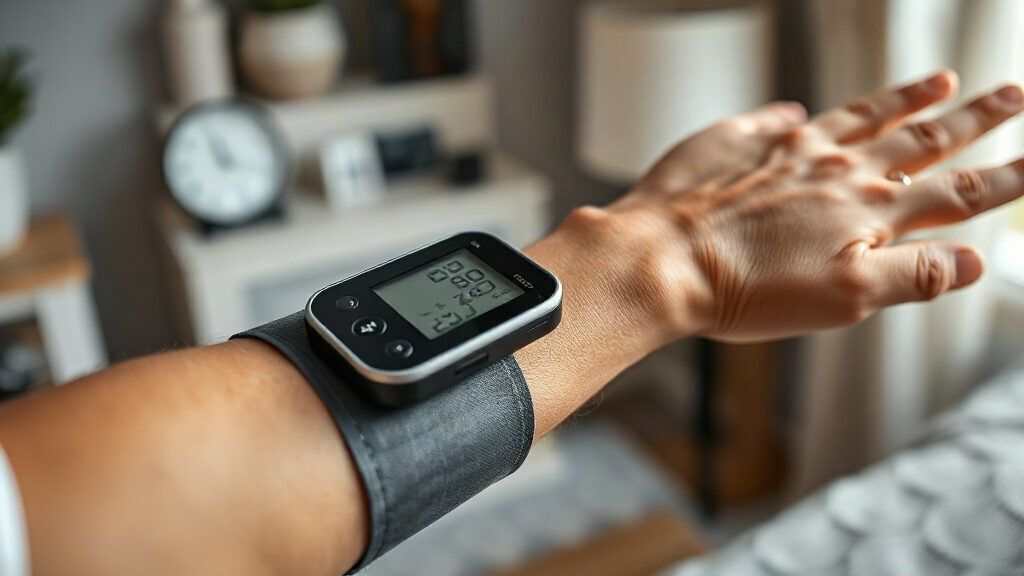
Measure while seated, after five minutes of rest, with your arm supported at heart level, having avoided smoking or coffee in the previous hour. Repeat the measurement twice, one minute apart, morning and evening for three days, and use the average rather than a single reading to limit the white coat effect.
Is salt really the main cause of high blood pressure?
Salt is a major factor, but not the only one. Physical inactivity, excess weight, alcohol, chronic stress and genetics also contribute to elevated blood pressure. Cutting back on salt nonetheless remains one of the fastest acting and best documented measures, especially in people who are salt sensitive.
Medical disclaimer. The information provided here is for informational purposes only and does not constitute medical advice. It does not replace a consultation. Ask a healthcare professional before changing your diet, taking dietary supplements or starting a new practice, especially if you have a medical condition, are pregnant or are under treatment. Dietary supplements do not replace a balanced diet or medical follow-up.