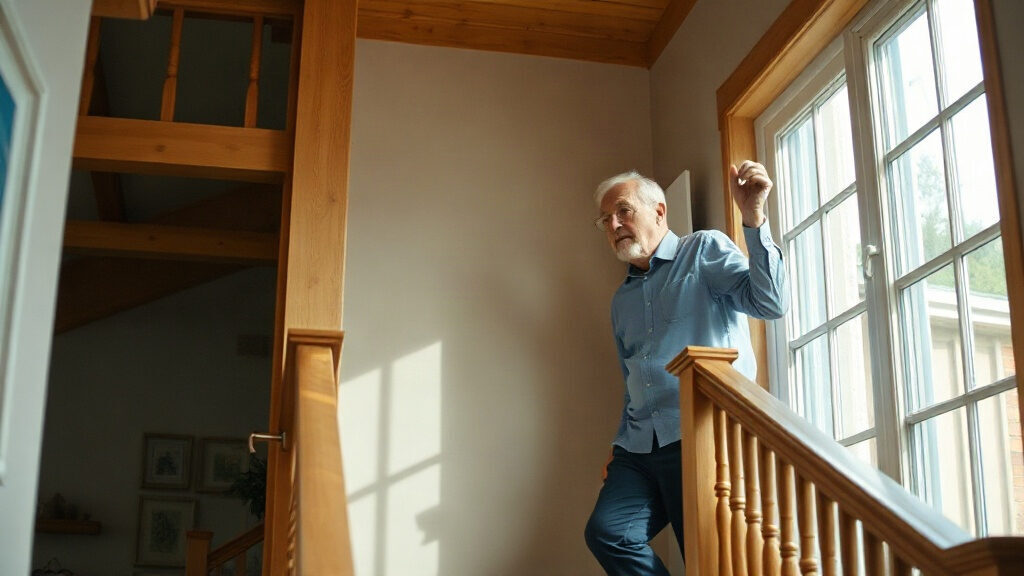
Heart failure affects about 2.3% of people in France and up to 10% of those aged 70 or over, according to Santé publique France, yet its first signs are often dismissed as ordinary age-related tiredness. Breath that runs short on the stairs, ankles that swell in the evening, 2 kg (4.4 lb) gained in three days: these symptoms carry a precise meaning once you are over 60. Here are the seven signs that should raise concern, what studies say about their value, and when to see a doctor.
In brief – Heart failure is a syndrome in which the heart no longer pumps enough blood, or fills poorly, to meet the body’s needs. After 60, it affects nearly 12% of people living at home, and one person in five will develop it during their lifetime, according to the Framingham study. Seven signs should raise concern: unusual breathlessness on exertion, needing to sleep propped up, waking at night short of breath, swollen ankles, rapid weight gain, fatigue that cuts down activities and a night-time cough. In a Dutch study, 15.7% of people over 65 who saw their doctor for breathlessness had unrecognized heart failure. A simple NT-proBNP blood test, followed by an ultrasound of the heart, is enough to settle the question. An early diagnosis, made by a family doctor rather than in the emergency room, goes hand in hand with longer survival.
Heart failure: definition and key figures after 60
Heart failure refers to an abnormality in the structure or function of the heart that prevents it from delivering the oxygen and nutrients the organs need. In France, the national public health agency estimates that it affects 2.3% of the population, up to 10% of people aged 70 and over, and that it is associated with 70,213 deaths each year. As the NHS points out, the term does not mean the heart has stopped: it keeps working, but less efficiently, and the body compensates by retaining water and salt.
The universal definition published in 2021 by the American, European and Japanese societies of cardiology requires two elements: symptoms or clinical signs, plus objective evidence, either raised natriuretic peptide levels or congestion visible on imaging (Bozkurt et al., 2021). European guidelines from the same year then classify the condition according to ejection fraction, the share of blood pumped out with each heartbeat (McDonagh et al., 2021).
| Form | Ejection fraction | Typical profile |
|---|---|---|
| Reduced ejection fraction | 40% or less | The muscle contracts poorly, often after a heart attack. More common in men. |
| Mildly reduced ejection fraction | 41 to 49% | An intermediate form, with a profile close to the reduced form. |
| Preserved ejection fraction | 50% or more | The heart empties well but fills poorly, because it has become stiff. The dominant form after 70, especially in women with high blood pressure. |
Age is the leading risk factor. A systematic review of 25 populations aged over 60, all assessed by echocardiography, puts the median prevalence at 11.8%, with the preserved form (4.9%) more common than the reduced form (3.3%) (van Riet et al., 2016). In the United Kingdom, the average age at diagnosis reaches 77, and patients arrive with an average of 5.4 other conditions (Conrad et al., 2018). Worldwide, more than 64 million people live with the disease (Savarese et al., 2023).
Mechanism: how the aging heart slides into heart failure
In older people, the syndrome almost always results from an accumulation of insults to a heart that has already lost some of its flexibility. Over the years, the arteries stiffen, the wall of the left ventricle thickens and its filling slows down. The Framingham study, which followed 8,229 people for 25 years, shows that the risk of developing it doubles when blood pressure reaches 160/100 mmHg instead of staying below 140/90 (Lloyd-Jones et al., 2002).
The main causes of the condition after 60 are well established:
- Long-standing high blood pressure, which thickens and stiffens the left ventricle.
- A heart attack (myocardial infarction), which leaves a scar that cannot contract.
- Atrial fibrillation, an irregular rhythm that robs the heart of part of its efficiency.
- Valve disease, particularly aortic stenosis, which becomes more common with age.
- Diabetes, obesity and kidney failure, which quietly wear the heart down.
- Certain medicines (anti-inflammatory drugs, some chemotherapies) and excess alcohol.
The energy supply of the heart muscle is another weak point. The heart continuously consumes ATP produced by its mitochondria, and an expert consensus published in 2017 describes, in the failing heart, a less efficient respiratory chain, more free radicals and a disrupted fuel metabolism (Brown et al., 2017). This link between cellular energy and the aging heart is explored in our pillar page on mitochondrial dysfunction.
The symptoms stem from two phenomena. Blood that does not move forward fast enough backs up behind the heart: in the lungs, it causes breathlessness and coughing; in the legs, it creates swelling (edema). At the same time, the kidneys sense too little blood flow and hold on to salt and water, which explains the rapid weight gain that often precedes a flare-up (decompensation).
What the science says about the signs of heart failure
No single symptom is enough to make the diagnosis, but some point strongly toward it, and the condition remains widely underdiagnosed in older adults. A meta-analysis of 22 studies published in JAMA measured the value of each sign in breathless adults (Wang et al., 2005). Waking at night short of breath multiplies the odds of a cardiac cause by 2.6 (likelihood ratio). Conversely, the absence of breathlessness on exertion roughly halves those odds, and a blood BNP below 100 pg/mL divides them by nine.
Natriuretic peptide testing remains the most reliable screening test for unexplained breathlessness. In the Breathing Not Properly study, conducted in 1,586 patients who came to the emergency department short of breath, BNP correctly identified a cardiac origin in 83.4% of cases, and a level below 50 pg/mL ruled out the disease with a negative predictive value of 96% (Maisel et al., 2002). Outside the emergency setting, European guidelines use a threshold of 125 pg/mL for NT-proBNP.
Underdiagnosis is massive. In the Netherlands, 585 patients aged 65 and over (mean age 74) who saw their family doctor for breathlessness on exertion were systematically assessed: 15.7% had unrecognized heart failure, including 12% with preserved ejection fraction (van Riet et al., 2014). Among 405 older patients followed for chronic obstructive pulmonary disease (COPD), the same team found 20.5% (Rutten et al., 2005). Breathlessness blamed on the lungs or on age therefore often hides a heart problem.
This delay comes at a cost. In England, 79.2% of the 36,748 diagnoses studied were made in hospital, even though 41% of these patients had seen their doctor for one of the three key symptoms in the previous five years (Bottle et al., 2018). And where the diagnosis is made matters: in the United Kingdom, median survival reached 5.3 years when the disease was detected without a hospital admission, compared with 2.9 years when it was found in hospital (Taylor et al., 2019).
The bathroom scale is the best witness of worsening. Among 134 patients admitted to hospital with the condition, compared with 134 patients who remained stable, weight began to rise about 30 days before admission (Chaudhry et al., 2007). In the final week, a gain of 0.9 to 2.3 kg (2 to 5 lb) multiplied the risk of hospitalization by 2.8, and a gain of more than 4.5 kg (10 lb) by 7.7.

In practice: 7 signs of heart failure to spot after 60
A new sign that sets in or worsens over a few weeks counts more than an old, stable symptom. In France, awareness campaigns sum up the signs with a four-letter mnemonic, EPOF, which stands for breathlessness, weight gain, edema and fatigue in French. The table below details the seven signs to watch and what lies behind them.
| Sign | What you notice | Explanation |
|---|---|---|
| Breathlessness on exertion | A flight of stairs, a hill or a usual walk becomes hard, sooner than before. | Fluid builds up in the lungs when the heart can no longer keep up. |
| Needing to sleep propped up | You add a pillow, or end the night in an armchair. | Lying flat, blood from the legs moves back up and overloads the lungs. |
| Waking at night short of breath | Sudden waking 1 to 2 hours after falling asleep, relieved by sitting up. | A highly suggestive sign: it multiplies the odds of a cardiac cause by 2.6. |
| Swollen ankles | Both ankles swell in the evening, and finger pressure leaves a dent. | The kidneys retain water and salt, which gravity pulls downward. |
| Rapid weight gain | More than 2 kg (4.4 lb) in 3 days, with no change in diet. | It is not fat, it is retained water. |
| Fatigue that limits you | You give up shopping, gardening or outings, and your legs feel heavy. | The muscles receive less blood and oxygen. |
| Night-time cough | A dry or wheezy cough when lying down, sometimes mistaken for asthma. | Congestion of the small airways. |
In the oldest patients, the condition also takes misleading forms: loss of appetite, a swollen belly, needing to urinate at night, unusual confusion or drowsiness. The challenge is to tell these signals apart from normal aging or another cause. Breathlessness on its own has many possible origins, detailed in our article on shortness of breath on exertion.
| Situation | Rather reassuring | Rather suggestive, worth reporting |
|---|---|---|
| Breathing | Breathlessness stable for years, in proportion to the effort. | New breathlessness, or breathlessness that worsens over a few weeks. |
| Legs | One ankle swollen after a sprain or a long journey, which goes down overnight. | Both ankles swollen every evening, with swelling creeping up toward the calves. |
| Weight | A variation of 1 kg (2.2 lb) depending on meals and the time of weighing. | More than 2 kg in 3 days, with no change in diet. |
| Night | Waking once to urinate, falling back asleep easily. | Waking short of breath, needing to sit up to breathe. |
| Fatigue | Tiredness after a bad night, which eases with rest. | Persistent fatigue that makes you give up your usual activities. |
Some situations are emergencies and require an immediate call to emergency services (911 in the US and Canada, 999 in the UK, 112 across Europe): breathlessness at rest or that prevents speaking, chest pain, fainting or loss of consciousness, frothy pink sputum, a very fast and irregular heartbeat. The other signs warrant a visit to your family doctor within the following days, who can order an NT-proBNP test, an electrocardiogram and then an echocardiogram.
Controlling blood pressure is the first prevention measure, because high blood pressure paves the way for the most common form after 70. Useful benchmarks are gathered in our article on blood pressure and the number that should raise concern. A resting pulse that speeds up for no reason or becomes irregular also deserves to be reported, and our guide to resting heart rate by age gives the reference values.
| Situation | Timeframe | Who to contact |
|---|---|---|
| Breathlessness at rest, chest pain, fainting, frothy sputum | Immediately | Emergency services (911, 999 or 112) |
| Gain of more than 2 kg in 3 days in someone already under follow-up | The same day | The cardiologist or the follow-up nurse |
| New breathlessness, swollen ankles, needing to sleep propped up | Within the week | Your family doctor |
| Progressive fatigue, unexplained night-time cough | Within 2 weeks | Your family doctor |
Tips: monitoring your signs and protecting your heart after 60
The steps that matter most are simple: weigh yourself, check your blood pressure, stay active and have your risk factors monitored. They help both to spot early heart failure and to reduce its risk.
- Weigh yourself at the same time each day, in the morning before breakfast and after using the toilet, and write the number down. After a diagnosis, daily weighing is part of the European guideline recommendations.
- Measure your blood pressure at home several days in a row if it has not been checked in the past year. In the SPRINT trial, aiming for a systolic pressure below 120 mmHg rather than 140 reduced serious cardiovascular events, heart failure included, by 25% in high-risk patients without diabetes (SPRINT Research Group, 2015). This target is discussed case by case with your doctor.
- Move every day. A meta-analysis of 12 cohorts and 370,460 participants links the minimum recommended level of activity (about 150 minutes of brisk walking per week) to a 10% lower risk of heart failure, and twice that level to a 19% lower risk (Pandey et al., 2015). This is an observed association, not proof of causation.
- Record each new symptom in a notebook, with its date, to bring to your appointment.
- Tell your doctor about any regular use of anti-inflammatory drugs, which promote water retention.
- Do not stop a prescribed treatment because you feel better: current treatments prolong life and reduce hospital admissions.
On salt, caution applies in both directions. Limiting very salty foods remains common-sense advice, but the SODIUM-HF trial, conducted in 806 patients who already had the disease, did not show that a very strict diet (less than 1.5 g of sodium per day) reduced hospitalizations or deaths at one year: 15% of events versus 17% under usual care, a non-significant difference (Ezekowitz et al., 2022). In an older person who eats little, an overly restrictive diet can also worsen undernutrition. The salt target is therefore set with the care team.
After a diagnosis, physical activity is still recommended. In the HF-ACTION trial, 2,331 patients with reduced ejection fraction followed a supervised endurance training program: the primary endpoint did not fall significantly, but after adjustment for prognostic factors, the risk of death or hospitalization was 11% lower, with no increase in adverse events (O’Connor et al., 2009). Cardiac rehabilitation, prescribed by the cardiologist, allows a safe return to exercise. The NHS treatment guide describes how this follow-up is shared between the family doctor, the cardiologist and specialist nurses. To keep up with new studies on the heart and aging, subscribe to our free newsletter.
Frequently asked questions about heart failure
What are the first signs of heart failure?
The first sign is most often breathlessness on exertion that worsens over a few weeks. Next come needing to sleep on several pillows, waking at night short of breath, swollen ankles in the evening, rapid weight gain and fatigue that makes you give up activities. In people over 75, loss of appetite or unusual confusion may be the only signs.
How can you tell age-related breathlessness from heart failure?
Age-related breathlessness is long-standing, stable and in proportion to the effort. New breathlessness that progresses over a few weeks or comes with ankle swelling should point to the heart. In a Dutch study, 15.7% of people over 65 who saw their doctor for breathlessness had unrecognized heart failure. An NT-proBNP blood test quickly points in the right direction.
What weight gain should raise concern in heart failure?
A gain of more than 2 kg (4.4 lb) in 3 days, with no change in diet, should prompt a call to your doctor or cardiologist the same day. This weight is retained water, not fat. In an American study, patients’ weight began rising about a month before a hospitalization, and a gain of more than 4.5 kg (10 lb) in one week multiplied that risk by 7.7.
Which test can diagnose heart failure?
Diagnosis rests on three steps. The doctor examines the patient and orders a blood test to measure BNP or NT-proBNP: a normal level makes the disease unlikely. An electrocardiogram completes the assessment. If the level is high, an ultrasound of the heart measures the ejection fraction and specifies the form of the disease, reduced or preserved.
What is life expectancy with heart failure?
It depends mainly on age, the cause and how early treatment starts. In the United Kingdom, 48.2% of patients diagnosed in 2012 were alive five years later. Median survival reached 5.3 years when the disease was detected outside hospital, compared with 2.9 years when it was diagnosed during a hospital stay. Seeing a doctor at the first signs therefore makes a real difference.
Can heart failure be prevented after 60?
The risk falls when its main causes are controlled. The Framingham study shows that the risk doubles when blood pressure reaches 160/100 mmHg. Treating high blood pressure, diabetes and atrial fibrillation, stopping smoking and limiting alcohol protect the heart. Physical activity equal to twice the recommended minimum is associated with a 19% lower risk.
Medical disclaimer. The information on this page is provided for informational purposes only and does not constitute medical advice. It does not replace a consultation. Ask a healthcare professional before changing your diet, taking dietary supplements or starting a new practice, especially if you have a medical condition, are pregnant or are under treatment. Dietary supplements do not replace a balanced diet or medical follow-up.