
Hand tremors immediately bring Parkinson’s disease to mind, yet after age 65 the most common cause is a different disorder: essential tremor. A meta-analysis of 42 studies puts it at 5.8% of older adults. The two can be told apart by a few concrete clues: does the hand shake at rest or during a movement, on one side or both, with or without slowness? Here is what the studies say, what you can observe at home and when to see a neurologist.
In brief – Essential and parkinsonian hand tremors are two neurological disorders that are recognized above all by the moment the hand shakes. Essential tremor appears during action (holding a glass, writing, bringing a spoon to the mouth), affects both arms, sometimes the head or voice, and progresses slowly over years, often with other cases in the family. Parkinsonian tremor occurs at rest, with the hand lying on the thighs, starts on one side, fades when a movement begins and comes with slowness of movement. Handwriting helps too: shaky and large in the first case, smaller and smaller in the second. These clues are sometimes misleading: at a New York center, 37% of patients referred for essential tremor actually had another diagnosis, Parkinson’s disease first among them. When in doubt, the neurologist may order a DaTscan, an imaging test that stays normal in essential tremor.
Hand tremors: definition and main types
A tremor is an involuntary, rhythmic movement, an oscillation of a body part around a fixed point. This is the definition of the Movement Disorder Society task force, which revised the international classification in 2018 (Bhatia et al., 2018). Neurologists classify tremors along two axes: first their clinical features, then their cause.
The most useful criterion for classifying tremors is the situation that triggers them. A rest tremor appears in a relaxed, supported limb that makes no effort. An action tremor occurs when the muscle is working: arms held out in front (postural tremor), a movement toward a target (kinetic tremor), or a precise task such as writing. This distinction between rest and action tremors already points strongly toward a diagnosis.
Everyone has a physiological tremor, invisible to the naked eye, with a frequency of 8 to 12 Hz. Stress, fatigue, cold, coffee or certain medications can amplify it until it becomes bothersome. Pathological tremors most often oscillate between 4 and 8 Hz. The 2018 consensus stresses that frequency alone is therefore of little help in telling them apart.
Essential tremor now has a strict definition: an action tremor of both upper limbs, present for at least 3 years, with or without involvement of the head, voice or legs, and with no other neurological sign (no dystonia, no balance disorder, no parkinsonism). When subtle signs of uncertain significance are added, such as unsteady tandem walking or mild memory trouble, the consensus speaks of “essential tremor plus”.
Parkinsonian tremor, for its part, is never enough on its own to make the diagnosis. The 2015 Movement Disorder Society criteria define parkinsonism as slowness of movement (bradykinesia) combined with rest tremor or rigidity (Postuma et al., 2015). Without slowness, an isolated rest tremor does not mean Parkinson’s disease.
Where hand tremors come from: cerebellum or dopamine
The two forms of tremor arise in different brain circuits, which explains their opposite signs. Essential tremor mainly involves the circuit linking the cerebellum, the thalamus and the motor cortex. Parkinson’s disease destroys the dopamine neurons of the substantia nigra, which control the start and the amplitude of movements.
- In essential tremor, a study of 33 brains donated to research found cerebellar lesions without Lewy bodies in 75.8% of them. The number of Purkinje cells, the large output neurons of the cerebellum, was reduced (6.6 versus 9.6 per microscope field) (Louis et al., 2007).
- These same brains showed about 7 times more “torpedoes”, abnormal swellings on the extensions of Purkinje cells, than those of the controls.
- Eight brains out of 33 (24.2%) carried Lewy bodies in the brainstem, mostly in the locus coeruleus. This subgroup was older, which feeds the hypothesis of a partial link with Parkinson’s disease.
- In Parkinson’s disease, alpha-synuclein, a protein found in nerve endings, misfolds and clumps into Lewy bodies. Dopamine neurons in the substantia nigra then degenerate preferentially, as described by the US National Institute of Neurological Disorders and Stroke.
- The lack of dopamine disrupts a network linking the basal ganglia to the thalamus. Parkinsonian tremor is one consequence, just like slowness and stiffness.
This clumping of misfolded proteins ties Parkinson’s disease to the loss of proteostasis, one of the biological hallmarks of aging. Some researchers classify essential tremor among the slow neurodegenerative diseases of the cerebellum, a hypothesis that is still debated.
| Criterion | Essential tremor | Parkinson’s disease |
|---|---|---|
| Main region | Cerebellum and its connections with the thalamus | Substantia nigra and basal ganglia |
| Lesion seen at autopsy | Loss and damage of Purkinje cells (75.8% of cases) | Loss of dopamine neurons and Lewy bodies |
| Protein involved | No aggregated protein identified to date | Aggregated alpha-synuclein |
| Dopamine transport (DaTscan) | Normal | Reduced, often on one side first |
| Family history | Common | Present in a minority of cases |
What studies show about the two types of tremor
Essential tremor is the most widespread movement disorder in adults, far ahead of Parkinson’s disease. The most recent meta-analysis pools 42 population studies conducted in 23 countries: prevalence reaches 1.33% across all ages and 5.79% after age 65 (Louis and McCreary, 2021). It rises by 74% with each decade and does not differ between men and women. An earlier study reported 21.7% in people aged 95 or older (Louis and Ferreira, 2010).
Parkinson’s disease is less common but rising sharply. According to Inserm, the French national health research institute, about 167,000 people were being treated in France in 2015, including 26,000 newly diagnosed. Their number more than doubled between 1990 and 2015, mainly because of population aging. The World Health Organization lists tremor among its most common motor symptoms, along with slowness, rigidity and walking difficulties.
Confusing these two forms of tremor happens often. At the Neurological Institute of New York, 26 of 71 patients referred with a diagnosis of essential tremor (37%) actually had something else: Parkinson’s disease in 15%, dystonia in 8% (Jain et al., 2006). A tremor in only one arm multiplied the risk of error by 10.5, a dystonic posture of the hand by 16.3.
The reverse happens too. A meta-analysis of 11 autopsy-confirmed studies puts the accuracy of the clinical diagnosis of Parkinson’s disease at 80.6% (Rizzo et al., 2016). It drops to 73.8% when the examination is done by non-specialists and climbs to 83.9% among experts after follow-up. Another often overlooked fact: of 100 Parkinson’s patients confirmed at autopsy in London, 23% had no rest tremor (Hughes et al., 1993). The absence of tremor therefore does not rule out this disease.
The two origins of tremor are not completely independent. In the Spanish NEDICES cohort, 3,813 older people were followed for a median of 3.3 years. Parkinson’s disease developed in 3.0% of people with essential tremor, versus 0.7% of the others, an adjusted relative risk of 4.27 (Benito-León et al., 2009). The risk is multiplied, but the vast majority of people affected never develop the disease.
| Study | Population | Main result |
|---|---|---|
| Louis and McCreary, 2021 | 42 studies, 23 countries | Essential tremor: 1.33% across all ages, 5.79% after 65 |
| Jain et al., 2006 | 71 patients referred for essential tremor | 37% misdiagnosed, including 15% with Parkinson’s disease |
| Hughes et al., 1993 | 100 autopsy-confirmed Parkinson’s cases | 23% without rest tremor |
| Rizzo et al., 2016 | 11 studies with autopsy | Clinical diagnosis of Parkinson’s correct in 80.6% of cases |
| Benito-León et al., 2009 | 3,813 older people followed for 3.3 years | Parkinson’s in 3.0% of people with essential tremor versus 0.7% of controls |
| Benamer et al., 2000 | 158 people with parkinsonism, 27 with essential tremor, 35 volunteers | DaTscan: 97% sensitivity, 100% specificity on local reading |
In practice: 6 clues to tell hand tremors apart
The moment the hand shakes remains the most reliable clue. A hand that shakes while resting on the thighs, as the person walks or watches television, points toward parkinsonian tremor. A hand that shakes while holding a cup, pouring water or signing a check points toward essential tremor.
| Clue | Essential tremor | Parkinsonian tremor |
|---|---|---|
| When it appears | During action: arms held out, glass, spoon, writing | At rest, limb relaxed; fades at the start of a movement |
| Side affected | Both hands, sometimes slightly unevenly | One side only at first, for years |
| Other areas | Head (“yes-yes” or “no-no”), quavering voice | Chin, lips, leg; rarely the head |
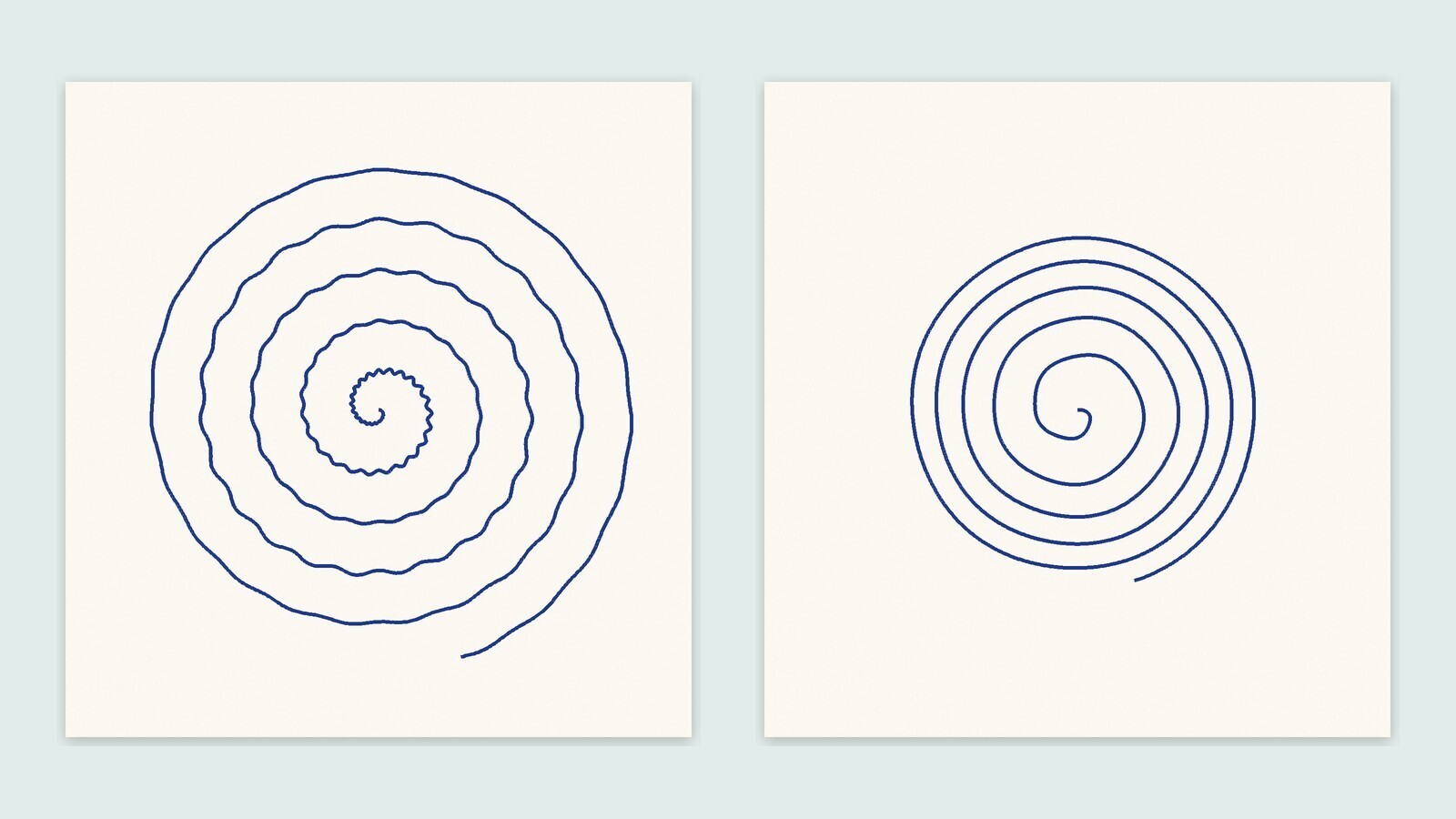
| Handwriting | Shaky, large and irregular letters | Letters getting smaller and smaller (micrographia) |
| Associated signs | None, or subtle signs (essential tremor plus) | Slowness, stiffness, shuffling walk, less expressive face |
| Course and family | Slow over years, often other cases in the family | Progressive, with other signs adding up |
A classic pitfall is called “re-emergent” tremor. In some people with Parkinson’s, the outstretched hand stays still for a few seconds, then starts shaking again. In a Houston study, this delay averaged 9.4 seconds in 12 of 18 Parkinson’s patients, whereas it was almost zero in essential tremor (Jankovic et al., 1999). This detail is sometimes enough to correct a diagnosis.
Non-motor signs count too. Loss of smell, agitated dreams in which a person thrashes about, and long-standing constipation can precede the motor symptoms of Parkinson’s disease by several years. Our articles on loss of smell after 60 and on frequent nightmares detail these warning signals. The risk factors for Parkinson’s disease, such as pesticides or head injuries, complete the picture.
Other causes of hand tremors to rule out
Before talking about a neurological disease, the doctor looks for a simple and often reversible cause. The 2018 consensus lists many medications that can cause or worsen tremors, and a Lancet Neurology review points out that caffeine and beta-2 bronchodilators are the best known (Morgan and Sethi, 2005).
| Cause | Type of tremor | Telltale clue |
|---|---|---|
| Enhanced physiological tremor | Fine and fast, arms held out | Stress, fatigue, cold, too much coffee, lack of sleep |
| Medications | Action or rest depending on the drug | Bronchodilators, lithium, valproate, amiodarone, excess thyroid hormones, antipsychotics, metoclopramide, some antidepressants |
| Hyperthyroidism | Fine, fast, in both hands | Weight loss, palpitations, nervousness; TSH blood test |
| Hypoglycemia | Sudden, with sweating | Treated diabetes, intense hunger, faintness that eases with sugar |
| Alcohol withdrawal | Action, in the morning | Regular drinking that has stopped |
| Dystonic tremor | Irregular, often on one side | Abnormal posture of the hand or neck; head turning |
Preparing for the appointment and knowing the treatment options
Observing your tremors before the appointment saves the doctor time and improves the accuracy of the diagnosis. The NHS describes the diagnostic pathway for Parkinson’s disease, from the first assessment by a family doctor to the referral to a specialist, usually a neurologist. Here are the most useful observations about your tremors to report.
- Film the tremor for 30 seconds, with the hand resting on the thighs, then arms held out in front, then while bringing a glass to the mouth. The video shows what the exam on the day does not always reproduce.
- Note which side started first, the approximate date of the first signs and how they have changed since.
- Write a sentence and draw a spiral on a dated sheet of paper, and repeat every month. Neurologists use this spiral test, which reveals action tremor well.
- List all medications, including asthma inhalers and thyroid hormones, and your daily coffee intake.
- Ask your family whether a relative had a tremor, and at what age.
- Mention slowness, a shortening stride, loss of smell or agitated dreams, even if they seem unrelated.
A small glass of alcohol often eases essential tremor for a few hours, a clue mentioned by the 2018 consensus. It is in no way a treatment: the effect is temporary, and the tremor can even get worse as the alcohol wears off. Better to tell your doctor about it than to use it.
What neurologists offer
Treatment of hand tremors depends on the diagnosis, which makes telling them apart essential. For essential tremor, the American Academy of Neurology rates propranolol and primidone at the highest level of efficacy (Zesiewicz et al., 2011). When these drugs fail, deep brain stimulation or focused ultrasound thalamotomy become options. In a randomized trial of 76 patients, focused ultrasound brought the hand tremor score down from 18.1 to 9.6 points, versus 16.0 then 15.8 points after a sham procedure (Elias et al., 2016). Walking problems (36%) and numbness (38%) followed the procedure, persisting at 12 months in 9% and 14% of patients.
Parkinsonian tremor calls for a different strategy, centered on dopaminergic drugs such as levodopa, which the WHO describes as the most effective at reducing symptoms. Rehabilitation also has its place for walking and balance. None of these treatments should be decided without a diagnosis made by a doctor.
FAQ: hand tremors, essential or parkinsonian
How can I tell if my hand tremors are essential or parkinsonian?
The moment the hand shakes is the main clue. Essential tremor appears during action, while holding a glass or writing, and affects both hands. Parkinsonian tremor occurs at rest, on one side only at first, and comes with slowness of movement. These clues are not always enough: a New York study found that 37% of essential tremor diagnoses were wrong. Only a neurologist can decide.
Can essential tremor turn into Parkinson’s disease?
The risk exists but remains low in absolute terms. In the Spanish NEDICES cohort, 3.0% of people with essential tremor developed Parkinson’s disease over 3.3 years, versus 0.7% of the other participants, a relative risk of 4.27. The vast majority therefore do not develop the disease. The onset of slowness or of a tremor at rest is a reason to see the neurologist again.
Why do my hands shake when I hold a cup?
A tremor that appears while holding an object is an action tremor. It may be a physiological tremor amplified by stress, fatigue, coffee or a medication such as a bronchodilator. If it has lasted more than 3 years, affects both hands and comes with no other sign, it fits the definition of essential tremor. A simple workup, including a TSH blood test, first rules out hyperthyroidism.
Can you have Parkinson’s disease without tremors?
Yes. Of 100 Parkinson’s patients whose diagnosis was confirmed at autopsy, 23% had no rest tremor. The Movement Disorder Society criteria rely above all on slowness of movement, combined with rest tremor or stiffness. A shuffling walk, handwriting that shrinks or a less expressive face can therefore reveal the disease without any shaking of the hand.
Which test can tell the two types of tremor apart?
Diagnosis rests first on a clinical examination by a neurologist. When in doubt, the DaTscan, a nuclear imaging scan that measures the dopamine transporter, helps settle the question. In a six-center study, it was abnormal in 97% of Parkinson’s patients and normal in all 27 patients with essential tremor. MRI is mainly used to rule out other causes, such as a stroke.
When should you see a doctor about hand tremors?
New hand tremors that make drinking or writing difficult, affect only one side or come with slowness warrant a visit to your family doctor. Tremors that appear suddenly with weakness in a limb, speech problems or confusion require calling emergency services right away (911 in the US, 999 in the UK, 112 in Europe). The doctor first checks medications, the thyroid and blood sugar, then refers you to a neurologist if needed.
Medical disclaimer. The information on this page is provided for informational purposes only and does not constitute medical advice. It does not replace a consultation. Ask a healthcare professional before changing your diet, taking dietary supplements or starting a new practice, especially if you have a medical condition, are pregnant or are under treatment. Dietary supplements do not replace a balanced diet or medical follow-up. A tremor that appears suddenly with weakness, difficulty speaking or confusion requires calling emergency services right away (911 in the US, 999 in the UK, 112 in Europe). Never stop or change a treatment without medical advice, and do not use alcohol to calm tremors.