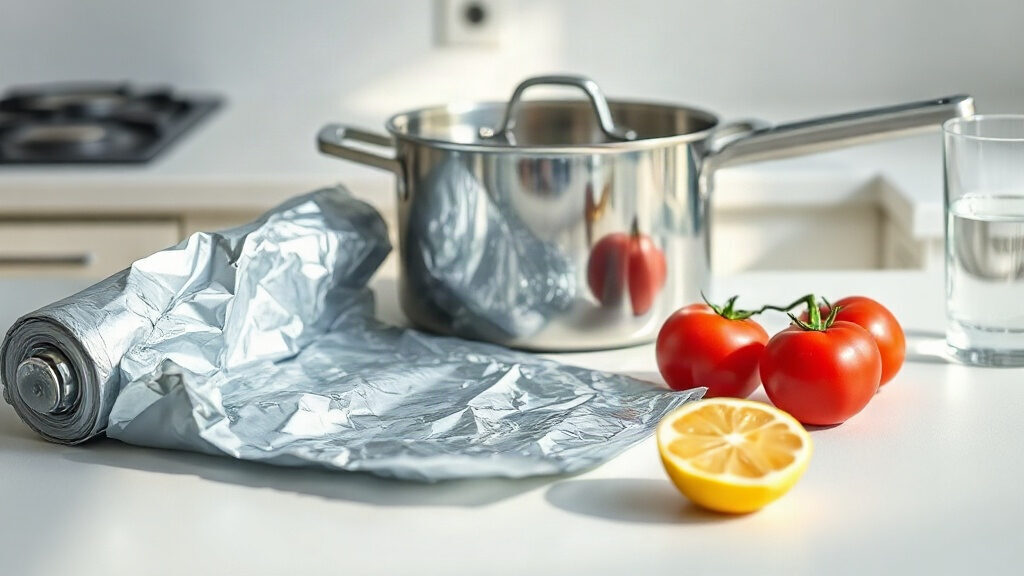
Aluminum is the most abundant metal in the Earth’s crust, and aluminum exposure is part of everyday life: each of us swallows a few milligrams a day without knowing it, mostly through food. Since the 1980s, the metal has been suspected of promoting Alzheimer’s disease, breast cancer or vaccine-related disorders. The data available in 2026, from French cohorts, meta-analyses and radioactive tracer studies, make it possible to sort what is proven from what is still debated and what has been ruled out.
In brief – Aluminum is a light metal found in soil, water and food, and aluminum exposure has only been proven toxic at high doses, in heavily exposed people. Documented poisonings involve dialysis patients in the 1970s, premature babies fed intravenously and some workers in the aluminum industry. For the general public, the gut absorbs only 0.1 to 1% of the metal swallowed, and the average exposure of French adults (0.28 mg/kg/week according to ANSES, the French food safety agency) remains seven times below the tolerable intake of 2 mg/kg/week. The link with Alzheimer’s disease rests on associations, with no proof of causation. Studies on deodorants and breast cancer are largely negative, and a Danish cohort of 1.2 million children found no excess risk linked to aluminum in vaccines. The useful everyday lever: do not cook or store acidic foods in bare aluminum.
Aluminum exposure: definition and everyday sources
Aluminum is a light metal that makes up 8% of the Earth’s crust, making it the third most common element after oxygen and silicon. It has no known biological function in humans: the body does not use it and works to get rid of it. It occurs naturally in soil and water, then in the plants that grow there.
Our exposure comes first and foremost from food, as the US Agency for Toxic Substances and Disease Registry (ATSDR) points out. The main sources are cereals, vegetables, tea, milk and cocoa, with about 5 mg per 100 g (3.5 oz) of chocolate. Tap water provides less than 5% of intake, and canned sodas 0.4%. Next come certain food additives, cookware, cosmetics and a few heartburn medicines.
The safety benchmark is the provisional tolerable weekly intake (PTWI) set in 2011 by the WHO and the FAO: 2 mg per kilogram of body weight per week, or 120 mg for a person weighing 60 kg (132 lb). ANSES estimates the average exposure of French adults at 0.28 mg/kg/week and that of children aged 3 to 17 at 0.42 mg/kg/week. According to the same assessment, 0.2% of adults and 1.6% of children exceed the limit.
| Source | Examples | Estimated contribution |
|---|---|---|
| Naturally rich foods | Cereals, vegetables, tea, cocoa, milk | Leading source for the general population |
| Food additives | Some colorings, baking powders, anti-caking agents | Varies with the processed foods eaten |
| Drinking water | Tap water, mineral water | Less than 5% of intake depending on the region |
| Cookware and packaging | Non-anodized pans, aluminum foil, trays | Low, except with acidic or very salty foods |
| Medicines | Antacids, stomach-coating drugs | High with prolonged use |
| Cosmetics | Antiperspirants, toothpastes, lipsticks | Almost no skin absorption (less than 0.01%) |
How aluminum behaves in the body
The gut forms a very effective barrier against this metal. Two volunteers who drank tap water labeled with aluminum-26, a tracer isotope, absorbed only 0.22% of it on average, the rest being recovered in the stool within 7 days (Priest 1998). The absorbed fraction then follows a few well-described steps:
- Absorption depends on the chemical form: aluminum citrate crosses about 50 times more easily than the hydroxide, and citrate (citrus juice) increases absorption of the hydroxide (Priest 1996).
- In the blood, most of it binds to transferrin, the protein that also carries iron.
- The kidneys excrete most of the absorbed fraction in the urine within a few days or weeks.
- A small share settles durably in the skeleton, and an even smaller fraction reaches the brain (Priest 2004).
- When the kidneys fail, this elimination collapses and the metal builds up in bone, muscle and gray matter.
At high concentrations, aluminum is neurotoxic. The clearest demonstration comes from dialysis patients in the 1970s, treated with aluminum gels and poorly purified dialysis water. In those who died of an unexplained encephalopathy, gray matter contained 25 ppm of the metal, compared with 6.5 ppm in other dialysis patients and 2.2 ppm in controls (Alfrey 1976, NEJM). Purifying dialysis water made this syndrome disappear.
At the molecular level, laboratory studies show that the aluminum ion binds to the beta-amyloid peptide and speeds up its aggregation into toxic fibrils (Kawahara 2011). This mechanism ties the hypothesis to the hallmark of loss of proteostasis, the inability of cells to keep their proteins properly folded. These experiments, however, use concentrations far beyond anything found in a human brain exposed through diet.
Aluminum and Alzheimer’s disease: what the science says
The link between aluminum and Alzheimer’s rests on epidemiological associations, with no proof of causation to date. The PAQUID cohort in Bordeaux, run by Inserm (the French national health research institute), followed 2,698 people aged 65 and over for 8 years. Water containing more than 0.1 mg/L of the metal was associated with a 2.14-fold risk of Alzheimer’s, but this result rested on only 13 exposed cases, with no dose-response relationship (Rondeau 2000).
After 15 years of follow-up of 1,925 participants, an intake of at least 0.1 mg a day from drinking water remained associated with faster cognitive decline and more dementia (Rondeau 2009). Exposure measured by geographic area, on the other hand, was no longer associated with dementia. The same work showed that an extra 10 mg of silica a day went hand in hand with an 11% lower risk of dementia. Yet water accounts for only a small fraction of total intake, which complicates the interpretation.
Meta-analyses give mixed results depending on the type of exposure. Pooling 8 studies and 10,567 people, a Chinese team found a 71% higher risk of Alzheimer’s with chronic exposure (Wang 2016). Conversely, occupational exposure was associated with no excess risk in 3 case-control studies covering 1,056 participants (Virk and Eslick 2015).
| Study | Population | Result | Main limitation |
|---|---|---|---|
| PAQUID, Rondeau 2000 | 2,698 older adults in Gironde and Dordogne, 8 years | Water above 0.1 mg/L: Alzheimer’s risk x 2.14 | 13 exposed cases, no dose-response relationship |
| PAQUID, Rondeau 2009 | 1,925 older adults, 15 years | Intake from water of at least 0.1 mg/day: faster decline | Geographic exposure not associated |
| Meta-analysis, Wang 2016 | 8 studies, 10,567 people | Chronic exposure: OR 1.71 | Heterogeneous observational studies |
| Meta-analysis, Virk 2015 | 3 studies, 1,056 people | Occupational exposure: OR 1.00 | Exposure reported by relatives |
| Meta-analysis, Virk 2015 | 34 studies, 613 patients | Higher levels in brain, blood and CSF | Cause or consequence of the disease? |
People with Alzheimer’s do have higher aluminum levels in the brain, serum and cerebrospinal fluid (Virk and Eslick 2015, J Alzheimers Dis). This finding does not tell whether the metal causes the disease or builds up in tissue that is already damaged. Other metals are also more abundant in these brains, and the Alzheimer’s Association stresses that a causal role for aluminum has never been confirmed.
The Camelford case, in Cornwall, illustrates this uncertainty. In July 1988, 20 metric tons (22 US tons) of aluminum sulfate were accidentally dumped into the drinking water network, exposing up to 20,000 residents to concentrations 500 to 3,000 times above the European standard. The autopsy of a local woman who died of a neurological disease revealed a rare amyloid angiopathy and deposits of the metal in the damaged areas, but the authors judged it impossible to establish a causal link (Exley and Esiri 2006). In 2025, a Canadian umbrella review of environmental risk factors for dementia did not find enough data for a meta-analysis on this metal (Jones 2025), while fine particle pollution emerged as a robust factor.
Aluminum in deodorants and vaccines: what the studies show
Antiperspirants contain aluminum salts that temporarily plug the ducts of the sweat glands. The skin lets only a tiny amount through. With radiolabeled aluminum chlorohydrate, 0.012% of the applied dose was absorbed in two adults, or about 4 µg per application to both underarms (Flarend 2001). A follow-up study in 12 women, under real-life conditions of use, measured an even smaller absorbed fraction: 0.00052% (de Ligt 2022).
On breast cancer, the studies are mostly negative. A Seattle case-control study of 813 patients and 793 controls found no excess risk linked to antiperspirants, including after shaving (Mirick 2002, JNCI). The Innsbruck study is the exception: in women who used these products several times a day before age 30, the risk was multiplied by 3.88, with a very wide confidence interval, from 1.03 to 14.66 (Linhart 2017). It rested on 209 cases and memories of past use, a classic source of bias. In 2024, a meta-analysis of 7 case-control studies concluded there was no association (OR 0.96) (Trinh 2024).
The European Scientific Committee on Consumer Safety (SCCS) concluded in 2020 that aluminum compounds are safe up to 6.25% in non-spray antiperspirants and 10.60% in sprays (opinion SCCS/1613/19). According to the committee, daily use of cosmetics does not add significantly to the body burden that comes from food.
Inactivated vaccines contain aluminum salts as adjuvants, to strengthen the immune response. The largest study on the subject followed 1,224,176 Danish children born between 1997 and 2018. Each additional milligram of the metal received through vaccination before age 2 was associated with no increase in any of the 50 chronic diseases studied: HR 0.98 for autoimmune diseases, 0.99 for allergies and 0.93 for neurodevelopmental disorders, including autism (Andersson 2025, Annals of Internal Medicine). An FDA model shows that an infant’s body burden, from diet and vaccines combined, stays below the safety threshold throughout the first year (Mitkus 2011).
A controversy persists around macrophagic myofasciitis, described by a French team. In 50 patients who underwent biopsy, the vaccine adjuvant persisted in the deltoid muscle for up to several years after the injection (Gherardi 2001, Brain). The local lesion is recognized. Its link with the widespread pain and fatigue reported by these patients has not been established by population studies.
| Alleged risk | What the data show | Level of evidence |
|---|---|---|
| Dialysis encephalopathy | Brain accumulation demonstrated, gone since water purification | Established, at very high exposure |
| Bone fragility | Seen in people with kidney failure and in premature babies on IV feeding | Established, in specific populations |
| Alzheimer’s disease | Associations in some cohorts, conflicting results | Unconfirmed hypothesis |
| Breast cancer and deodorants | 2024 meta-analysis negative, one isolated positive study | Not demonstrated |
| Chronic childhood diseases and vaccines | No excess risk in 1.2 million children | Ruled out for moderate to large effects |
| Cancers in production workers | Linked to pitch fumes from the process, not to the metal | Aluminum not classified as a carcinogen by IARC |
Aluminum exposure in practice: who is really at risk?
Documented poisonings involve specific situations with no equivalent in everyday life. Health agencies identify three groups: dialysis patients at a time when dialysis water was poorly treated, premature babies fed intravenously with overloaded solutions, and workers in the aluminum industry. People with chronic kidney disease remain the most vulnerable, because their kidneys no longer properly clear the absorbed fraction.
Antacids and stomach-coating drugs based on aluminum hydroxide deliver doses far higher than food. Taken occasionally, they pose no known problem. For prolonged courses, especially in an older person or someone whose kidney function is declining, their use should be discussed with a doctor or pharmacist.
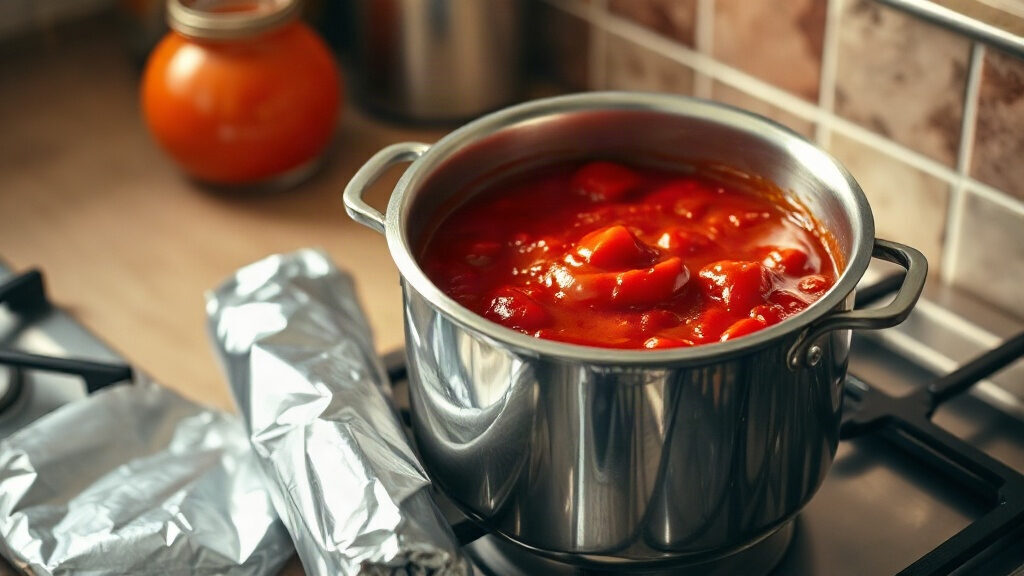
In the kitchen, transfer depends mainly on acidity, salt and contact time. An Austrian study shows that brief contact with aluminum foil raises the metal content of food only marginally (Ertl and Goessler 2018). Transfer becomes high, however, when the food touches both the foil and another metal, such as a stainless steel dish. According to Germany’s Federal Institute for Risk Assessment (BfR), regularly cooking acidic foods in aluminum foil can add up to 13 mg a day.
| Cookware | Transfer into food | Recommended use |
|---|---|---|
| Non-anodized aluminum pan | Multiplied by 10 with acidic or very salty food | Water, pasta, neutral foods |
| Anodized aluminum | Greatly reduced by the protective layer | Suitable for daily use |
| Aluminum foil, brief cold contact | Marginal | Short-term wrapping of dry foods |
| Foil in the oven with acidic food | Up to 13 mg a day with repeated use (BfR) | Avoid: use parchment paper instead |
| Stainless steel, enameled cast iron, glass | None | Acidic dishes, marinades, storage |
For the general population, this metal is therefore not a health priority on a par with smoking or a sedentary lifestyle. The topic fits better into a logic of exposure hygiene for heavy metals, where cutting avoidable sources is enough. For cognitive prevention, the factors with better-documented effects are covered in our guide to Alzheimer’s prevention.
Limiting your aluminum exposure: practical tips
No study has shown that cutting dietary aluminum exposure protects memory in a healthy person. These habits aim to avoid unnecessary intake, with no radical change and no special product:
- Do not cook or store tomatoes, citrus fruit, rhubarb, wine-based dishes or marinades in a non-anodized pan or in aluminum foil.
- Replace aluminum foil with parchment paper for lemony fish parcels or oven-roasted vegetables.
- Avoid laying a sheet of foil directly over a stainless steel dish that holds moist food.
- Choose stainless steel, enameled cast iron or anodized aluminum cookware for everyday cooking.
- Vary your sources of cocoa and tea rather than consuming large amounts every day.
- Ask a doctor before taking antacids for several weeks in a row, especially if you have kidney disease.
- Keep your usual deodorant if it suits you: current data do not justify banning it over cancer risk.
Dietary silicon, found in silica-rich mineral water, beer and whole grains, limits the gut’s absorption of this metal. In PAQUID, a higher silica intake was associated with less dementia, though no trial has confirmed it. The other effects of this mineral are detailed in our article on silicon.
Frequently asked questions about aluminum exposure
Does aluminum cause Alzheimer’s disease?
No study has proven that aluminum causes Alzheimer’s disease. The French PAQUID cohort links water with higher levels of the metal to more dementia, but based on very few exposed cases. Occupational exposure is not associated with the disease. The higher levels found in patients’ brains may be a consequence of the damage rather than its cause.
Do aluminum deodorants cause breast cancer?
Current data do not show it. The skin absorbs less than 0.01% of the salts applied, and a meta-analysis of 7 studies published in 2024 found no association with breast cancer. An Austrian study from 2017 suggested a risk in very frequent users before age 30, but with small numbers and probable recall bias.
Is it dangerous to cook with aluminum foil?
Brief contact with neutral foods transfers very little metal. Transfer rises sharply with acidic or very salty foods, heat and contact time. Germany’s BfR estimates that repeated oven use with acidic foods can add up to 13 mg a day. For a parcel with lemon or tomato, parchment paper is the better choice.
How much aluminum can you safely ingest?
The tolerable weekly intake set by the WHO and the FAO is 2 mg per kilogram of body weight, or 120 mg a week for a person weighing 60 kg (132 lb). According to ANSES, French adults ingest an average of 0.28 mg/kg a week, and only 0.2% of them exceed the limit. Children are slightly more exposed, notably through milk and chocolate.
Is the aluminum in vaccines dangerous for children?
A Danish cohort of 1,224,176 children published in 2025 found no increase in 50 chronic diseases, including asthma, autoimmune diseases and autism, according to the dose of vaccine adjuvant received before age 2. An FDA model shows that the body burden stays below the safety threshold. Small effects on rare diseases cannot be fully ruled out.
Who really needs to watch their aluminum exposure?
People with chronic kidney disease are the most concerned, because their kidneys clear this metal poorly. Heavy users of aluminum hydroxide antacids and workers in aluminum production are the other groups to monitor. For the general population, average dietary aluminum exposure remains well below safety limits.
Medical disclaimer. The information on this page is provided for informational purposes only and does not constitute medical advice. It does not replace a consultation. Ask a healthcare professional before changing your diet, taking dietary supplements or starting a new practice, especially if you have a medical condition, are pregnant or are under treatment. Dietary supplements do not replace a balanced diet or medical follow-up.