COPD (chronic obstructive pulmonary disease) affects 10.3% of adults aged 30 to 79 worldwide, and more than eight in ten of them do not know it. After 60, getting winded on the stairs or coughing every morning is often put down to fatigue or simply getting older. Here are the signs that should raise a flag, the test that settles the question and the situations that call for prompt medical care.
In brief – COPD is a chronic lung disease that permanently narrows the airways and destroys part of the air sacs, which slows the flow of air out of the lungs. Smoking is the leading cause, ahead of workplace dust and air pollution. After 60, the warning signs are breathlessness that worsens year after year, a morning cough with phlegm, chest infections that drag on every winter and wheezing. Only one test confirms the diagnosis: spirometry, which measures your breath before and after a bronchodilator. In a large survey across 27 countries, 81.4% of cases had never been diagnosed. See your doctor if you smoke or used to smoke and have any of these signs. Call emergency services (911 in the US, 999 in the UK, 112 in Europe) if you are short of breath at rest, have bluish lips or become confused.
Definition: what is COPD?
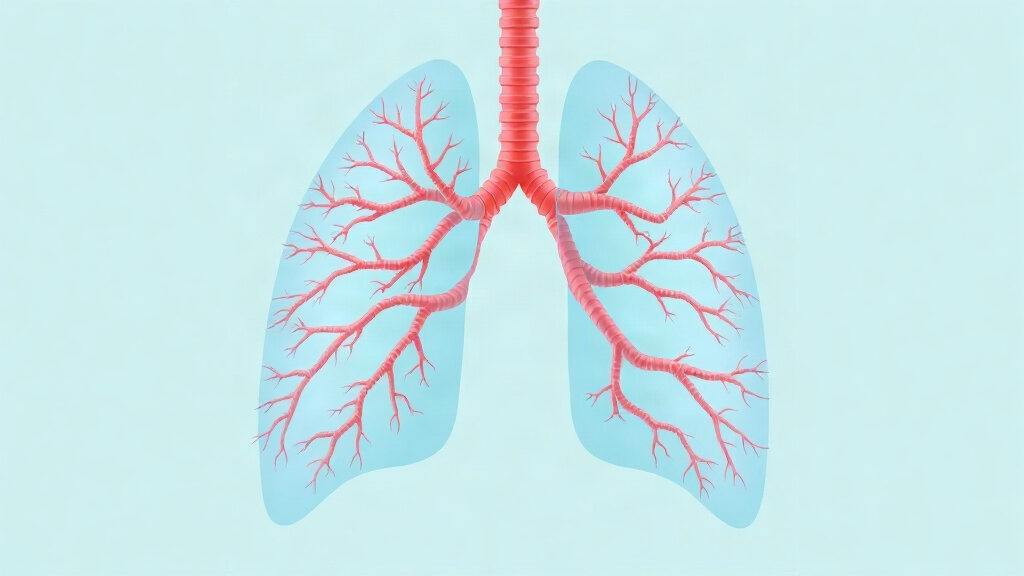
COPD refers to a permanent obstruction of the airways. It is confirmed when the ratio between the volume of air exhaled in one second (FEV1) and the forced vital capacity (FVC) stays below 0.7 after inhaling a bronchodilator. This threshold is the one used by the Global Initiative for Chronic Obstructive Lung Disease (GOLD). The disease combines two conditions that often occur together: chronic bronchitis, which thickens and clogs the airways, and emphysema, which destroys the walls of the air sacs. Unlike asthma, the obstruction does not fully go away with treatment.
The burden of the disease is considerable. According to the World Health Organization, COPD is the third leading cause of death worldwide, with 3.4 million deaths in 2023, about 6% of all deaths (WHO fact sheet on COPD). In France, national estimates from 2010 put the number of people with the disease at 3.5 million, or 7.5% of the population, a figure that is probably an underestimate (for an overview of the condition, see the MedlinePlus COPD page). Globally, the modeling study by Adeloye and colleagues counts 391.9 million people with the disease aged 30 to 79 in 2019 (Adeloye et al., 2022, PubMed).
| Sign | More likely due to age | Suggestive of COPD |
|---|---|---|
| Breathlessness | After intense effort, with quick recovery | Climbing one flight of stairs or walking on flat ground, worse from year to year |
| Cough | Occasional, during a cold | Daily, especially in the morning, at least 3 months a year |
| Phlegm | Absent outside of infections | Mucus in the morning, almost every day |
| Infections | A cold that clears in about ten days | Repeated bronchitis every winter, lasting more than 3 weeks |
| Wheezing | Rare | Wheezy breathing during exertion or at night |
| Exposure | No notable exposure | Current or former smoking, dusty job, wood or coal heating |
Mechanism: how COPD damages the lungs
COPD results from chronic inflammation triggered by inhaled particles, which ends up destroying lung tissue instead of repairing it. Tobacco smoke remains the main trigger: the WHO estimates it accounts for more than 70% of cases in high-income countries. The global meta-analysis published in 2022 in The Lancet Respiratory Medicine quantifies the excess risk: a current smoker is 3.2 times more likely to have the disease, a former smoker 2.3 times. Occupational dust or fumes raise the risk by 40%.
- Persistent inflammation of the small airways, sustained by neutrophils and macrophages.
- Excess mucus production, behind the wet morning cough.
- Destruction of the air sac walls (emphysema), which shrinks the surface available for oxygen exchange.
- Loss of elasticity: air stays trapped, the chest overinflates and breathlessness appears on exertion.
- A buildup of senescent cells that release inflammatory signals, a mechanism explained on our cellular senescence pillar.
A lung affected by COPD shows the hallmarks of accelerated aging. The review by Mercado and colleagues, published in Thorax, describes more senescent cells, stem cell exhaustion, increased oxidative stress and impaired autophagy (Mercado et al., 2015, PubMed). Lung function naturally starts to decline from around age 25. In people with the disease, this slope gets steeper or starts from a lower level.
Not every case follows the same path. The study by Lange and colleagues followed three cohorts for 22 years (Lange et al., 2015, PubMed). About half of the patients had normal lung function before age 40, then lost it quickly, at a rate of 53 mL per year. The other half started from low lung capacity in early adulthood, with a slower decline of 27 mL per year. Low lung function at the start is therefore enough to lead to the disease, even without accelerated decline.
What the science says: a late COPD diagnosis comes at a cost
COPD is massively underdiagnosed, and this delay has a measurable cost. The survey by Lamprecht and colleagues analyzed spirometry results from 30,874 adults aged 40 and over, at 44 sites in 27 countries (Lamprecht et al., 2015, PubMed). Overall, 81.4% of people with airflow obstruction had never been diagnosed. Only 26.4% had ever taken a breathing test. Underdiagnosis was more common in men, in people with less education and in those whose obstruction remained moderate.
Not knowing about the disease does not protect you. In the US NHANES survey from 2007-2012, 72% of cases of airflow obstruction were undiagnosed (Martinez et al., 2015, PubMed). After a median follow-up of 14.5 years, people with undiagnosed obstruction had a 23% higher risk of death than people without obstruction. This figure describes an association, not proof that diagnosis alone extends life.
Exacerbations weigh heavily on the outlook. These flare-ups worsen cough, phlegm and breathlessness within a few days. In a Spanish cohort of 304 men with COPD, aged 71 on average, three or more severe exacerbations multiplied the risk of death over 5 years by 4.13 (Soler-Cataluña et al., 2005, PubMed). The ECLIPSE study, conducted in 2,138 patients, shows that the best predictor of a new flare-up is having already had one (Hurst et al., 2010, PubMed).
Quitting smoking remains the step backed by the strongest evidence. As early as 1977, Fletcher and Peto showed that a susceptible smoker who quits does not regain lost lung function, but that their decline returns to the rate of a nonsmoker (Fletcher and Peto, 1977, PubMed). The Lung Health Study, a randomized trial in 5,887 people with early obstruction, confirmed the effect on survival. After 14.5 years, mortality was 8.83 per 1,000 person-years in the group helped to quit, versus 10.38 in the control group (Anthonisen et al., 2005, PubMed).
| Study | Population | Main finding |
|---|---|---|
| Adeloye et al., 2022 | 162 articles, 65 countries | 10.3% of people aged 30-79 affected in 2019 |
| Lamprecht et al., 2015 | 30,874 adults aged 40 and over | 81.4% of cases undiagnosed |
| Martinez et al., 2015 | NHANES surveys, United States | Undiagnosed obstruction: 23% higher risk of death |
| Soler-Cataluña et al., 2005 | 304 men, mean age 71 | Three or more severe exacerbations: risk of death multiplied by 4.13 |
| Lange et al., 2015 | Three cohorts followed for 22 years | Half of cases started with low lung function before age 40 |
| Anthonisen et al., 2005 | 5,887 smokers with early obstruction | Mortality of 8.83 versus 10.38 per 1,000 person-years |
In practice: when to see a doctor about COPD after 60
See your primary care doctor if you have smoked or been exposed to dust and have breathlessness, a cough or phlegm that persists. After 60, these signs are too often blamed on age, weight or being out of shape. Our article on shortness of breath during exercise covers the other possible causes, heart problems in particular. Your doctor will then order spirometry, performed by a lung specialist or sometimes in the office. The test takes about fifteen minutes and does not hurt.
The mMRC scale helps you rate your breathlessness. At grade 0, you only get breathless during intense effort. At grade 1, when walking fast or climbing a gentle slope. At grade 2, you have to walk more slowly than people your age. At grade 3, you stop after about 100 meters (330 feet), and at grade 4 you are too breathless to leave the house or get dressed. Grade 2 or higher warrants a medical visit.
Once the disease is diagnosed, the focus shifts to flare-ups. Any unusual worsening of cough, phlegm or breathlessness deserves a prompt call to your doctor, who can adjust treatment earlier. The table below summarizes the levels of urgency.
| Situation | What it may mean | What to do |
|---|---|---|
| Breathlessness building over months, morning cough, former smoker | Possible COPD, not yet diagnosed | Book a visit with your primary care doctor and ask for spirometry |
| Bronchitis lasting more than 3 weeks | Prolonged infection, COPD or another cause | See a doctor within the week |
| More or darker phlegm, increased breathlessness for 1 or 2 days | Likely exacerbation | Call your doctor within 48 hours |
| Blood in phlegm, unexplained weight loss | Sign to investigate quickly, lung cancer in particular | See a doctor without delay |
| Breathlessness at rest, bluish lips or nails, confusion, drowsiness | Respiratory distress | Call emergency services (911, 999 or 112) |
| Chest pain, swollen and painful leg | Possible heart problem or embolism | Call emergency services |
Tips: protecting your lungs against COPD
Quitting smoking slows the loss of lung function, even after 60. Our article on smoking and the years of life you can regain presents proven quit methods. The rest relies on physical activity, vaccination and regular follow-up, whether the disease is already confirmed or only suspected.
- Quit smoking with support: nicotine replacement, a stop-smoking service or a quitline (1-800-QUIT-NOW in the US, NHS Smokefree in the UK).
- Move every day. Pulmonary rehabilitation combines exercise training and education. The Cochrane review by McCarthy and colleagues, covering 65 trials and 3,822 participants, measured an average gain of 44 meters (144 feet) on the 6-minute walk test (McCarthy et al., 2015, PubMed).
- Get a flu shot every fall. The inactivated vaccine reduces the number of exacerbations, with evidence rated as low certainty (Kopsaftis et al., 2018, PubMed). Pneumococcal, COVID-19 and RSV vaccines are worth discussing with your doctor.
- Have your pharmacist check your inhaler technique: poor technique reduces the dose that reaches the airways.
- Limit exposures: ventilate during renovation work, wear a mask suited to dust, avoid exercising outdoors during pollution peaks.
- Watch your weight. In the 2022 global analysis, a BMI below 18.5 multiplied the risk of COPD by 2.2, and unexplained weight loss should always be reported.
Keep a simple log: flights of stairs climbed without stopping, color of phlegm, nights woken by coughing. This record helps your doctor spot a decline between two visits. To receive our summaries on respiratory health and aging, subscribe to our health newsletter.
Frequently asked questions about COPD
What are the first signs of COPD?
The first signs of COPD are a persistent cough, often wet in the morning, daily phlegm and breathlessness on exertion that slowly gets worse. Many people cut back on effort without realizing it, which masks the symptom. Repeated bouts of bronchitis every winter should also raise a flag. In a current or former smoker over 40, these signs warrant spirometry.
How is COPD diagnosed?
Diagnosis relies on spirometry, a painless breathing test that takes about fifteen minutes. You blow hard and long into a mouthpiece, before and after inhaling a bronchodilator. COPD is confirmed if the FEV1/FVC ratio stays below 0.7 after the medicine. A chest X-ray or CT scan is mainly used to rule out other lung or heart diseases.
What is the difference between COPD and asthma?
Asthma often starts early in life, comes in attacks, and the airway obstruction is largely reversible with treatment. COPD most often appears after 40, in smokers or people exposed to dust, and the obstruction is permanent. Both diseases can coexist in the same person. Medical history and spirometry help tell them apart.
Can you have COPD without ever smoking?
Yes. According to the WHO, smoking accounts for more than 70% of cases in high-income countries, but not all of them. Occupational dust and fumes, air pollution, wood or coal heating and low lung capacity from early adulthood also raise the risk. A genetic alpha-1 antitrypsin deficiency is involved in a small minority of cases.
When should you call emergency services for COPD?
Call emergency services (911 in the US, 999 in the UK, 112 in Europe) for breathlessness at rest that makes it hard to talk, bluish lips or nails, confusion or unusual drowsiness, or chest pain. These signs may point to a severe exacerbation or another emergency. Without any warning signs of severity, worsening cough or phlegm means calling your doctor within 48 hours.
Can you slow down COPD?
The damage caused by COPD does not go away, but its progression can be slowed. A landmark British study published in 1977 showed that quitting smoking brings the loss of lung function back to the rate of a nonsmoker. Pulmonary rehabilitation, regular physical activity, vaccination and properly used inhaled treatment then reduce breathlessness and the risk of flare-ups.
Medical disclaimer. The information provided here is for informational purposes only and does not constitute medical advice. It does not replace a consultation or a spirometry test. If you have breathlessness, a persistent cough or phlegm, talk to your doctor. If you are short of breath at rest or have bluish lips, confusion or chest pain, call emergency services immediately (911 in the US, 999 in the UK, 112 in Europe). Never change an inhaled treatment or oxygen therapy without medical advice. Dietary supplements do not replace a balanced diet or medical follow-up.