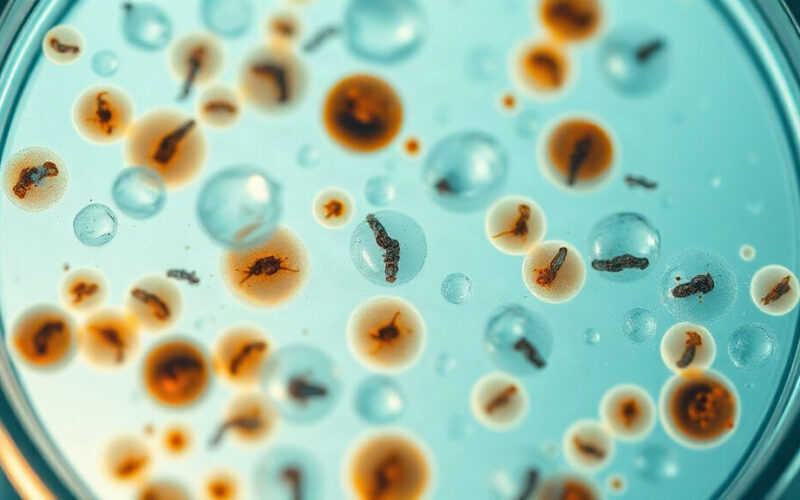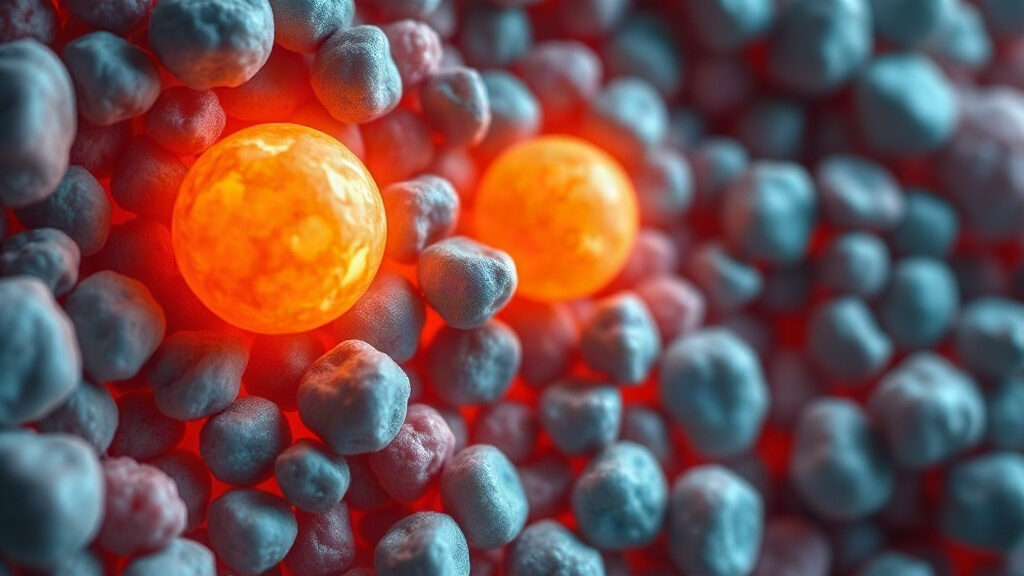
Senescent cells build up in all of our tissues as the years go by: skin, fat, liver, kidneys, joints. These cells have stopped dividing but refuse to die, and they secrete an inflammatory cocktail that degrades their surroundings. Since 2011, a series of studies in mice and then in humans has shown that lowering their number improves organ function. Here is how they arise, why the body struggles to clear them after 60, and what research has actually validated to limit their burden.
In brief – Senescent cells are damaged cells that have permanently stopped dividing without being eliminated, and that secrete inflammatory molecules (the SASP phenotype) harmful to neighboring tissues. They accumulate with age because their production rises (DNA damage, short telomeres, oxidative stress) while their clearance by the immune system slows down. In mice, removing them extends median lifespan by 17 to 35% (Baker 2016). In humans, a 3-day course of dasatinib and quercetin reduced senescent cells in the fat tissue of 9 patients by 35% (Hickson 2019), and 12 weeks of structured exercise lowered their blood markers in older adults (Englund 2021). The validated everyday levers remain regular physical activity, control of caloric excess, and protection against tobacco and UV radiation.
Definition: what is a senescent cell?
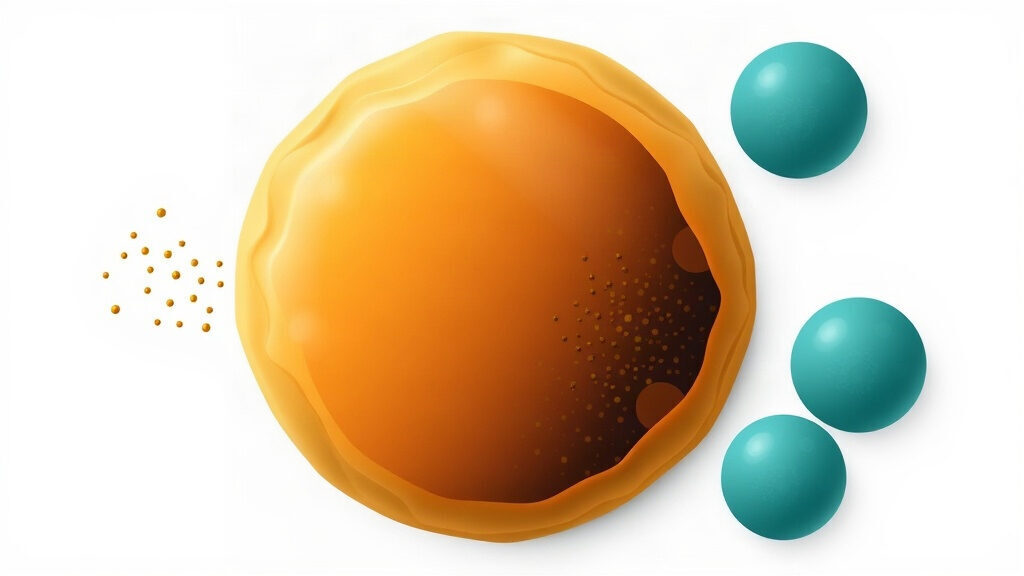
A senescent cell has permanently left the division cycle in response to damage, while remaining metabolically active. Leonard Hayflick described it as early as 1961: human fibroblasts in culture stop after around fifty divisions (Hayflick 1961). This arrest is initially a protective mechanism: a cell with damaged DNA must no longer multiply, or it risks becoming cancerous.
The problem is that these cells do not stay silent. Judith Campisi and her team showed in 2008 that they release dozens of cytokines, proteases and growth factors, a set named the SASP (Coppé 2008). Cellular senescence has since featured among the 12 hallmarks of aging listed by López-Otín and colleagues in the journal Cell (López-Otín 2023). UltraSanté devotes a dedicated pillar page to cellular senescence.
Mechanism: how senescent cells accumulate with age
The accumulation results from an imbalance between production and clearance. In youth, the body generates few of them, and immune cells (NK cells, macrophages, T lymphocytes) destroy them within days. After 50, both sides of the scale tip at the same time: more cells enter senescence, and the immune system, itself aging, clears fewer of them. The main sources of production are well known:
- Telomere shortening: after dozens of divisions, the ends of the chromosomes become too short and trigger cell-cycle arrest (replicative senescence).
- DNA damage: UV rays, tobacco, radiation or chemotherapy activate the p53/p21 and p16 pathways, the two molecular “brakes” that lock division (Demaria 2017).
- Oxidative stress and mitochondrial dysfunction: an excess of free radicals damages proteins and DNA, and pushes cells toward senescence.
- Oncogene activation: a cell that receives an abnormal proliferation signal shuts itself down to avoid forming a tumor.
- The SASP domino effect: the released cytokines induce senescence in healthy neighboring cells, which sustains chronic low-grade inflammation, the “inflammaging” described by Franceschi and Campisi (Franceschi 2014).
This last point explains why a modest number of senescent cells is enough to cause damage. In 2018, James Kirkland’s team at the Mayo Clinic transplanted these cells into young mice: a proportion of roughly one senescent cell per ten thousand cells was enough to reduce their walking speed and endurance (Xu 2018).
What the science says: from mice to the first human trials
Removing senescent cells extends healthy lifespan in mice, and the first human trials confirm that their number can be reduced. Darren Baker and Jan van Deursen paved the way in 2011 with a genetic model that destroys p16-expressing senescent cells on demand: the treated mice developed cataracts, muscle wasting and loss of subcutaneous fat later in life (Baker 2011). In 2016, the same team applied the method to normal mice from 12 months of age: median lifespan rose by 17 to 35% depending on the strain, with better-preserved kidneys, heart and fat tissue (Baker 2016).
The next step was to eliminate these cells with drugs, the senolytics. The dasatinib + quercetin combination (D+Q), given to mice aged 24 to 27 months, the equivalent of 75 to 90 human years, increased their remaining survival by 36% (Xu 2018, cited above). In humans, two pilot studies followed in 2019:
| Study | Participants | Intervention | Measured result |
|---|---|---|---|
| Hickson 2019, Mayo Clinic | 9 patients, diabetic kidney disease | Dasatinib + quercetin, 3 days | p16+ cells in fat tissue: -35%; p21+ cells: -17%; drop in circulating SASP factors at 11 days |
| Justice 2019, Wake Forest | 14 patients, idiopathic pulmonary fibrosis | Dasatinib + quercetin, 9 doses over 3 weeks | 6-minute walk distance: +21.5 m (about 70 ft); improved walking speed; no direct cell count |
| Englund 2021, Mayo Clinic | Sedentary older adults | Structured exercise, 12 weeks | Drop in p16, p21, cGAS and TNF-alpha in T lymphocytes; drop in circulating SASP proteins |
| Fontana 2018, Washington University | Middle-aged volunteers | Long-term calorie restriction vs Western diet | Senescence markers not induced in the colon lining |
These sample sizes are small, and most of the trials had no placebo group. The review by Chaib, Tchkonia and Kirkland published in Nature Medicine lists more than twenty ongoing clinical trials and recalls that no senolytic holds marketing authorization for aging (Chaib 2022). Our detailed review of the 8 senolytic trials in humans takes stock.
In practice: what reduces senescent cells
Three everyday levers have direct human data on senescence burden or its markers: regular exercise, limiting caloric excess, and avoiding the insults that create them (tobacco, UV, chronic high blood sugar). Pharmacological senolytics and flavonoids such as fisetin remain in the research domain. Fisetin, for example, extended the lifespan of aged mice (Yousefzadeh 2018), but the results of human trials have not yet been published. As MedlinePlus notes, the immune system, which is in charge of clearing these cells, loses efficiency with age, which makes restoring it a lead at least as important as destroying them directly.
| Lever | Level of evidence in humans | Documented effect | Available today |
|---|---|---|---|
| Structured exercise (endurance + strength training) | 12-week interventional trial (Englund 2021) | Drop in p16/p21 markers and SASP proteins in the blood | Yes, no prescription needed |
| Moderate calorie restriction without malnutrition | Cross-sectional study (Fontana 2018) | No increase in senescence markers in the colon | Yes, with nutritional follow-up |
| Quitting smoking, UV protection | Mechanistic + epidemiological | Less DNA damage, hence fewer cells entering senescence | Yes |
| Dasatinib + quercetin | 2 open-label pilot trials, 9 and 14 patients | -35% p16+ cells in fat; +21.5 m (about 70 ft) on the walk test | No, hospital use within trials |
| Fisetin | Mice only; human trials ongoing | Extended lifespan in aged mice | Not recommended outside a trial |
Autophagy, the internal recycling of damaged cellular components, acts upstream: a cell that repairs its mitochondria and proteins accumulates less damage, and joins the senescent pool less often. The World Health Organization stresses that the share of people over 60 will double by 2050 (WHO, ageing and health): acting early on these levers therefore concerns everyone, well before retirement.
Protocol: the habits that limit the burden of senescent cells
The Englund 2021 protocol is reproducible: 12 weeks combining endurance work and strength training, 3 sessions per week, supervised at the start. Its authors saw senescence markers fall in the T lymphocytes of older adults who had not been training before. In practice:
- Move 150 minutes per week at moderate endurance intensity (brisk walking, cycling, swimming), the threshold adopted by the WHO for adults, plus 2 strength sessions.
- Avoid chronic caloric excess: visceral fat tissue is one of the richest reservoirs of senescent cells, and that is where Hickson 2019 measured the 35% drop.
- Protect your DNA: quit smoking, use sunscreen, limit alcohol. Every piece of damage avoided limits the formation of new senescent ones.
- Sleep 7 hours: sleep deprivation raises DNA damage markers in immune cells, according to several laboratory studies.
- Do not self-medicate with senolytics: dasatinib is an anticancer drug with real side effects, and high-dose quercetin interacts with several medications. These protocols belong in a supervised clinical trial.
To follow the next trial results, the UltraSanté newsletter “The Health Letter” summarizes the landmark longevity publications every month.
Frequently asked questions
Why are senescent cells not cleared naturally after 60?
The immune system ages along with the rest of the body. The NK cells and macrophages that destroy them become fewer and less effective, while the SASP recruits exhausted immune cells that no longer do their job. The result: production exceeds clearance, and the burden grows in fat, kidneys, liver and skin.
How do we know a cell is senescent?
Researchers combine several markers to identify senescent cells, because none is specific on its own. The most widely used are the expression of the p16 and p21 proteins, the activity of the senescence-associated beta-galactosidase enzyme, the absence of division, and the presence of the SASP secretory profile (interleukin-6, interleukin-8, MMPs). In the clinic, they are measured on fat or skin biopsies, or indirectly through proteins in the blood.
What is the difference between a senolytic and a senomorphic?
A senolytic destroys these cells by triggering their programmed death: dasatinib, quercetin and fisetin belong to this family. A senomorphic leaves them in place but blocks their inflammatory SASP secretion: rapamycin and metformin are being studied in this role. Both approaches are at the experimental stage in humans, and neither is approved for aging.
Does physical exercise really reduce senescent cells?
It reduces their measurable markers in the blood, which is the best evidence available in humans to date. In the Englund 2021 study from the Mayo Clinic, 12 weeks of structured exercise lowered the expression of p16, p21 and TNF-alpha in the T lymphocytes of older adults, as well as several circulating SASP proteins. The effect on the actual number of these cells in deep tissues remains to be documented by biopsy.
Medical disclaimer. The information provided here is for informational purposes only and does not constitute medical advice. It does not replace a consultation. Ask a healthcare professional before changing your diet, taking dietary supplements or starting a new practice, especially if you have a medical condition, are pregnant or are under treatment. Dietary supplements do not replace a balanced diet or medical follow-up.