Cellular autophagy is the process by which a cell breaks down its own damaged components to recycle them. First described in yeast by Yoshinori Ohsumi, who won the 2016 Nobel Prize in Physiology or Medicine for the discovery, this process declines with age, and that decline is linked to a buildup of misfolded proteins and failing organelles in tissue. Understanding this mechanism helps explain why fasting, calorie restriction and certain natural compounds keep coming up in aging research.
In brief – Cellular autophagy is a cell recycling process that clears damaged proteins and faulty organelles through vesicles called autophagosomes, which then fuse with lysosomes for breakdown. It runs continuously at a low level and ramps up during fasting, exercise or nutrient stress, while declining with age in many tissues. This decline is linked to a buildup of cellular waste implicated in neurodegenerative disease and organ aging (Hansen et al., 2018, PMID 30006559). Compounds such as spermidine and practices such as intermittent fasting experimentally boost this process, with measurable effects on lifespan in animals. In humans, the evidence remains mostly correlational or short-term.
What Is Cellular Autophagy?
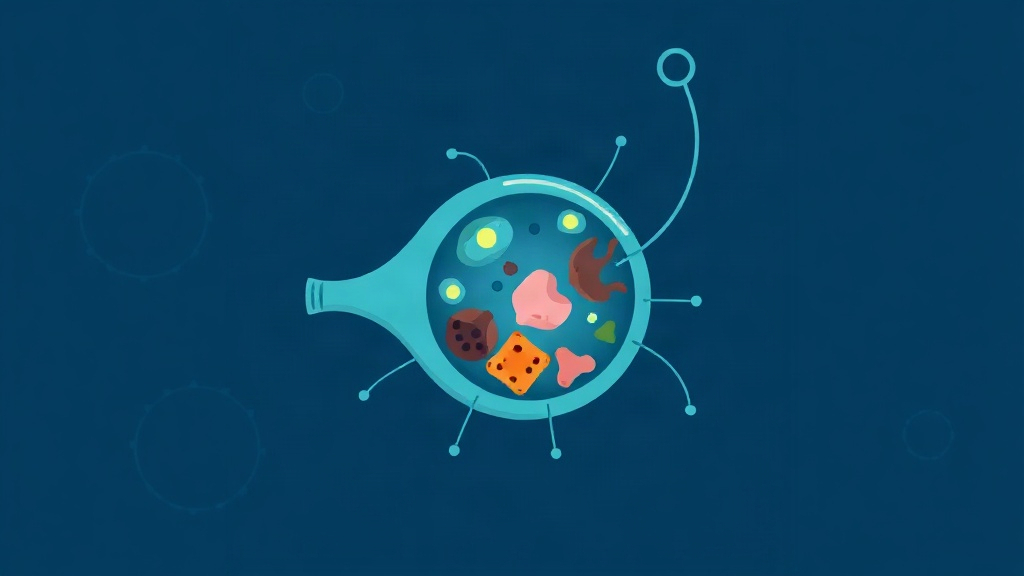
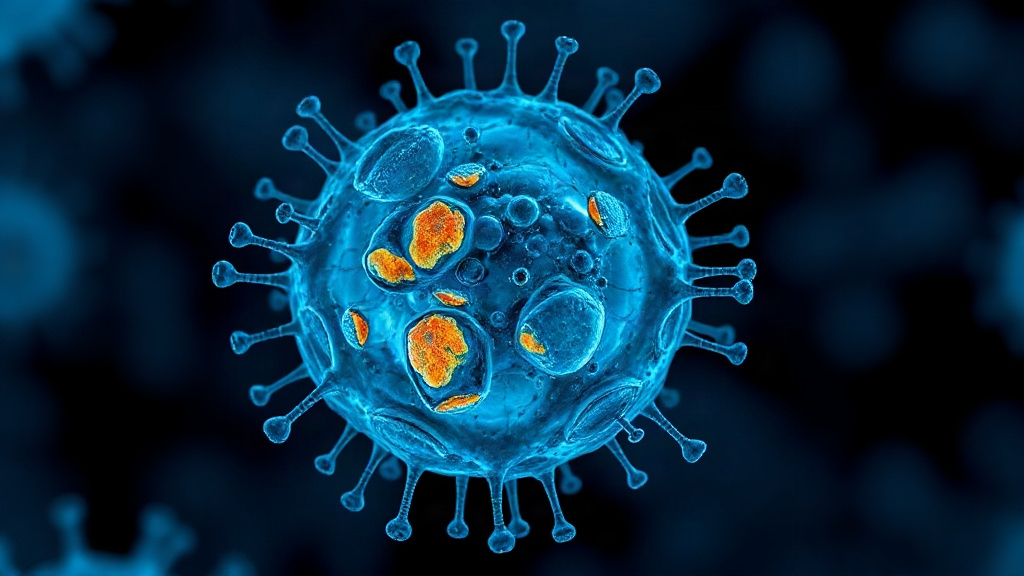
The word comes from the Greek auto (self) and phagein (to eat): the cell “eats itself” in a controlled way. Mammalian cells rely on three overlapping pathways: macroautophagy (the most studied, forming double-membrane vesicles), microautophagy (direct engulfment by the lysosome), and a chaperone-mediated pathway that selectively recognizes tagged proteins. Research from the NIH Intramural Research Program describes this mechanism as the cell’s ongoing recycling system, essential for clearing out damaged components.
This pathway follows a precise sequence: initiation, nucleation of an isolation membrane, elongation around the material to be removed, closure into an autophagosome, then fusion with a lysosome that breaks the contents down into reusable amino acids and lipids. The cascade involves roughly thirty ATG (autophagy-related) genes, first identified in the yeast Saccharomyces cerevisiae by Yoshinori Ohsumi (Tsukada & Ohsumi, 1993, PMID 8224160), the work that earned him the 2016 Nobel Prize.
Mechanism and Triggers
A central sensor governs this process: the kinase mTOR (mechanistic target of rapamycin) suppresses it when nutrients are abundant and releases it during deprivation. AMPK, activated by low cellular energy, works in the opposite direction and stimulates the process. This balance explains why some physiological states switch it on far more than others.
- Fasting and calorie restriction, which lower mTOR activity and increase autophagy across multiple tissues (Bagherniya et al., 2018, PMID 30172870).
- Physical exercise, especially endurance training, which transiently induces the same mechanism in muscle and heart tissue.
- Oxidative stress and low oxygen levels, which activate cell-rescue pathways.
- Certain dietary compounds, including spermidine (a polyamine found in wheat germ, legumes and aged cheese), which can induce autophagy independently of calorie restriction (Eisenberg et al., 2016, PMID 27841876).
This same mTOR/AMPK balance is targeted by pharmacological molecules such as rapamycin, studied in longevity research but not recommended for use outside a medical setting, given the lack of safety data in the general population.
Cellular Autophagy and Aging: What the Science Shows
In model organisms, yeast, the worm C. elegans, flies and mice, disabling autophagy genes shortens lifespan, while targeted stimulation in specific tissues extends it, according to the reference review by Hansen, Rubinsztein and Walker published in Nature Reviews Molecular Cell Biology (2018, PMID 30006559). This mechanism appears to be required for several known longevity pathways: calorie restriction, mTOR inhibition and reduced insulin signaling.
Evidence in humans is more indirect. A 2019 review in the New England Journal of Medicine linked intermittent fasting to a metabolic switch from glucose to ketones, accompanied by cellular stress resistance and increased autophagy, with reported benefits on cardiometabolic markers (de Cabo & Mattson, 2019, PMID 31881139). For spermidine, an Austrian cohort linked higher dietary intake to lower cardiovascular mortality, consistent with the induction of this recycling process and of mitophagy observed in animals (Eisenberg et al., 2016, PMID 27841876; Madeo et al., 2018, Science, PMID 29371440). These associations do not establish direct causation in humans and do not allow for an optimal dose to be set.
Pharmacological modulation remains an active research avenue for neurodegenerative and metabolic disease and certain cancers, as detailed in the review by Rubinsztein, Codogno and Levine (2012, PMID 22935804), though no autophagy-targeted drug is currently approved to slow aging in healthy people.
In Practice: When Does This Mechanism Switch On?
Baseline autophagy runs continuously, but its intensity varies sharply with nutritional state and activity level. The table below compares the main levers studied, their level of evidence and their limits.
| Lever | Proposed mechanism | Evidence in humans | Caution |
|---|---|---|---|
| Intermittent fasting / calorie restriction | Lower mTOR, higher AMPK | Moderate (metabolic markers, no direct tissue measurement) | Not suitable during pregnancy, treated diabetes or a history of eating disorders |
| Endurance exercise | Muscle and cardiac energy stress | Moderate, mostly animal studies | Requires a gradual approach, no substitute for medical follow-up |
| Dietary spermidine | mTOR-independent induction | Low to moderate (observational cohorts plus animal data) | No established reference dose in humans |
| Rapamycin and analogs | Direct mTOR inhibition | Mostly preclinical | Restricted to supervised medical use (immunosuppressant) |
For a practical look at the related energy-storage mechanisms, the complete guide to intermittent fasting covers the most studied protocols, and the article on the fasting-mimicking diet (FMD) presents a less demanding periodic alternative. The companion piece on spermidine and longevity covers the data specific to that compound.
Protocol and Cautious Advice
No standardized protocol is validated by scientific consensus for the general population. The best-documented approaches remain lifestyle adjustments, introduced gradually.
- Space out meals (for example, an extended overnight fasting window) rather than attempting an unsupervised prolonged fast.
- Maintain regular physical activity, combining endurance work and muscle-strengthening training.
- Favor a diet rich in legumes, whole grains and aged cheeses, natural sources of spermidine, without unsupervised high-dose supplementation.
- Seek medical advice before any prolonged fast, particularly if undergoing treatment, pregnant or living with a chronic condition.
See the UltraSanté guide to loss of proteostasis to place this mechanism among the other processes that maintain cellular protein quality.
Frequently Asked Questions
What Is Cellular Autophagy in Simple Terms?
Autophagy is the process by which a cell isolates its damaged components, misfolded proteins, faulty organelles, inside a vesicle, then breaks them down in a lysosome to recycle their building blocks. It runs continuously at a low level and intensifies during fasting, exercise or cellular stress.
Why Does Autophagy Decline With Age?
Several regulatory pathways (mTOR, AMPK, sirtuins) lose efficiency with age, which slows the formation and turnover of autophagosomes in many tissues. This decline is linked to the buildup of misfolded proteins and failing organelles, a mechanism studied in neurodegenerative disease (Hansen et al., 2018, PMID 30006559).
Does Intermittent Fasting Really Boost Autophagy in Humans?
Metabolic markers consistent with increased autophagy appear during fasting, such as a shift toward ketone bodies and lower mTOR activity, but direct measurement in tissue remains difficult in living humans. Current data come mostly from animal models and indirect markers in humans (Bagherniya et al., 2018, PMID 30172870).
What Is the Difference Between Autophagy and Apoptosis?
Apoptosis is a programmed cell death pathway that eliminates an entire cell irreversibly. Autophagy is a recycling process that, by contrast, generally helps a cell survive stress by selectively clearing its faulty components without destroying it.
Can Autophagy Levels Be Measured?
There is no simple, validated test to measure autophagy in an individual in routine practice. Reference methods, such as imaging markers like LC3 or tissue biopsies, remain confined to laboratory research, not public use.
Medical disclaimer. The information provided here is for informational purposes only and does not constitute medical advice. It does not replace a consultation. Ask a healthcare professional before changing your diet, taking dietary supplements or starting a new practice, especially if you have a medical condition, are pregnant or are under treatment. Dietary supplements do not replace a balanced diet or medical follow-up.