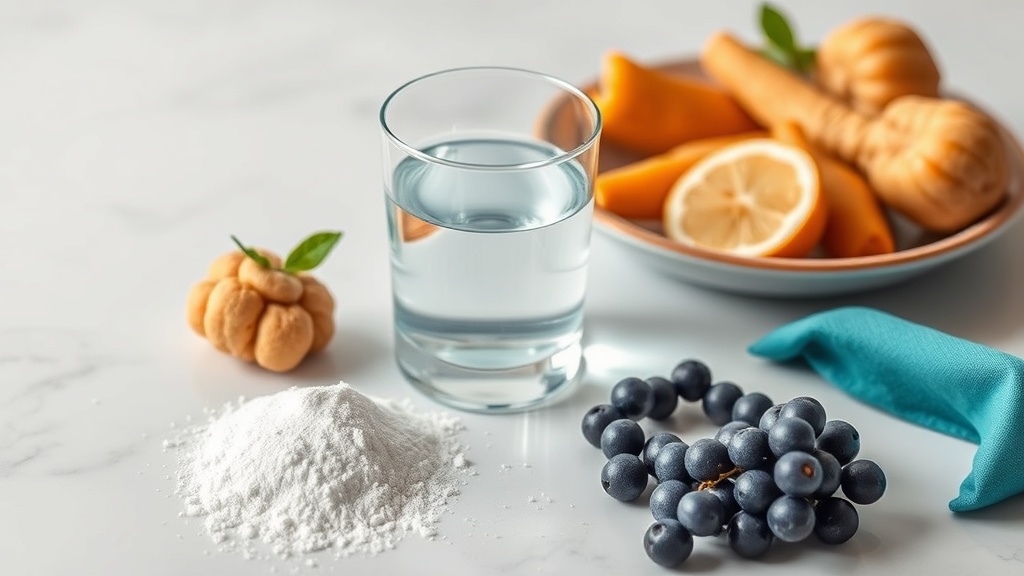
What if one of the most decisive nutrients for healthy aging were also one of the most overlooked? Glycine is a modest amino acid with a mildly sweet taste, and the body’s need for it is enormous, far greater than what it produces and receives from food. Some researchers estimate our total requirement at around 15 grams a day, while synthesis and diet together cover only a fraction of that. The result is a chronic shortfall estimated at roughly 10 grams a day, with underestimated consequences for collagen and longevity.
In brief – Glycine is an amino acid the body needs in far larger amounts than it can make or absorb from food, with total needs estimated near 15 grams a day against a shortfall of about 10 grams. It supplies nearly a third of collagen’s structure, supports glutathione production, favors deeper sleep, and helps buffer excess methionine. Bone broth, gelatin and skin-on cuts provide some, but a daily supplement is the most reliable way to close the gap. It is well tolerated even at several grams a day, though people with kidney disease, who are pregnant, or under medical treatment should check with a clinician first.
Glycine, an amino acid unlike the others
It is often filed under “non-essential” amino acids, on the grounds that the body can make it. That label is misleading. Glycine is better described as “conditionally essential”: the body synthesizes about 3 grams a day, and food adds a few grams more, yet the total still falls well short of what is needed.
Research on the topic puts total metabolic demand at around 15 grams daily. Subtracting what we produce and eat leaves a shortfall of roughly 10 grams a day. Few amino acids are simultaneously in such high demand and so poorly supplied, which makes it one of the most underrated nutrients in a modern diet.
Glycine and collagen: the essential link
Why does the body need so much of it? The answer comes down to collagen. This protein is the most abundant in the human body, making up about 30% of all our proteins. It forms the scaffolding of skin, tendons, cartilage, bone and blood vessels.
Glycine makes up nearly a third of collagen: it is the only amino acid small enough to fit into every third position of its triple-helix structure. Without enough of it, collagen production is constrained. Here is what that collagen supports every day:
- Skin: firmness, elasticity and repair capacity.
- Joints: resilient, supple cartilage, tendons and ligaments.
- Bones: the collagen framework that minerals attach to.
- Blood vessels: the strength of arterial walls.
Maintaining collagen means preserving the structures that literally keep us standing, and that starts with a sufficient glycine supply.
What the science says
Research confirms its central role in collagen synthesis and highlights the gap between requirements and typical intake (PubMed data).
Beyond collagen, it is a precursor of glutathione, the body’s major antioxidant, whose levels decline with age (PubMed data). It has also been studied for its effect on sleep, with an evening dose improving sleep quality in several trials (PubMed data). These combined roles echo general guidance on nutritional balance from the Harvard T.H. Chan School of Public Health.
The other benefits of glycine
Reducing it to its role in collagen would understate its value. This amino acid plays several other useful roles for health:
- Better sleep: it slightly lowers core body temperature and favors faster sleep onset and deeper sleep.
- Antioxidant support: by feeding glutathione production, it helps counter oxidative stress.
- Metabolic balance: it has been studied for favorable effects on blood sugar and insulin sensitivity.
- A protective role: it helps buffer excess methionine, an amino acid whose overabundance is linked to aging.
This last point is especially interesting: by moderating the effects of methionine, it may partly mimic the longevity benefits seen with restriction of that amino acid.
Glycine and longevity
This is where the picture gets compelling. With age, glutathione production declines, collagen becomes scarcer and inflammation sets in. By acting on all three fronts, it stands out as a strong ally for healthy aging.
Animal studies have shown that glycine supplementation can modestly extend lifespan. In humans, research on combining glycine with N-acetylcysteine, which restores glutathione, shows promising improvements across several markers of aging. As with creatine, this is a simple, safe supplement with real potential, best used as part of an overall healthy lifestyle.
In practice: closing the glycine gap
How can you restore an adequate intake? Several approaches work together:
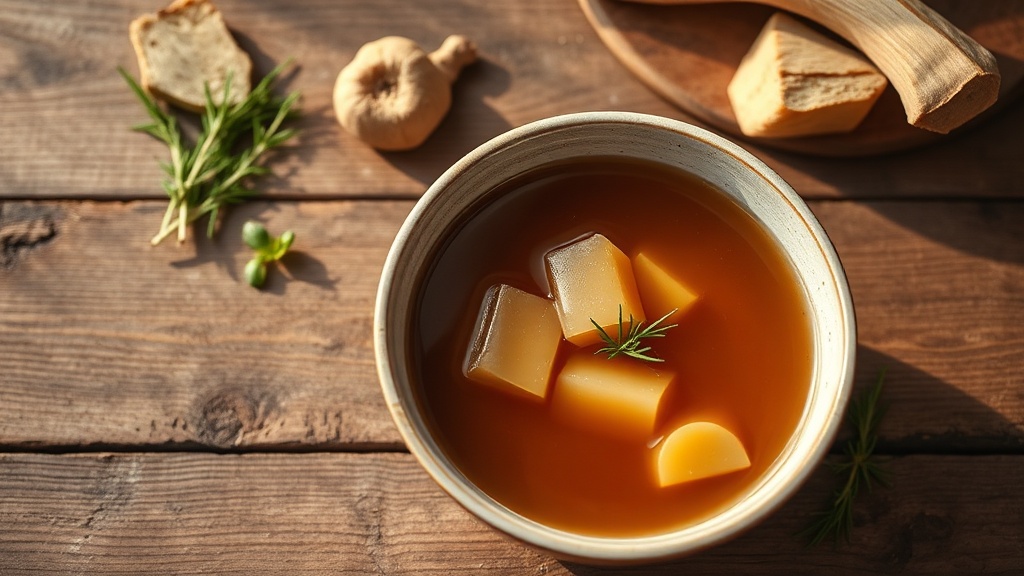
- Collagen-rich foods: bone broth, gelatin, skin and gelatinous cuts, tendons and cartilage, long staples of traditional diets.
- Supplementation: a mildly sweet powder that makes it easy to add several grams a day to close the gap.
- Timing: an evening dose can combine the intake with the sleep benefit.
- Consistency: as always, sustained regularity over time makes the difference.
It is very well tolerated, even at doses of several grams. In cases of kidney disease, pregnancy or specific treatment, prior medical advice is still recommended. This habit fits into a broader approach to longevity, alongside attention to joint mobility and the dietary habits of blue zones.
| Aspect | What glycine does |
|---|---|
| Collagen | Supplies nearly a third of its amino acid content, needed for skin, joints, bone and vessels |
| Glutathione | Serves as a precursor for the body’s main antioxidant, which declines with age |
| Sleep | An evening dose is linked to faster sleep onset and deeper sleep in several trials |
| Methionine balance | Helps buffer excess methionine, an amino acid linked to faster aging |
Frequently asked questions
How much glycine do you need per day?
Total metabolic needs are estimated at around 15 grams a day. Since the body and diet together supply only part of that, an additional intake of a few grams, often up to 10 grams, is sometimes suggested to close the gap. Professional advice helps tailor the amount to your situation.
Does glycine really help skin and joints?
It is essential for making collagen, the key protein in skin, tendons and cartilage. A sufficient intake therefore supports these structures, provided it is paired with a balanced diet and regular physical activity.
When should you take glycine?
It can be taken at any time, but an evening dose is worth considering since it also favors better sleep. What matters most is the regularity of intake day after day.
Does glycine carry any risks?
It is considered very safe and well tolerated, even at several grams a day. Rare digestive discomfort can occur at high doses. In cases of kidney disease, pregnancy or intensive treatment, ask a healthcare professional for advice.
Medical disclaimer. This information is provided for informational purposes only and does not constitute medical advice. It does not replace a consultation. Ask a healthcare professional before changing your diet, taking dietary supplements or starting a new practice, especially if you have a medical condition, are pregnant or are under treatment. Dietary supplements do not replace a balanced diet or medical follow-up.