What if the color on your plate said something about your real age? Carotenoids, the pigments that give fruits and vegetables their bright colors, sit at the center of a striking discovery. Studies using biological clocks such as GrimAge show that a high intake of lutein, lycopene or astaxanthin is linked to a younger biological age, sometimes even more strongly than physical activity. A striking result, but one that needs careful interpretation.
In brief – Carotenoids are the antioxidant pigments that color fruits and vegetables red, orange and green. Several large cohort studies, based on epigenetic clocks such as GrimAge, associate a high carotenoid intake, especially lutein, zeaxanthin and beta-carotene, with a younger biological age. In some analyses this link was stronger than the one seen with physical activity. These are observational findings, not proof that carotenoids cause slower aging, and exercise keeps benefits a blood test cannot capture. The practical takeaway is simple: fill your plate with colorful vegetables and fruit alongside regular movement.
GrimAge, a clock for how we age
GrimAge is one of the best-performing biological clocks available. Built on patterns of DNA methylation, this epigenetic signature estimates biological age and predicts disease risk and mortality remarkably well, often better than the age on a birth certificate.
Alongside other validated measures such as PhenoAge, it lets researchers test the real effect of our habits on aging. Unlike chronological age, biological age can shift, for better or worse, depending on lifestyle. That is exactly what several research teams set out to test by looking at an unexpected player in nutrition: carotenoids.
Carotenoids, the protective pigments
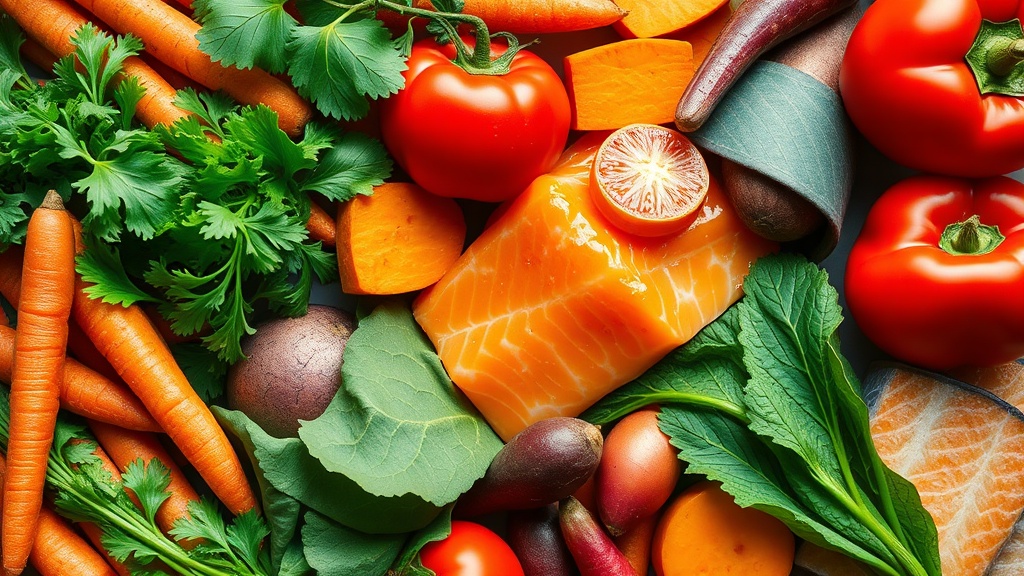
Carotenoids are plant pigments with antioxidant properties that help protect cells from oxidative stress. Six of them stand out, each concentrated in differently colored foods.
| Carotenoid | Best food sources | Main interest |
|---|---|---|
| Lutein | Leafy green vegetables | Eye and brain health |
| Zeaxanthin | Leafy green vegetables, corn | Eye and brain health |
| Lycopene | Cooked tomato, watermelon, pink grapefruit | Antioxidant, cardiovascular support |
| Beta-carotene | Carrot, sweet potato, pumpkin | Vitamin A precursor, antioxidant |
| Alpha-carotene | Carrot, sweet potato, pumpkin | Vitamin A precursor, antioxidant |
| Astaxanthin | Salmon, trout, some microalgae | Particularly potent antioxidant |
Some researchers have nicknamed these compounds the “longevity vitamins” for the protective role they appear to play across multiple organs.
What the research shows
Analyzing data from tens of thousands of adults, several studies found that a high carotenoid intake is associated with a slower biological age (PubMed data). Lutein, zeaxanthin and beta-carotene stand out as the strongest contributors. This work, carried out on large American cohorts of roughly 20,000 to 27,000 participants, combined several biological age measures in parallel, which strengthens confidence in the findings.
The most striking result concerns the comparison with lifestyle: in these analyses, carotenoid status was sometimes more strongly linked to a slower biological age than physical activity itself (PubMed data). That is a reminder of just how much diet matters, as the World Health Organization notes in its guidance on a healthy diet.
Carotenoids versus exercise? A false debate
Does this mean carotenoids outperform exercise? That would be moving too fast. These studies are cross-sectional: they observe correlations, not cause-and-effect relationships. A high carotenoid status often reflects a generally healthier diet overall, one that is hard to isolate from other habits.
Above all, exercise remains irreplaceable: its benefits for the heart, muscles, brain and independence go far beyond what any epigenetic clock can capture, since such a clock reflects only part of aging (PubMed data). The real message, then, is not to choose one over the other but to combine them: a plate rich in carotenoids and regular physical activity, two complementary longevity levers.
In practice: getting enough carotenoids
The good news is that raising carotenoid intake is simple and enjoyable. A few practical pointers:
- Color your plate: carrots, tomatoes, peppers, sweet potatoes, spinach, kale and squash at every meal.
- Cook it and add a little fat: cooking tomato releases lycopene, and a drizzle of oil improves carotenoid absorption.
- Think about salmon: for its astaxanthin, on top of its omega-3s.
- Favor food over supplements: at high doses, isolated beta-carotene supplements have increased lung cancer risk in smokers. Whole food remains the safer route.
- Aim for variety: each color brings a different mix of carotenoids, and eating them year-round ensures a steady supply.
This approach fits within a plant-rich diet. To track your progress, you can estimate your biological age with our free calculator.
Frequently asked questions
What is GrimAge?
It is a biological clock based on patterns of DNA methylation that estimates biological age and predicts disease and mortality risk very well. Researchers use it to measure the real effect of our habits on aging.
Do carotenoids really slow aging?
Studies show an association between a high carotenoid intake and a younger biological age. These are correlations, not proof of causation, but they support the value of a diet rich in colorful fruit and vegetables.
Are carotenoids better than exercise?
In some analyses, their link to a slower biological age was stronger than that of physical activity. But this data is observational, and exercise keeps benefits nothing else replaces. The best approach is to combine both.
Should you take carotenoid supplements?
Food sources are the better choice. At high doses, some beta-carotene supplements have increased lung cancer risk in smokers. A varied, colorful plate remains the safest and most effective strategy.
Medical disclaimer. The information provided here is for informational purposes only and does not constitute medical advice. It does not replace a consultation. Ask a healthcare professional before changing your diet, taking dietary supplements or starting a new practice, especially if you have a medical condition, are pregnant or are under treatment. Dietary supplements do not replace a balanced diet or medical follow-up.